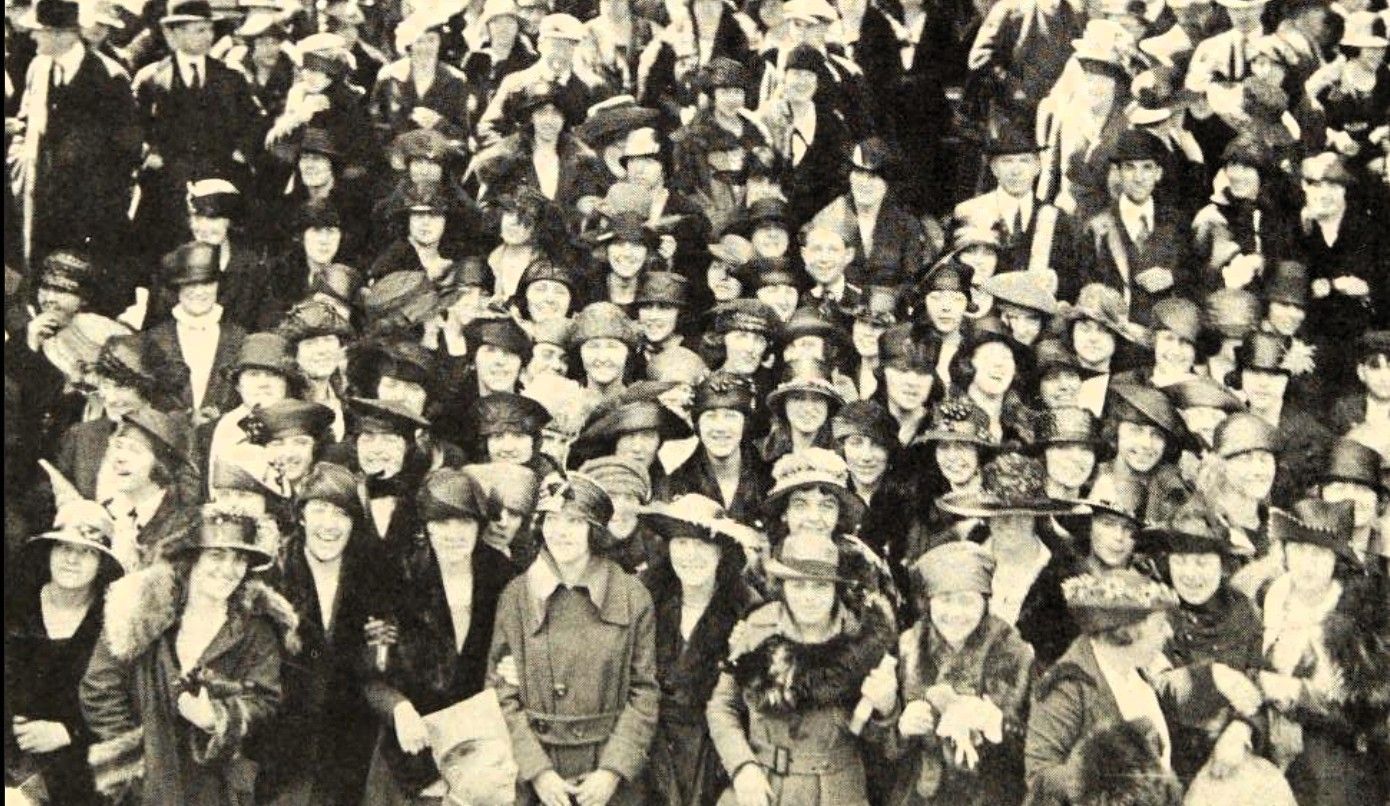
Having won their 1919 fight for union recognition, the telephone operators of New England were unable, in changed conditions as the post-war labor wave receded, to win their 1923 battle with the Bell System. William Simons reports on the situation of the second strike.
‘Phone Girls in Grim Fight Against the Bell Combine’ by William Simons from The Worker. Vol. 4 No. 286. August 5, 1923.
BOSTON, Mass. Plucky telephone operators are putting up a strong fight against the New England Telephone Co. a subsidiary of the American Bell System, the nation-wide monopoly. Always the staunch defender of the “company union,” the company is attempting to crush the strike and thus remove every vestige of trade unionism among its employees. The company is already installing automatic phones, and it is wise to eliminate any possible opposition from the unions, The workers might ask for a sum to tide them over until they prepared themselves for another trade. This must be prevented.
Several thousand girls have been out for four weeks, for a seven-hour day instead of eight hours at a nerve-racking switchboard, and for an increase of $5.00 a week.
At present, a student starts at $11.00 a week, and if after a year she is accepted as an operator, she attains the maximum of $22.00 in 5% years.
Only 26 per cent of the operators are getting this glorious maximum. The demand is for a $5.00 increase all along the line, bringing the maximum to $27.00.
Noteworthy is the fact that the demand is for a flat increase for all girls, and that no special group is favored. The demands were submitted to the Company two and a half years ago, and the company was satisfied to leave things as they were.
Scope of the Strike
All of New England was affected by the strike. Worcester, Springfield, Lawrence, Brockton and many other points outside of Boston were hard hit. Service was practically at a standstill.
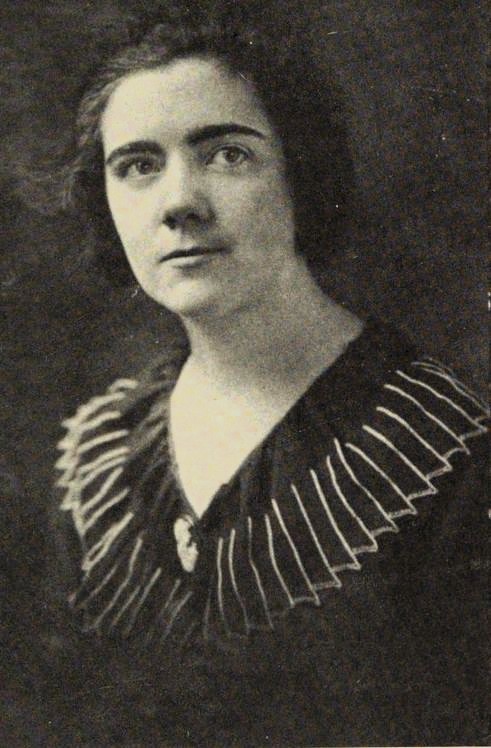
In Boston, the service was also impaired, but many remained at work because of differences between their local union, old Local 1A. whose charter had been revoked a short while before, and the strike leader. Miss Julia S. O’Connor, head of the Telephone Department of the International Brotherhood of Electrical Workers, who had revoked the charter.
Practically all of the exchanges were picketed by the girls. Strike meetings were held in Tremont Temple, and one on the Boston Common, with speakers of the local labor movement, and of other international unions. On the Common, characteristic placards were displayed: “The Service is Good–and, Rotten”; “Miss Jones (the daughter) of the President of the company) works for $32”; “We will work for $27”; “The Press Stands Behind Us–With an Axe.”
Support from the Unions
A sympathetic strike on the part of the male operators was impossible, for the vast majority of the organized belong to the “International Brotherhood of Telephone Operators,” an independent organization. Some, out of a spirit of solidarity with the striking women, have gone back to Local 142 of the International Brotherhood of Electrical Workers. The strike leader, Miss O’Connor, stated that this local was small, and that because of the other union, it would be suicide to call them out on a sympathetic strike. They are assisting as individual members in getting funds.
The various Central Labor Unions have voted to support the strikers morally and financially, the Boston C.L.U. pledging itself to raise $50,000. However, there is many a slip between the cup and the lip. The amount received by the strikers to-date from Boston unions does not amount to more than $3.000. Local 34, Cooks and Waiters’ Union, gave $500 of $1,000 promised; Local 103 of the International Brotherhood of Electrical Workers gave $1,000.
Attitude of the Phone Company
From the start, the Company has refused to treat with the strikers. Scabs were secured from all possible points, and were whisked to and fro in taxicabs. Police protection was asked for: husky policemen were stationed as a protection against the young women fighting for the right to a decent wage and decent conditions. Fighting? It doesn’t look very much like a fight to see young women walk up and down the street, while armed police are protecting the scabs. But this is the way in which trade unions carry on their fights to-day.
Pitiless publicity was resorted to in the newspapers; special letters were sent to subscribers, pointing out the impossibility of granting the strikers’ demands; the joys of the telephone work, the case, the splendid salary, medical service available, etc., ad nauseam.
The wages of the girls were “war peak wages,” urged the company. But the salary of the President was increased after that, from $15,000 to $26,000 a year. And the dividends were dealt out regularly, 8 per cent yearly.
When the strikers urged arbitration, the company still maintained that there was nothing to arbitrate.
The Union Proposals
The attitude of the Company is causing some of the Central Labor Union bodies to contemplate action. There is talk in the Boston C.L.U. to ask the State Legislature for an Investigation of the New England Telephone and Telegraph Company. In the Brockton C.L.U. they talk of nationalization of the telephones.
As for strike action to back up the girls with the best kind of support, it is in evidence only in a few places. In Springfield, the C.L.U. threatens to call a general strike, if police reserves are again placed on duty at the telephone exchanges, or if the sidewalks are roped off to prevent picketing. In the Boston C.L.U. a motion to place before the local unions the question of the advisability of a general strike was ruled out of order, and a question as to whether the C.L.U. could express its agreement with such a proposal was choked off.
The Girls Are Learning
They have learned that the press as a whole is expressing the point of view of the company: their speakers are particularly bitter against the prostituted press. They have learned that the police are being used to deprive them of their right to work; that the judges are against them, for in Lawrence, a judge ruled that it was not necessary for a taxicab driver from out of town to have a local license, if he was transporting scabs to and from work, since he was doing “private” work for the company; that their only source of support is the trade unions, and other working-class organizations. The contributions sent them from the branches of the Workers Party will make them realize the real nature of the Party.
The Fight Continues
At the Conference called by the Mayors of several cities, the strikers agreed to go back without insisting on the wage and hour demands, provided all the strikers were returned to their places. This offer was refused by the company, out of regard “for the loyal workers” meaning the scabs who took the places of the striking operators. The fight is once more on, for the original demands.
In December 1921 the above-ground Workers Party of America merged the Toiler with the paper Workers Council to found The Worker, which became The Daily Worker beginning January 13, 1924. National and City (New York and environs) editions exist. The Daily Worker began in 1924 and was published in New York City by the Communist Party US and its predecessor organizations. Among the most long-lasting and important left publications in US history, it had a circulation of 35,000 at its peak. The Daily Worker came from The Ohio Socialist, published by the Left Wing-dominated Socialist Party of Ohio in Cleveland from 1917 to November 1919, when it became became The Toiler, paper of the Communist Labor Party.
PDF of full issue: https://www.marxists.org/history/usa/pubs/theworker/v4n286-aug-04-1923-Worker.pdf

