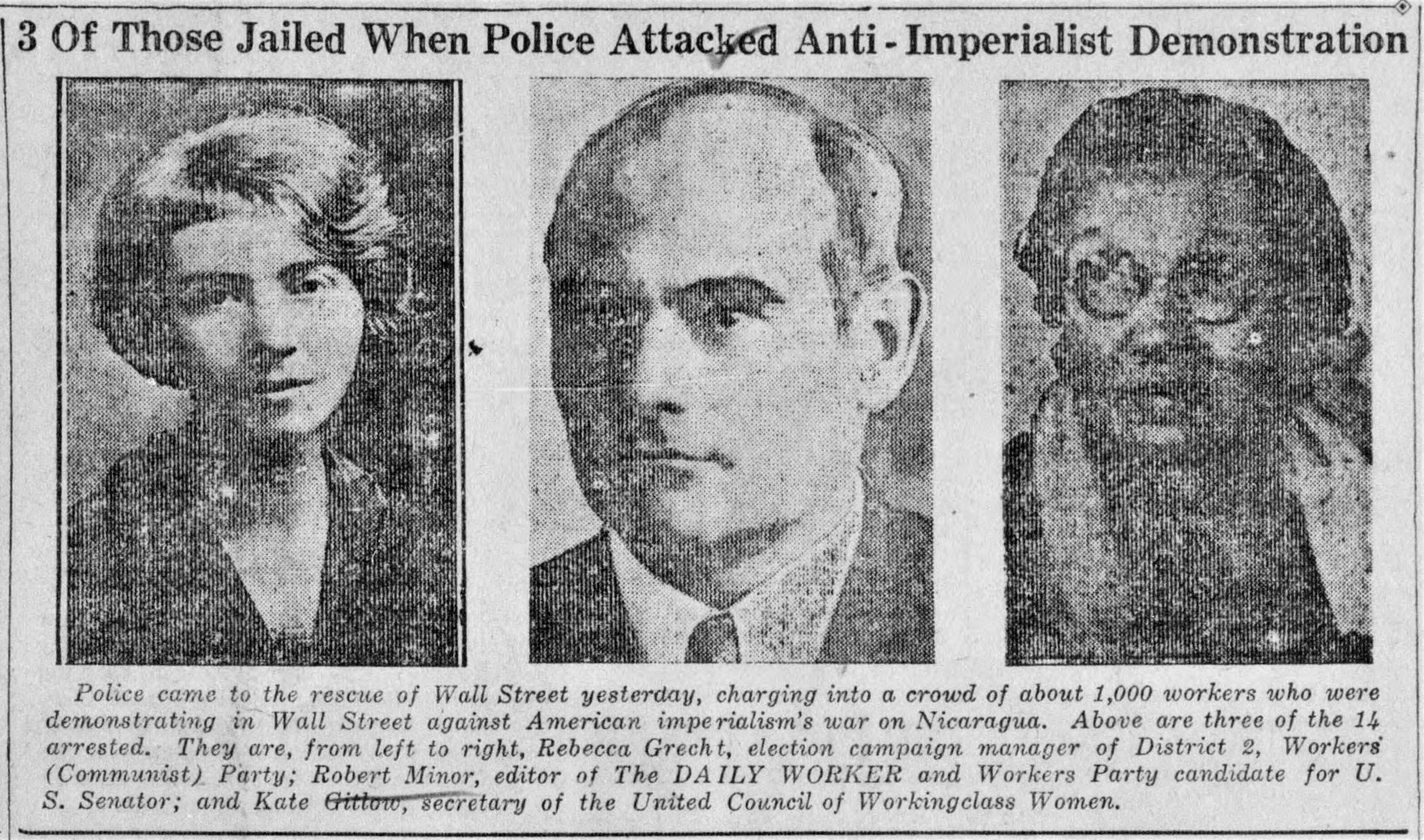
Dunn, here as National Chairman of the Anti-Imperialist League, gives a synopsis of U.S. imperial intervention into Nicaragua up to that point. Dozens of new chapters have been written since.
‘The American Bandits in Nicaragua’ by Robert Dunn from The Daily Worker. Vol. 8 No. 111. May 8, 1931.
In order to understand the hypocrisy of the Yankee imperialist bandits in Nicaragua, workers should keep in mind the long history of Wall Street intervention in that country. Here are the highlights of the story:
Twenty-three years ago, in 1908, the United States government sent battleships and marines to overthrow the Zelaya government of Nicaragua because (1) it was considering the cancellation of the concession of a mining company in which the U.S. Secretary of State had a majority interest; (2) it had failed to suppress with sufficient “vigor” a strike in the banana fields of United States companies; (3) it had placed a large loan with an English firm in- stead of in Wall Street.
This was the beginning of American intervention. For several years, the tool of Wall Street interests, Diaz, was kept in power by the U.S. Marines. Whenever his regime seemed to be weakening the American minister in Nicaragua would wire, “A warship is necessary for the moral effect.” The vessel would be sent.
Once when some Liberals started a revolution Major Smedley Butler, the gabbling marine, was sent from Panama with 400 marines to save the government and the American bankers. The revolution was crushed, and an “election” held under marine “supervision.” The candidate of the U.S. bankers was easily “elected.”
Diaz remained in office from 1912 to 1916, and American naval officers later testified before a Senate investigating committee that he was so unpopular he could not have remained in the country 24 hours without the protection of the U.S. marines.
Then came another equally servile president, Chamorro. Major Butler was later asked by a U.S. Senator: “How long would Chamorro remain if the marines were withdrawn?” Butler laughed and replied, “He wouldn’t remain at all. He would be on the last coach of the train that carried the marines from the capital.”
In the meantime the bankers had sunk their claws into most of the wealth of the country, and loaned money to the government maintained in power by the marines. Brown Brothers and J. and W. Seligman & Co., were the chief bankers involved, and later the Guaranty Trust Co. The U.S. government had meanwhile picked up the site for another canal and a naval base under a forced treaty which according to the American customs collector in Nicaragua, was “an important link in the chain we are attempting to forge, of preparedness and national defense, and the protection of our investment in the Panama Canal.”
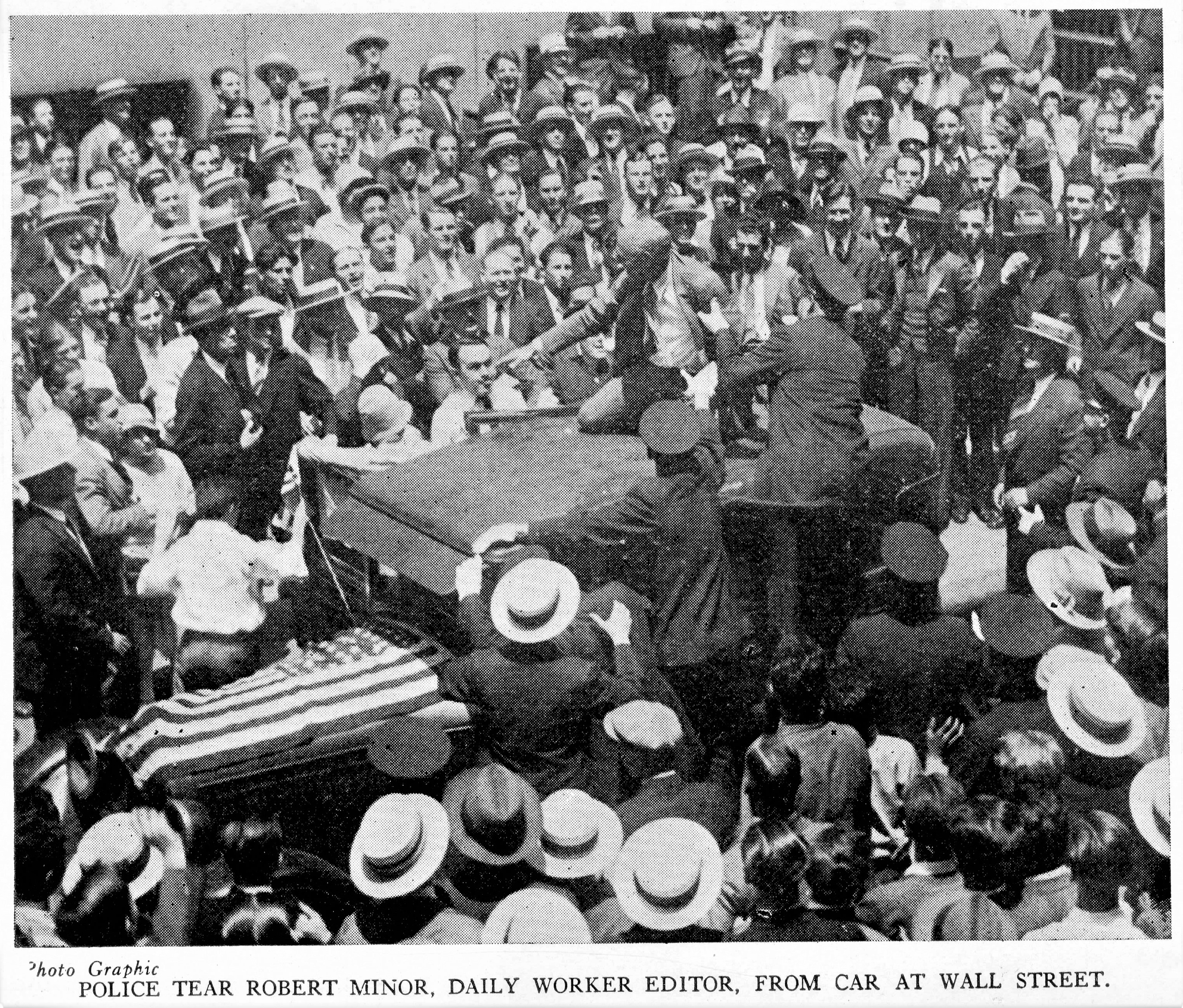
By 1924 a Liberal administration that tried to balk at some of the orders of Wall Street somehow got into power. Only then were the marines withdrawn for a few months. Why? To permit Chamorro to start another “revolution” financed by Wall Street. It was successful; but when the Liberals were again gaining the upper hand in their efforts to oust the Yankee agents, the marines were sent to Bluefields, August, 1926, and saved Chamorro from defeat. Later that year the Wall Street government had its old puppet, Diaz, put back in the presidency. But the Liberals continued to fight and were only stopped when marines from 9 battleships were landed at Puerta Cabezas and established “neutral zones.” They defeated the Liberals and kept in power the faithful lackey, Diaz.
Then in April, 1927, Henry L. Stimson was sent to pacify all factions, and buy off Moncada, a general of the Liberal army, who had always, as a matter of fact, been in favor of American intervention. Moncada was, therefore, prompt to comply when Stimson told him to put down his arms and be paid $10 apiece for them–or have them shot out of his hands by the American marines. Essentially a traitor, and having presidential aspirations, Moncada took the place of Diaz as imperialist tool. He was promptly elected president in an “election” run by marines.
At that time only one Liberal general refused to be bribed into betrayal by Stimson. In spite of the fact that Stimson said in 1927, “the civil war in Nicaragua is now definitely ended,” adding that Sandino had only 50 or 60 men, the struggle has not ceased. The Yankee imperialists put a $30,000 reward on Sandino’s head and have hunted him like a wild beast in the mountains. Hundreds of peasants and workers have given their lives for the expulsion of the Wall Street invaders from Nicaragua. The harbor workers of Corinto once struck to support the armed fight. The Anti-Imperialist League of the U.S. sent medical supplies to the Army of Liberation.
After training the Nicaraguan National Guard to protect its interests and clinching the power of its servile Moncada, the bloody Washington government now adopts a “new policy.” But at the very moment when it declares it will no longer send marines to protect American property in the interior of the country, it is dropping bombs on the Army of Liberation, and slaughtering the heroic workers and peasants who strike against slavery on the plantations of the Standard Fruit and Steamship Co.
Let no worker be bamboozled by the Stimson “change of policy” propaganda, The American imperialist policy today is precisely that of Coolidge when he stated in 1926:
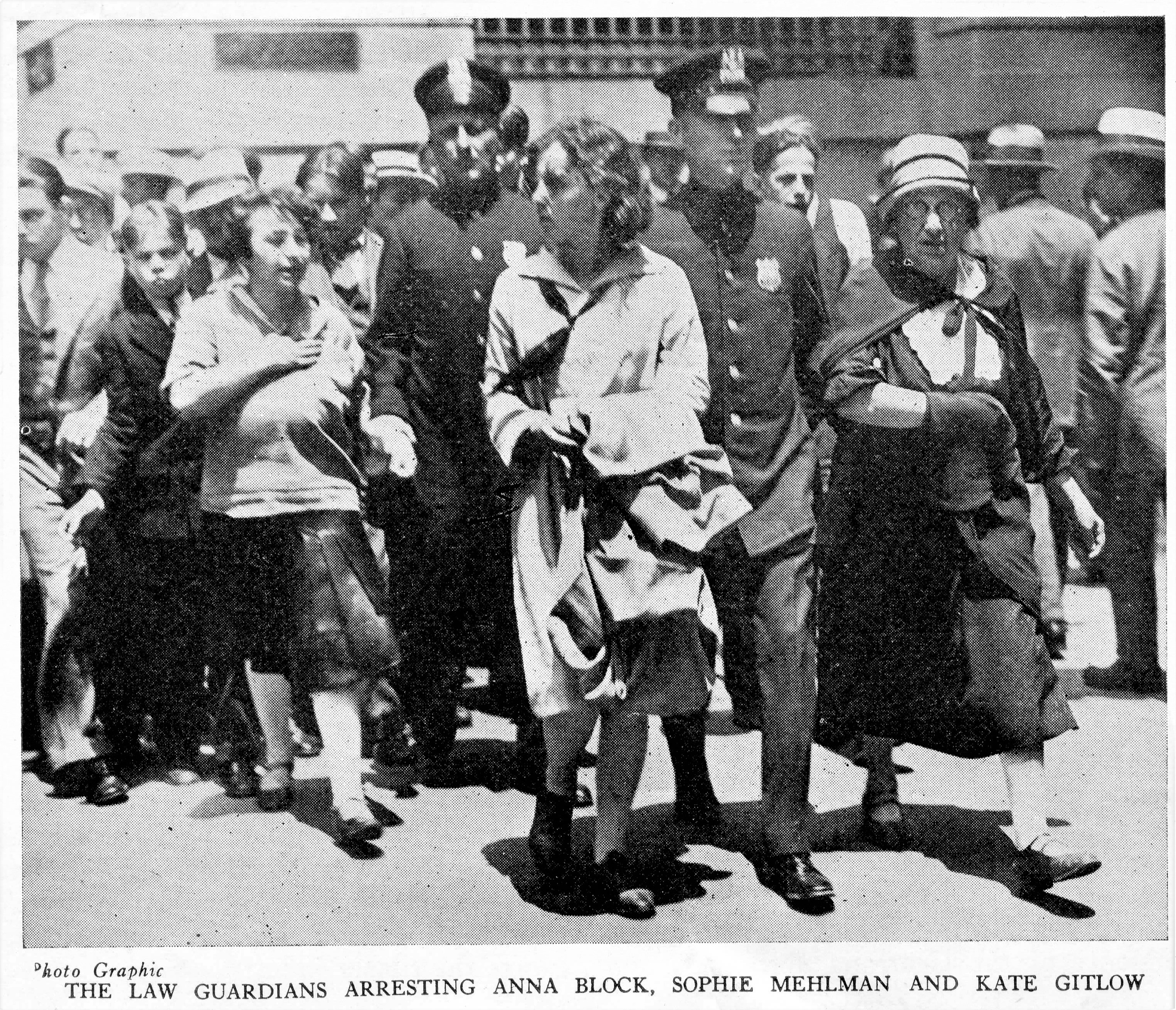
“We must guarantee rights to build the canal across Nicaragua even if necessary AGAINST THE WILL OF THE NICARAGUAN PEOPLE because Central America and the Nicaraguan Canal will represent for us with our expanding interests and trade as a center a necessary protection across the trade routes be- tween Atlantic and Pacific.” (Emphasis ours.) The marines have been in Nicaragua, with the exception of a few months “vacation,” ever since 1908. Only the force of the workers and pea- sants of Nicaragua combined with those of the workers and poor farmers of the United States can get them out. Every worker should join and vigorously support the Anti-Imperialist League which supports the struggle of the Army of Liberation under general Sandino, the revolt of the workers and peasants, and demand the immediate withdrawal of all marines from all Central American countries.
The Daily Worker began in 1924 and was published in New York City by the Communist Party US and its predecessor organizations. Among the most long-lasting and important left publications in US history, it had a circulation of 35,000 at its peak. The Daily Worker came from The Ohio Socialist, published by the Left Wing-dominated Socialist Party of Ohio in Cleveland from 1917 to November 1919, when it became became The Toiler, paper of the Communist Labor Party. In December 1921 the above-ground Workers Party of America merged the Toiler with the paper Workers Council to found The Worker, which became The Daily Worker beginning January 13, 1924.
PDF of full issue: https://www.marxists.org/history/usa/pubs/dailyworker/1931/v08-n111-NY-may-08-1931-DW-LOC.pdf

