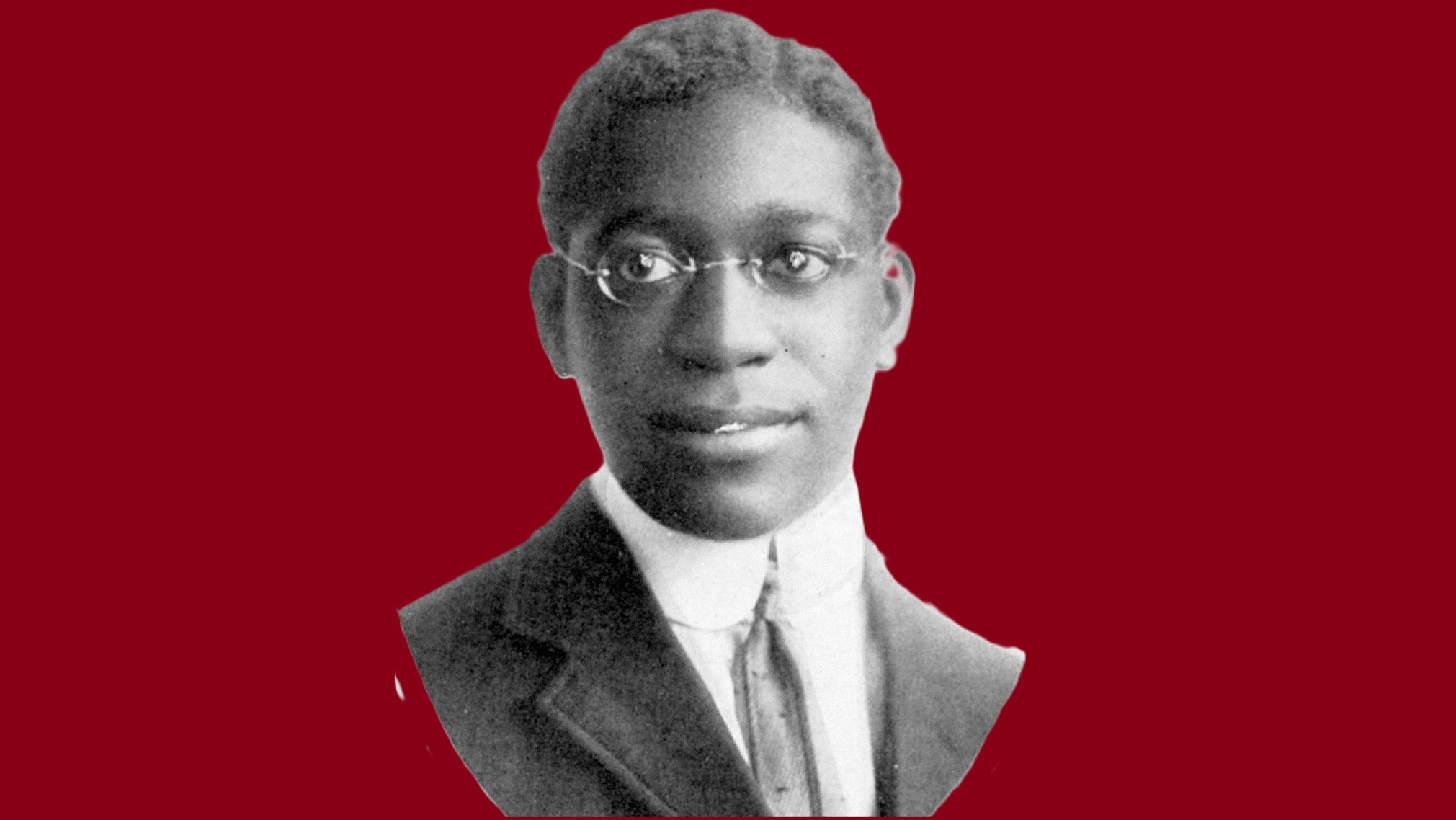
Patterson looks forward to what would be a milestone in international Black Communist organizing. The First International Conference of Negro Workers to be held in Hamburg, Germany in June, 1930, and sponsored by the Red International of Labor Unions with delegates coming from the countries and colonies of Africa and the diaspora in Europe, the United States, and Caribbean, with the largest group of participants coming from the U.S. As a young lawyer, William L. Patterson, was passionately engaged the Sacco and Vanzetti case which brought him into the Communist Party in 1926 through its American Negro Labor Congress and International Labor Defense, which he would eventually lead. Central to Patterson’s life’s work was the internationalization of the Black freedom struggle in the U.S., placing oppression here in the world-wide context of imperialism and colonialism. Perhaps best known for leading the charge of genocide in 1951 at the United Nations against the United States government for its role in two centuries of oppression.
‘Some Significant Features of the Coming Negro Workers’ Conference’ by William Wilson (William L. Patterson) from Negro Worker. Vol. 3 No. 1-2. January-February, 1930.
London, (the Labor Government permitting), will be the scene of the first international conference of Negro workers ever held. A Provisional Committee, composed of representatives from Negro working class organisations was created in Frankfurt, Germany, during the sessions of the Second Congress of the Anti-Imperialist League, for the purpose of c carrying out the necessary plans. The date of the Conference has been fixed for July 1, 1930. Such a conference would be of tremendous significance if we were to consider it solely from the viewpoint that it signalises the internationalisation of the Negro problem. But more than that it will very sharply focus the attention of the world of Negro workers upon the class aspects of their problems and made them appreciate the common interests between their struggles and those of other oppressed toiling masses in the colonies as well as the proletariat of the “mother” countries.
Millions of Negroes were ruthlessly torn from their native hand, Africa, centuries ago and forced into chattel slavery in the New World. Since then, they have remained separate and apart from each other, and from other peoples whose suffering parallelled their own. The coming conference will put an end to this unfortunate isolation, This is a factor of extremely far-reaching significance.
The place selected by the Provisional Committee will be an extremely significant factor in awakening the consciousness of the Negro masses. The international situation, which will have assumed an even more intensely critical character, will have even greater significance.
Perhaps it is no exaggeration to say that more than one-half of the Negroes in the world are subjects of the British Empire. These victims of British Imperialism will assemble in the very citadel of the Empire where they will discuss their problems and lay plans for an effective struggle against the their exploiters. What will be the answer of the “Labor” Government to these Negros?
Recent events in Gambia, Nigeria and Kenya, leave little room for speculation after the nature of the “Labor” Government’s answer. The enlightening effect of this answer will be truly tremendous. For this reason the choice of place for the conference was a particularly happy one and the position of the “Labor” Party enhances the value of the choice. This does not by any means begin to exhaust the significant features arising out of the selection of London as the scene of the conference. But a survey of the world situation and its direct relation to the conference is of tremendous importance. The conference will not only take place in a period of rising revolutionary activity in the working class movement of the world, but during a period when this revolutionary development is parallelled by the rise of a wave of revolutionary activity in the colonies and when the active role played by the Negro masses of the colonies and to the “mother countries has attained unprecedented m momentum and intensity. A picture the Congress cannot fail to examine presents, the Durban dead and wounded in the foreground, the upsurge in South Africa with the uprising in Kenya, where the black masses, denied access to all land which can be profitably cultivated, are in a position of extreme poverty. The savage attacks upon the workers of Gambia, West Africa, whose only” “crime” was that they sought to organise themselves; French Equatorial Africa, a sea of blood from the millions of black men and women done to death by the robber-seeking exploiters and reeking with the stenching of tens of thousands or more who have died of starvation; Nigeria with the bleeding carcasses still lying on the ground; Haiti, groaning under the iron heel of American Imperial ism; millions of Negroes in Latin-America, living in virtual slavery; the “independent” Republic of Liberia, forced by American Imperialism to enslave millions of natives. This is the picture which will cover every wall of the hall in which the International Conference of Negro Workers will be held. We cannot measure the significance of this. But there is more, recent events show that world economy is rapidly entering a period of profound crisis, In the “mother” countries every effort will be made to place the burden of this crisis upon the backs of the most exploited sections of their “own” working class and the already inhumanly exploited and oppressed masses of the colonies. For the Negro masses this will not only mean the passage of “native Bills” in South Africa, which lead directly to an intensification of their exploitation and oppression, a bloody reign of terror in East and West Africa; the ruthless attempt to stamp out every vestige of revolt in Haiti as well as in the Metropolitan centres; and a tremendous worsening of the living conditions. Social-Fascism and the Fascist organisations such as the American Legion, and the Ku Klux Klan, will be made to understand that insofar as Negroes are concerned it is “open season.” We will witness an increased utilisation of the theory bf inherent inferiority of colored peoples to broaden the base of the exploitation and oppression of the Negro masses and to quash any tendencies which the white class-conscious workers may exhibit to accept the racial struggles of the Negro masses as an integral part of the struggle against World Imperialism. This will be the economic and political situation of the world when the Negro workers are called into session in London.
More and more clearly will “Labor” Governments and Social-Democrats have exposed themselves as the enemies of these black workers. More clearly will the treacherous Negro reformists have proved their alliance with the enemies of the Negro masses. More clearly will imperialism have disclosed the fact that it views war, war against the Soviet Union, the Fatherland of the toiling masses of the world, regardless of race and color–as a way out of its dilemma. The process of militarisation in the colonies will have shown to the black masses the role to be assigned to them in this gigantic conflict, the necessity for organised,” revolutionary leadership will be apparent. The slogan of democracy for all people around which the 1914 imperialist war was fought, and the “rewards” accorded the Negro masses at the conclusion of this blood-bath will be paraded. The use to be made of these and similar slogans in the near future will be made known. These are “signs of the times” which will not be forgotten by those into whose hands the leadership of this conference has been committed. These are but a few of the factors which show that the International Conference of Negro workers will be a gathering of tremendous significance.
First called The International Negro Workers’ Review and published in 1928, it was renamed The Negro Worker in 1931. Sponsored by the International Trade Union Committee of Negro Workers (ITUCNW), a part of the Red International of Labor Unions and of the Communist International, its first editor was American Communist James W. Ford and included writers from Africa, the Caribbean, North America, Europe, and South America. Later, Trinidadian George Padmore was editor until his expulsion from the Party in 1934. The Negro Worker ceased publication in 1938. The journal is an important record of Black and Pan-African thought and debate from the 1930s. American writers Claude McKay, Harry Haywood, Langston Hughes, and others contributed.
PDF of full issue: https://www.marxists.org/history/international/comintern/negro-worker/files/1930-v3n1-2-jan-feb.pdf

