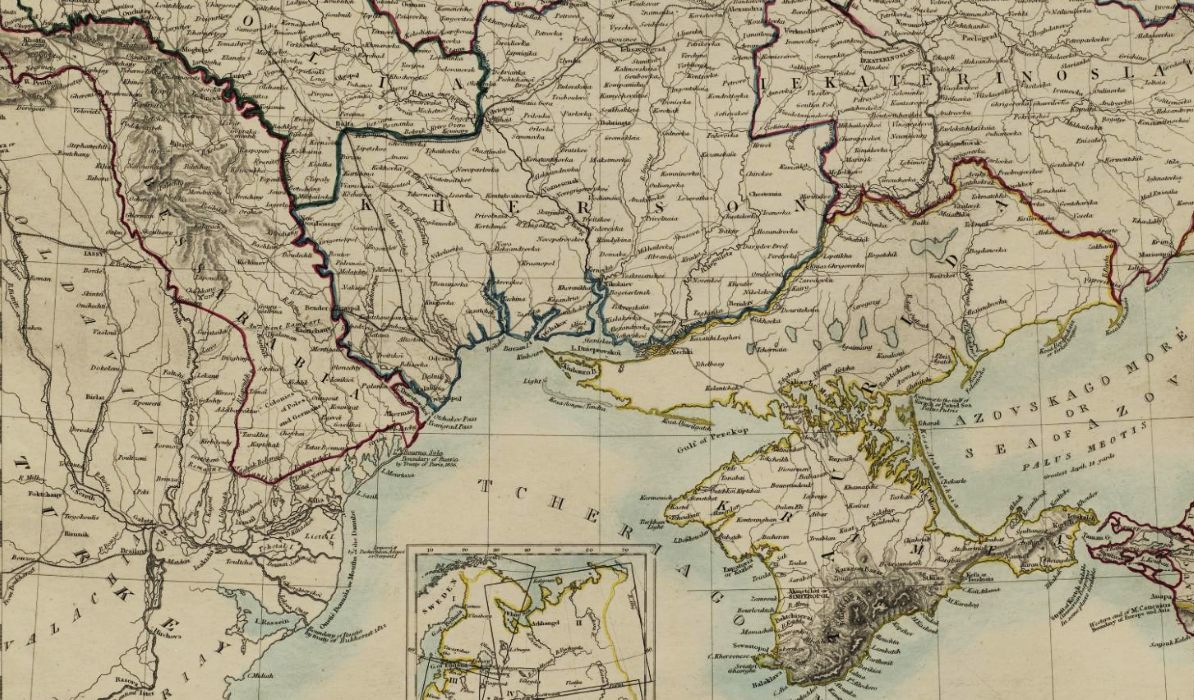
Still a conflict, the status of ‘Bessarabia’, on the border of today’s Moldova and Ukraine, ten years after it was brought into Romania in 1918, with repression and uprisings in its wake.
‘The Bessarabian Tragedy’ from International Press Correspondence. Vol. 8 No. 79. November 9, 1928.
Leading article of the “Pravda” of January 26th, 1928.
The so-called “Bessarabian Question” represents one of the most tragic sides of the postwar history of European imperialism, this system of abominable exploitation and violation which is cloaked by the hypocritical pacifism of the Second International, which has sold itself to the bourgeoisie.
The vilest methods of violation known to imperialism and its servants have been applied by Roumania and the Entente supporting it in order to subjugate Bessarabia, with the object of converting this country into a military base against the first victorious proletarian revolution. International provocations (the Roumanian spies, Inkultz and Katarren as statesmen in Bessarabia in 1917!); making use of the treachery of the Fascist general Shterbatchev, who betrayed Bessarabia to the Roumanian troops; making use of the treacherous aid of the Petlura people and the Social Revolutionaries; crushing of the Soviets; brutal and bloody violation not only of proletarian but also of bourgeois and peasant organisations in Bessarabia (two presidents of the Peasant Congress were shot down one after the other, soldiers with bayonets at the sessions of the Bessarabian “Preliminary Parliament” Sfatul Cerli); drownings in the Dniester and countless executions of Bessarabian revolutionaries, workers and peasants all these things happened at the beginning of 1918 when Bessarabia was occupied.
The ten years occupation of Bessarabia by Roumania is a bloody epoch. In the first four years alone there were 153 revolts of the Bessarabians against Roumania (according to the official Roumanian figures). Dozens of villages were burnt down in suppressing some of these revolts; thousands were murdered, hundreds of thousands suffered and fled abroad. During the ten years occupation, 30,000 Bessarabians have been shot by the Roumanians; 300,000 Bessarabians emigrated abroad.
How terrible must that system of economic exploitation which is maintained at the price of such incredible sacrifices. The working masses of Bessarabia groaned and are still groaning under the weight of the threefold pressure: that of the Entente powers, that of the Roumanian hangmen and that of their “own” landowners and capitalists. During the occupation the industrial production and the production of grain has sunk approximately by one half. The incredibly high taxes, prices and customs duties, the lack of land, chronic unemployment and starvation wages keep the workers and the peasantry on the verge of misery.
And all this with the approval of the League of Nations, the “Guardian” of the suppressed peoples of Europe! And all this in the immediate neighbourhood of Soviet Ukrainia and the Autonomous Moldavian Soviet Republic, where the population has overcome the poverty and misery of the pre-war years and is freely developing, economically, politically and culturally. The occupation of Bessarabia by Roumania bears a thoroughly robber-like character, so that even the Second International was compelled at one time, under the pressure of the masses, to protest against the action of Roumania. But already in the year 1920, this same International approved the action of the imperialist governments by signing the “Treaty” on the separation of Bessarabia from the Soviet Union without the two parties mainly interested in this treaty the Bessarabian population and the Soviet Union being consulted.
The Soviet Union has repeatedly declared that it abandons once and for all any claim to Bessarabia based on the former Tsarist rule over Bessarabia. But the Soviet Union just as emphatically refuses to recognise in any form the Roumanian rule over Bessarabia which is based upon bayonets, gallows and the annihilation of all the rights of the Bessarabian people. The Soviet Union proposed and proposes that a free plebiscite be carried out, by which the population of Bessarabia shall have the opportunity, free from the threats of bayonets, of expressing its sovereign will regarding the constitution of its State.
This unchanged attitude of the Soviet Union’ is well known to all the peace mongers of the League of Nations; but they do not take any steps to hold a plebiscite in Bessarabia, because they know perfectly well what sympathy the working masses of Bessarabia cherish towards the Soviet Union. They are particularly afraid of an expression of this sympathy at the present time, when Great Britain, which plays first fiddle in the League of Nations, is engaged in consolidating the “frontier barriers” around the Soviet Union in preparation for war adventures.
This is the reason why we observe of late a certain change of attitude in the Roumanian press. If hitherto the Roumanian newspapers unceasingly maintained that all the Moldavians live only in occupied Bessarabia, and that the Autonomous Moldavian Republic is an artificial thing “without Moldavians”, the press is now beginning to cry out about the many hundred thousands of Moldavians living on the Left bank of the Dniestr and longing to be united with their brothers on the right bank, of course under the high hand of the degenerate princes of the Roumanian royal family. In this “new policy” we must see a new tendency against the Soviet Union with which Roumanian “public opinion” has been inoculated by British imperialism.
The workers and peasants of the Soviet Union are not afraid of such threats. On the day of mourning on the occasion of the tenth anniversary of the Roumanian robber-like occupation of Bessarabia, they demonstrate their solidarity with the workers and peasants of Bessarabia and call upon them to follow in their country the example of the Soviet Union, which has found the only correct way to their emancipation, to promoting and developing economy and culture and to annihilating every national and other yoke.
We bow our heads before the tens of thousands who have fallen at the hands of the Roumanian boyars in the towns and villages of Bessarabia, and express our firm belief that the hour is not distant when the European proletarian revolution will once and for all sweep aside the whole abominable and rotten system of European imperialism and destroy every possibility of maintaining or restoring such profoundly tragic “questions” as the Bessarabian question.
International Press Correspondence, widely known as”Inprecorr” was published by the Executive Committee of the Communist International (ECCI) regularly in German and English, occasionally in many other languages, beginning in 1921 and lasting in English until 1938. Inprecorr’s role was to supply translated articles to the English-speaking press of the International from the Comintern’s different sections, as well as news and statements from the ECCI. Many ‘Daily Worker’ and ‘Communist’ articles originated in Inprecorr, and it also published articles by American comrades for use in other countries. It was published at least weekly, and often thrice weekly.
PDF of full issue: https://www.marxists.org/history/international/comintern/inprecor/1928/v08n06-feb-02-1928-Inprecor-op.pdf

