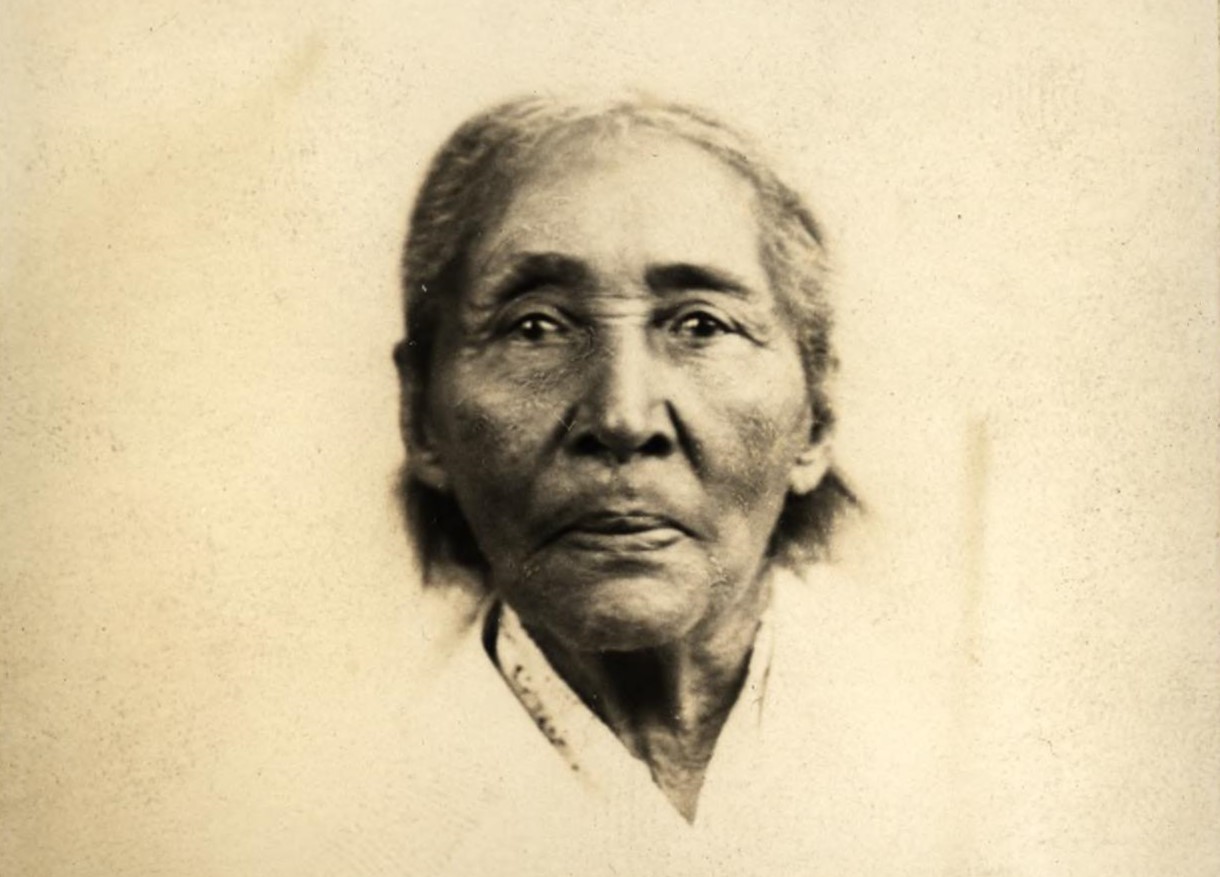
An extraordinary early letter from Parsons on the racist reality of the U.S. and the specter of a righteous, avenging, Black revolt. Born in bondage, the early life of Lucy Parsons, as you would expect, is obscure. She seems to have been born in bondage around 1851, likely in Virginia, to an enslaved women named Charlotte. As the advancing Union Armies threatened her enslavers, they relocated to Texas in 1863. Either liberated by the end of the war, or escaping with her mother and, like so many newly free, settled in Waco, Texas. Lucy was still a teenager, already previously married and having buried an infant child when she met the person she would be intimately associated with the remainder of her long, eventful life. Albert Parsons was a former Confederate soldier who became a RADICAL Republican, leading interracial militias defending freeman and pro-Reconstruction Southern whites. His life and death, along with his Haymarket martyrs, will always stand as watershed for our movement. Texas Reconstruction saw ‘inter-racial’ marriage briefly legal, with Lucy and Albert marrying in 1872. Shortly after, the couple moved to Chicago and would become major figures in that city’s vibrant, multi-national, revolutionary working-class political life. Working as a seamstress, and contributing to the era-defining Alarm newspaper as editor, distributor, and author, she also involved herself in all manner street and shop level activities of the class war. While she did not dwell on her racial identity, indeed there are contradictory statements from her on her ancestry, as this article makes clear it is hard to imagine the possibility of any other known leftist of the time making such a statement.
‘The Negro’ by Lucy E. Parson from The Alarm (Chicago). Vol. 3 No. 2. April 3, 1886.
Let Him Leave Politics to the Politician and Prayers to the Preacher
Who has stood upon the seashore and watched the weird dash of the ceaseless waves and has not become tired of their monotonous sameness? Still there was occasionally a wave which could attract and fix our attention for the time being by rearing its cap above the rest and thus become conspicuous.
Who but a devoted soul in this labor movement does not at times become tired—a weary tiredness, verging on a disgust at the apparent sameness and dreary monotony of the wage system as depicted by those engaged in the noble work of exposing the hideous inequalities of the present economic system? Yet, like the waves, there arises amid all this monotony a wrong sometimes as much or more glaring in all its details that not only is our attention attracted but our sympathies are enlisted.
Who, surrounded even as we are in the midst of organizations whose mission it is to depict the wrongs to which the propertyless class are subjected, could help but stand aghast and heave a sigh and perchance drop a tear as they read the graphic account flashed to us of the awful massacre of the poor and defenseless wage-slaves in Carrolton, in the state of Mississippi? Defenseless, poverty-stricken, hemmed about by their deadly enemies; victims not only to their misfortunes, but to deep-seated, blind, relentless prejudice, these our fellow-beings are murdered without quarter.
This is the history in brief: The plain unvarnished facts of this most damnable outrage which, with it and similar occurrences almost innumerable of a like nature perpetrated upon these people, should bring a tinge of indignation to the cheek of every soul who can at all comprehend the meaning of the word Liberty!
While these are the plain facts, what is the lesson it teaches? Are there any so stupid as to believe these outrages have been, are being and will be heaped upon the Negro because he is black? Not at all. It is because he is poor. It is because he is dependent. Because he is poorer as a class than his white wage-slave brother of the North.
And to the Negro himself we would say your deliverance lies mainly in your own hands. You are the modern Helot. You sow but another reaps. You till the soil but for another to enjoy. Who is this other one who continues to enjoy the fruit of your industry? Are they not the idle few who you but lately acknowledged as your masters, and are not these loafers practically your masters yet in so far as absorbing all your labor product without even being compelled to return you sufficient to keep you in decent food and clothes? For they are not even actuated by the monied interest which they had in you in former years. The overseer’s whip is now fully supplanted by the lash of hunger! And the auction block by the chain-gang and convict cell!
The same land which you once tilled as a chattel slave you still till as a wage-slave, and in the same cabin which you then entered at eve not knowing but what you would be sold from wife and little ones before the morrow’s setting sun, you now enter with dread lest you will be slain by the assassin hand of those who once would simply have sold you if they did not like you.
Verily your situation is still deplorable. Will the soft, smooth words of the bidder for your vote emancipate you from these conditions? Who has tried the delusive thing more faithfully than you have? Has it done you any good? Will prayer stay the hand of the oppressor? Who has prayed with more zeal than you? Of what practical good has it ever been to you? Then clearly your road to redemption lies not along these paths. But your course in future, if you value real freedom, is to leave politics to the politician, and prayer to those who can show wherein it has done them more good than it has ever done for you, and join hands with those who are striving for economic freedom.
Can you divine what this freedom means? Homes for the homeless producer of today, and only those who produce shall have them, and no longer shall the industrious many feed the idle few, who riot in luxury and ease.
As to those local, periodical, damnable massacres to which you are at all times liable, these you must revenge in your own way. Are you deaf, dumb and blind to the atrocities that you are subjected to? Have the gaping wounds of your dying comrades become so common that they no longer move you? Is your heart a heart of stone, or its palpitations those of cowards, that you slink to your wretched abode and offer no resistance? Do you need something to nerve you to action? Then look in the tear-stained eye of your sorrowing wife and hungry children, or think of your son, who has been sent to the chain-gang or perhaps murdered upon your door-steps. Do you need more horrible realities than these to goad you on to deeds of revenge that will at least make your oppressors dread you? And this is the beginning of respect! Do you ask me what I would do if I were like you, poor, unarmed and defenseless? You are not absolutely defenseless.
For the torch of the incendiary, which has been known to show murderers and tyrants the danger line, beyond which they may not venture with impunity, cannot be wrested from you.
The Alarm was an extremely important paper at a momentous moment in the history of the US and international workers’ movement. The Alarm was the paper of the International Working People’s Association produced weekly in Chicago and edited by Albert Parsons. The IWPA was formed by anarchists and social revolutionists who left the Socialist Labor Party in 1883 led by Johann Most who had recently arrived in the States. The SLP was then dominated by German-speaking Lassalleans focused on electoral work, and a smaller group of Marxists largely focused on craft unions. In the immigrant slums of proletarian Chicago, neither were as appealing as the city’s Lehr-und-Wehr Vereine (Education and Defense Societies) which armed and trained themselves for the class war. With 5000 members by the mid-1880s, the IWPA quickly far outgrew the SLP, and signified the larger dominance of anarchism on radical thought in that decade. The Alarm first appeared on October 4, 1884, one of eight IWPA papers that formed, but the only one in English. Parsons was formerly the assistant-editor of the SLP’s ‘People’ newspaper and a pioneer member of the American Typographical Union. By early 1886 Alarm claimed a run of 3000, while the other Chicago IWPA papers, the daily German Arbeiter-Zeitung (Workers’ Newspaper) edited by August Spies and weeklies Der Vorbote (The Harbinger) had between 7-8000 each, while the weekly Der Fackel (The Torch) ran 12000 copies an issue. A Czech-language weekly Budoucnost (The Future) was also produced. Parsons, assisted by Lizzie Holmes and his wife Lucy Parsons, issued a militant working-class paper. The Alarm was incendiary in its language, literally. Along with openly advocating the use of force, The Alarm published bomb-making instructions. Suppressed immediately after May 4, 1886, the last issue edited by Parson was April 24. On November 5, 1887, one week before Parson’s execution, The Alarm was relaunched by Dyer Lum but only lasted half a year. Restarted again in 1888, The Alarm finally ended in February 1889. The Alarm is a crucial resource to understanding the rise of anarchism in the US and the world of Haymarket and one of the most radical eras in US working class history.
PDF of full issue: https://digitalcollections.crl.edu/record/1117356?ln=en

