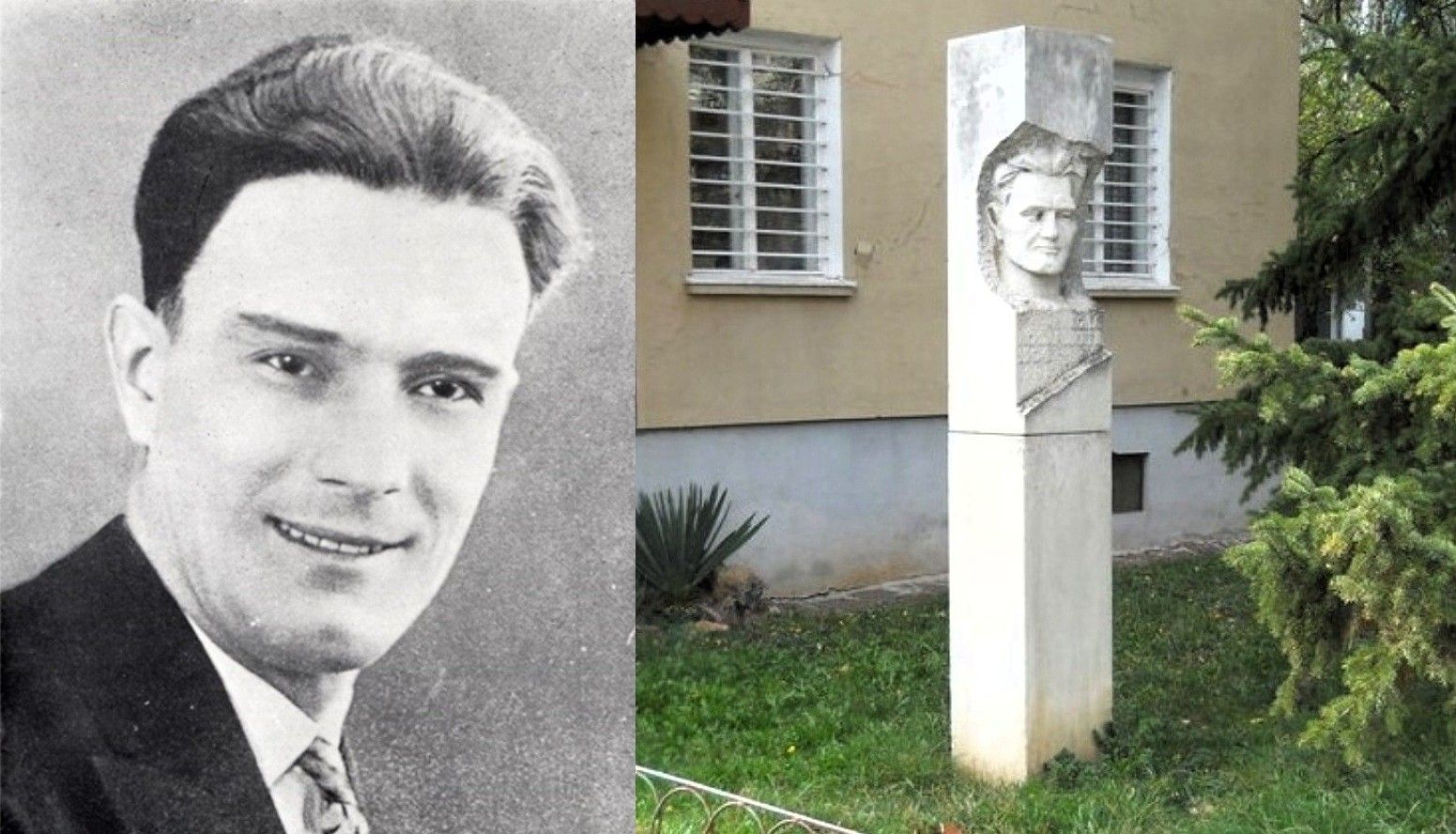
A leading member of the Bulgarian Communist Party, Nikola Kofarjiev, was murdered at age 27, gun in hand fighting off a police ambush on the streets of Sofia. A Young Communist leader and a veteran of the armed, anti-fascist September Uprising in 1923, he would study at Leningrad University and work for the Comintern before returning to lead the “Bolshevised” Bulgarian Party, becoming Secretary of its Central Committee. A look at his life, death, and the context in which he was killed.
‘The Murder of Nikola Kofarjiev and the Fresh Wave of White Terror in Bulgaria’ by P. Iskrov from Communist International. Vol. 8 No. 20. December 1, 1931.
COMRADE KOFARJIEV (Sasho) has been murdered by the hangmen of the Bulgarian proletariat.
A severe loss has been inflicted on the Communist International, on the Bulgarian Communist Party and on the proletariat of Bulgaria. The secretary of the Bulgarian Communist Party, comrade Nikola Kofarjiev has been sniped down by his murderers in a street of Sofia. Judging by the police information, on learning that Kofarjiev was in Bulgaria, the police organised the pursuit. For three nights the police ambuscade lay in wait for Nikola Kofarjiev. On October 30th it carried through its plan. While crossing the street, Nikola Kofarjiev and a comrade were caught in the ring of this ambuscade and in the exchange of shots which broke out comrade Kofarjiev fell dead, revolver in hand, while his comrade was wounded and arrested. According to the police information, this is Racho Ponev, a textile worker from Slivna, and a member of the Central Committee of the Communist Party.
This foul murder of comrade Kofarjiev is accompanied by an unchecked fascist terror exercised against the revolutionary working-class movement and its vanguard, the Communist Party, such as has not been seen since the time of the darkest reaction which followed the coup d’état of June 9th, 1923. The new Government of fascist dictatorship, the “democratic and agrarian” Government, has greatly intensified the persecution of the revolutionary proletariat and of the Communist movement. The last four months alone provided a whole series of new victims of this reign of terror; the authorities fired on strikers in Yambol, Danoilov and Stoyanov (July 22nd), on poor peasants in Peterchov, Stoyanov; Dyanoy, in the villages of Dolbaki and Kran, on the occasion of the International Youth Day (September 6th), in Chelakov. In October, on one of the streets of Sofia, the police wounded severely and arrested the young worker, Pelo Ivanov Pelovski. At the police station he was subjected to torture to secure evidence.
The Government of the ‘democrat’ Moshanov and the agrarian Gichev, makes a practice of mass arrests, of animal-like brutalities and cruel tortures inflicted on the leaders of the working-class movement and of Communism. Right now, as these very lines are being written, in the torture-chambers of the Bulgarian police, hundreds of arrested workers and working women are being subjected to tortures and sufferings such as bring to life again the black pages of the bourgeois dictatorship of the first half of 1925. A few days after the murder of Kofarjiev, the tobacco worker, Christ Kochev, and the student Pacho Nenov were tortured to death in the police headquarters. The former was accused by the police of being treasurer, the latter of being the manager of the technical section of the Central Committee of the Bulgarian Communist Party. At that same time Racho Tsonev and the proletarian poet Hrito Radevski were carried away half-dead from the police headquarters, no one knows whither. It is not known whether they are still alive or not. Even according to the information of the bourgeois Press, during the last few days more than 120 persons have been arrested in Sofia, including thirty women. Mass arrests are going on in Plovdiv, T. Pazardjie, Slivna and other cities. The deputies belonging to the Workers’ Party who speak at the meetings of workers and peasants, are subjected to manhandling by the police and especially by organised fascist bands. Through the mouth of the Minister of Justice the Government declares in the Press that it is preparing for the suppression of the legal Workers’ Party, as it is merely another form “of the Communist Party.” At the same time, sensational reports are being circulated about the seizure of the “archives of the Communist Party.” The corrupt papers, in touch with the police, publish “figures” giving the budget of the Communist Party, in which there is supposed to be an item of revenue from dues paid by the deputies of the workers’ parliamentary group.” In the Press the most vile misrepresentations of the political line adopted by the Communist Party and the Communist International are resorted to in order to give the idea that the Communist Party in Bulgaria is engaged in the direct preparation for an armed insurrection. In order to lend plausibility to this rumour in the eyes of politically unconscious strata of the toiling masses, the traditional lie has been let loose, about an “instruction for organising an armed insurrection” discovered in the “archive” of the Communist Party (and in the documents found on Nikola Kofarjiev). In a word, the Moshanov-Gichev Government, following the example of Lyapchev and Tsankov, do not despise any means, even absurd fabrications, in order to prepare “public opinion” amongst all the bourgeois and the foreign capitalist Governments in favour of the fresh wave of violence against the working-class and Communist movements in Bulgaria.
The Central Committee of the Communist Party of Bulgaria has appealed to the masses, protesting against the murder of the secretary of the Party, comrade Nikola Kofarjiev, and against the new raids made on the workers’ quarters, arrests, tortures and murders (“suicides,” as the police call them) at police headquarters. At the same time, the Central Committee of the Communist Party of Bulgaria has appealed to the German, French, Czechoslovak, Dutch and Swiss Communist Parties; in its appeal it points to the fact that the Government is getting ready to prohibit all legal revolutionary organisations of the workers, especially the Workers’ Party and the independent trade unions. It asks their parliamentary and extra-parliamentary support in the struggle which the Central Committee of the Communist Party of Bulgaria is waging against the murders, the reign of terror and the break-up of the workers’ organisations in Bulgaria.
From all parts of the country there come protests made at meetings of workers and peasants against the murder of the leader of the Communist Party, comrade Kofarjiev. The rising wave of the workers’ movement is shown by a whole series of facts, during the last few days. For example, in Eski Jumai (Northern Bulgaria) an election meeting was held just recently. The police attacked the people at the meeting, but the workers not only did not retreat in the face of armed force, but even organised mass resistance, defended themselves with stones, sticks, etc., and even brought into operation the fire-hoses which they had seized. In Pazarjik similar events took place (Southern Bulgaria), the people taking part in a protest meeting against the beating up of the worker deputy Konstantin Rusinov, by the Government agents. They acted in the same manner. The workers succeeded in beating off the attack of the police and bringing the meeting to a close.
The clashes with the police and the troops in many cities and villages, the revolutionary character of the meetings and demonstrations with active participation and stubborn self-defence by the masses, even though self-defence has not yet been given an organisational form, the united front of the toiling peasants with the striking workers, the collection and transfer of supplies by the peasants for the strikers in a number of cities—all these are facts which show that the masses are passing over ever more determinedly to the counter-offensive against the fascist reign of terror of the new “democratic-agrarian” Government, which has already bespattered itself with the workers’ blood. In the ranks of the Agrarian Union, which along with Social-Democracy, is the main support for the dictatorship of the police and Fascists, a process of ferment has begun. A series of village organisations of the Union have openly expressed their disappointment at the participation of the Agrarian Union in the Government of bourgeois dictatorship, have abandoned its ranks and gone over to the legal Workers’ Party.
The fresh offensive of the Government and the employers upon the standard of living of the masses of workers and peasants is with even greater force intensifying the class battles in Bulgaria. The Government is bringing into effect a fresh reduction in the wages of civils servants. At the same time in the factories a most unheard-of act is being carried out: the wages of the workers are being cut by 20 to 30 percent. Now the Government is attacking even the miserable doles given to a small number of the unemployed. With winter approaching a large number of tobacco warehouses and other businesses are being closed and the numbers of unemployed are growing. Everywhere in the villages, the domestic chattels of the poor and middle peasants are being auctioned off for failure to pay taxes and debts. Moshanov and Gishev are preparing a law to levy fresh taxes on the articles of mass consumption. The Government has raised the price of bread by 30 percent, other products of prime necessity have also risen in price. Under the mask of “stabilising prices” and “restricting cartels” a new campaign of robbery is being organised, to cover the deficit in the Government’s budget. All this leads to the strengthening of the revolutionary movement. The masses of workers and peasants are more and more determinedly acting under the slogans of the Communist Party. On November 1st, during the Fascist raids and pogroms, the municipal elections took place in goo villages and 19 cities the outcome clearly shows the new impetus imparted to the class struggle since the change in the Government, in June of this year. In these elections the revolutionary bloc of workers and peasants took second place after the Government, while in the parliamentary elections of June 21st, of this year, it was third. The Social-Democratic Party was again left dangling at the tail of the weakest groups of the bourgeoisie and petty bourgeoisie. According to the official figures, the Government received 256,898 votes, the Workers’ Party 50,753 (in reality, about 55,000). The Democratic Alliance 31,594, the Social-Fascists 5,165, etc. In a number of villages the municipal councils fell into the hands of the revolutionary peasantry. In the cities, the revolutionary workers, and the mass of the poor, which follows them, were also successful at the polls. In Bratza, which in the past has been a stronghold of Social-Fascism, and from which the Social-Fascist leader, Pastukhov, has invariably been returned to Parliament (of course, with the help of the police), the list of the Workers’ Party received 758 votes to 182 cast for the Social-Democratic Party. In Eski-Jumai, after a street battle by the workers against the police, the Workers’ Party list received 628 votes (89 for the Social-Fascists and Artisans), in Berkovitza 307 (10 for the Social-Fascists), in Palatiurishta 474 (176 for the Social-Fascists), in Peshtera 409 (152 for the Social-Fascists), in Pirdo 204 (34 for the Social-Fascists), etc.
Another fact which fully indicates the revolutionary feeling of the masses is the mass election of a worker and peasant delegation to the U.S.S.R. The Government has forbidden the first worker delegate to the U.S.S.R., the deputy Petko Napetev, to make public reports on his visit to the U.S.S.R. At mass meetings the workers and toiling peasants have already chosen 2,000 worker and peasant delegates to be sent to the U.S.S.R. Of course, the workers realise that such a huge delegation cannot be sent, but they want in this way to show in fact, their readiness to fight by every means, both to defend the U.S.S.R. and to attack the Fascist dictatorship of Bulgaria, under its new “democratic-agrarian” label.
All the activity of the murdered secretary of the Communist Party of Bulgaria, comrade Kofarjiev (Sasho), was closely bound up with this fresh wave of revolutionary advance and within this wave, towards strengthening the organising and guiding role of the Communist Party.
After passing through the dark school of apprenticeship in one of the barber’s shops of Sofia, Nikola Kofarjiev became a Young Communist at the age of 15 or 16 years. At 17 he made application to enter the Communist Party. As a minor he could not receive a Party card, but he was permitted to attend the Party meetings and to take an active part in the work of the Party. Thus, while still a youngster, he became an active party-worker. He himself used to relate that he had been urged on to the path of revolutionary enthusiasm by the October Revolution and the victory of the Red Army over the imperialist interventionists and the White Guard generals. A true son of his Leninist era, the era of the proletarian revolution, he entered the movement at the crest of the revolutionary wave in Bulgaria, which followed the imperialist war of 1914-1918. The political awakening of Nikola Kofarjiev coincided with the awakening of his Communist consciousness.
The September insurrection of 1923 gives Kofarjiev his revolutionary christening. The height of his revolutionary activity, as worker and leader in the Young Communist League and in the Party, is indissolubly linked up with the September insurrection. He took part in preparing it and carrying it through. He organised the armed struggle of the 8,000 miners of Pernik. In the September insurrection he came to the fore as the leader of the Young Communists—first, in its largest organisation, in Sofia, and later of the entire Young Communist League. Kofarjiev shattered the opportunists and liquidators, the followers of Devitiyunev and the enemies of the September insurrection within the Party. When the right-opportunist wing revolted against the revolutionary insurrection and its leader, the Communist Party, Kofarjiev proved to be one of those Young Communists and young party workers who fought most energetically for the position of the Communist International and the Party on June 9th, and saw the triumph and correctness of this position in the slogan for the general insurrection of September 22nd and 23rd. But for the Party the September uprising was not merely an historic act of the masses, it was a policy, a line, a programme, the only perspective for the proletariat to set itself free from capitalism. It is just this which comrade Kofarjiev grasped in September, 1923, and this was characteristic of that Kofarjiev, our Sasho, who perished on October 30th so prematurely and tragically by the bullet of the hangmen of the September insurrection.
The revolutionary underground work was the practical and theoretical school of Marxism-Leninism for Sasho. In the revolutionary underground work he became the leader of the Young Communists, later of the Party. His talent, his natural capacities, his supreme devotion to the proletarian revolution, to the Communist International and the Young Communist International came to full bloom under conditions of underground work. There he showed himself to be a remarkably talented mass-leader; he always went in the vanguard of the struggle against the liquidators and renegades of the underground Party, and was a pioneer of the struggle and practical work in building up the legal mass organisations of the proletariat and its younger generation.
Anti-militarist work is the sphere in which comrade Kofarjiev displayed a particularly fine sense, daring and devotion, as early as the first period following the defeat of the insurrection of 1923. He and the comrades who were working with him in creating soldiers’ organisations, even in 1923-1925 gave the first practical experiences of the Party’s leadership of the struggle against militarism in Bulgaria. He was one of the first comrades to grasp, before the rest, after the defeat of the 1923 insurrection, that the Communists must strive to disintegrate the armed forces of the bourgeoisie, for that was one of the chief conditions needed for the victory of the revolution. In the history of the Young Communists and of the Communist Party in Bulgaria the name of comrade Kofarjiev will remain a symbol of the revolutionary education of new cadres in anti-militarist work.
A revolutionary, a Bolshevik, capable of seizing upon and independently elaborating any militant problem of the Bulgarian or international Communist Movement, comrade Kofarjiev, while still secretary of the Young Communists, was advanced to leading positions in the Party. The Party elected him a member of the Central Committee and at the same time at the Congress of the Young Communist International he was elected a member of its Presidium and Executive Committee. In 1926-1927, at his post as secretary of the Young Communist League, comrade Kofarjiev fought to correct the right-wing, opportunist errors (unification of the proletarian class organisation of youth, with the Socialist Union of Youth, a wrong attitude towards the guiding role of the Young Communist International in the World Movement of the Young Communists), which had been made by the Central Committee of the Bulgarian Young Communist League. Under comrade Kofarjiev’s leadership, the errors were corrected. In 1930-1931, now as secretary of the Communist Party, Kofarjiev was struggling to carry into effect the August resolution (1930), passed by the Political Secretariat of the Executive Committee of the Communist International regarding the position and tasks of the Communist Party of Bulgaria. With his return a fresh current was to be felt in dealing with Party questions. A detailed inspection of each Party organisation, beginning. with the most important industrial centres, the study of the conditions of work peculiar to each organisation—this is what comrade Kofarjiev succeeded in organising. Under his leadership began the practical progress of the Communist Party of Bulgaria towards Bolshevisation as had been indicated to it by the Communist International in its resolutions on the Bulgarian question. Kofarjiev was a genuine pioneer of the general line of the Communist International in Bulgaria, and in the history of our Party his name will remain forever bound up with the most decisive moment of the turning of the Party, under the leadership of the Communist International and based on the lessons of the September insurrection towards its reorganisation into a genuinely Bolshevik Party.
Of late Kofarjiev had raised in the most resolute manner the question of self-criticism as the fundamental method for the work of the cells and Party organisations; on the basis of his own experience he pointed out (by the way, he was taking part personally in the conference of several of the provincial organisations at the very time the police were searching for him) the concrete links which every organisation must lay hold of at the present moment.
Comrade Nikola Kofarjiev remains a bright name in the history of the Bulgarian and International Communist Movement. The cause of comrade Kofarjiev will be carried forward by tens and hundreds of thousands of workers and toiling peasants in Bulgaria. Kofarjiev the Bolshevik, was born from a drop of the same blood as Karl Liebknecht. From the blood of the Bolshevik comrade Kofarjiev will be born new proletarian, Bolshevik cadres, and they will carry on to its final victory, after the example of the October Revolution, the struggle which Nikola Kofarjiev carried on and for which he died.
There were a number of journals with this name in the history of the movement. This ‘The Communist’ was the main theoretical journal of the Communist Party from 1927 until 1944. Its origins lie with the folding of The Liberator, Soviet Russia Pictorial, and Labor Herald together into Workers Monthly as the new unified Communist Party’s official cultural and discussion magazine in November, 1924. Workers Monthly became The Communist in March ,1927 and was also published monthly. The Communist contains the most thorough archive of the Communist Party’s positions and thinking during its run. The New Masses became the main cultural vehicle for the CP and the Communist, though it began with with more vibrancy and discussion, became increasingly an organ of Comintern and CP program. Over its run the tagline went from “A Theoretical Magazine for the Discussion of Revolutionary Problems” to “A Magazine of the Theory and Practice of Marxism-Leninism” to “A Marxist Magazine Devoted to Advancement of Democratic Thought and Action.” The aesthetic of the journal also changed dramatically over its years. Editors included Earl Browder, Alex Bittelman, Max Bedacht, and Bertram D. Wolfe.
PDF of full issue: https://www.marxists.org/history/international/comintern/ci/vol-8/v08-n20-dec-01-1931-CI-grn-riaz-OC.pdf

