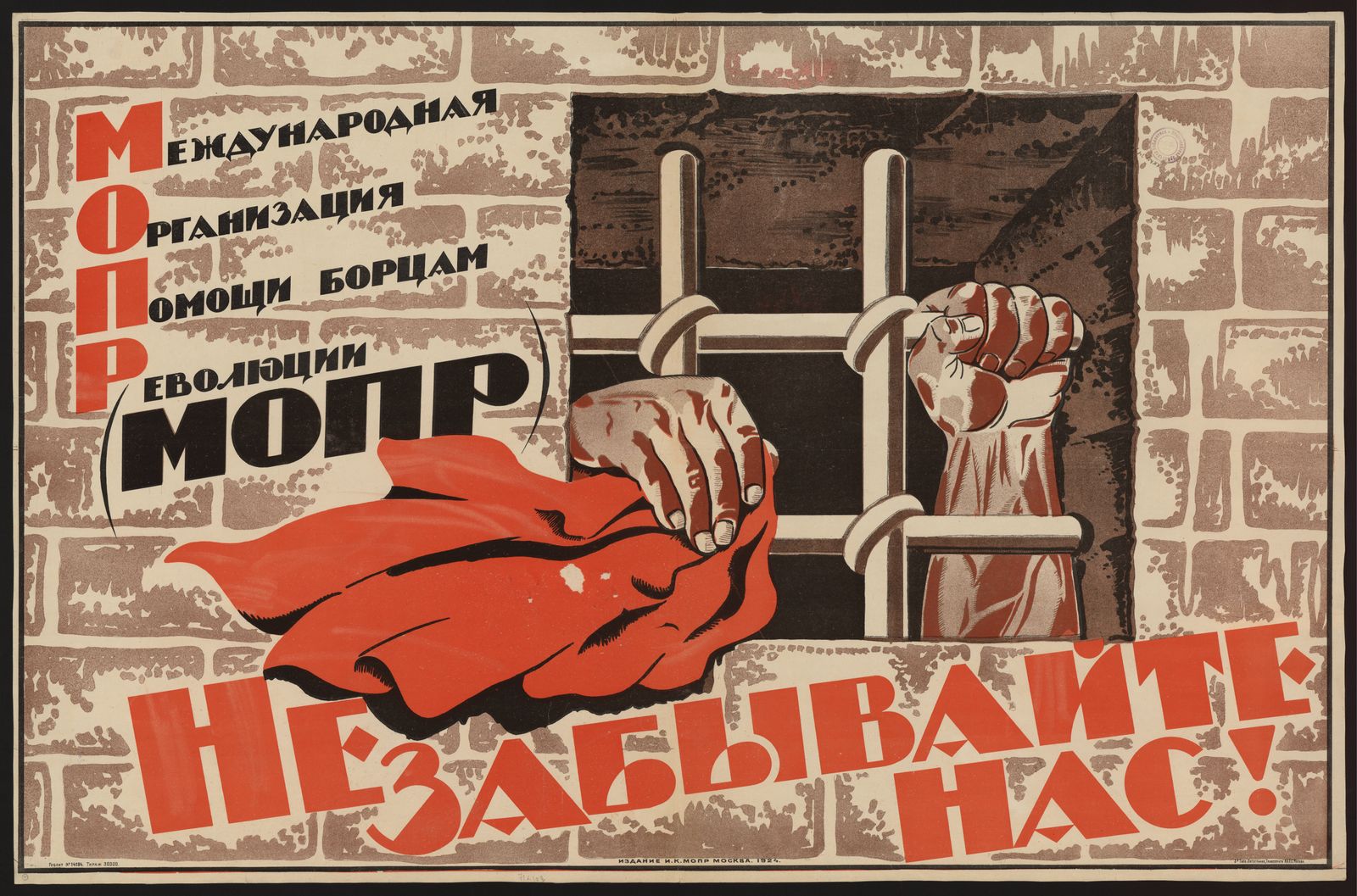
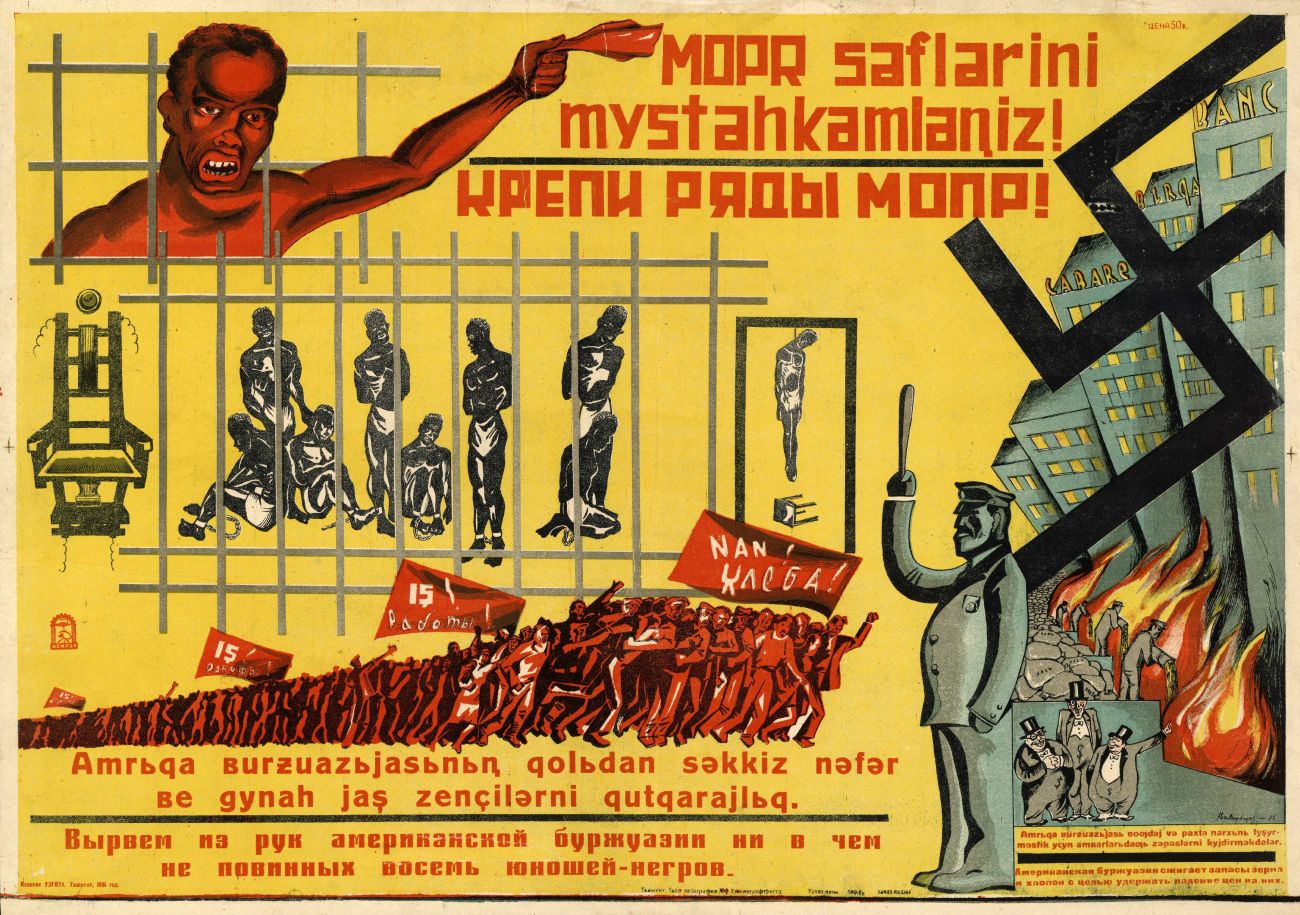
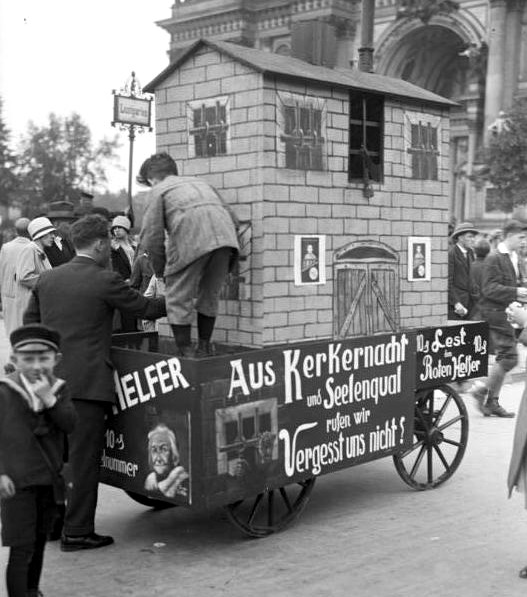
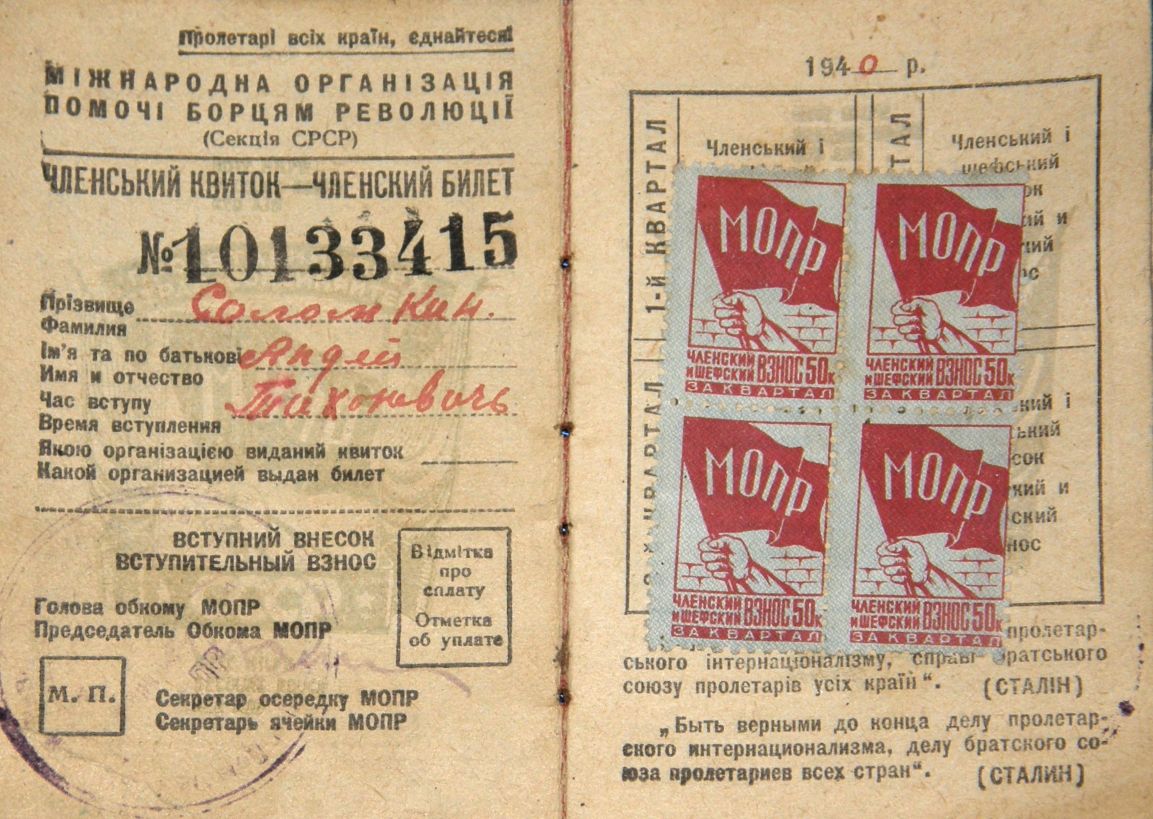
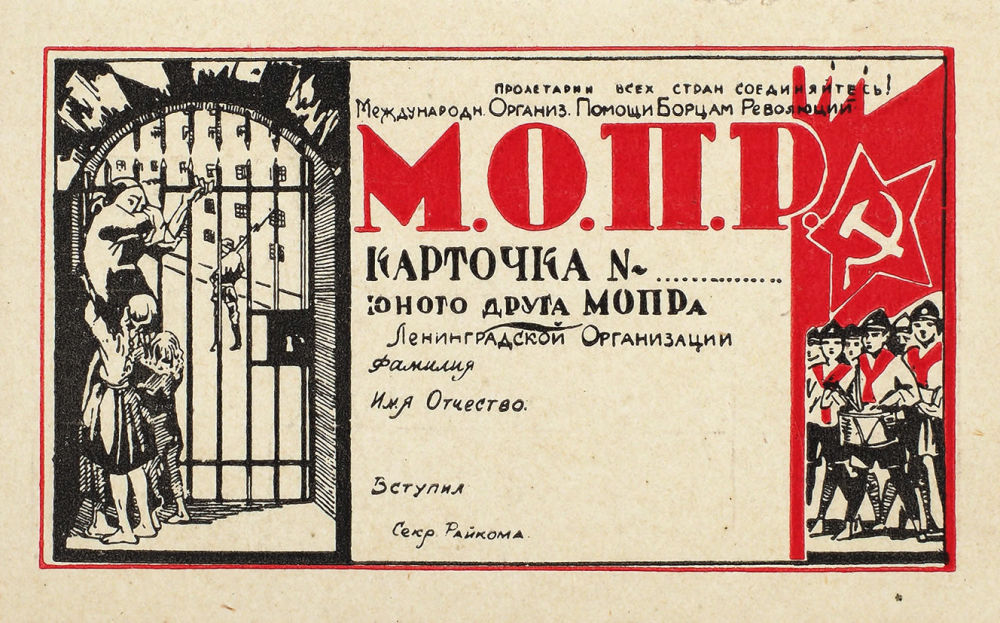
A major organ in the defense of our class, a project which needs reborn. A dossier on the first year’s work of International Red Relief (sometimes called I.R.A.–International Red Aid) from its leading German figure Ehrenfried Wagner with articles ‘The Suffering of the Children of the German Barricade Fighters,’ ‘One Year of “Red Relief,”‘ ‘March 18, An International Red Relief Day,’ ‘The Youth and the Red Relief,’ ‘The Tasks of the International Red Relief,’ ‘March 18–A Step forward for Red Relief.’ One of the Comintern’s most important auxiliary organizations, the International Red Aid (also known by its Russian acronym MOPR) was established following the Fourth Comintern Congress, and formally called the International Organization for Assistance to Fighters for Revolution. Originally a response to the persecution of German revolutionaries in the Weimar’s class war, this international organization became dedicated to the support of class war prisoners and their dependents world-wide, while also raising awareness of the plight of political prisoners around the world. First led by veteran Polish revolutionary Julian Marchlewski (Karski), while Elena Stasova coordinated its Soviet work, and the author Ehrenfried Wagner leading its most important section, Germany’s Rote Hilfe. With its inaugural conference held in Moscow around 1925’s Fifth World Congress, it mandated that all sections begin this essential work. Eventually the MOPR would have nearly sixty national affiliate and produced fifty-eight publications in two dozen languages. Not all were mass organizations, with many being committees working specific cases. The United States had among the most active and successful affiliate, the International Labor Defense. Campaigning throughout the 1920s and 30s on every continent (Madagascar had a section), the Red Aid undoubtedly saved many lives and gave invaluable solidarity and succor to those effected by political persecution before its 1937 shuttering. The annual day chosen to mobilize and highlight the persecution of political prisoners was March 18, the anniversary of the establishment of the Paris Commune, the destruction of which remains synonymous with the barbarism of our class enemy towards its prisoners.
‘Dossier on International Red Relief (MOPR): The International Organization for Assistance to Fighters for Revolution’ by Ehrenfried Wagner from International Press Correspondence. January-May, 1924.
***
The Suffering of the Children of the German Barricade Fighters. January 24, 1924.
In the month of November there were in Germany twelve hundred women and two thousand four hundred children of revolutionary fighters to be supported. Of the children, four hundred were from Hamburg alone. That means no light task for the Red Relief. One must not forget that a great famine already prevails in Germany. Thus the children of political prisoners and of fighters slain on the barricades find themselves in particularly bad circumstances.
Of the 2,400 children who are awaiting Red Relief 800 are without shirts and only 350 possess shirts and clothes. Only 10 per cent have decent shoes, all the rest having such dilapidated ones that they cannot go out in wet winter weather. They cannot even go to the school and are forced to remain in bed. Only three per cent of the children dwell in warm rooms. Only those children can get food whose mothers are working and thereby receiving half of a tolerable wage. These children constitute a disappearing minority. Those women whose husbands took part in the “disorders” or “acts of violence” are thereby placed outside of the laws of the bourgeois Order, and naturally have no claim whatever for support by the State. They are thrown upon their own resources. From whence shall they obtain work when there are already millions of unemployed in Germany? The widow of a Saxon worker, who fell in a street fight, was offered a weekly payment of one gold mark (equal to twenty-five cents) under the condition that she performed six hours work daily. This work, or better call it hard labour, consisted in the cleaning of lavatories and spittoons in school buildings. For her whole week’s wages she would have been just able to buy one pound of horse flesh.
Without giving any further description of their necessitous conditions one can easily imagine how hard it is for the wives. of political prisoners to protect themselves and their children against hunger. As a result of the prohibitive prices of gas and fuel, only 15% of the children of political prisoners get a warm midday meal at home. The remainder must content themselves with a weak lukewarm coffee substitute, and a slice of bread made out of potatoes and thin glutinous flour. All children are undernourished, not one having the weight of a normal child of the same age. Children can only get milk with a doctor’s prescription and then only 50 grams daily. Added to this the milk is always well diluted. However, as the dependents of plunderers” and traitors” have no right to demand help from the Poor Relief, the children of political prisoners are not even able to obtain this modest ration. Even in case of sickness many petitions and visits to different offices are necessary before medical assistance is sent. The health conditions are exceedingly bad and such as to cause anxiety. Among these badly underfed children tuberculosis is widespread. Per centages almost as high are shown for scurvy, scrofula and rickets. Without any exaggeration one can say that if general energetic relief is not brought to these children of the political prisoners one must calculate on their dying wholesale.
It is true that the Red Relief has recently taken up the work of giving the dependents of the political prisoners a warm midday meal, but in view of the severe distress, that is only a drop in the bucket. One can in no way speak of this distress being partially reduced in spite of the immense sums that have been sent to Germany recently by the International Red Relief. Within the last few days the Central Committee of the International Red Relief received the following urgent telegram from Germany:
“Send money at once. We have nothing for the payment of the money grants. Red Relief. Germany.”

The Central Committee of course, transmitted a large sum at once. One must, however, take into consideration that today, the purchasing power of the dollar in Germany has greatly decreased. At the present time the dollar just about suffices to buy a pound of meat. Assuming only 3,600 absolutely necessitous cases (which would only be the number of the dependents of the political prisoners), one can see for oneself that with a sum of five thousand dollars a month very little can be done.
Added to this is the fact that these figures of the dependents relate to the period before the party became illegal, and that in the meantime the number of victims has grown and is growing daily. At the same time the prices of food in Germany are continually becoming higher than world prices, that means that the buying power of a dollar becomes continually less in Germany. Owing to the increase of the number of prisoners, survivors, and fugitives, a monthly support of thirty thousand dollars is necessary. The International Red Relief cannot give more than ten thousand dollars, a month from its funds. The remaining twenty thousand will have to be raised by immediate and speedy collections amongst the international proletariat.
We are all responsible for seeing to it that the children and wives of those revolutionaries who are behind prison bars do not perish in misery. Warm clothes must be got ready and money collected, on the one hand for the financial support of the victims of the class struggle, and on the other hand for the maintenance of children’s homes for the orphans of the German revolution. All workers and sympathizers with the revolutionary struggle must assist; for in no circumstances must the children of these courageous class champions be left in the lurch.
***
One Year of “Red Relief.” February 7, 1924.
The Central Committee of the International Red Relief, devoted its chief activity during the past year to the task of so increasing the capability of the Red Relief Organization, as to render it capable of undertaking heavier responsibilities. The funds which were at its disposal were spent with the utmost economy possible. As the political development in Western Europe towards the end of the past year indicated the approach of a stormy period, and severe struggles on the part of the proletariat, involving many sacrifices, were to be reckoned with, the Central Committee of the International Red Relief considered it to be right and necessary to gather together a great reserve fund while there was yet time. In order, however, that the different countries should not be deprived of the current support for their political prisoners, the Central Committee instructed the various national committees to conduct a most intensive collection campaign. In addition to this, steps were taken for the setting up of fresh national committees. In the course of the past year, such new committees were formed in Denmark, Mexico, Switzerland, Austria, Czecho-Slovakia and recently at commencement was made with setting up similar committees in China and Finland. As a result of this far-reaching policy, the Central Committee was not only able to fulfil its current obligations, but also succeeded in building up a great reserve fund.
It was as well that the Central Committee, in connection with the great offensive of the Western proletariat, at the same time thought of the very true words of Lenin regarding the necessity of a retreat. The struggles in Bulgaria, in Poland and in Germany did not bring to the proletariat the desired results. They ended everywhere with severe and heavy losses to the proletariat. The greatest demands were made upon the Red Relief. Beside the current relief supplied, extraordinary expenses were added. In Bulgaria and Germany, for the first time, at great number of victims were added who had fallen in open battles. Thousands of widows and orphans had to be supported. The Central Committee therefore saw itself faced with a widened circle of tasks. Whilst, hitherto, only a relatively small number of political prisoners and their dependents had to be supported with current payments, a new kind of relief work had now to be carried out to meet the demands of the new situation. This consisted in providing for the orphans of the revolution, for those children whose fathers or mothers had fallen in the street fighting. How quickly the newly-formed committees not only grasped, but showed themselves capable of dealing with their tasks is proved by the child relief provided by the committees in Austria and in Switzerland. Austria was the first country to realize the idea of supporting the orphans of the revolution, and in a very short time Switzerland succeeded in providing for 100 children. In the last-named country, in addition to providing for the German children, homes are being set up for the children of Italian and Bulgarian victims. In Germany itself, the Red Relief possesses two children homes, while plans are being made for the establishment of a third. Besides the carrying cut of this new and very important task of supporting children, the other task of providing support for the prisoners themselves remained equally pressing as before. In Bulgaria and in Germany the number of prisoners had increased to 10,000. Although the number of prisoners in Bulgaria was reduced at the end of the year, the number increased in Germany and is daily increasing. These prisoners come from all parties: Anarchists, communists, as well as socialists and revolutionary bourgeois. Hence, now, as heretofore, in making collections the greatest stress is laid on the fact that the Red Relief supports all proletarian victims of the class struggle regardless of party. The various labour parties, trade unions, co-operatives, as well as choral societies and sport clubs are therefore affiliating to the national committees of the Red Relief. The choral societies and sports clubs in particular have rendered good service by arranging concerts and sporting displays, the net proceeds of which have been devoted to the Red Relief.
For the purpose of mobilizing further resources and gaining more intense influence among the masses, the Central Committee at the end of the year conducted an energetic press campaign. To this end a regular press-service was instituted, which provided the whole international press with reports and propaganda material. It thereby succeeded in keeping the workers’ press currently informed regarding the activity of the Red Relief, and in conducting propaganda among the masses by means of appeals, and by this means to render effective support to the work of the organizations. Although this press-service is only in its very tentative beginnings and is working with a very indifferent apparatus, the Red Relief succeeded in spreading its propaganda in the most important countries abroad.
The demands which were made upon the International Red Relief in the last year can be seen to a certain extent by the financial work accomplished during that period. From March 1923 to January 1924, the Central Committee of the International Red Relief disbursed a total sum of 95,655 dollars and 3,000 francs for the support of the political prisoners. The sums for the different countries were as follows: Germany 650 dollars and 3,000 francs, Austria 650 dollars, Italy 8,000 dollars, Poland 900 dollars, Latavia 1,450 dollars, Lettland 540 dollars, Esthonia 625 dollars, Rumania 2,250 dollars, Finland 1,000 dollars, Yugoslavia 750 dollars, Turkey 250 dollars, China 1,250 dollars, Japan 5,000 dollars and Bulgaria 23,500 dollars. Great as these sums may appear, they are but very small compared with the real need of the prisoners and their relatives. The sums granted to each are just sufficient to save the prisoners from starvation and their relatives from being thrown on the streets. But in order even to continue with this small help and to be able to help on a larger scale, the most earnest endeavours of the international proletariat are necessary. The Central Committee will have to complete the organization of the sections, and to rope in all countries of the world for the purpose of the organization of the Red Relief. To this end, and in order to review the present forces, the Central Committee intends in the immediate future to summon an International Red Relief Congress. Strengthened by the experience of the past year, the International Red Relief will continue in the same way in the new year of work and stand firm at its post in its struggle against world-reaction.
***
March 18, An International Red Relief Day. March 13, 1924.
The Central Committee of the International Red Relief has resolved to use March 18th for a more intensive propaganda for the political prisoners. We approach all organizations affiliated to us, and the working men and women throughout the world, to carry out this decision, and to do their utmost to assist us in this work.
Working men and women! In all bourgeois countries, the prisons and dungeons are full to overflowing with political prisoners. Many of them have already been for years behind prison walls and are exposed to cruel tortures. Their families are in great want. All of them need Red Relief. Therefore, make up your minds to establish on March 18th Red Relief sections in all the countries of the world, and to recruit more members for the already existing organizations. Be as active as you possibly can. Collect money to enable the Red Relief to give continuous and sufficient assistance to the relatives and dependents of the prisoners. Make it a habit to put aside on every pay-day a certain amount for those who are in prison. For this purpose it will be as well to have Red Relief collecting boxes in factories and workshops, in trade union bureaus and in the shops of the workers’ cooperatives. Do not let go by a single festival, gymnastics or sports display, or singing competition without on such occasions collecting for the prisoners and for Red Relief. Take advantage of March 18th to protest in all parliaments and municipal councils against the White Terror, and move resolutions at cooperative meetings for collective affiliation to the Red Relief with a guaranteed fixed contribution. It is at such meetings that you will have a good opportunity to ask for special contributions in money, food, fuel, and clothes for our prisoners and their families. Workingmen and Women! Make use of March 18th to render at least a small return for all we owe our prisoners and their families. Work for the Red Relief is part of the great revolutionary work of the proletariat. Those who work for the Red Relief are helping to render the incapacitated troops of the revolutionary class fit again for further struggles. The more intensive the proletariat works for Red Relief, the sooner will the world proletariat be able to engage again in new struggles. All workers and peasants, the women and the youth, and the great army of those who sympathize with us, must help us to accomplish our Red Relief work.

Give Red Relief to the Political Prisoners! Demand their Liberation!
Protest on March 18th against
White Terror and World Reaction!
The Executive Committee of the Communist International.
***
The Youth and the Red Relief. March 12, 1924.
Recent developments have brought about severe conflicts between Revolution and Reaction. In Poland, Bulgaria and Germany, the proletariat proceeded to the attack. The outcome of these struggles did not bring to the proletariat the desired result. In Bulgaria, the Workers’ and Peasants’ revolt ended in the most bloody manner. But in Germany also the struggles involved the revolutionary proletariat in heavy sacrifices. In Poland, mass arrests took place. But in all countries where there were revolts of the proletariat, the revolutionary Youth participated most actively. Particularly in the long and protracted fights which are at present being carried on in Germany, the young communists are taking a most prominent part. Also in the other countries where the proletariat entered into the fight against Reaction, the revolutionary Youth always stood in the vanguard of the fighters.
After the defeat of the peasants’ rising in Bulgaria, which was suppressed in a most bloody fashion, and when in Germany also the Reaction was able to consolidate its victory, the need among the proletariat grew immensely. The prisons are overcrowded. The families of the fighters are suffering great distress, and especially in Germany, where at the same time starvation and misery prevail among the proletariat. The wives of political prisoners receive no support whatever from the state, or from the authorities, because they are the wives of men “guilty of high treason” and “plunder.” The position of the children of the prisoners is a particularly deplorable one. Among them sickness and consumption is raging. They are delivered over helpless to terrible misery. The state of the prisoners themselves is very bad. In Germany they are herded in concentration camps. They are insufficiently fed and lack everything for their spiritual and cultural needs. They are entirely without reading matter. In these circumstances it is the numerous prisoners belonging to the Youth who are the greatest sufferers. In spite of the strictest measures, there are possibilities enough for providing the prisoners with books and to keep up communications between them and the struggling outside world. Besides all these sacrifices, the recent struggles have also involved much bloodshed. This is particularly the case in Bulgaria, where the number of murdered victims runs into thousands. The surviving widows and orphans of the slain barricade fighters have of course met with a horrible fate.
If the wounds of the proletariat are to be quickly healed, so that every section of the world proletariat will be able to participate in the continuation of the fight, the whole international proletariat must take advantage of the present breathing pause in the revolution in order to heal the wounds. That is to say, the workers of all countries have no more important revolutionary duty to perform than to support the actions of the International Red Relief.
And just as the revolutionary Youth has hitherto marched at the head in all revolutionary struggles, it must now also come first when it is a question of rendering the revolutionary troops capable of battle again. Even today, the revolutionary Youth of Spain and the communist Youth of Czecho-Slovakia are participating most energetically in the actions of the Red Relief.
We appeal to the entire revolutionary Youth of the world, to participate with all its might in all the actions of the Red Relief of its respective countries. Red Relief work has nothing to do with philanthropy. Activity for the Red Relief is the highest revolutionary activity; it is a part of the revolutionary class struggle itself. In a speech which comrade Zinoviev delivered at the last congress of the Red Relief of Russia, he pointed out with all earnestness the necessity for the extension of the International Red Relief and said:
“A well-organized International Red Relief will be the best and most worthy memorial which we can erect to the memory of our late comrade Vladimir Ilyitch Lenin.”
Young Comrade! Help to build up this memorial! Bring all your strength into the service of the “International Red Relief”!
***
The Tasks of the International Red Relief. March 19, 1924.
For many years on the 18th of March, workers in tense and earnest ranks have proceeded to the graves of the victims fallen in masses. On this day they think of all the heroic dead who have sacrificed their lives in the struggle for the emancipation of the proletariat. These revolutionary victims have enormously increased in number since the world war. In all the countries of the world, thousands of valiant workers have perished in struggle. Thousands of others have been languishing in prisons for many years. The world proletariat remembers all these victims on the 18th of March. We think of them in order to celebrate their faith and their courage. On this occasion we shall give account to ourselves as to whether we, who are living in freedom, have done everything possible to give expression to the thanks we owe to the comrades in prison and to their families for their great sacrifices.
It is a long and grievous procession which is passing before our eyes. The bare figures in themselves are incapable of expressing the huge sum of needs, tortures, tears, of hunger and of all the griefs contained in the sacrifices which our valiant comrades in all countries of the world have to endure in the course of the class struggle. Who, for the rest, could help the proletariat, this suppressed class, to compile exact statistics indicating the number of the comrades languishing in the prisons?
If we say that there are 6,000 political prisoners in Italy, 3,000 in Hungary, 1,200 in Finland, 1,500 in Poland, 20,000 in India, 3,000 in Spain, 5,000 in Bulgaria, and 7,000 in Germany, this refers only to these who could be reached by the “Red Relief” and are supported by it. To this number there must be added a three times greater number representing the families of the imprisoned (wives and children); and these numbers are increasing from day to day, since struggles between reaction and the vanguard of the Proletariat are taking place daily.
In Bulgaria, white terror assumed forms hitherto unknown. Entire towns and villages were burned, and the inhabitants were massacred and slaughtered in the most cruel mass assassinations. The prisoners are crowded in barracks or in barges anchored in the Danube. Hundreds of Bulgarian emigrants are living in several countries.
In Germany, the majority of the victims have fallen in the course of numerous hunger demonstrations, and fresh victims are falling every day. In all districts of Germany there were created Special Military Courts, which are working zealously and which doubled their zeal at the very moment when there was the talk of an imminent abolition of the state of siege. Thousands of political prisoners in the various prisons and concentration camps, and waiting there for weeks and months to be sentenced, will be sentenced in the most severe manner as long as the Military or civil state of siege in Germany still continues. In all these sentences, the political tendency is revealed quite clearly. In Germany a particularly cruel misery exists amongst the families of the arrested, since hunger is prevailing in the whole country. These families are not receiving any support, either from the state, or from the numerous philanthropical associations collecting money for starving Germany. It is true, comrades who are still in freedom and still have a job are making efforts to support their friends. But such casual help, which is rendered by a small circle of near friends does not suffice. Permanent and systematic aid must be afforded.
On the 18th of March, the workers of the whole world must remember the necessity of such a methodical support. Now, and beginning from now, we have an international relief for all imprisoned, for all arrested for political reasons and for their families. This is the “International Red Relief”. It has its sections already in the most important countries. It supplies books and cigarettes to the arrested ones; it procures clothes and work for refugees; it permanently supports their families by means of money, food and warm clothing. During the short period of its existence, the International Red Relief had already spent for the political prisoners in all countries 105,565 dollars, collected from all parts of the world. The existence of the Red Relief is in itself a moral support for the fighting proletariat. The fighters who are in prison know that they are in no way forgotten, and that their friends living in freedom, are at least partially, repaying their debt to them and to their families.
On the 18th of March, however, the workers must commence a still greater work than has been achieved up to now. The International Red Relief, which we already have, must still be increased to an important degree. In all countries it must become a troop destined to fulfil a special task in the proletarian class struggle. All fighting proletarians, the most active and most sacrificing friends of the revolution, must be members of this organization. By means of permanent contributions they must enable the Red Relief to achieve its entire task. In spite of the huge sums distributed up to now, the Red Relief has not yet reached the necessary level. For the moment it does nothing more than afford to the prisoners and to their families, just the absolutely necessary. If the working class in all countries succeeds to build up firmly the apparatus of the Red Relief everywhere, and if it brings into it thousands of members, then the Red Relief will very soon be in a position to fulfil its obligations fully and thoroughly. This organization, the Red Relief, is not a “philanthropic” organization, but it has to form a part of the fighting formations in the class struggle, with the special aim of rendering the troops of the proletariat rendered unable to fight, again fit for the fray. We, therefore, on this 18th March, must declare ourselves ready to support the work and the campaigns of the Red Relief in the most intensive way, it is up to us to make propaganda for it with the greatest zeal, to collect subscriptions for the comrades languishing in the prisons and to win new members.
Every revolutionary who desires that the revolutionary battle which at present has come to a standstill in Europe shall be renewed very soon, must during the period of the interruption of the revolution, place all his forces at the service of the Red Relief. To support the Red Relief at present is the most important role of every revolutionary. We shall not be able to set the fighting troops of the proletariat in motion again if we have not previously healed the old wounds. It was with good reason that Comrade Zinoviev said at the last Congress of the Russian Section of the Red Relief:
“A well-constructed International Red Relief will be the finest and most dignified monument which we can erect in commemoration of our departed Vladimir Ilyitch Lenin.”
And when, on the 18th of March, the proletarians of all countries, in their manifestations, call to mind. the victims of the class struggle, all their vows to be ready for the fight, must be united in the declaration:
“To be ready to contribute to the enlargement of the International Red Relief, this living monument to Lenin.”
***
March 18–A Step forward for Red Relief. May 1, 1924.
Since one year the “International Red Relief” has existed. Already on the 18th of March of the past year the Central Committee decided to fix this day for the future as a “Day of International Red Relief”. In the past year this internationalism was still little to be felt. Solely the Russian proletariat with full consciousness backed up the necessity of an internationally organized Red Relief. For the first time there also appeared a printed paper (in Russian language), in which revolutionaries of the whole world described their sufferings in prison as living witnesses against bourgeois reaction. With all clearness and urgence, however, the proletarians of all countries were appealed to not to think of the organization of Red Relief only after the struggle but to embody it already into the strategical scheme itself.
With the revolutionary energy and steadiness proper to the Russian proletariat, it has worked in this sense for the construction of the “International Red Relief”. The 18th of March of this year was characterised already in all governments of the huge Russian state by the “Red Relief”. Everywhere binding decisions were taken by Unions and by shops by which the workers engaged themselves to contribute ten Kopecks a month to the “Red Relief” while the peasants engaged themselves to deliver a certain quantity of grain. Until the 1st of May the organization of the “Red Relief” in Russia is destined to count one million members. Sixty-six international orators on the 18th of March stood in the service of the “Red Relief” and in some places spoke in ten, even in twenty meetings a day. Everywhere the same consciousness showed itself to bring systematic and permanent help to the proletarian victims of the class struggle, everywhere the same readiness for sacrifices and for contribution was to be observed. Hundreds of examples could be quoted showing the matter of course in which the Russian worker is giving, although also he saves it from his bare necessities and is still far from living in extravagance.
The whole Russian press was equally under the sign of the “Red Relief”. In Moscow “Pravda” and “Isvestia”, in all other countries right into the deepest Siberia, all daily papers, illustrated, magazines, professional periodicals, military informations etc., all of them brought entire pages of propaganda for the “Red Relief”, exhorted, instructed, and rang the bells of fraternal solidarity. Various papers published special editions, the same was done by many a shop and union. In Saratov, on one day 90,000 men joined the organization of the “Mopr” (“Red Relief”). In Kotelnitshi a small town on the road to Siberia, on the 18th of March 7500 gold Roubles (3750 Dollars) were collected in money. Post cards, stamps, medals, papers, were already exhausted before the sale itself began. Peasants brought silver money which had been hidden, priests deposed their silver crosses, counter-revolutionary of the day before yesterday brought silver and jewels which had been kept hidden briefly the 18th of March showed that not only the revolutionary proletariat of Russia, but even all strata of the population were profoundly convinced of the fact that the sufferings endured by the Western brethren in their fight against the reaction, were also suffered for us. It is our duty to help them in bearing their sufferings. Certainly the Russian people of workers and peasants on this 18th March has advanced again some steps on the way leading to an internationally organized Red Relief.
But the 18th of March in this year came into appearance with a stronger accentuation for the first time also in Western Europe. The Central Committee of the International Red Relief had taken care of the necessary preparatory propaganda, supported by decisions of the Communist International, the Red International of Labour Unions, the Sport International and the Communist Youth International. While in the past year on the 18th of March this Red Relief Day had been little felt beyond the Russian frontiers, this year the Western proletariat also strived at imitating the Russian brethren. In particular, those countries have done this, the proletariat of which is not yet standing in the direct class struggle and whose duty it is for the first time to care for the prisoners of the world reaction.
In England the press unfolded a strenuous propaganda, and the organizations of the “Red Relief” in huge meetings made the greatest efforts.
Austria on the 18th of March has continued vigorously the path upon which she entered several months ago. Her section of the “Red Relief” belongs to those most zealous and model ones. The “Rote Fahne” (Red Flag) of Vienna is exercising indefatigable and systematic work of propaganda and enlightenment.
A rapid and good development has taken place in Switzerland, the section of which is showing praiseworthy initiative as regards propaganda and also has obtained respectable financial results in collections.
There are still defects in Holland, in the Northern countries and in particular in Czecho-Slovakia, the central organ of which did not even on the 18th of March take notice of the political prisoners.
Weak beginnings are made by France (here is lack in systematic propaganda in the press), and America where however at least the English press is beginning a stronger propaganda.
Amongst the countries, in which White Terror is raging, Italy is continuing to work well. The propaganda, taking into regard the weak technical and financial means which are at disposal, is a model.
Spain is making praiseworthy efforts.
Poland on the 18th of March edited rich illegal material of “Red Relief” and is supplying her numerous prisoners almost without subsidies.
Germany could undoubtedly make more efforts and also obtain far more in the financial sphere, as partly was shown by the good results of the collection of the 18th of March. The German provincial press is working fairly well, partly even surprisingly well, as for instance the “Sozialistische Republik” which had prepared the 18th of March for a fortnight in systematic propaganda. Completely, however, on the 18th of March the German central organ failed. In vain the political prisoners will have sought in the “Rote Fahne” of that day something regarding their misery.
But nevertheless and in spite of all, the 18th of March of this year was already a step further forward. Though slowly, still the revolutionary proletarians in all countries are already understanding that the organization of the Red Relief has not to be a matter of each single country, but that the Red Relief can be of value only when the whole international proletariat is aiding its construction. The Relief has not to be an incidental one, but a permanent and systematic one. The idea of the “Red Relief” comprises strong dynamic elements which when employed for good propaganda render possible not only the maintenance of revolutionary forces, but also to awake new forces. May the future show to which extent our comrades in all countries succeed.
International Press Correspondence, widely known as”Inprecorr” was published by the Executive Committee of the Communist International (ECCI) regularly in German and English, occasionally in many other languages, beginning in 1921 and lasting in English until 1938. Inprecorr’s role was to supply translated articles to the English-speaking press of the International from the Comintern’s different sections, as well as news and statements from the ECCI. Many ‘Daily Worker’ and ‘Communist’ articles originated in Inprecorr, and it also published articles by American comrades for use in other countries. It was published at least weekly, and often thrice weekly. Inprecorr is an invaluable English-language source on the history of the Communist International and its sections.

