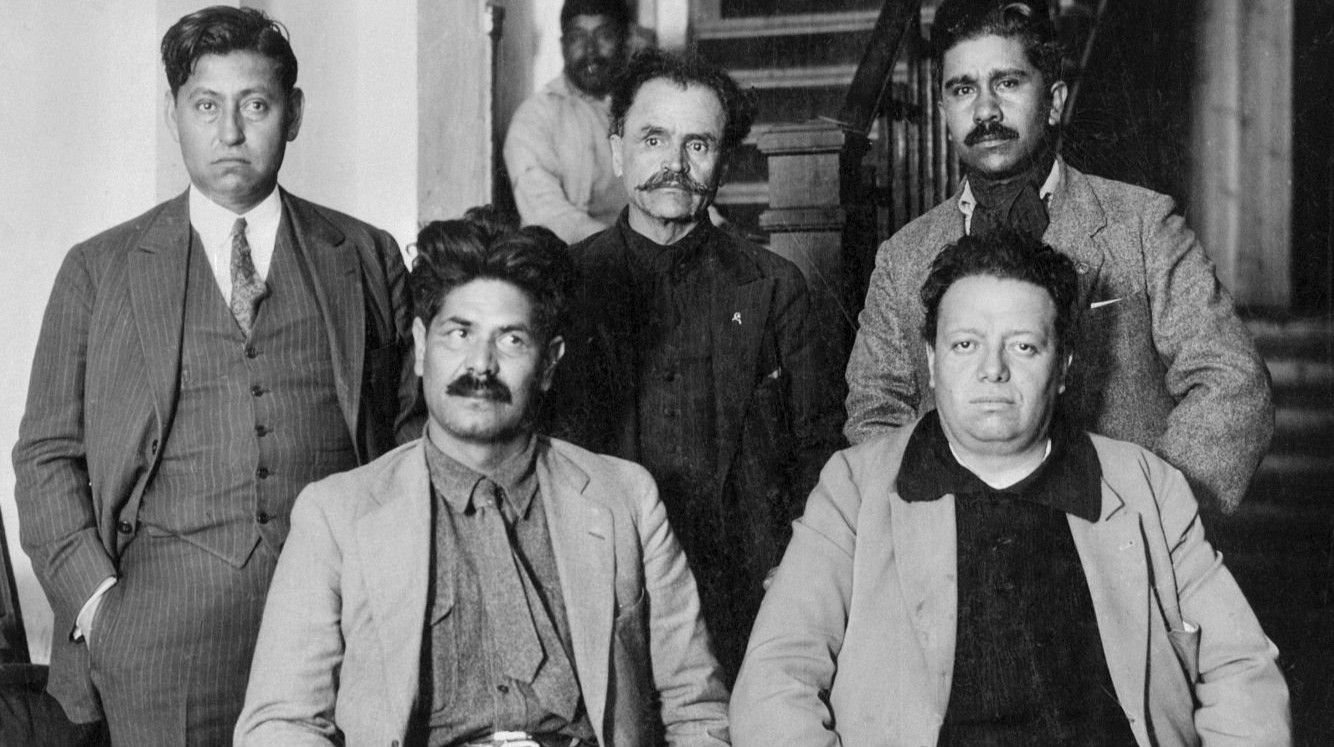
Charles Shipman reports from the underground congress of the Mexican Communist Party of 1926.
‘Communists of Mexico Draft New Program’ by Manuel Gomez from The Daily Worker. Vol. 3 No. 126. June 9, 1926.
Will Go to Masses in Work for Unity
(By Mail). Critical overhauling of policies in trade union. agrarian and anti-imperialist work featured the national convention of the Communist Party of Mexico just closed here. Delegates were present from Mexico City, Tampico, Vera Cruz, Jalapa, Cruz, Jalapa, Orizaba, Guadalajara, and the state of Michoacan. There were also fraternal delegates from the Communist International and from the Workers (Communist) Party of the United States.
With the Mexicans working class suffering decreases in wages and facing a concerted attack upon living standards by the bosses, it was realized that the central question before the workers at this time is consolidation of the trade union forces of the country. The party’s program for trade union unity, which up to now has been based too much upon the so-called independent unions and the anarcho-syndicalist C.G.T., is to be broadened to include all labor organizations, radical and conservative alike.
Will Work to Win C.R.O.M.
It was especially emphasized that the powerful C.R.O.M. (Regional Confederation of Labor), having in its ranks more than half of all the organized workers of Mexico, must receive far more attention from the party than heretofore.
Reporting for the national executive committee, Rafael Carrillo, national e secretary, declared that while 80 per cent of the members of the party are r members of trade unions, only a handful of these are in unions belonging to the C.R.O.M.
The little band of Mexican Communists, numbering not more than 100, must adopt a correct trade union policy if it is ever to strike roots in the masses. The opportunities of the Mexican situation are far beyond the capacity of the party to take advantage of them. Incorrect policies in the trade union and other fields are due to the complexity of the struggle in Mexico, together with the inexperience, looseness of organization and ideological weakness of the Communist Party.
One of the most interesting points on the agenda at the convention was the agrarian question. It is among the peasants that the Communist Party of Mexico has made its nearest approach to a bid for anything like mass leadership. Ursulo Galvan, a party members, is the undisputed leader of 30,000 peasants in the state of Vera Cruz, organized in the “Liga de Communidades Agrarlas” (League of Agrarian Communities). Party members have established their leadership over masses of peasants in other states as well, and Communists are actually at the head of the movement for a national peasants’ organization.
Build Party–Not Personal Following.
However, it was made plain at the convention that while the Communists working among the peasants have secured a personal following they have done so not as Communists but as individuals, and have organized no Communist nuclei.
The inevitable result of such isolated activity is seen in the case of Comrade Primo Tapia, who has been at the head of the peasants’ league in the state of Michoacan. Primo Tapia was murdered by the police a few weeks ago, and now we have no foothold in the Michoacan organization whatever. The convention stressed the importance of organizing Communist nuclei wherever our comrades have a following among the peasants. Work among the peasants, it was pointed out at the convention, is of exceptional significance in Mexico–not only because 11,000,000 Mexicans belong to peasant families, but also because the Mexican agrarian revolution is still in process. Thus the peasants play an important role at every turn of the political situation.
Vital Situation for Peasantry.
The convention decided to issue slogans calling for establishment and legalization of agrarian community defense organizations. This goes hand in hand with the demand for further partition of the land among the peasants.
For the first time the party considered in detail the question of the various strata of middle peasants–particularly the so-called “rancheros acomodados”–and adopted policies based upon the conception that these elements must be won over to the side of the poorer peasants in the struggle against the large landholders.
The Fight for National Freedom.
In the peasant question, as in practically every question taken up at the convention, the delegates found themselves considering phases of the struggle against United States imperialist aggression, which is the obvious unifying factor for the various revolutionary movements of Mexico today. The peasants, in their struggle for the land, come into direct conflict with the monopolistic aspirations of U.S. investors. The workers feel the pressure of Wall Street at every turn. The Mexican petty bourgeoisie, struggling to be born, is threatened with still-birth by the persistent effort of U.S. capitalists to exploit Mexico on a colonial basis.
To Correct Attitude Toward Calles.
The latest U.S. government offensive against Mexico–over the Mexican oil and land laws–was still fresh in every mind when the convention met. The struggle to preserve Mexico’s independence is a vital one for every revolutionist. In the discussion on the question of American imperialism Comrade Carrillo admitted that the Communist Party of Mexico had made mistakes in the anti-imperialist work, particularly with regard to its attitude toward the Calles government.
The party will raise the banner of the “united anti-imperialist front” and will ally itself with all elements struggling against American imperialism. It was with the common tasks of Mexican and American Communists in the struggle against American imperialism that the principal speech of the representative of the Workers (Communist) Party was concerned. The speech was warmly received. Nevertheless, the delegates pressed the opinion that the Communists of the United States have failed to bear their proper share of the bun den in the anti-imperialist work.
The Daily Worker began in 1924 and was published in New York City by the Communist Party US and its predecessor organizations. Among the most long-lasting and important left publications in US history, it had a circulation of 35,000 at its peak. The Daily Worker came from The Ohio Socialist, published by the Left Wing-dominated Socialist Party of Ohio in Cleveland from 1917 to November 1919, when it became became The Toiler, paper of the Communist Labor Party. In December 1921 the above-ground Workers Party of America merged the Toiler with the paper Workers Council to found The Worker, which became The Daily Worker beginning January 13, 1924.
PDF of full issue: https://www.marxists.org/history/usa/pubs/dailyworker/1926/1926-ny/v03-n126-NY-jun-09-1926-DW-LOC.pdf

