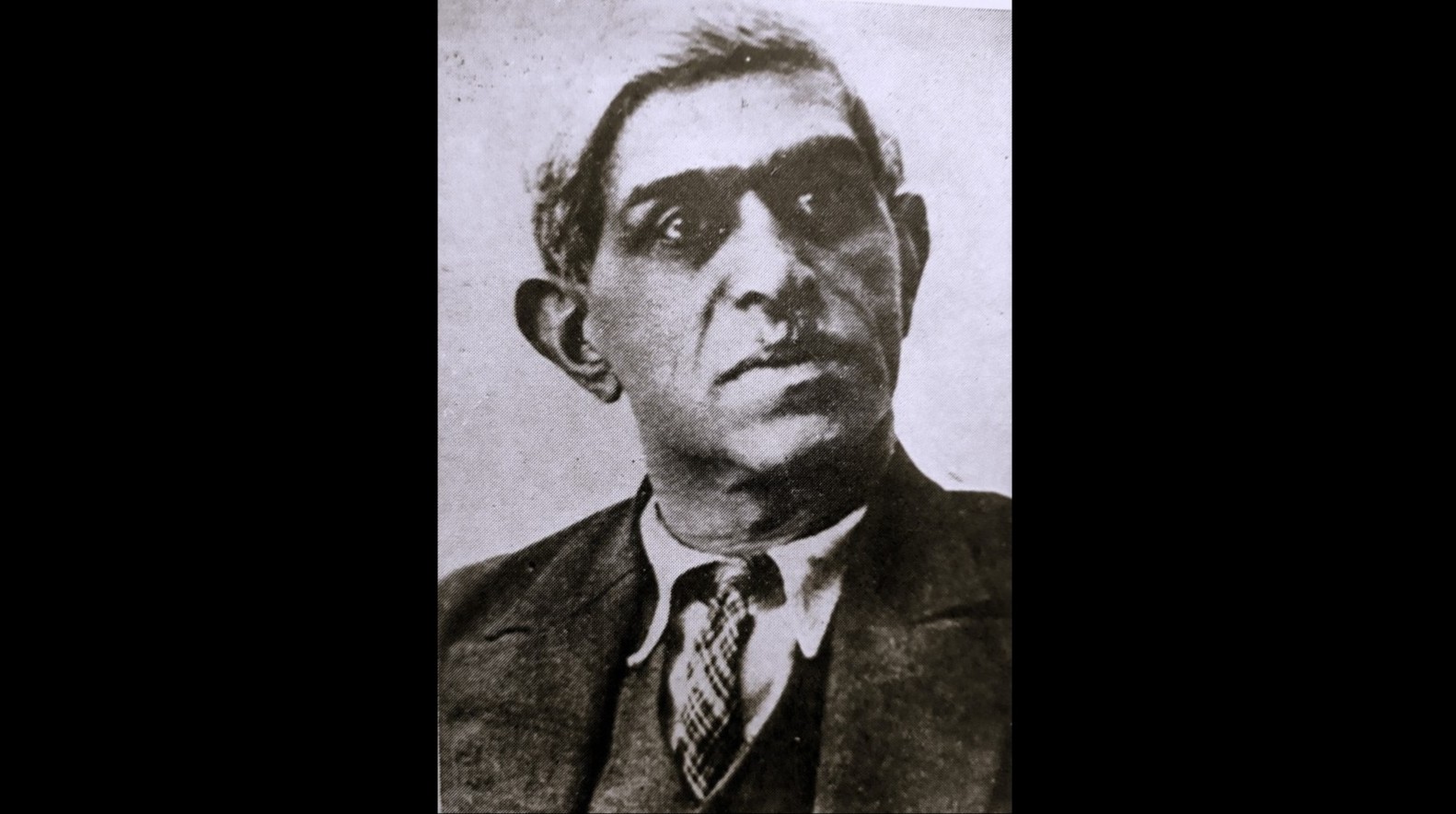
Chatto analyzes the outbreak of a major class battle in colonial India, an industrial strike of tens of thousands of railway workers while a ‘Labour’ government ruled the Empire.
‘The Indian Railway Strike’ by Virendranath Chattopadhyaya from International Press Correspondence. Vol. 10. No. 11. February 27, 1930.
The General Strike that broke out on the Great Indian Peninsular Railway (G.l.P.R.) on February 4th is of more than usual interest because in addition to the various economic demands that have been put forward by the workers the movement has assumed a definitely political character. The G.I.P.R. Workers are among the best organised and most class-conscious in India and their struggle for better conditions of life during the last few years has been accompanied by a realisation of the fact that no improvement is possible without the overthrow of imperialist exploitation.
Ever since 1927, the G.I.P. Railwaymens’ Union had been making attempt to obtain redress of their grievances, but the Agent of the Railways paid no attention whatsoever to the workers’ demands. In May 1928, the leaders of the Union recommended that the weapon of the strike should be employed. After having received a final definite refusal from the Railway Agent, the Managing Committee of the Union in November 1928 formed a Committee of Action to organise a 100% membership and to collect a fund sufficient to guarantee the victory of the workers. The Union was under the leadership of Comrades Thengdl, Bradley, Joglekar, Jhabwala and Kadam, and the enormous enthusiasm that was aroused among the railway workers during the course of their organisational work, led the Government to order the arrest of these five comrades, in March 1929, whereby the workers were deprived of their ablest leaders. These comrades are still undergoing their trial along with 26 other revolutionary workers at Meerut on a charge of attempting to overthrow British imperialist domination and to establish a Workers’ Republic, or, in the words of the Public Prosecutor, “a Coolie-Government”.
It may be noted in passing that comrades Thengdi and Joglekar had been elected by the Trade Union Congress as delegates to the Second World Congress of the League Against Imperialism held in July 1929 at Frankfurt a Main, so that after their arrest it became necessary for the Trade Union Congress to appoint new delegates. One of those who were nominated was comrade V.B. Purandare, General Secretary of the G.I.P. Railwaymen’s Union, who had been 13 years in the railway service. The President of the Union, D.B. Kulkarni, who is also the Vice-President of the All-India Trade Union Congress, was elected by the Frankfurt Congress to the General Council of the League Against Imperialism.
It was under their leadership that the G.I.P. Union at its Conference in July last formulated some 16 demands, which are the demands of the strikers to-day. The most important of these are:
1) A demand for the minimum wage of Rs. 30 (45 sh.) per month, whereas the vast majority of workers do not receive more than half of the amount.
2) An 8 hours day for all, including the commercial staff who work no less than 10 hours a day and many of whom have to work as much as 16 hours a day.
3) One day’s rest in the week and other holidays.
4) Regular holiday periods.
5) The abolition of the daily wages system.
6) Free passes for all railway employees and Union officials.
7) Supply of uniforms and waterproofs.
8) Abolition of racial discrimination.
9) Abolition of periodical medical examination (which is often used as a pretext for dismissing large numbers of workers).
10) No victimisation of Union workers.
In addition to these demands the strikers are calling upon the authorities to re-instate comrades Kulkarni and Purandare who had been dismissed at the end of last year by reason of their political activities as members of the Workers’ and Peasants’ Party and of their connection with the League Against Imperialism.
The above demands were placed before the Agent for the last time on December 22nd, 1929 and it was decided to declare a one day strike on February 4th 1930 to enforce the demands, and to declare a general strike if they were not granted.
These demands having been categorically rejected by the railway, authorities, first 20,000, then 75,000 and then 125,000 railwaymen went out on strike. The workers organised pickets before the workshops and railway-stations which were guarded by strong military and police forces. In spite of the terror of the police, the strike was very successful. At all the important stations such as Manmad, Poona, Nasik, Nandgaon and Kurla the stations are without light, the important workshops at Matunga, Parel and Wadibunder are completely closed and the whole tram service has been partly delayed and partly stopped. The Government is turning the trains with the help of strike-breakers who are protected by strong military forces. It is significant that the strike-breakers are confined mostly to the literate section of the staff, whereas the porters, sweepers, gatekeepers, cabinmen and the rank and file generally are absolutely firm and united.
Another important feature of the strike is that it is not confined to the Indian workers only. All the Chinese workers who are concentrated at Matunga have joined the strike in a body and have declared their determination to stand by their Indian comrades, while on the other hand Anglo-Indians (Eurasians) and Parsis who receive favoured treatment at the hands of the Imperialist Government have been helping the Government as scabs and blacklegs.
The G.I.P. Railwaymen’s Union is receiving the moral support of other railway unions such as the Southern Mahratta Railway, the South Indian Railway and the Bengal–Baroda and Central Indian Railway. The All-India Railwaymen’s Federation, of which the G.I.P. Union is an important member, played a decisive role at the All-India Trade Union Congress at Nagpur on December 1st, 1929, and along with the textile- workers were responsible for the strongly anti-imperialist line adopted at the Congress, which resolved to boycott the imperialist Whitley Commission, to fight against the reformism of Amsterdam and Geneva, to affiliate to the Pan-Pacific Trade Union Secretariat and the League Against Imperialism.
It is obvious that the MacDonald Government will use all its power to break the revolutionary movement of the workers who are leading the whole struggle for national independence.
Nor are the leaders of the Indian National Congress, including the President, Jawaharlal Nehru (who is also a member of the Executive Committee of the All-India Trade Union Congress) giving any help to the strikers; they are advocating the reference of the “dispute” to an arbitration board. But the workers will not be fooled. Only a few days before the strike began, they gave the proper character to the “Independence Day” on January 26th by hoisting the Red Flag all over the country. It is in this anti-imperialist atmosphere that the struggle is being conducted by the railway workers who receive the support of the entire Indian working class and to whom every help should be extended by the international proletariat.
International Press Correspondence, widely known as”Inprecorr” was published by the Executive Committee of the Communist International (ECCI) regularly in German and English, occasionally in many other languages, beginning in 1921 and lasting in English until 1938. Inprecorr’s role was to supply translated articles to the English-speaking press of the International from the Comintern’s different sections, as well as news and statements from the ECCI. Many ‘Daily Worker’ and ‘Communist’ articles originated in Inprecorr, and it also published articles by American comrades for use in other countries. It was published at least weekly, and often thrice weekly.
PDF of full issue: https://www.marxists.org/history/international/comintern/inprecor/1930/v10n11-feb-27-1930-inprecor-Virginia.pdf

