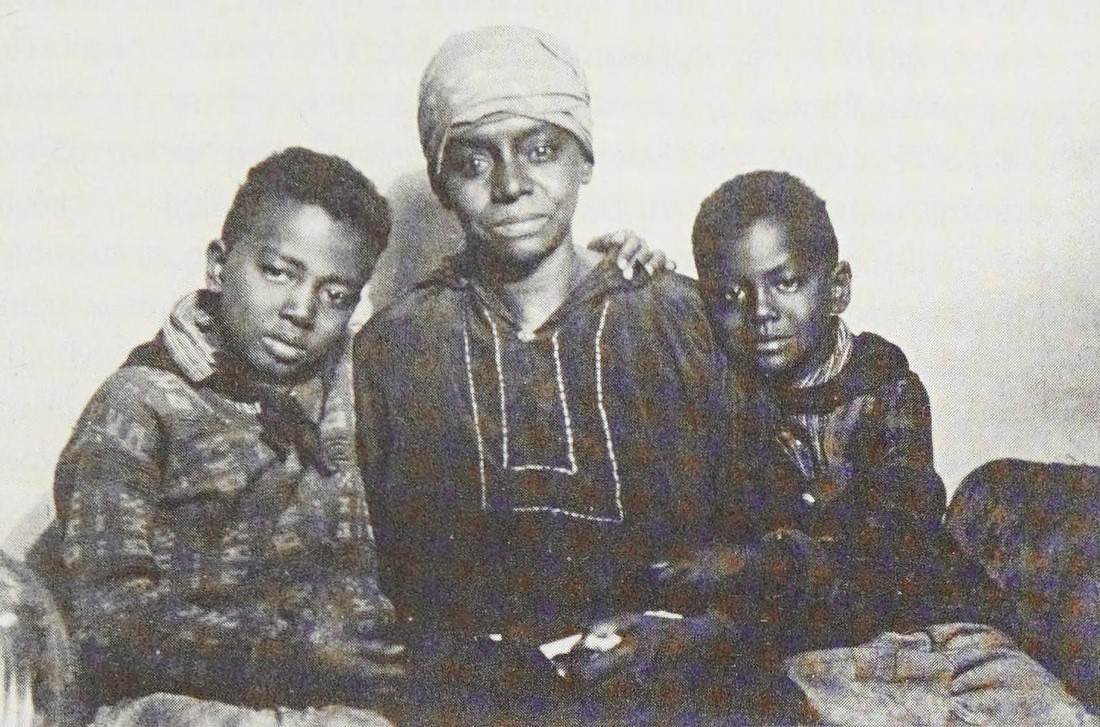
Born in Petersburg, Virginia, Williana Burrourghs came to New York City as a child with her domestic-worker mother and siblings. For years she lived at an orphanage while her mother did live-in work. Working with her mother while going to school, WIlliana eventually went to Hunter College for teaching, working all the while, graduating in 1903. Radicalized, she did not join the Socialist Party, but eventually did the American Negro Labor Congress and, in 1926, the Communist Party. She had to fight to regain employment after her children wee born and was persecuted by the School Board for her activism. Williana would lose her job as a teacher in the 1930s. She would become an editor of the Harlem Liberator and instructor at the Harlem Workers School, whole running for local office as a Communist, receiving the highest Communist votes in the city. Here, she remarks on the entrance of Black women in the labor movement.
‘Negro Women Move To Fore in Struggle Against Oppression’ by Williana J. Burroughs from Daily Worker. Vol. 12 No. 56. March 6, 1935.
Wage-Earners and Housewives Alike Meeting Menace of Redoubled Poverty and Terror by Heroic Fighting Spirit
That American fascism is growing is proved by the vicious treatment of Negro women, native and foreign-born, by local authorities.
A Negro woman was one of the fifty-seven workers murdered in strikes during the past year. Wages for colored women have been forced to as low as three dollars a week, in some places, in tobacco, food, and bag factories, laundries, stockyards and domestic service. Home-work, piece-work, speed-up, long hours, intolerable working conditions, dangerous, dirty jobs menace lives and health of Negro women workers.
In the South the savage program carried through by the landlords has rapidly smashed the living standards. Here the acreage and cotton reduction laws have driven tenants and croppers off the land, and reduced them to day laborers. As such their wage is the lowest paid to any group. Many families face starvation.
Negro Babies Starve
Small incomes, due to widespread unemployment, less than minimum wages, and totally inadequate relief, have sharply increased the death rate of Negro babies, Colored children today are growing up with health broken by such diseases of poverty as rickets, poor teeth and tonsils. Social services, always poor, have been curtailed or abolished. Schools have been closed in many parts of the South for more than two years.
In Harlem, center of New York’s Negro population, with long waiting lists, the clinics refuse to care for many children. The Federal government has cunningly seized this period of wide-spread misery, to make Jim Crow schools official, by a fund from the national treasury.
Overcrowded, dark, damp basement living quarters, old unsanitary houses, filthy streets, lack of playgrounds, multiply problems for the colored mother, who in most cases is also a wage-earner. Negro pupils daily go to schools which have been officially pronounced fire-traps. Petty crime and juvenile delinquency grow. Young girls, unable to find work, are forced into the streets.
In spite of growing terror, Negro women are heroically fighting for better conditions. On the picket lines in Alabama and Ohio they fought side by side with the miners. At Seabrook farm in New Jersey, in St. Louis, at the stockyards in Chicago, they are in the fight for higher wages. In protests at relief stations, all over the country, even in the lynch-ridden South, they have braved the clubs and guns of the police.
Women Aid Sharecroppers
Many hundreds of women have helped to build up the fighting Sharecropper’s Union.
Negro women today fight with the same high courage against wage slavery and growing fascism, as formerly Harriet Tubman and Sojourner Truth fought against chattel slavery. From the enemy press we get little news of struggles of the colonial workers. But from these meagre reports we learn that the women coffee pickers of Colombia won their strike for better wages, that a large strike is going on in Porto Rico, another on the sugar plantations of Martinique, that the teachers are on strike in Cuba.
Negro women did important work behind the lines, in the factories in the last war. They will be used again if war comes. The chief executives of the American Federation of Labor have left this vast body of women workers without the protection of organization. It is imperative if the working class is to win its fight against fascism and war, that we forge the solidarity of all women, black and white.
Women Must Organize
This International Women’s Day should be the start of an energetic campaign to draw this key section of the working class into labor unions, and into the auxiliaries of coal, steel. railroad, marine and veterans bodies, into relief, foreign-born and defense groups. Our message of solidarity must be carried to the Negro people, into their lodges, churches, clubs.
Today the main struggle for unity of black and white peoples Scottsboro, the symbol of all Negro exploitation. Along with its every day work, each organization must have its active Scottsboro committee to carry on a mighty fight to give back their children, to these brave mothers of the working class. This is practical work for Negro rights.
The Daily Worker began in 1924 and was published in New York City by the Communist Party US and its predecessor organizations. Among the most long-lasting and important left publications in US history, it had a circulation of 35,000 at its peak. The Daily Worker came from The Ohio Socialist, published by the Left Wing-dominated Socialist Party of Ohio in Cleveland from 1917 to November 1919, when it became became The Toiler, paper of the Communist Labor Party. In December 1921 the above-ground Workers Party of America merged the Toiler with the paper Workers Council to found The Worker, which became The Daily Worker beginning January 13, 1924. National and City (New York and environs) editions exist.
PDF of original issue: https://www.marxists.org/history/usa/pubs/dailyworker/1935/v12-n056-NAT-mar-06-1935-DW-Q.pdf

