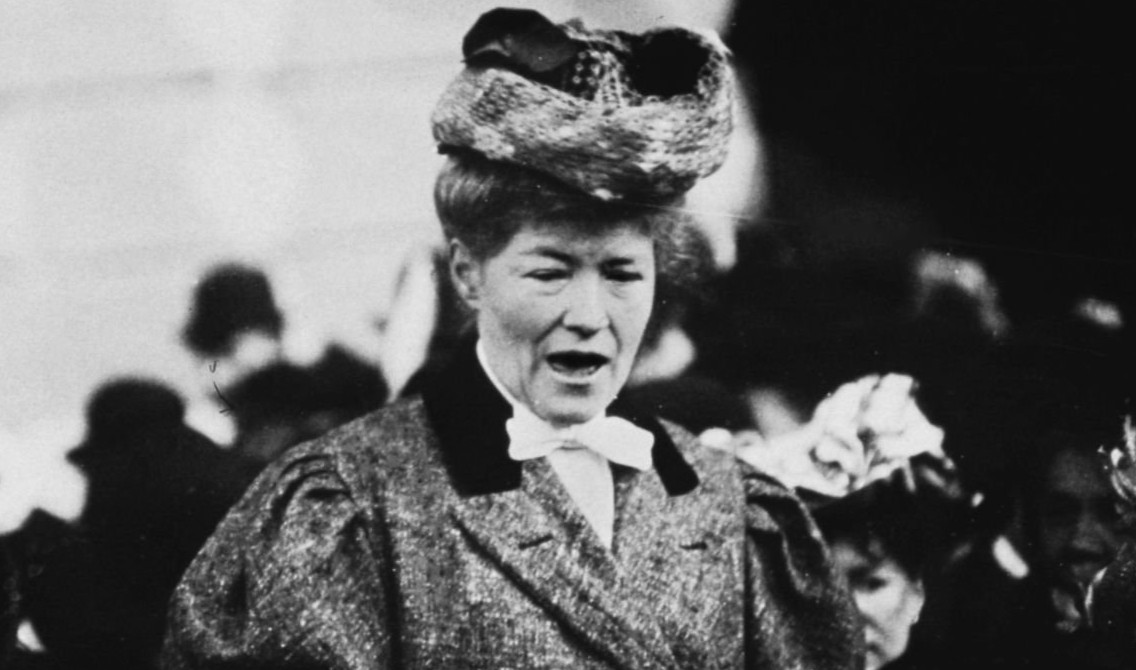
An important history from the first labor union for public library workers, Library Employees’ Union of Greater New York, chartered as A.F. of L. local 15590 on May 15, 1917 was originally led by militant Irish-American sisters Maud and Marcella Malone, suffragettes and Socialists. After retiring, Maude Malone became the archivist for the Daily Worker.
‘Trade Unionism and the Library Worker’ from Life and Labor (W.T.U.L.). Vol. 8 No. 3. March, 1919.
By the Library Employes Union of Greater New York, No. 15590
PART of the “winning the peace” in the labor war, as elsewhere, is the recognition of the common interests of those who work with their hands and those who work with their brains. The Library Employes Union is composed of men and women who do both.
But before the formation of the Union, the workers had to undergo a long and discouraging apprenticeship in self-conscious, united effort. This consciousness of their position and the ensuing spirit of rebellion against the existing order did not come about overnight. It had been preparing for five years or more. War conditions were responsible in only a small degree for the outburst. They were the last straw which broke the librarian’s back.
For several years before the war the sweated labor in the libraries of Greater New York, and the unjust method of appointment and promotion and dismissal had given rise to a feeling of discontent and unrest among the staff.
In the New York Public Library up to 1917, there was no standard entrance examination; no graded service; no public eligible list; no yearly automatic increases based on efficiency ratings; no open efficiency ratings to be seen by all members of the staff; no promotion from the ranks only (vacancies were frequently filled from outside the staff); no tenure of position; no seniority of service recognized; no pension.
At the beginning of 1917 the workers realized that in spite of promises from their employers the same old conditions were to be continued, a few favorites promoted with increased pay and the rest neglected.
In the Borough of Brooklyn, which maintains a separate public library system from that of the Boroughs of Manhattan, Bronx and Richmond, a real movement toward trade unionism was developing. The employes had almost succeeded in forming a local, but the superintendent was successful in strangling the feeble effort before it got a start.
In the New York Public Library, which is made up of the branch libraries of Manhattan, Bronx and Richmond, the library authorities in an effort to ward off a similar movement, started an organization of their own, an employers’ club–popularly known among trade unionists as a “mutual admiration society.” The circulating branch libraries have a graded service. With the approval of the authorities one of the higher grades (Grade B, Assistant Librarian), invited the other grades “to consider and vote upon the question of organization and, providing the vote was favorable, to select officers and to draw up a constitution and by-laws, thereby putting the organization on a business basis.”
In perfect good faith the two lowest grades, Grade D (the entrance grade) and Grade C (the next higher grade), voted to send a committee to a central conference of all the grades. As these two grades numbered together over four hundred of a total staff of five hundred, they decided to adopt the system of proportional representation. Each elected a committee of twelve, making a total of twenty-four.
The committee from Grade D was composed of the following assistants: Miss Nellie Mahoney, chairman; Misses Bernaro, Clark, Crow, Cyprus, Henderson, Markoff, Ortmann, Rush, Ratkofsky, Mrs. Joyce and Mrs. Kimmelman; the committee from Grade C, Miss Maud Malone, chairman; Misses Beck, Chandler, Glenn, Grannis, Lindsey, Newberg, Osborne, Scully, Reichold, Whipp and Mrs. Silvernail.
When the joint meeting was held in the Central Library building in April, 1917, the pretense of this organization was uncovered.
In accordance with the instructions from her grade the chairmen, Maud Malone, presented in the form of a resolution the following demands of the workers of the library: Better salaries; promotion from the ranks; eligible lists; the purpose, if any, of examinations; standardization of work and salaries; court of appeals; grade elimination; pensions; length of service recognized; public inspection of all efficiency sheets.
A motion was then presented by the two lower grades to form an organization of the graded service “which shall meet at stated periods and after organizing, where certain specified information shall be necessary for action the administrative officer shall be asked to come to the meeting and furnish such information, and then upon his withdrawal the question shall be discussed and voted upon.”
This motion was presented in the hope that the intimidation from which the workers always suffered in the presence of their superiors would be eliminated.
The chairman of the conference, however, ran the official steam roller over both these resolutions, saying that since the two lower grades had not done as they were told and sent only three instead of twelve on their committees to the conference they had no standing as a committee. The meeting then adjourned. As a matter of fact, there had been no instruction to this effect in the call to the meeting, each grade being left free to send any number it decided to.
“CONGENIAL WORK” NOT A SUBSTITUTE FOR A LIVING WAGE
It was this experience that finally convinced the employes that only they themselves could solve their own problems. The result was the New York Library Employes Union. This was the first trade union of librarians in the United States, and probably the first in the history of trade unionism.
Like all labor movements, this grew up primarily because of bad economic conditions. While the librarian has always been regarded, curiously enough, as a member of the leisure class, she has been receiving, with prices what they are at present, less than 25 cents an hour for an 8-hour day. The National War Labor Board fixed the minimum rate for common labor at 42 cents an hour, which is a mere subsistence wage. The crass discrepancy between what the librarian earns and what she is paid is, of course, largely due to inertia among the librarians themselves. This inertia has been fed with soothing syrup administered by the library authorities, defending a system in which the worker is supposedly paid in “congenial work,” “agreeable surroundings,” “pleasant contacts” instead of a living wage. The librarian has been made to feel that she is lowering her professional standard when she attempts to raise or even to maintain a decent standard of living.
The members of the Library Employes Union, however, proudly assert that they belong to the industrial rather than to the professional classes, and declare in their announcement of incorporation “that as the vast number of those using the libraries belong to the industrial class, and as these are the people we are daily and hourly in contact with, a better spirit of cooperation will exist as the result of our being trade unionists. We joined the American Federation of Labor as a result of this belief.”
As a matter of fact, the union includes among its members both men and women, some of whom are engaged in highly specialized work in various fields of research, and there are charter members from several private and business libraries. The underpaid page and the progressive-minded expert are banded together to make the public library truly a democratic institution.
The struggle to make their demands effective has been complicated for the librarians by the New York library system.
The New York Public Library, Astor, Lenox and Tilden Foundations is in reality not a public institution but a private corporation. It is made up of two departments, the Reference Department and the Circulation Department. The former is supported by the income from the Astor, Lenox and Tilden foundation and gifts from private persons. The Circulation Department is supported by the city. But both are administered by the same board of trustees, composed of twenty-five members who hold office continuously and are self-perpetuating. The distribution of the money appropriated by the private corporation for the salaries of the employes in the Reference Department, and also the distribution of the money given in a lump sum by the city for the support of the Circulation Department are alike administered by this board of trustees. Increases in salary depend upon the decisions of the library authorities, and not upon the recommendation of the taxpayers.
METHODS OF APPOINTMENT AND ADVANCEMENT UNJUST
Quite as much dissatisfaction prevails with regard to methods of recruiting and advancing employes. It is a common practice to appoint graduates of the library school to the important positions in preference to those assistants who have had years of practical experience and who are eligible for promotion.
A typical case was that of a young woman who, after graduating from high school, decided to take up library work and obtained a beginner’s job at $30 a month. After eight years this employe was earning $50 per month. She had been repeatedly recommended for a raise by her immediate superior but was always told by the division head that the library could not afford more. Finally, forced to the wall by the rapidly increased cost of living she left the library service for the business field at a salary of $80. Her position was immediately filled by a library school student with no experience in that particular phase of work at a salary of $75 per month.
Another assistant who entered library service under the same conditions and who had served about the same period and demonstrated remarkable ability in organizing reading groups, was told that she could not hope to advance without library school training. But the library was unwilling to give her leave of absence without salary for one year in order to go to school. Thereupon the assistant resigned from the library, and went to the school. After completing a one year’s course she was offered by the library a salary of $90, a raise of $40.
During the year 1916, 16 per cent of the staff left the graded service of the New York Public Library, 55 to take other positions and to receive higher salaries than when in the employ of the library.
In 1917 a rumor was circulated among the staff that the library authorities had been forced to borrow heavily from the book fund in order to pay higher salaries that the book fund for the Reference Department had been decreased to $30,000. Yet in this same year the library purchased one book for $6,900.
A Hindu nationalist once declared that the clearest proof of what India has suffered was given in the benefits which Montagu proposed to confer upon her. Similarly, the proof of what conditions have been in the library is given in a recital of what the Union has accomplished.
For the first time in the history of their work, library assistants, because of agitation by the Union, are permitted to see their efficiency ratings. For the first time they are allowed to see their examination papers, showing their percentages and averages. Previously assistants after taking examinations were notified if they had failed or passed, but no mark was assigned. Last year for the first time every library assistant received an increase of salary because the Union made it clear that the distribution of increases had previously been restricted to certain individuals only.
UNION ARRANGES STRONG PROGRAM FOR COMING YEAR
The program of the Union for the coming year is ambitious and far-reaching. It recommends that the Circulation Department of the New York Public Library, whose expenses are paid entirely out of city money, be administered by the city, under the rules and regulations of the Civil Service Commission for appointment and promotion of the employes. It proposes that a training school for librarians be established, administered by the Board of Education and corresponding to the present training school for teachers. It suggests that for the more specialized phases of library work, special courses be given in the colleges–courses which are now neglected or undeveloped in the library schools throughout the country. This scarcely sounds as though the Union were lowering professional standards. It insists, moreover, on the establishment of a graded service, with standard entrance examinations; on the standardization of positions and salaries; on promotion from the ranks only; yearly automatic increases; recognition of seniority of service; pensions after twenty-five years of service; no dismissal without written charges and an opportunity for a hearing (librarians may now be dismissed without charges at a month’s notice or pay): and, finally, a 38 hour week in common with other city employes. It believes that women should be appointed on the Boards of Trustees, and that there should be representatives of organized labor on these Boards. It has asked that all positions in library service from page to director shall be open to men and women equally with equal pay for equal work.
Already the Union is a powerful factor in obtaining for the librarians an answer to demands long ignored. The Central Federated Unions of New York and Vicinity, the Labor League, the Women’s Trade Union League and the Federation of Women’s Civil Service Organizations of New York City have endorsed the recommendations of the New York Library Employes Union. Public opinion is aroused and professional pride is gaining the courage of its convictions.
The three largest systems in the country, New York Public, Library of Congress, in Washington, D.C., and the Boston Public Library have local unions affiliated with the American Federation of Labor. A large and fertile field, however, remains for the enterprising organizer. There are over sixteen hundred libraries in the country with several thousand employes living on less than subsistence wages and giving significant social service.
Unions of library workers stand for a new era, in which work dignifies the worker, and public institutions become in the best sense public property and public instruments.
Life and Labor was the monthly journal of the Women’s Trade Union League (WTUL). The WTUL was founded by the American Federation of Labor, which it had a contentious relationship with, in 1903. Founded to encourage women to join the A.F. of L. and for the A.F. of L. to take organizing women seriously, along with labor and workplace issues, the WTUL was also instrumental in creating whatever alliance existed between the labor and suffrage movements. Begun near the peak of the WTUL’s influence in 1911, Life and Labor’s first editor was Alice Henry (1857-1943), an Australian-born feminist, journalist, and labor activists who emigrated to the United States in 1906 and became office secretary of the Women’s Trade Union League in Chicago. She later served as the WTUL’s field organizer and director of the education. Henry’s editorship was followed by Stella M. Franklin in 1915, Amy W. Fields in in 1916, and Margaret D. Robins until the closing of the journal in 1921. While never abandoning its early strike support and union organizing, the WTUL increasingly focused on regulation of workplaces and reform of labor law. The League’s close relationship with the Amalgamated Clothing Workers of America makes ‘Life and Labor’ the essential publication for students of that union, as well as for those interest in labor legislation, garment workers, suffrage, early 20th century immigrant workers, women workers, and many more topics covered and advocated by ‘Life and Labor.’
Access to full issue: https://hdl.handle.net/2027/coo.31924069101222

