With its different political history and economy, Austria’s own fascist movement naturally diverged from that in Germany. A look at the beginnings of the far-right’s growth in the 1920s, a movement that began with murder.
‘Fascist Reaction in Austria’ by D. Peter from International Press Correspondence. Vol. 5 No. 48. June 5, 1925.
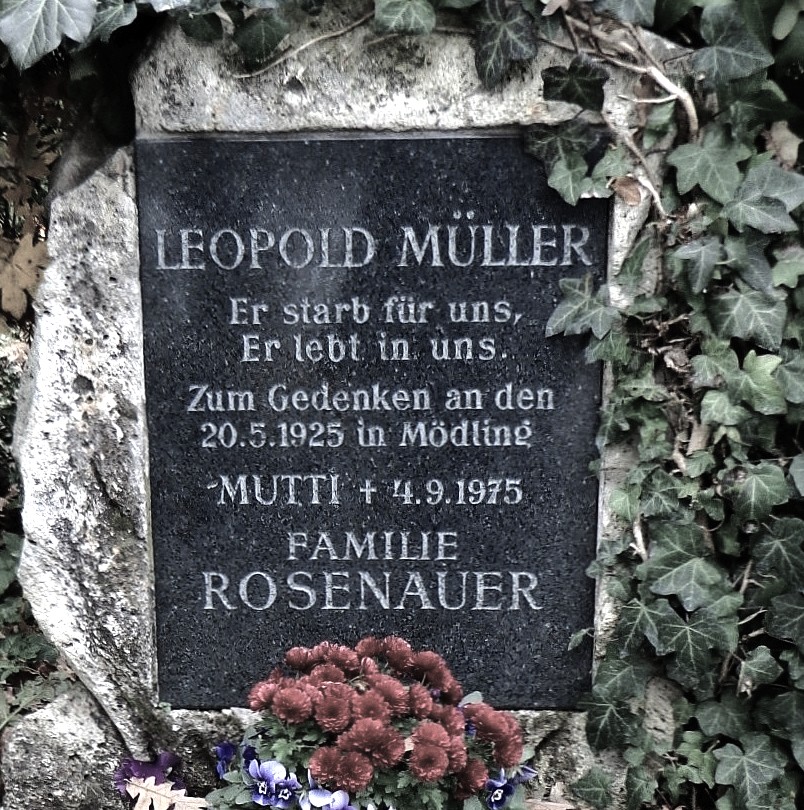
On the 21st of May last there took place in Moedling, a small town in the neighbourhood of Vienna, a Hindenburg demonstration on the part of various fascist bands. After the conclusion of the demonstration one of the participating organisations “Rheinland” arranged an attack upon the workers of Moedling, as a result of which Leopold Müller, a social democrat, suffered such fearful mishandling that he died a few days later. This foul murder is typical of the methods of fighting of the fascist petty bourgeoisie of Austria. Moedling is the link in the chain which commenced with the killing of Birnecker, a worker, and leads from the further victims, Still and Kovarik to the worker, Müller. The advance of the fascists takes place precisely at a time of a rising wave of international reaction.
Capitalist “restoration”, represented by the Geneva Agreement, has suffered complete bankruptcy in Austria. Hence we see the abolition of the eight hour day, reduction of wages etc. and the appearance of big bourgeois fascism, which is attempting to carry out the intensified process of “restoration” by means of violent crushing of all resistance on the part of the proletariat.
Whilst the big bourgeoisie, in dealing with the proletariat, relies on the one hand upon social democracy, which is capable of preventing the proletarian revolution, it is endeavouring at the same time to overcome the discontent of the middle classes, to win them as allies and to divert their opposition from the “restoration” to the working class. For this purpose the bourgeoisie makes use of petty bourgeois and peasant fascism.
The oldest fascist organisations are the Home Defence Leagues (Heimwehrverbände) which arose immediately after the collapse of the Habsbourg monarchy, with the toleration and support of social democracy. Their field of activity is mainly Styria, Tyrol, Salzburg, and Carinthia; their composition is a peasant one. They receive financial support from the agricultural organisations of the big peasants, but are also the defence guards of Styrian heavy industry (Alpine Mine works etc.), and are therefore maintained by the latter. Since 1919 they have been in undisturbed possession of weapons. The governor of Styria, Rintelen, of Tyrol, Steidle and also the Minister of Finance Ahrer and the Chancellor Ramek are among the most important organisers and fathers of the Home Defence movement. The members of the Home Defence Leagues receive military training from retired and active officers.
Another fascist organisation, the Front Fighters, chiefly consists of declassed elements of the bourgeoisie and of the nobility, retired and active officers and students. They are closely allied with the Vienna wing of the Christian Socialist Party (Seipel group) and are financed by the latter. They are outspoken supporters of the Habsbourg monarchy.
The Fatherland Defence Union, the organisation of the Hakenkreuzer (swastica) and national socialists comprise petty bourgeois elements, clerks, minor officials, students etc., but also working class elements.
Further, there are secret monarchist organisations. All the fascist organisations are connected with each other and with similar organisations abroad (Hungary, Germany) and receive subventions from the latter.
It need hardly be said that the State apparatus of the bourgeoisie is of course fully and entirely at the disposal of the fascist organisations. As the Austrian social democracy, after the collapse of the Habsbourg monarchy, allowed this State apparatus to get more and more into the hands of the bourgeoisie and did nothing in order to clear out the bureaucracy, it is equally guilty for the growth of reaction. Moreover, whenever it was necessary to take up the fight against reaction, the social democracy, with all the methods of Austro-Marxism, held the working class back from the fight.
Already at the time of the workers’ Councils the social democrats ignored the warning of the communists and their demand to take up the fight against reaction and declared that the communists were frightened at “bogeys”. When the worker Birnecker was murdered by the monarchists, the social democrats “warned” the monarchists. When the worker, Still, fell as a victim to a fascist attack, the “Arbeiter-Zeitung” considered it necessary to declare that there is only one political slogan: not to allow ourselves to be provoked…Herr Seitz, the social democratic Lord Mayor of Vienna, said at the grave of Still: “We hope that this is the last victim” and further: “German-Austria is not a land of fascism”.
When later the bourgeoisie, by handing over the government to Ramek and Ahrer proclaimed its fascist policy, the social democrats assisted by their policy of deceiving and lulling the working class. Whilst their policy towards the Seipel government was one of sham radical opposition, as soon as Ramek came into power, they went over to a policy of loyal opposition and declared this government, which was committed to a fascist policy. to be a “cabinet of social tendencies” and thus did everything to render easier the transition to fascism.
And even now, in view of the bloody deed of Moedling, social democracy is sabotaging the fight against reaction. Instead of mobilising the masses, they “pacify” them and appeal to the authorities, who have always encouraged and promoted the organisations of these murderers.
The Communist Party of Austria is calling upon the workers to set up a red class front and is at the same time propagating five demands against reaction, which constitute a programme of action for the whole of the working class. These demands tell the workers quite plainly that it is only they who can disarm the fascists and for this they require weapons; that an investigation against these murderers by class justice is at mere farce and that they must have control through their own representatives over a real investigation; that they must drive the abettors of these murderers out of the government offices and that they must therefore overthrow the government and fight for a workers’ and peasants’ government.
International Press Correspondence, widely known as”Inprecorr” was published by the Executive Committee of the Communist International (ECCI) regularly in German and English, occasionally in many other languages, beginning in 1921 and lasting in English until 1938. Inprecorr’s role was to supply translated articles to the English-speaking press of the International from the Comintern’s different sections, as well as news and statements from the ECCI. Many ‘Daily Worker’ and ‘Communist’ articles originated in Inprecorr, and it also published articles by American comrades for use in other countries. It was published at least weekly, and often thrice weekly. A major contributor to the Communist press in the U.S., Inprecorr is an invaluable English-language source on the history of the Communist International and its sections.
PDF of full issue: https://www.marxists.org/history/international/comintern/inprecor/1925/v05n48-jun-05-1925-inprecor.pdf

