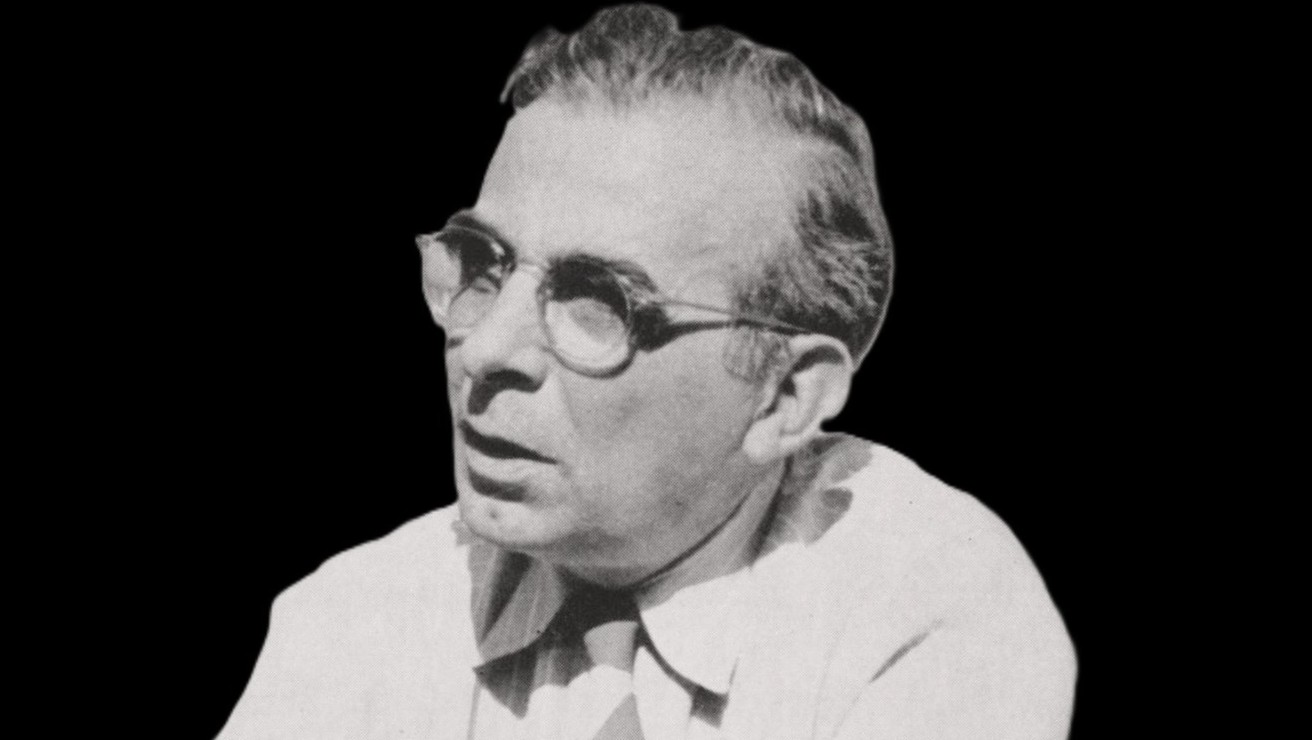
Exact, illuminating and layered, one year into the war and Fraina fills out his analysis of a U.S. imperialism that will come to overtake all of its rivals. Whatever his faults then and regardless of his later trajectory, in 1915 on the subject of imperialism, Louis Fraina was miles ahead of most of his Marxist contemporaries in the U.S.
‘American Imperialism’ by Louis C. Fraina from New Review. Vol. 3 No. 13. September 1, 1915.
ΤHE agitation for a larger army and navy strangely called “preparedness against war”–is an opera-bouffe converted into tragedy by the logic of events. In its way this agitation is preparing the sentiment necessary to forge an instrument for American Imperialism. While Imperialism is only one factor in the “preparedness” movement, Imperialism alone will reap the profit. And while our heroic-tongued patriots blabber about the “helplessness of China” and “insurance against war” in their campaign for larger armaments, the United States government, in establishing a protectorate in Haiti, emphasizes the real purpose for which fatedly the armaments will be used.
Not that a protectorate in Haiti per se requires a large army or navy. American Imperialism is shy of intervention requiring great efforts and sacrifices. It prefers the role of bully to that of fighter. Perhaps the chief reason why Taft did not intervene in Mexico, why President Wilson has not been forced to intervene, is that if the United States went into Mexico it would be compelled to fight, not simply bully, and that the money cost of the adventure would be staggering. But events such as the Haiti protectorate possess a preceding and a subsequent logic. Given one imperialistic act, and many more follow. They carry with them certain consequences, one being the necessity to “consolidate” control by acquiring new control; and isolated events soon disclose an imperialism which has gone too far to turn back, and which requires new imperialistic adventures to protect its stolen holdings.
The early Imperialism of this country was largely a reflex of the Monroe Doctrine, without a definite economic basis. But when American Capitalism out-grew its swaddling clothes and became a world-factor, things changed. American capital looked for investments in other lands; American finance became an integral part of world-finance. The first consequence was the ending of America’s “splendid isolation”: politically, that isolation may still have been desirable; economically and financially it was not.
Our investments in Latin America assumed very large proportions, and great mercantile organizations, like the American Fruit Company, developed a power stronger even than that of the native governments. It was the backward character of these regions, the lack of civilization and its, at the best, small protection for the worker, that lured American capital to invest, and was responsible for the fabulous profits secured. But this circumstance had its disadvantages. While it produced a docile, easily-satisfied labor, it simultaneously produced disturbed conditions of social and economic life, inefficient governments incapable of maintaining law and order and protecting the profits on investments, and perpetual revolutions that interfered with the peaceably systematic development and exploitation of the vast natural resources. Accordingly, the American government was called upon repeatedly to protect “American interests,” and active political interference in the affairs of our neighbors became the order of the day. The result of all this has been the creation of a de facto empire in Central America and the Caribbean, based upon the financial control which ultimately leads to political domination.
Simultaneously with this development, and stimulated by the acquisition of the Philippines, American capital became interested in the Far East. Encouraged by the McKinley, Roosevelt and Taft administrations, American finance made a bid for a share in the spoilation of China. The administration of President Wilson reversed this policy. His Republican predecessors, being primarily concerned with the interests of high finance, encouraged American participation and intervention in the Far East. President Wilson, however, being primarily interested in the lesser capitalists and wishing to unlock for them the “double-bolted door of opportunity,” concentrated his efforts upon an Imperialism nearer home and in the profits of which the capitalist class as a whole could participate. Consequently, our government withdrew from the “Six-Power Group,” which was negotiating a loan with China. But this action did not mean the end of American Imperialism; it meant the end of imperialism in China, but not in Latin America. The Wilson administration has since then been encouraging the much more dangerous Imperialism which benefits larger groups of capitalists than could participate in financial adventures in the Orient, and which operates in a region much less developed and much less capable of defending its economic and political sovereignty than the nations of the Far East. Since that time, the lines of this newer policy have been clearly visible. In the first place, its object is to make firmer American control in Central America and the Caribbean; in the second place, to divert Latin American trade to the United States by using against Europe the threat of the Monroe Doctrine and by lavishing blandishments upon the Republics of the South. In his Mobile speech in 1913, President Wilson opposed granting oil concessions to foreign promoters by the weaker American states, as the granting of these concessions was a menace to the Monroe Doctrine. Here we had formulated a completely new phase of the Monroe Doctrine, not intended to protect the political independence of the American continents against foreign aggression, but to aggrandize, financially and economically, the United States as against all the other nations of the world.
In line with this policy are the efforts of the Wilson administration to consolidate and intrench American financial and political control in Central America and the Caribbean. There are now pending treaties with Honduras, Nicaragua, and Costa Rica, which, if approved by Congress, mean the complete subjection of these states to American finance and the American government. In 1914 the last remnants of Dominican administrative independence were destroyed.
The establishment of a protectorate in Haiti is the newest event in this development. The proposed “agreement” with the Republic of Haiti has been framed in the light of the experience in Santo Domingo with the purpose of making American control complete. It is a “perfected” agreement and destroys completely the administrative independence of Haiti.
The Haitian protectorate seems to be a precursor of more general intervention. It is the government’s intention, according to report, “to adjust affairs in certain Latin-American countries involving European interests, which interests might lead to trouble between the United States and European nations after the conclusion of the European war.” Peru may next be “adjusted.” Its government proposing a war-tax on the exportation of minerals and mineral products, the N.Y. Times says it “will be damaging or fatal to American interests”. English interests also are heavily involved. Could American Imperialism seek a better pretext?
An interesting aspect of this evil business is the way the United States government ignored Pan-American participation. Where is the famous Pan-American “solidarity” which was to function so admirably in Mexico and in all problems of the great American family? The United States has no intention of relinquishing the role of the “brother of the big stick.”
New Review was a New York-based, explicitly Marxist, sometimes weekly/sometimes monthly theoretical journal begun in 1913 and was an important vehicle for left discussion in the period before World War One. In the world of the Socialist Party, it included Max Eastman, Floyd Dell, Herman Simpson, Louis Boudin, William English Walling, Moses Oppenheimer, Walter Lippmann, William Bohn, Frank Bohn, John Spargo, Austin Lewis, WEB DuBois, Maurice Blumlein, Anton Pannekoek, Elsie Clews Parsons, and Isaac Hourwich as editors and contributors. Louis Fraina played an increasing role from 1914 on, leading the journal in a leftward direction as New Review addressed many of the leading international questions facing Marxists. The journal folded in June, 1916 for financial reasons. Its issues are a formidable archive of pre-war US Marxist and Socialist discussion.
PDF of full issue: https://www.marxists.org/history/usa/pubs/newreview/1915/v3n13-sep-01-1915.pdf

