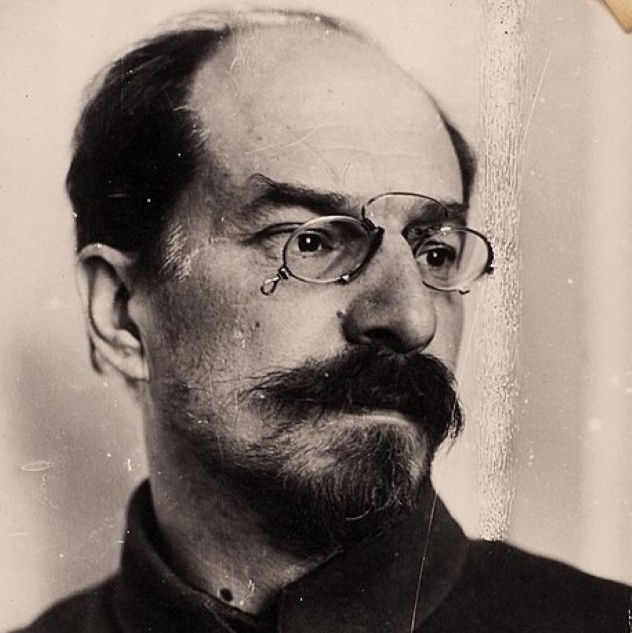
A major work from Lunacharsky who comes to terms with Plekhanov’s pioneering Marxist arts criticism.
‘Plekhanov’s Views on Art’ by Anatoly Lunacharsky from International Literature. No. 12. 1935.
Basic Problems of Art–Analyzing Plekhanov’s Views on Art
In his work of laying a Marxian foundation for literary criticism, Plekhanov came into conflict first of all with the subjectivists, the epigones of the great enlighteners and the vulgarizers of the basic principles put forward during the best period of activity of the civic intelligentsia.
While for the period of enlightenment itself the characteristic attitude to literature was primarily a publicistic one—that is, the evaluation of the facts of life through literature and the evaluation of literary works according to the progressiveness of their tendencies—the sociological school of subjectivists (Mikhailovski et al) converted this into a peculiar sort of all-embracing social principle.
In the end the subjectivists were wont to consider the “critically thinking individual,” in other words the intelligentsia, or, as Plekhanov wittily re marked, “people not lower in rank than an eight class official,”1 as the moving forces of history. Consequently, that portion of the intelligentsia which, in the pitiful social conditions of old Russia, seemed the most powerful influence, the writers (especially the publicists) were bound to be held the very salt of the earth, the motive force of all progress.
It is perfectly evident that any writer with tendencies not progressive, as progress was then understood by the intelligentsia, was considered an evil intentioned person sabotaging the general cause. Issuing from this one could construct a graduated scale of writers according to their progressiveness, according to the definite tendencies they showed in their works.
This point of view was represented as the direct continuation of the work of the great Russian critics of the sixties and, barring, of course, conservative journalism which Jed a very reserved and inconspicuous existence–relying almost totally on the support of the government, this point of view predominated.
With the growth of capitalism, however, a new section of the intelligentsia appeared. Although they tied up with expanding capitalism they were afraid to come out directly as its apologists, and simply renouncing, very energetically at times, the old Narodniki ideas, they adopted apologist positions.
This was facilitated by the crash of the practical revolutionary Narodniki movement on the one hand and by the possibility, on the other, of posing in imitation of Europe where literature and criticism was becoming more and more esthetic, as the proponents of Europeanising Russia by furnishing cultural surroundings and entertainment to the increasing numbers of the wealthy bourgeoisie who had had a taste of civilization and were inclined to act the Maecenas, as well as to the richer sections of the intelligentsia who earned large incomes with the growth of capitalism. This was reflected in the attempt, among other things, at a revolution in the field of evaluating critical methods and of literary values generally, made by Volynski and the Severny Vetsnik, later to be continued by all sorts of esthetes, symbolists, decadents, etc.
Plekhanov understood, of course, perfectly that literature has a social significance and that a literary work can be analyzed from the point of view of the good it may or may not do to the proletarian forces growing within Russian society. But he understood just as perfectly that art achieves its full significance only then when the ideas so beneficial to society are clothed in artistic form, in other words produce their effect not by force of reason but by force of image.
Plekhanov noted both of these phases on various occasions. But, primarily for purposes of the struggle against both purely publicistic and purely esthetic criticism and comparison of their methods with those of the Marxian one, he advocated the scientifically genetic analyses of the phenomena of art.
Although he laid a brilliant foundation for such objectively historical critical analysis of works of art and gave some excellent examples of its application in the attempt to emphasize its advantages over both purely publicistic and purely esthetic criticism, Plekhanov did not, it seems to us, make a proper synthesis of these methods. As we shall show in detail later, there was a sort of eclecticism about Plekhanov’s literary criticism as he admitted, with various reservations, both publicistic and esthetic criticism even while emphasizing quite sharply the extreme correctness of the genetic method which says distinctly that criticism cannot raise the question of “must” for a work of art.
It must be kept in mind that this defect in the structure of Plekhanov’s theory of criticism is also one of its merits and is entirely due to the period in which he wrote. Perhaps such polemical emphasis was necessary in defense of the Marxian historico-genetic method in order to decisively annihilate the one-sided subjectivism of the “publicists” and the gourmet-like impressionism of the esthetes who vainly tried to mask their dilettantish “ohs and ahs” by falsely borrowed phraseology from idealist philosophers.
Plekhanov was too perspicacious, clever and broadminded to take an uncompromising stand on genetics. In many of his articles he seems to stop and think of what logical place to assign to publicistic and esthetic criticism before delivering the crushing blow to them. But his fundamental tendency of determined defense of the new genetic point of view against the evaluational point of view did not fuse harmoniously with his own theory of evaluation although Plekhanov made several very interesting attempts at such fusion. This phase of Plekhanov’s activity as literary and art critic is exceedingly important. We shall therefore be compelled to return to this question again and again in the course of this study. Our task in studying Plekhanov’s views is to establish an organic connection between the three points of view—the genetic, publicist evaluational and esthetic evaluational (which require criterions while the genetic one does not)—by overcoming some of Plekhanov’s biases.
It is perfectly clear that the evaluational point of view was bound to be a secondary matter to Plekhanov, if for no other reason than because neither he nor the party of which he was then the foremost representative pretended to exert any tangible influence on the course of the development of literature. Plekhanov was an underground worker, an emigrant. The greatest effect he could possibly achieve was precisely in establishing the basic principles of Marxism by profound Marxian analyses of what was taking place and in prospect. Should Plekhanov have adopted the point of view of what should be and have begun to apply publicistic or esthetic criticism of the literature of his time, it would have been merely ludicrous, because totally futile. The influence of social democracy was then very small and hardly a single writer would have paid the least attention to Plekhanov.
Compare that with the present situation, when the government and the party leading it are vitally interested in giving literature definite form both in subject matter and style. Literature has become a very important instrument in the organization of the masses, in raising their cultural level and in directing the course of cultural development of the peoples of our country. Under such circumstances a critic who considers it a crime for a Marxian to approach literature from the point of view of what it should be like would be a monstrous menshevik.
Is a passively genetic approach to current literature even possible in our day? If we even go to the best in search of such values as could be of assistance to us in the building of today, it stands to reason that with respect to the present, genuine Marxian criticism must be an aid, in some cases even a teacher, to the writer, making plain to him the great social order placed by the revolution and reflected in the gigantic construction efforts of the Soviet Union.2
The reader should not be surprised therefore that we devote particular attention to this phase of the matter in our discussion later. Plekhanov gives a great deal of food for this as, in polemics against Chernishevski, he undoubtedly strained the point and we must now correct some of his excessively severe tirades against the thoroughly conscious and definite “utilitarian” approach to literature practised by Chernishevski, Dobrolubov and others of their school.
In his Unaddressed Letters Plekhanov draws a critical line of distinction between his above-mentioned theory and some other teaching on the essence of art and its place in human life.
One of the most important theories of this sort is that of play. It is a fairly old theory and was presented with particular force by Friedrich Schiller. Art, originating in play, was juxtaposed to labor, originating in want, in the spirit of high romanticism peculiar to Schiller. This, as Plekhanov has explained in his articles on romanticism, was due to the fact that people like Schiller (or rather people of a period like that of Schiller’s) could accomplish nothing in the field of labor, which gives practical results, and consequently grasped the more readily at any limitation, including the glorification of free play and its highest form—free art. In his Unaddressed Letters however, Plekhanov merely mentions Schiller, taking the principles laid down by Bucher and Spencer as the expression of this theory.
Basing himself on an incorrect analysis of the social life of savages Bucher reaches the conclusion that: “Play antecedes labor and art antecedes production of useful things.”
Spencer, though he does not deny that play may be useful indirectly in exercising some of the organs of man or animals, claims that play is primarily such functioning of the organism as does not pursue any direct useful end but gives pleasure by itself.
Plekhanov refutes this principle of Spencer’s with great ease, gracefully one could say, by the mere analysis of how animals or children play. It develops that there is no play of either animals or children that is not in imitation of grown-ups or the work of grown-ups. A kitten playing with a spool of cotton is imitating the cat catching a mouse. Wild animal cubs at play imitate fights which will later be serious business. Children play with dolls, play soldier, etc.
Going more deeply into this principle, Plekhanov notes that the very pleasure found in play must first be sought for in work activities. He quotes Wundt: “Life’s cares induce labor and, little by little, man learns to find pleasure in applying his strength usefully.” Thus Plekhanov comes to the conclusion that: “play originates in the endeavor to recapture the pleasure found in applying strength usefully.” He illustrates this thesis excellently by descriptions of dances of savages imitating animals and explains them as play, repeating the pleasures of the hunt. “Play is the child of labor,” concludes Plekhanov.
All rhythmic motion in man, according to Plekhanov, are simply “repetition of the motions of a worker.” So how could they antecede work?
Further Plekhanov emphasizes correctly that the Spencerian principle does not sufficiently reflect the biological significance of play:
“2. Play, especially with young animals, has a definite biological purpose. With animals as with man, the play of the young represents the exercise of parts useful to the individual and to the entire species.”
There is one more objection to consider. Grown-ups frequently play like children—but on closer examination it develops that in the primitive stages it is not at all play but a sort of ritual, a sort of ceremony, which seems to us entirely lacking in usefulness but which, to the primitive mind thinking in terms of magic, should influence surroundings. From this point of view, work is an activity of man which actually changes his surroundings in some useful way, while magic is an activity of man which in his imagination influences nature in devious ways defined later, in the animistic stage, as influencing nature through the spirits ruling in it.
Plekhanov correctly understands this principle. He writes:
“The North American redskin dances the “dance of the bison” when he has not come upon the bison for a long time and is threatened by starvation. The dance is continued until the bison appears and this is put into causal connection with the dance. Leaving aside the question of how such a causation comes to their minds, as this question does not interest us here, we can assuredly say that neither the “dance of the bison” nor the hunt which follows upon the appearance of the animal can in such cases be looked upon as mere play. Here the dance itself proves an activity with a definite utilitarian purpose intimately connected with the principal life activity of the redskin.”
On the whole, Plekhanov devoted too little attention to the significance of magic in the development of art. We now know that these primitive ceremonials gave rise to all sorts of church rituals which exerted a powerful influence on art—the cult with all its acts and accessories which constitute a great tier in human art; on the other hand—from this also developed the theatre which has been of greater. significance in the history of mankind than, perhaps, less synthetizing and less effective form of art.
This is not meant in reproach to Plekhanov, because a great special chapter {in fact a whole series of volumes) in Marxian theory of art could be devoted to the examination of magic forms of art and inserted into Plekhanov’s general system without in the least infringing upon it.
It is self-evident that any attempt to represent all art as originating in magic {and such attempts have been made) must be rejected categorically, because magic itself is really a primitive form of labor or, rather, a very important admixture to all the labor processes due merely to those primitive errors and vague theoretical ideas man guided himself by (instead of later science) in mastering primitive technique. This is why his technique proved thoroughly fantastic in many respects and unsuited to his real surroundings. This part of primitive technique which embraced all sorts of rituals developed beyond control of reality to some extent and assumed the most monstrous forms in the matter of tabus, totems, sacrifices, exorcisms, etc. It was all the expression of the will of social man, i.e. of society as a whole. Social man (society) worked out definite methods of behavior in this field. The individual perhaps introduced only very insignificant variations. On the whole, however, it was a totally necessary product of social life growing up beyond the will or consciousness of the individual and thoroughly subjugated individual personalities.
At the base of all this primitive magic or primitive religious creativeness lay husbandry and economic relations. Sex played a very important role in these economic relations. But this phase of the matter has also been greatly exaggerated and the tendency to reduce the main determinants of the social behavior of primitive and savage man to sex as has been the case with all sorts of Freudists is also erroneous. Engels himself, however, assigned a definite role to the forms of family in primitive ideology. The establishment of the precise interrelation between primitive economy and the primitive family is a subject requiring further researches (the labors of Kunow, Eldermann and others are directed to this end).
Plekhanov took into account the age theory (The theory of the birth, maturity and decline—Tr.) which is being revived to some extent in Spengler’s works. Spengler, however, only repeats in a more brilliant but also more friable form the theory of cycles of civilizations upon which Draper built his history of civilization. Something similar to this in the history of art (cycles, though not with respect to age, but still necessary uniform cycles and transitions from one form to another) has been proposed by F.I. Schmidt, the Russian art critic, who considered himself a Marxian.
Plekhanov did not know yet all these works published later, but there was even then some serious literature in defense of the theory of cycles, to admit which one must evidently concede a total discrepancy between economic relations and culture, that is subject economics itself somehow to a principle so foreign to it as that of the age of development or some other such necessarily cyclical principle.
This does not, of course, mean to reject the possibility of repetition in history of more or less typical periods and of even sequences of periods with more or less considerable changes between one and the other. On this, for instance, W.M. Fritsche built his Sociology of Art to a great extent.
On examining some of the ideas of this sort of Mme. De Stael, Guizot, Taine and others, Plekhanov quite correctly compares them to another, no less artificial theory trying to pose as a bio-sociological one—namely, the race-theory. Wherever we examine concrete facts we find profound changes in the culture of any given race depending upon changed conditions. The more general the condition the more the similarity, independent of race. The more different the economic conditions prevailing with people of the very same race, the greater the difference between them. Plekhanov gives numerous most interesting examples proving this.
Evidently the so-called “natural development of the human mind” (upon which Guizot, for instance, based his explanation of the development of culture in antiquity, although he noted quite distinctly that the motive force in the history of modern civilization is the class struggle), is also an abstraction requiring critical examination in the light of concrete facts. Plekhanov correctly points out that the facts of recent history were better known to keen historians like Guizot, hence they more readily discerned the real motive forces. The world or antiquity they conceived in toto and the inner mechanism of its history remained misty.
One cannot therefore but agree with Plekhanov when he says:
“In order to understand the history of art and literature of a given country, therefore, it is necessary to study the history of those changes which have taken place in the conditions of its inhabitants. This is—an undisputed truth.”
What is still somewhat unclear, is the question of the interdependence of economic power of a given society, and its cultural progress, particularly and especially—the progress of art (including literature).
“Mme de Stael knew that modern peoples, irrespective of their achievements of intellect, have produced no poetic work which could be considered greater than the Iliad or Odyssey. This circumstance threatened to shake her assurance of the continuous upward growth of perfection of mankind and she consequently would not relinquish the age theory inherited from the eighteenth century as it furnished an easy way out of the difficulty.”
Plekhanov does not agree with Mme de Stael and points out that she—like Guizot—adopts a more concrete point of view as soon as she turns to modern peoples.
Very well. But is the fact itself of the great artistic heights of the Iliad, the Odyssey, Greek tragedy, Greek sculpture, Greek architecture unshakably true? More than that, is it true that maturity—at least within the confines of that literature which we know up to now, of bourgeois literature, does not always go hand in hand with the growth in quality of artistic product of a given people?
This question cannot but be put now that the famous passage from the proposed introduction to Zur Kritik der politischen Oekonomie, which must have been known to Plekhanov, has been published and in which Marx adopts this view entirely.3
There is of course not a bit of “Draperism” in this. Marx does not at all think that there is any immanent law according to which the social organism goes through childhood, adolescence, maturity and old age. Marx, at any rate, cannot be suspected of not understanding the role played by the class struggle and to what extent the class struggle is based upon the economic circumstances which give rise to these classes!
That’s not what we are after. It is necessary to verify critically the principle that a certain anthropomorphism carried over into nature and surroundings is a condition for great poetry, great artistic work.
Primitive man lives to a great extent in a world of poetry, that is, his idea of surrounding nature, of social forces, of himself and so on is to a high degree subjectively creative. But to consider this poetry for that period of human development is, of course, essentially impossible. To him it is by no means poetry as distinguished from reality. Subjectively he considers this world created by his social imagination, advocated and established by the guardians of tribal tradition (the sorcerers, priests, etc.), as the real world and the real world only partially seeps through into this imaginary world.
At the other pole we have the scientific engineering world of the modern technically foremost bourgeoisie. All anthropomorphism has been completely taken away from nature. Nature is regarded entirely as a causal and lawful chain of phenomena. More than that the bourgeois scientific engineering attitude towards reality tends to consider the psychic element itself, human thought, as a little understood, uselessly superimposed phenomenon. The psychic element thus proves to be a significant element in the great automaton of the universe. The tendency is to reduce “psychic” life to chemistry and physics and all the phenomena of the world finally to a “dance of the atoms.”
Such is the mechanistic view of life which corresponds to “mature” society. By “mature” one evidently should understand a more critical, more practical attitude to reality, an undoubtedly greater accuracy of knowledge of nature and technique and a disdainful attitude to all that was previously held as a basis of belief and determined the view of life as so much fiction. Under such circumstances some of the great charm of the creative order evaporates and art can no longer play a leading role.
The Greece of antiquity at the time of its golden age found itself at a period when it already understood the “poetic” principle, that is, the principle issuing to a great degree from the imagination in the artistic depiction of the world. The gods themselves in Homer are already presented not so much religiously as artistically. But the myths nevertheless possess not only great freshness but also tremendous force. There is a sort of semi-confidence in them. It would seem that such a state of the human mind is one that assigns to the imagination a prominent place in culture and at the same time demands that works of fiction be socially extremely well regulated.
On such a basis, if, as happened in ancient Greece, a society arises which is fairly strong or even just stable, then, at the culminating point of domination of the basic classes which determined this society (an aristocratic, semi-aristocratic, although nominally democratic, citizenry of some Athens), we get most remarkable works of art which do not lose their force of conviction , as Marx points out, to posterity.
What is of interest to us here is, of course, not any attempt to revive the age theory based on the external form of an expression of Marx’s (childhood). What is important is to establish the possibility of a considerable discrepancy between the curve of economics and the curve of art: the first may turn sharply upward and the second go downward at the same time. A human society may command great scientific knowledge, tremendous technical forces and be artistically barren.
It seems to me that it would be exceedingly rash and entirely wrong to pick up a word dropped by Marx and amplify what he failed to amplify, and might have turned in an entirely different way if he had, and on such a basis claim that Marx thought the artistic heights achieved by ancient Greece would never be duplicated or exceeded. This seems to us entirely wrong and Marx could never have come to any such conclusion.
Really—dialectic materialism is something radically different from the mechanistic materialism of the typically bourgeois scientific engineering view of the world. Inherent to Marxism is the view of matter as something eternally alive and constituting an infinitely diversified whole, in which the processes taking place do not resolve themselves to the mere displacement of particles in space but include entirely regular qualitative changes. Marxism does not bar thought or consider it an unnecessary appendix, a sort of incomprehensible mask of material processes. Marxism considers thought a quality of live matter, a quality appearing wherever matter is organized in a definite way.
It seems perfectly clear to me that on a basis of such a philosophy of the world the profoundest cosmic poetry is possible, that this is a source generally for vital poetic creativeness which discovers a profound connection between man and the universe, between the so-called living and the so-called dead. The subjects of the comparatively poor didactic poems which Schelling wrote on the evolution of the world as it appeared to him could come to life again with extraordinary splendor and infinite variety, no longer on a basis of evolutionary idealism but on a basis of dialectic materialism.
Under socialism mankind will be freed from heavy care and the “bread problem” and a continually greater amount of time will be available for other than economic activities. This is one of the forms that leap from the kingdom of necessity to the kingdom of liberty of which Engels spoke.
Freed from the duty of excessive labor, man will unfold a much greater creative activity of imagination than at any other period.
From these roots an art will grow more powerful, courageous, wise and truthful than Greek art and be no less fresh and young.
Childhood to the individual is irrevocable. But the conception of “childhood” and “maturity” become extremely relative in sociology. Future generations may witness a wonderful synthesis of a new happy childhood and a stable human maturity. And this is all only possible, of course, if socialism triumphs.
But perhaps we should reach the conclusion, in spite of Marx’s perfectly clear ideas just recited, that there really is no criterion for the comparison of the art of different periods? Plekhanov gives the following interesting excerpts from Taine’s Lectures on Art:
“The new method I am attempting to follow and which is beginning to find its way into all moral sciences, consists of viewing all human works and particularly works of art, as facts and phenomena which indicate characteristic traits and seek the causes—nothing more. Science, thus understood, does not condemn or condone, it only points out and explains. It does not say: “disdain Flemish art—it is too crude; admire only Italian art.” Nor does it say: “disdain Gothic art—it is morbid; admire only Greek art.” It leaves everyone free to follow his awn tastes, to prefer that which conforms to his temperament and study with closer attention that which is more agreeable to the development of his spirit. With respect to art itself it is equally sympathetic to all its forms and all schools, even to those that seem diametrically opposed: they are considered different manifestations of the human spirit.”
And Plekhanov hastens to agree with this principle:
“Thus things must necessarily present themselves so long as we stay on purely scientific grounds: esthetics—science, does not give us any theoretical basis, supporting ourselves on, which we could say that Greek art merits admiration and Gothic art condemnation or the reverse.”
Immediately following this, however, we are somewhat amazed to find Plekhanov writing:
“Things are entirely different, of course, the moment we leave the province of esthetics. Works of art are phenomena and facts that have their origin in the social relations of people. As these relations change so also the esthetic tastes of people change, and consequently also the works of artists. The man of a given social period will always prefer such works of art as express the tastes of the period. In a society divided into classes the tastes peculiar to the period are apt to be different according to the position of each class. And since every given art critic is himself also a product of his social surroundings, his esthetic judgement will always be determined by those surroundings. He will therefore be unable to avoid giving preference to one school in art or literature over another, opposed one. All this is quite true, but it does not in the least impugn either Bielynski or Taine. It, on the contrary, only proves that they were entirely right in denying the absoluteness of all art criteria. Whenever such criteria are accepted, scientific esthetics becomes an impossibility.”
And so, any given are critic is a product of his social surroundings and cannot exercise esthetic (sic!) judgement independent of his surroundings. He must judge things from the angle of better and worse. Bielynski and Taine however, are right, according to Plekhanov: there are no absolute criteria of art and the science of esthetics is impossible if such criteria are adopted.
Let us drop the question of absolute criteria. There are no absolute criteria. But Marx does put himself the question whether it is possible to establish according to some criterion whether a given social order is higher or lower in type. And Marx, as is well known, answered: the criterion according to which it is possible to judge the relative value of social orders is the development of human wealth. Or, if this dry term is to be changed into a more concrete one, we should say: that social order can be considered higher which facilitates most the greatest development of all abilities and capabilities inherent in man.
We thus have such a picture. At any period, ours included, there can only be critics whose judgement corresponds to their convictions which are determined by their class and through it, by their period. But in addition to these, it develops, there are also some such critics as not only the bourgeois Taine, who naturally would wish to adopt an eclectic point of view—a view implying that all periods are of equal value, but also Bielynski and Plekhanov. Such critics would say to us, common critics:
“It is true, no critic (so Plekhanov would have it—‘no one’ except Plekhanov himself, evidently, who proves, in this case, to be exempt from the social law) can escape the prejudices of his period, consequently you also have subscribed to such prejudices. You also evaluate different works of art and find one period better—another worse. But you are miserably mistaken, you are in the thrall of your class feelings. But we, a special order of Marxians (or predecessors of Marx like Taine and Bielynski), we are not swayed by any class prejudice and we declare that your evaluations are all vanity of vanities, that they are the purest sort of subjectivism while in reality, objectively, every work of art, if it only expresses its period, is a great masterpiece and can not be compared with the product of any other period.”
We should then answer our unexpectedly “beyond all class” Marxians:
We greatly suspect that you—just like us common sinners—can not be exempted from the general law according to which your esthetic (precisely esthetic, as you expressed yourself) judgement reflects the interests which sway and stir you—social class interests. But you wish to resist such an “obsession.” You wish to be beyond all classes, above all classes, on the heights of a perfectly objective and purely scientific point of view. From this purely scientific point of view there prove to be no criteria in the history of culture by which one could find one period of greater merit than another. Even if you do extend your “criterionlessness” only to esthetics, permit me to tell you that this is an intellectual point of view becoming to Taine, less so to Bielynski and less than that to Plekhanov though the latter frequently broke away from it and has the justification that inasmuch as he was conducting a hard struggle against the subjectivists and wished to refute them as completely as possible, he had to present Marxian objectivism as glaringly as possible. But we sinners and class bound ones are not at all prepared to admit our point of view a hopelessly subjective one. We assume that when the proletariat prefers socialism to capitalism it does not only reveal class subjectivism but also defends the objective development of mankind. We also assume that art cannot be torn away from the base on which it grows and that, evidently the higher the social base, the mightier and happier will be the society; the better the prospects for “the greatest development of all abilities and capabilities inherent to man” (evidently including also artistic ones), the higher the art of that society. From this point of view we do not consider it impossible esthetically to consider which period—the middle ages, say, or Greek classicism—is closer to us, builders of socialism.
This is by no means a judgement beyond the province of esthetics because—as a matter of fact—and Plekhanov himself explains this superbly—there is no such thing as an esthetic judgement outside the pale of human life. Inasmuch as art is always a social expression, we as well as the estheticians have to take it as the expression of some society.
Let us compare then, which society, which culture, which art gave greater possibility for development of all human abilities—the middle ages with their mysticism and Gothics or the world of antiquity? Remember that the bourgeoisie itself when it began to feel its strength always inaugurated, by way of its best representatives, a “renaissance of Greek principles” in one form or another.
So we can say that antique art is esthetically closer to our period.
But—Plekhanov would object—that does not prove that it is of a higher order than arts less close to your period, since everything is relative.
This would be true—should be our answer—if the social bases themselves would also be lost somewhere in the immeasurable space of relativity. But they are not. Since the Socialist era is the highest of al! that have existed, all those eras that come closest to it are also of a higher order than those that are further from it. The esthetics of socialist society is the expression of free man that has made the leap from the kingdom of necessity to that of the consciousness of organized man, and is esthetics of the highest order. Its subjective and objective significance there coincide. It is subjective because it is the expression of the real interests, the real mode of thought and feeling of the given era and given class. It is also objective because the given period and the given class (the proletariat) are objectively of a higher order than previous eras and classes. This would seem clear?
We shall return to this several times later on and develop the thought from other angles, as Plekhanov also returns to it and develops it in a great variety of ways. The essential idea has already been stated here. It follows from our argument that it is incorrect to say the critic must not analyse a work of art from the point of view of what it should be like. And we emphasize that for our time it would be monstrous to adopt Plekhanov’s position. The critic examining in our day works of art of our own period—or even of past periods, inasmuch as we “master critically” the past as Lenin has recommended— and rejecting the point of view of “should,” that is of their greatest possibilities of serving the cause of socialist construction would be a very odd critic and no one would consider him Marxian.
It cannot but be regretted that in the passage quoted above (and several others) Plekhanov suddenly tries to put up an impenetrable wall between the science of esthetics in which there are no criteria or rather, in which there are only criteria taken from the same period as the given work of art, from a sort of “beyond esthetic” point of view where class interests and similar subjective forces hold sway. Here Plekhanov abandoned the point of view which synthesizes subject—object. Here, it seems to us, he failed to make ends meet.
What place does Plekhanov occupy in the field defined by the two esthetics: the esthetics of “art for art’s sake” (with the condition of its being subconsciously useful) and the esthetics of “art which is socially useful?” (with the conditions that the product is unquestionably artistic).
Plekhanov here adopts primarily his objective point of view which, it is quite self evident, is a mighty and necessary one for any work on the nature of art criticism or the history of art. We must add, on our side, that both points of view very frequently prevailed at one and the same time and conflicted powerfully, being the expressions of the ideologies of different classes of one and the same society. Plekhanov does not ignore this phase of the matter although he leaves it somewhat in the shade. He proposes the following thesis: “The tendency to art for art’s sake arises when there is a disagreement between the artist and his social surroundings.”
This thesis is a very keen one and Plekhanov, as usual, supports it with a tremendous number of brilliant examples. On the basis of an admirably worked out example of the French romanticists, he shows how they could not but have a horror for “utilitarian art” inasmuch as they abhorred—and rightfully so—their surrounding bourgeois world with its ideas of utility.
According to Plekhanov, those classes, on the contrary, tend towards a utilitarian art, which have direct creative problems, in other words, classes in power, which are hither changing the world or actively opposing such changes.
Plekhanov very truly notes that the utilitarian viewpoint on art is by no means organically a part of particularly revolutionary or radical views.
“It must add,” he writes, “that any given political power always prefers the utilitarian view on art, insomuch, of course, as it concerns itself with this matter altogether. This is really self evident: it is to its own interest to direct all ideologies towards the serving of the end it serves itself. As political power, though sometimes revolutionary, is generally conservative and often even reactionary, it is quite evident that it cannot be taken for granted that the utilitarian viewpoint on art is mainly held by revolutionary or generally progressively minded people.”
Notwithstanding this objectively perfectly correct conclusion, I beg to call particular attention to the Plekhanov statement that “any given political power prefers the utilitarian viewpoint on art.” It is perfectly evident that the political government in our country, being unquestionably a revolutionary one, the most revolutionary government that has ever existed in the world, also cannot but be inclined to a utilitarian point of view. It is also evident that its utilitarianism will be an absolutely different one from those Plekhanov brings for illustration (from the time of the reign of Nicholas II in his essay Art and Social Life.
In another passage he is even more definitely emphatic:
“The utilitarian view on art is just as agreeable to the conservative mind as to the revolutionary one. The tendency to adopt such a point of view involves only one condition necessarily: a live and active interest in a certain—it makes no difference which— social order, or social ideal—and wherever this interest disappears for any reason this tendency also disappears.”
Strictly speaking—this is already a definite evaluation. Under such circumstances one can by no means agree with Plekhanov when he declares, time and again, that when we thus establish the connection between the two points of view with the different social orders we can no longer put the question as to which point of view is preferable. How so? the Marxian reader cannot but ask amazed. Just because the utilitarian viewpoint on art is also agreeable to the aristocracy dominant in a given society we cannot determine which of the two utilitarianisms is best? We quite evidently can.
Similarly, if we have two social orders, one of which evinces “a lively and active interest in the social order and social ideal” and of a very high calibre at that (is permeated by a truthful idea and not by a false one—to use Plekhanov’s terminology), while the other has lost all interest in activity, can we really hesitate to decide which of the two is objectively the higher order? (I call attention again to the objective criterion given by Marx for comparing social systems as cited by me previously).
In the same essay—Art and Social Life, Plekhanov also asks the following question: “Let us go further and investigate—which of the two opposing views on art is more advantageous for the success of art?”
This is a very interesting way of putting the question.
Rejecting (vainly, in our opinion) an objective stand, frankly admitting that periods when conservatism which retards human developments puts utilitarian art at its service as well as periods (and classes) which, due to unfortunate circumstances that reduce socially-utilitarian viewpoint on art, are of a lower order than periods that forge ahead with full force—Plekhanov nevertheless wishes to, at any rate, put the question as to which of these points of view is more favorable to the development of art itself.
Here we come across a most curious judgement of Plekhanov’s. He writes:
“Turgenyev. who disliked the advocates of the utilitarian viewpoint on art very much has said: the Venus of Milo is more unquestionable than the principles of 1789. He was entirely right. But what is to be inferred from this? Not at all what Turgenyev wished.”
Plekhanov points out that some races and some periods would not have found the Venus of Milo an ideal.
“But the Venus of Milo is “unquestionably” attractive to some portion of the white race. To this portion of the race she is really more unquestionable than the principles of 1789. But why? Because those principles express relations corresponding to one definite phase of development only of the white race—the era of the establishment of the bourgeois order in its struggle against the feudal one—while the Venus of Milo represents an ideal of womanly charms corresponding to many phases of that development. Many, but not all.”
It is self-evidently not my aim to find an absolute criterion of beauty that would make the Venus of Milo, objectively, the most beautiful type of woman. It is quite conceivable that a Negro may find her lacking in a dark skin and other features of the Negro race. But if we leave aside all questions of race and consider womanly beauty as represented by the Venus of Milo only as beauty of a definite stock, will it not develop that womanly features like those of the Venus of Milo represent an ideal which not only corresponds to many phases of development but precisely to the best of them?
In fact Plekhanov writes later:
“The Christians had their own ideal of womanly beauty. It can be seen on Byzantine icons. It is well known that the worshippers before those icons had their “doubts” about the Venus of Milo or any other Venus. They considered them she-devils and destroyed them whenever they had the opportunity. Then came a time when these antique she-devils again found favor in the eyes of the white race. This period was preceded by a movement for freedom among West European city burghers, a movement which found its most vivid expression precisely in the principles of 1789. Hence we can say, Turgenyev to the contrary, that the Venus of Milo became more and more “unquestionable” with the maturing of the European population for announcing of the principles of 1789. This is no paradox—it is a naked historical fact.”
But did an “earthly” ideal triumph in this case? Shall we agree with Plekhanov that it cannot be decided what is to be esteemed higher as an artistic achievement: the greatest embodiment of the “earthly” ideal or the highest expression of the Christian mystic ideal?
We shall not speak of the fact that our feelings—the feelings of the more advanced people of our age—are aroused at the mere idea that one can hesitate upon a choice between these two ideals—to such an extent are we, materialists; permeated by the consciousness that the earthly happiness which socialism will bring is something more concretely beautiful than any “cherubic” dreams of an “immaterial” heaven. But can we not say from a purely objective point of view that when a “dispute” arises “about tastes” between the idealist and the materialist, the artistic views of the materialist are as unquestionably and objectively higher than the artistic views of the idealist as materialism is higher than idealism? Would it not otherwise be tantamount to admitting that materialism and idealism are also a matter of taste?
It is quite well known that to convince an idealist by logic, if his class background resists it, is a futile endeavor.
What could one say about a Marxian who would deliver himself on such a dispute in this fashion: “O my idealist friend, you are as much right as I am, there is no objective point of view here. My ideas correspond to the position of my class in my time and yours are due to that of your class. I cannot think otherwise than I do; neither can you. Consequently, our dispute is useless.” An “objective” individual, free of all class prejudice (Plekhanov and such like Marxians) should logically say:
“Both the one and the other point of view are equally true, because they equally express their particular eras; neither can objectively have any advantage, nor can they be reconciled. The thing will simply be decided by the struggle.”
What could one say about such a Marxian? Could one really come to the conclusion that if the great test came, and in a civil war or a universal world war the idealists should overcome the materialists it would mean that idealism has proved its superiority in the only way possible on earth?
I beg to differ. We do not share this point of view. We know that such a triumph of idealism would mean the decline of all human culture.
It is better to adhere firmly to Marx’s objective criterion.
It is very interesting to note that Plekhanov himself quotes a thought of Bielynski’s in which the latter departs very seriously from the principles of strict objectivity so dear to Plekhanov.
Bielynski who justly asserted in the later period of his literary activity that never and nowhere has there been any pure, unconditional or, as the philosophers say, “absolute” art, allowed, however, that the paintings of the Italian school of the sixteenth century approached the ideal of an absolute art to a certain degree as they were the creations of a period when “art was the chief interest, exclusively the preoccupation of the cultural sections of society.”
This quotation is an exceedingly interesting one. Of course there never has been or can be, from our point of view, an absolute, unconditional, art. But when Bielynski nevertheless suddenly admits that “Italian painting of the sixteenth century approached the ideal of an absolute art” we involuntarily ask: how did Bielynski account for this, psychologically?
Really now, there is no absolute ideal, so how can one judge whether a given art “approaches” such an ideal? Bielynski points out that this came about as a result of the extraordinary interest taken in art by the cultured sections of society. But the cultured sections of society have also been interested in art at other times. It is hard, for instance, to conceive a more esthetical period than the eighteenth century in France (Louis XV and his court). This section of society probably spent greater sums of money on art than any court during the period of the renaissance. Outwardly, art played a veritably gigantic role in the life of these drones. But these drones of the end of the eighteenth century were not very sure of their tenure, their roots were rather rotten and their art was somewhat rotten so that, notwithstanding it occasionally reached a remarkable subtlety in various fields, this art would not for a moment have been considered by Bielynski as approaching an “absolute art.”
And Plekhanov soon declares that the works of art so dear to Bielynski’s heart were a “characteristic artistic expression of the triumph of the earthly ideal over the Christian monastic one” and that “great force and healthy joy” which had “nothing in common with the pious virgins of the Byzantine masters” are manifested in them.
That, then, is the explanation! It seemed to Bielynski that an art approaches the absolute, not because he had found the absolute, but because he compared this art with that of other periods and, perhaps not altogether consciously, accorded it preference just because and insomuch as “great force and healthy joy” were so tempestuously manifested in it.
But, I ask the staunch adherents of Plekhanov’s views, how shall we reason? Shall we insist that from the viewpoint of esthetics though, as Plekhanov himself has explained, it cannot be torn away from life, the era of pious fasting and mortification of the body must be placed on a par with periods of force, health and joy?
In spite of the labored objectivity dictated by reasons of polemics, Plekhanov himself instinctively adopts this point of view. Talking about the merits and defects of the bourgeoisie realistic school and other bourgeois trends, Plekhanov notes that the artists are about eighty years behind their time and should march in step with the proletariat instead. He wrathfully refutes the opinion that the proletariat is supposedly also infected by the bourgeois spirit:
“It is ludicrous. Richard Wagner has long ago shown how lacking in any basis are the reproaches of such gentlemen that the working class movement for freedom is bourgeois. According to the extremely just opinion expressed by Wagner, an examination of the matter proves that the working class movement for freedom is a trend not towards the bourgeois but away from the bourgeois to a free life, to “artistic humanity.””
Both Wagner and Plekhanov are, of course, entirely right here. Plekhanov is also right when he further agrees with Flaubert that “virtuous books are false and a bore” only adding: “This is because the virtue of present day society, bourgeois virtue, is false and a bore.”
He says:
“In socialist society a passion for art for art’s sake becomes a purely logical impossibility just as there must come an end to the vulgarisation of public morals now an inevitable result of the efforts of the ruling class to maintain its privileges.”
Explaining:
“The endeavor to be useful to society which is the basis of the virtue of antiquity, is the source of self sacrifice and a self sacrificing act can easily and, as history shows, often has become a subject for esthetic treatment. It is sufficient to recall the songs of primitive peoples or, not to go back so far, the monument to Harmodius and Aristogiton at Athens.”
Further Plekhanov comes to a conclusion which must be examined with great attention.
“I am trying, according to the well known saying, not to weep or to laugh but to understand. I do not say: the modern artist “must” draw his inspiration from the proletarian movement for freedom. Not at all—an apple tree must bear apples, a pear tree pears and artists holding a bourgeois viewpoint will inevitably rise up in arms against such a tendency. The art of the period of decline “must” be decadent. This is inevitable. And it would be fruitless to “protest” against it. But, as the Communist Manifesto justly says, in periods when the class struggle approaches a climax the process of dissociation of the ruling class reaches such a high stage within the entire old society that pact of the ruling class splits away from it and joints the revolutionary class which carries the banner of the future. Just as part of the aristocracy once joined the bourgeoisie, part of the bourgeoisie, particularly bourgeois ideologists who have risen to a theoretical understanding of the entire course of history, now joins the proletariat.”
When one thinks himself into this remarkable passage, one can see that up to the point when it refers to the Communist Manifesto, it is permeated by the most genuine fatalism. This should be grist to the mill of V. Pereversey who so insisted on the fatal predetermination of every artist.
And really, who can say to the artist: “You must become a proletarian artist” when in another sense of must—in the fatalistic sense—he is bound to be a bourgeois artist as “the apple tree must bear apples?”
The example chosen by Plekhanov is exceedingly inapt as modern gardening proves that an apple tree may bear pears. Even if not to go so far, in the sense of the “trick” of it—which would be tantamount to having a sculptor, for instance, take up music—but to keep within the limits of reality, a wild apple tree, in the hands of a good gardener, can be made to produce a variety of cultivated sorts of apples.
But it is not necessary to rely on gardening experience, because in the second part of the passage Plekhanov himself, supporting himself on Marx, refutes the first part (of the passage). It develops that bourgeois ideologists cap rise to a theoretical understanding of proletarian ideas. What remains then is only the question: can we do anything to have as many great artists as possible who are on the wrong road now, “when the class struggle is reaching a climax,” turn in the right direction? And we are beginning to think more and more that we could prove a determining force in this respect.
Plekhanov says that—
“Among bourgeois ideologists who go over to the side of the proletariat we find very few artists. This is probably due to the fact that only those who think can “rise to a theoretical understanding of the entire course of history, and modern artists, unlike the great masters, for instance, of the Renaissance, do very little thinking.”
So artists think too little while the great masters of the Renaissance period thought a great deal. Doesn’t it follow from this that the artist of our day should think more? And cannot man arouse thoughts in others? Cannot a party which considers agitation and propaganda one of its most effective weapons, should not such a party arouse the artist to thought and direct it in healthy channels—channels which Plekhanov himself thinks healthy, since he says:
“However it may be, one can say with certainty that any more or less important artist can unquestionably greatly increase his power if he should steep himself in the great ideas of the modern movement for freedom. It is only necessary for these ideas to become part and parcel of him, that he express them precisely as an artist.”
To many it seems that there is nothing left to argue about after this. Some even say: “There was nothing to argue about—Plekhanov, as you see, understood all this perfectly well himself.”
I beg to differ. There is an evident discrepancy in Plekhanov’s ideas here and it must be settled finally.
If we should adopt Plekhanov’s point of view and examine objectively (which is a prime duty of any Marxian) both his point of view and the one we have defended, we could say: Plekhanov’s point of view should have coincided with that period of Marxian thought when it did not feel itself a power which can change conditions including also the creative ideas of the artist, it corresponded to a period when it was more of an observer and could only explain, when, using Marx’s own words, it “interpreted the world” of art and held that such is its only lawful mission. Our point of view corresponds to a period when Marxian thought has become, in our country, a power, when it wants to change the world, including also the world of art, wholly in accordance with Marx’s fundamental idea of the role of philosophy, or any theoretical labor. And as we are living in our own period and not in Plekhanov’s we must rid Plekhanov’s views of that which was an effect of the weakness of his period.
I do not consider it necessary to quote passages from the afterword to Art and Social Life devoted to me, personally, and dispute them. This can be done elsewhere, in fact has already been done. I must note only one thing. Plekhanov then distorted my first objection entirely (unconsciously, of course). I never could have demanded of Plekhanov (and there is no trace of any demand in any of my writings) any absolute criterion. But what Plekhanov altogether slanderously attributed to me was that I supposedly denied the possibility of judging objectively whether “a given artistic work was well executed.” I have never dreamt of denying such an objective possibility. In my dispute with Plekhanov then, I only claimed one thing: that it is possible to compare not only individual works of art produced by the same period, that is, works which issue from one and the same principle, but also the very esthetic principles of individual periods.
Although we have no absolutely ideal society, we have criterions by which we can judge what is progress and what is regress in a society. Together with Marx, we consider socialism the greatest social achievement we are now aiming to reach. The Earth has not seen any such thing before. Consequently although we do not possess any absolute artistic truth, those esthetic theories (just as those philosophical or economical doctrines) which organically fuse with our socialist ideal, with the modern advanced labor movement, we consider unquestionably of the highest order.
Plekhanov was compelled to admit this partially, even though with various circumlocutions, in his later recriminations. As he acknowledged the esthetically positive value of the great liberating ideas of our time, it only remained for Plekhanov to say it (which he, however, never would, as he did not wish to divorce his beloved “objectivism”)—namely, to say that our great liberational ideas are great not only for our time but also for all past times, that it cannot, consequently merely be said that socialism is, of course, not only objectively possible in our time but also a morally great idea; however, there have been other periods which can pretend to similar grandeur inasmuch as they were the natural product of their time.
To wind up. Every cultural phenomenon is the natural product of its time. But times change and they are not without their difference. We completely reject all theories of cycles a la Spengler, who claims that the peaks are equally grand in any period if one only finds in them their adequate expression. Not by any means. Human progress is a real march forward. It is, of course, not a simple straight line as naive progressivists once thought, it follows a zig-zag course, a stirring and dialectical course. But with socialism, for which we are struggling, which we are already building, we shall really reach heights never reached before.
We must stop briefly on some individual studies devoted to various artists. In some magnificent essays on the works of Uspenski, Karonin and Naumov, two features stand out with special vividness:
In the first place, inasmuch as these writers devote much of their attention in their works to publicistic subjects Plekhanov also (and perhaps not so much also as by personal preference?) assigns a great deal of space to the form of criticism he was inclined to half condemn in Dobrolubov—that is the type of criticism which, using art as a pretext, discusses primarily the basic economic questions of their time and country.
In the second place Plekhanov insists with particular fervor in these essays that the publicistic bias was most harmful to the Narodniki writers. This trend was most vividly developed by V. Vorovski in his essay More About Gorki. There it is stated very plainly that the writer whom life drafts into its service proves to be in an intolerable position, as the endeavors of the writer to respond to contemporaneity and uncover the tendencies in it leads to his work being stamped with a lack of artistry.
Vorovski himself, however, quotes examples which completely refute all he has stated so categorically. Thus Voroyski says that the Russian literature which is of a tendacious character, in other words, that Russian literature from which one can reach social conclusions—is below all criticism. How such a statement came to be penned by Comrade Vorovski it is hard to imagine. Are such unquestionably tendacious writers as Nekrasov, Shchedrin, etc., really below criticism? But aside from the fact that the most conspicuous tendaciousness never prevented either them or Aeschylus, Aristophanes, Dante, Hugo, Byron, from being great poets, the opposite examples quoted by Vorovski again convince us that his judgement was biased and was a direct inference from some almost similarly categorical statements of Plekhanov’s.
In fact, Vorovski refers to Tolstoi’s War and Peace. He asserts that this is a book lacking all tendaciousness, that it is creative work beyond all classes, that there life is really given in all its fulness, objectively, and so an. But we know very well that War and Peace is a polemical work, taking issue at once against the rising bourgeoisie and against the revolutionary intelligentsia which was the offspring of this rising capitalism and fought against it. We know that Tolstoi, contrary to Vorovski’s claims, selected his facts, rejected all those which did not help the apotheosis of the nobility (serfdom, for instance), that he most decisively distorted facts and did so consciously, in order to prove his thesis. It is precisely a reference to Tolstoi, even to his most virtually objective writings, that brings up an entirely different question: how was such a degree of convincing realism as was produced by Tolstoi’s great art possible with such exceedingly false ideas (see Plekhanov on Ibsen) and such a shameless treatment of fact?
Plekhanov sympathetically quotes a passage from Bielynski:
“Woe to the man whom nature has made an artist, woe to him, if, dissatisfied with his own path, he throws himself onto a strange course. An inevitable descent awaits him on this new path, a descent from which it is not always possible to get back to his own path.”
Explaining:
“These lines recall his principle, which includes into his esthetic code that the artist does not think in syllogisms but in images—a principle from which it follows that an artist of genius may occasionally be a very poor thinker.”
An artist may be a poor thinker. Does it not follow that the artist is always a rather poor thinker and does it not also follow that, everything else being equal, the artist who is also a keen thinker is of a higher type than the talented artist who is a poor thinker? It seems there can be no two opinions on this. But the powerful thinker-artist must evidently try to express his thoughts in his writings. The question then resolves itself merely to whether he will be able to express them completely in imagery. Those works of art which are charged with a tremendous amount of thought, like Turgenyev’s best novels, do not at all bear against publicistic tendencies as the long discussions with which his novels are filled seem, in the mouths of living characters, merely part of the chain of vivid action which are the feature of the novel. Even from this point of view only one must say that Plekhanov’s judgement, expressed in a general form with respect to Gorki’s didactic novels, is wrong. A powerful thinker who thoroughly understands Marxism and is also a great artist can preach and preach in imagery.
We are inclined to put the question even more sharply. What if we have before us a work in which not all the ideological values are expressed in imagery and the author also comes out directly with some so-called lyrical propaganda, directly addressed to the reader? Such is the case, for instance, in Chernishevski’s novel What Is To Be Done? Plekhanov is inclined to think this novel relatively a weak one artistically. I think this is due to the fact that Plekhanov was to some extent under the sway of aristocratic-bourgeois esthetics from under which Bielynski also did not fully escape inasmuch as he insisted so energetically on the existence of a sort of impassable barrier between artistic publicistic work and “fine literature.” Plekhanov in any event understands the tremendous influence enjoyed by Chernishevski’s book on his contemporary society. And would it not be a complete application of the “should” idea, and a distorted application at that if we should say that, from the point of view of esthetics, Chernishevski was wrong in writing What Is To Be Done? And so were the thousands upon thousands of readers wrong who read this novel, as we are told, with veneration, like a new bible?
The question of the subjectively lyrical principal in a work of art cannot be rejected just in order to cater to remnants of aristocratic estheticism, and I may say that both Plekhanov’s and Vorovski’s somewhat disdainful attitude to tendaciousness is just such a remnant.
I cannot but point out, however, that it was Plekhanov’s constant, firm conviction that every work of art had an ideological content. But it is not entirely clear how Plekhanov understood this ideological content—whether as something cognized by the artist and organically connected with his work or as something not entirely cognized, so that to the author his work seems only imagery, while what this imagery means and what inferences they suggest—this is not clear to the artist. It seems to me that this must remain vague even to the most careful reader of Plekhanov’s works.
NOTES
1. An eight class official—in the original “Kalleghski assessor” which, in the tsarist hierarchy was an official ranking eight in order among lower officials and usually implied possession of more than a common school education. We use the equivalent term “eight class official” as coming closer to English conceptions than the entirely strange “kallezhski assessor”—Tr.
2. In this respect it is worth while to recall Lenin’s famous saying on the fusion for us in principle of theory and party adherence: “The materialist uncovers the class contradictions and thus determines his point of view…The materialist is on the one hand more profoundly objective. He does not confine himself to pointing out the necessity of the process but finds out what class determines this necessity. On the other hand materialism implies, so to say, party adherence, compelling us to frankly adopt the point of view of a definite social group when evaluating any event.”
3. We omit this widely known quotation from Marx which Lunacharski cites in full —Ed.
Translated from the Russian by S.D. Kogan
Literature of the World Revolution/International Literature was the journal of the International Union of Revolutionary Writers, founded in 1927, that began publishing in the aftermath of 1931’s international conference of revolutionary writers held in Kharkov, Ukraine. Produced in Moscow in Russian, German, English, and French, the name changed to International Literature in 1932. In 1935 and the Popular Front, the Writers for the Defense of Culture became the sponsoring organization. It published until 1945 and hosted the most important Communist writers and critics of the time.
PDF of full issue: https://www.marxists.org/subject/art/literature/international-literature/1935-n12-IL.pdf

