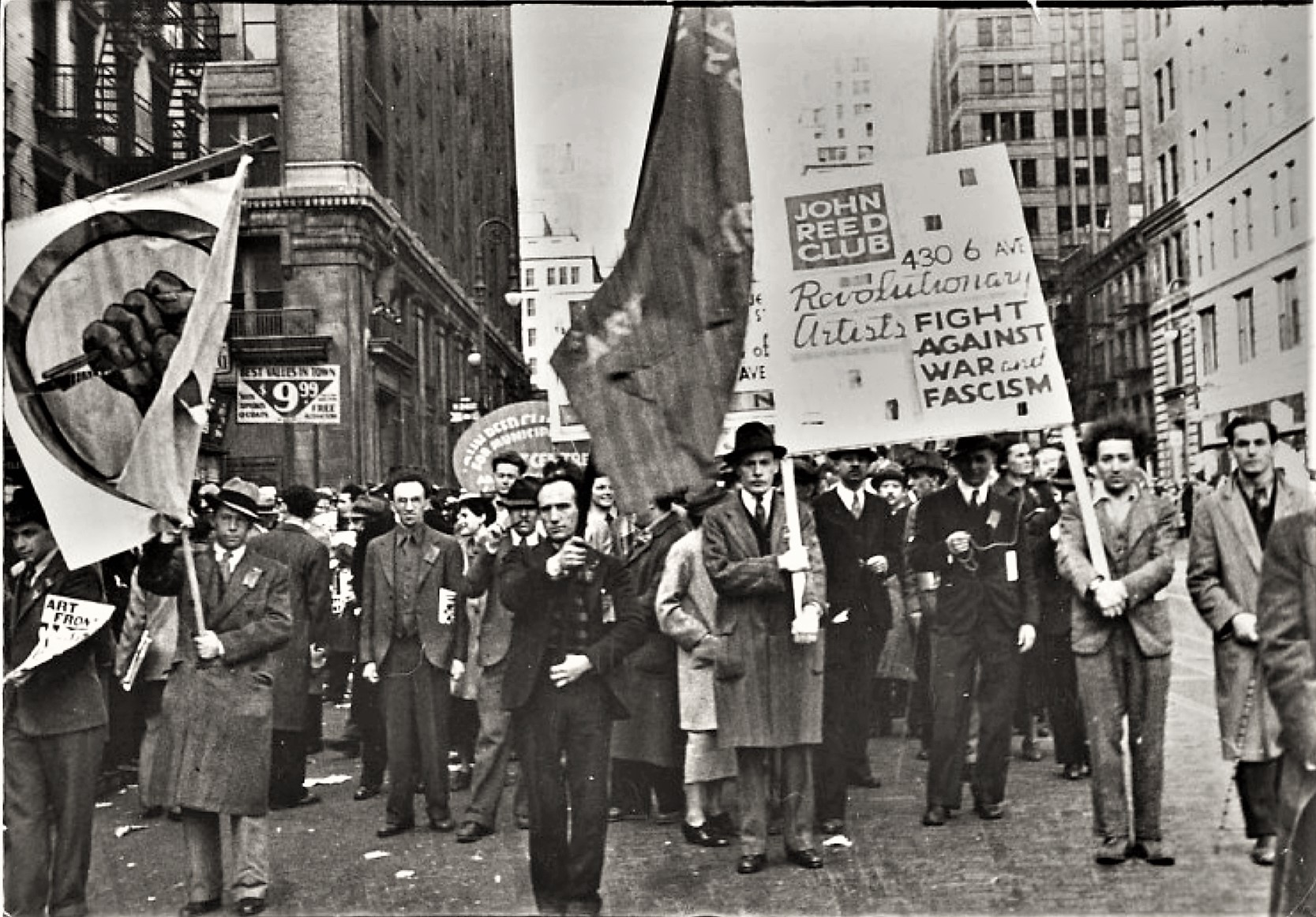
‘Draft Manifesto of the John Reed Clubs’ from the New Masses. Vol. 7 No. 12. June, 1932.
The Editors of New Masses take pleasure in publishing this Manifesto which is a draft prepared by the John Reed Club of New York to be submitted to the conference of John Reed Clubs of the United States, meeting in Chicago, on May 30. The conference was called following a suggestion to the International Union of Revolutionary writers. The International Union then empowered the Executive Board of the New York Club to constitute itself a national organizing committee, to function until a regularly elected National Executive Board could be formed.
Mankind is passing through the most profound crisis in its history. An old world is dying; a new one is being born. Capitalist civilization, which has dominated the economic, political, and cultural life of continents, is in the process of decay. It received a deadly blow during the imperialist war which it engendered. It is now breeding new and more devastating wars. At this very moment the Far East seethes with military conflicts and preparations which will have far-reaching consequences for the whole of humanity.
Meantime, the prevailing economic crisis is placing greater and greater burdens upon the mass of the world’s population, upon those who work with hand or brain. In the cities of five-sixths of the globe, millions of workers are tramping the streets looking for jobs in vain. In the rural districts, millions of farmers are bankrupt. The colonial countries reverberate with the revolutionary struggles of oppressed peoples against imperialist exploitation; in the capitalist countries the class struggle grows sharper from day to day.
The present crisis has stripped capitalism naked. It stands more revealed than ever as a system of robbery and fraud, unemployment and terror, starvation and war.
The general crisis of capitalism is reflected in its culture. The economic and political machinery of the bourgeoisie is in decay, its philosophy, its literature, and its art are bankrupt. Sections of the bourgeoisie are beginning to lose faith in its early progressive ideas. The bourgeoisie is no longer a progressive class, and its ideas are no longer progressive ideas. On the contrary: as the bourgeois world moves toward the abyss, it reverts to the mysticism of the middle ages. Fascism in politics is accompanied by neo-catholicism in thinking. Capitalism cannot give the mass of mankind bread. It is equally unable to evolve creative ideas.
This crisis in every aspect of life holds America, like the other capitalist countries, in its iron grip. Here there is unemployment, starvation, terror, and preparation for war. Here the government, national, state and local, is dropping the hypocritical mask of democracy, and openly flaunts a fascist face. The demand of the unemployed for work or bread is answered with machine-gun bullets. Strike areas are closed to investigators; strike leaders are murdered in cold blood. And as the pretense of constitutionalism is dropped, as brute force is used against workers fighting for better living conditions, investigations reveal the utmost corruption and graft in government, and the closest cooperation of the capitalist political parties and organized crime.
In America, too, bourgeois culture writhes in a blind alley. Since the imperialist war, the best talents in bourgeois literature and art, philosophy and science, those who have the finest imaginations and the richest craftsmanship, have revealed from year to year the sterility, the utter impotence of bourgeois culture to advance mankind to higher levels. They have made it clear that although the bourgeoisie has a monopoly of the instruments of culture, its culture is in decay. Most of the American writers who have developed in the past fifteen years betray the cynicism and despair of capitalist values. The movies are a vast corrupt commercial enterprise, turning out infantile entertainment or crude propaganda for the profit of stockholders. Philosophy has become mystical and idealist. Science goes in for godseeking. Painting loses itself in abstractions or trivialities.
In the past two years, however, a marked change has come over the American intelligentsia. The class struggle in culture has assumed sharp forms. Recently we have witnessed two major movements among American intellectuals: the Humanist movement, frankly reactionary in its ideas; and a movement to the left among certain types of liberal intellectuals.
The reasons for the swing to the left are not hard to find. The best of the younger American writers have come, by and large, from the middle-classes. During the boom which followed the war these classes increased their income. They played the stockmarket with profit. They were beneficiaries of the New Era. The crash in the autumn of 1929 fell on their heads like a thunderbolt. They found themselves the victims of the greatest expropriation in the history of the country. The articulate members of the middle-classes — the writers and artists, the members of the learned professions — lost that faith in capitalism which during the twenties trapped them into dreaming on the decadent shores of post-war European culture. These intellectuals suddenly awoke to the fact that we live in the era of imperialism and revolution; that two civilizations are in mortal combat and that they must take sides.
A number of factors intensified their consciousness of the true state of affairs. The crisis has affected the intellectual’s mind because it has affected his income. Thousands of school-teachers, engineers, chemists, newspapermen and members of other professions are unemployed. The publishing business has suffered acutely from the economic crisis. Middle-class patrons are no longer able to buy paintings as they did formerly. The movies and theatres are discharging writers, actors and artists. And in the midst of this economic crisis, the middle-class intelligentsia, nauseated by the last war, sees another one, more barbarous still, on the horizon. They see the civilization in whose tenets they were nurtured going to pieces.
In contrast, they see a new civilization rising in the Soviet Union. They see a land of 160,000,000 people, occupying one-sixth of the globe, where workers rule in alliance with farmers. In this vast country there is no unemployment. Amidst the decay of capitalist economy, Soviet industry and agriculture rise to higher and higher levels of production every year. In contrast to capitalist anarchy, they see planned Socialist economy. They see a system with private profit and the parasitic classes which it nourishes abolished; they see a world in which the land, the factories, the mines, the rivers, and the hands and brains of the people produce wealth not for a handful of capitalists but for the nation as a whole. In contrast to the imperialist oppression of the colonies, to the lynching of Negroes, to Scottsboro cases, they see 132 races and nationalities in full social and political equality cooperating in the building of a Socialist society. Above all, they see a cultural revolution unprecedented in history, unparalleled in the contemporary world. They see the destruction of the monopoly of culture. They see knowledge art and science made more accessible to the mass of workers and peasants. They see workers and peasants themselves creating literature and art, themselves participating in science and invention. And seeing this, they realize that the Soviet Union is the vanguard of the new Communist society which is to replace the old.
Some of the intellectuals who have thought seriously about the world crisis, the coming war and the achievements of the Soviet Union, have taken the next logical step. They have begun to realize that in every capitalist country the revolutionary working class struggles for the abolition of the outworn and barbarous system of capitalism. Some of them, aligning themselves with the American workers, have gone to strike areas in Kentucky and Pennsylvania and have given their talents to the cause of the working class.
Such allies from the disillusioned middle-class intelligentsia are to be welcomed. But of primary importance at this stage is the development of the revolutionary culture of the working class itself. The proletarian revolution has its own philosophy developed by Marx, Engels and Lenin. It has developed its own revolutionary schools, newspapers, and magazines; it has its worker-correspondence, its own literature and art. In the past two decades there have developed writers, artists and critics who have approached the American scene from the viewpoint of the revolutionary workers.
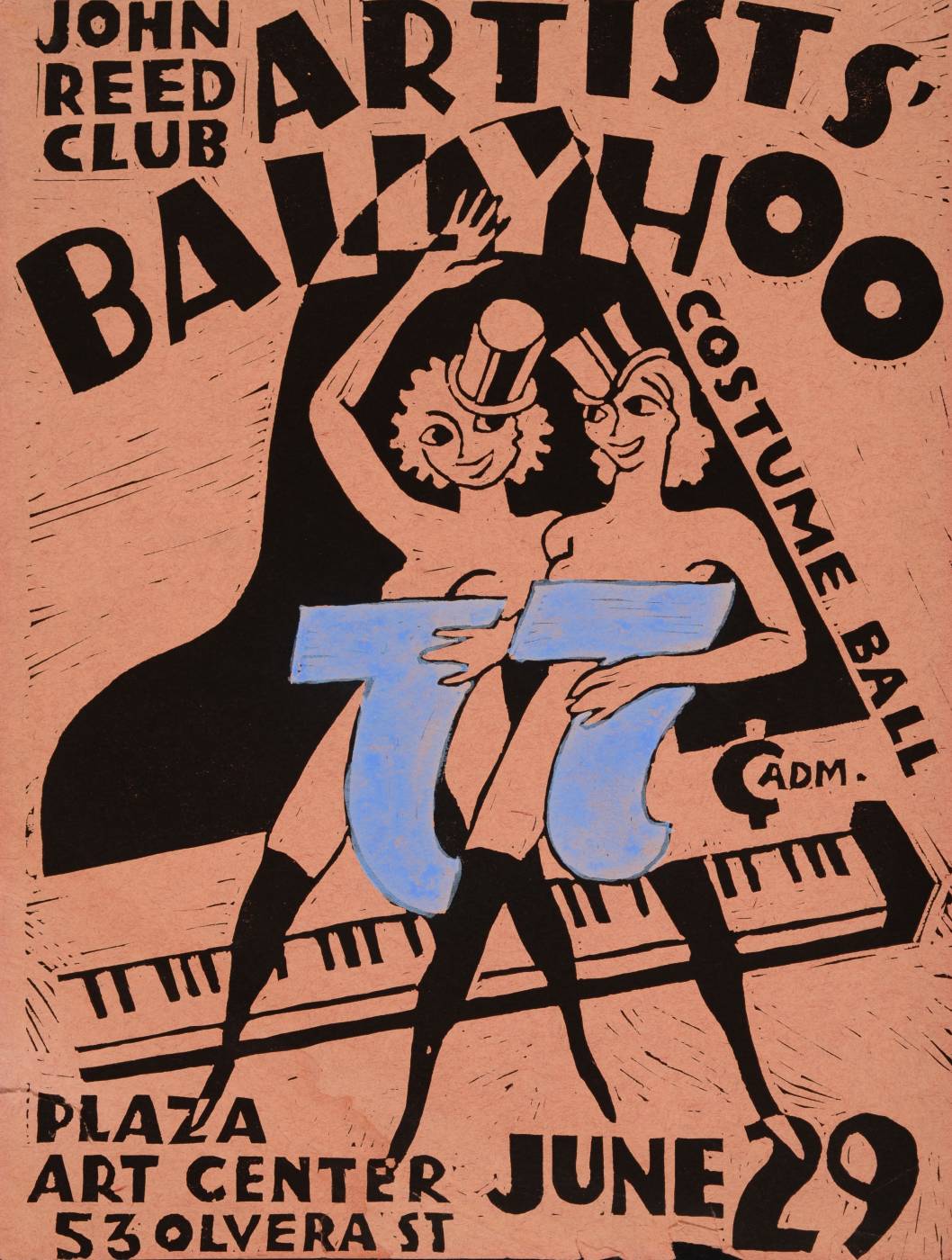
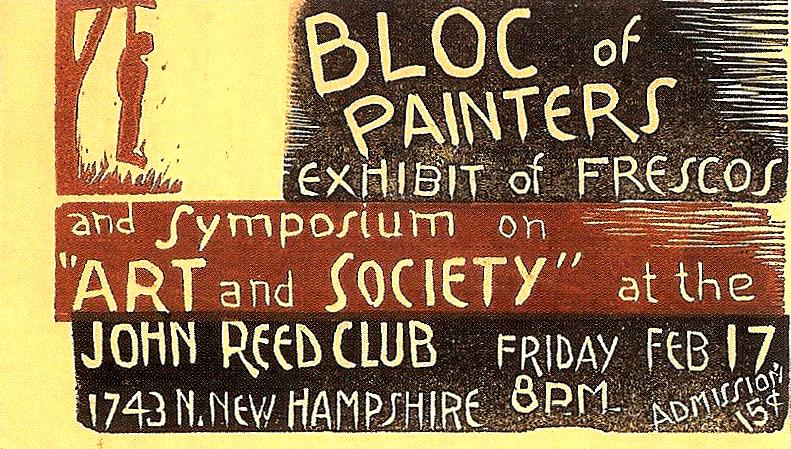
To give this movement in arts and letters greater scope and force, to bring it closer to the daily struggle of the workers, the John Reed Club was formed in the fall of 1929. In the past two and a half years, the influence of this organization has spread to many cities. Today there are thirteen John Reed Clubs throughout the country. These organizations are open to writers and artists, whatever their social origin, who subscribe to the fundamental program adopted by the international conference of revolutionary writers and artists which met at Kharkov, in November, 1930. The program contains six points upon which all honest intellectuals, regardless of their background, may unite in the common struggle against capitalism. They are:
(1) Fight against imperialist war, defend the Soviet Union against capitalist aggression;
(2) Fight against fascism, whether open or concealed, like social-fascism;
(3) Fight for the development and strengthening of the revolutionary labor movement;
(4) Fight against white chauvinism (against all forms of Negro discrimination or persecution) and against the persecution of the foreign-born;
(5) Fight against the influence of middle-class ideas in the work of revolutionary writers and artists;
(6) Fight against the imprisonment of revolutionary writers and artists, as well as other class-war prisoners throughout the world.
On the basis of this minimum program, we call upon all honest intellectuals, all honest writers and artists, to abandon decisively the treacherous illusion that art can exist for art’s sake, or that the artist can remain remote from the historic conflicts in which all men must take sides. We call upon them to break with bourgeois ideas which seek to conceal the violence and fraud, the corruption and decay of capitalist society. We call upon them to align themselves with the working-class in its struggle against capitalist oppression and exploitation, against unemployment and terror, against fascism and war. We urge them to join with the literary and artistic movement of the working-class in forging a new art that shall be a weapon in the battle for a new arid superior world.
The New Masses was the continuation of Workers Monthly which began publishing in 1924 as a merger of the ‘Liberator’, the Trade Union Educational League magazine ‘Labor Herald’, and Friends of Soviet Russia’s monthly ‘Soviet Russia Pictorial’ as an explicitly Communist Party publication, but drawing in a wide range of contributors and sympathizers. In 1927 Workers Monthly ceased and The New Masses began. A major left cultural magazine of the late 1920s and early 1940s, the early editors of The New Masses included Hugo Gellert, John F. Sloan, Max Eastman, Mike Gold, and Joseph Freeman. Writers included William Carlos Williams, Theodore Dreiser, John Dos Passos, Upton Sinclair, Richard Wright, Ralph Ellison, Dorothy Parker, Dorothy Day, John Breecher, Langston Hughes, Eugene O’Neill, Rex Stout and Ernest Hemingway. Artists included Hugo Gellert, Stuart Davis, Boardman Robinson, Wanda Gag, William Gropper and Otto Soglow. Over time, the New Masses became narrower politically and the articles more commentary than comment. However, particularly in it first years, New Masses was the epitome of the era’s finest revolutionary cultural and artistic traditions.
PDF of full issue: https://www.marxists.org/history/usa/pubs/new-masses/1932/v07n12-jun-1932-New-Masses.pdf
 Revolution's Newsstand