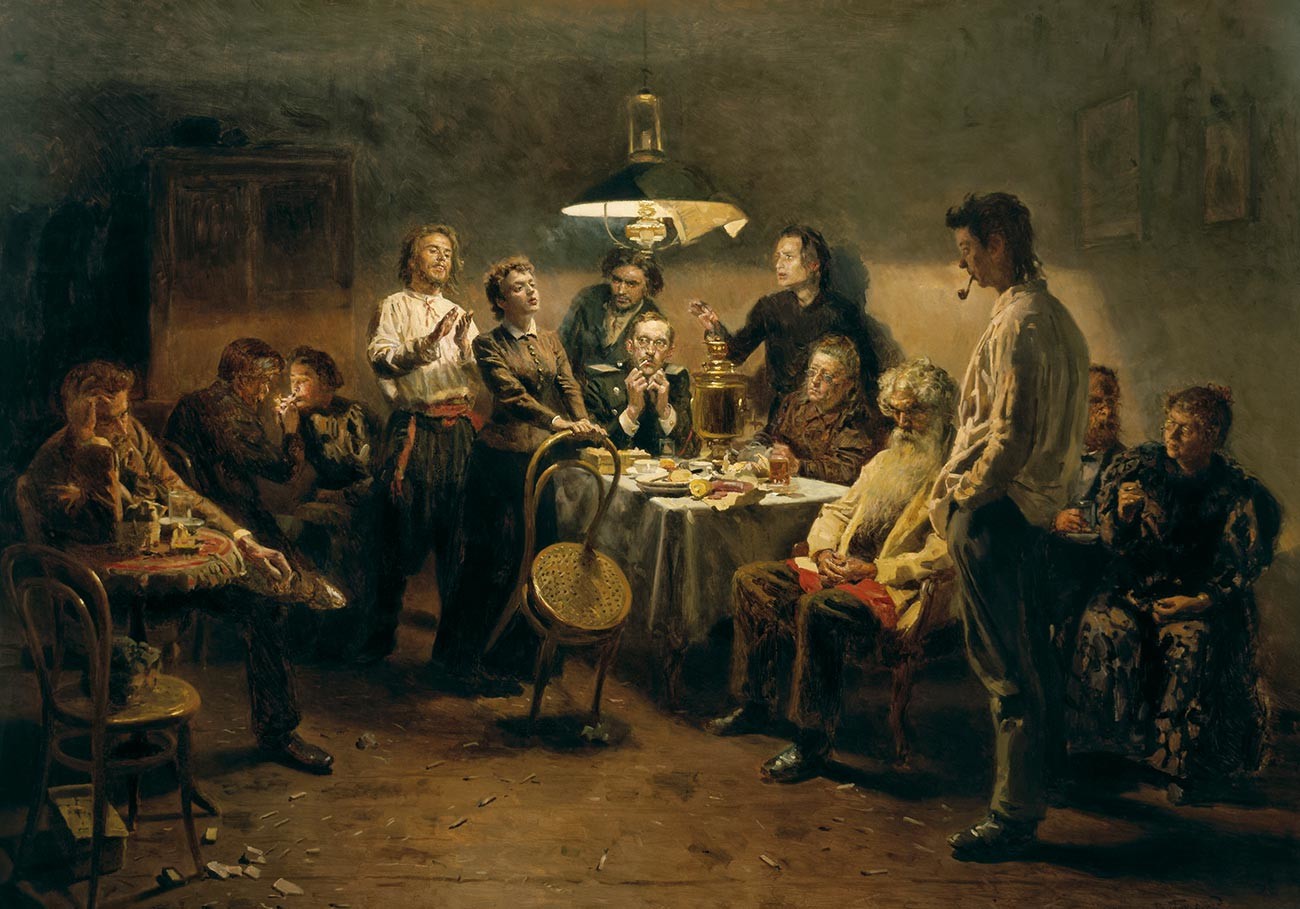
Max Nomad/Max Strypyansky (Maximilian Nacht), here in his Communist days, gives us the story of ‘Maximalists,’ the ‘Makhayevtsy,’ all manner of S.R.’s, the ‘Beznachalye’ and ‘Chomoye Znamya,’ ‘Syndicalist-Anarchist-Communists,’ and the ‘Non-Conformists of the Russian Revolution’ in this ‘chapter from Russian Revolutionary history.’
‘Non-Conformists of the Russian Revolution’ by Max Strypyansky (Max Nomad) from Soviet Russia (New York). Vol. 5 No. 1. July, 1921.
THE history of modem revolutions shows a great diversity of main and side-currents, of heated discussions, wasted energies, forgotten sacrifices. This applies especially to the first decade of this century, the epochs immediately preceding and following the First Revolution, that of 1905.
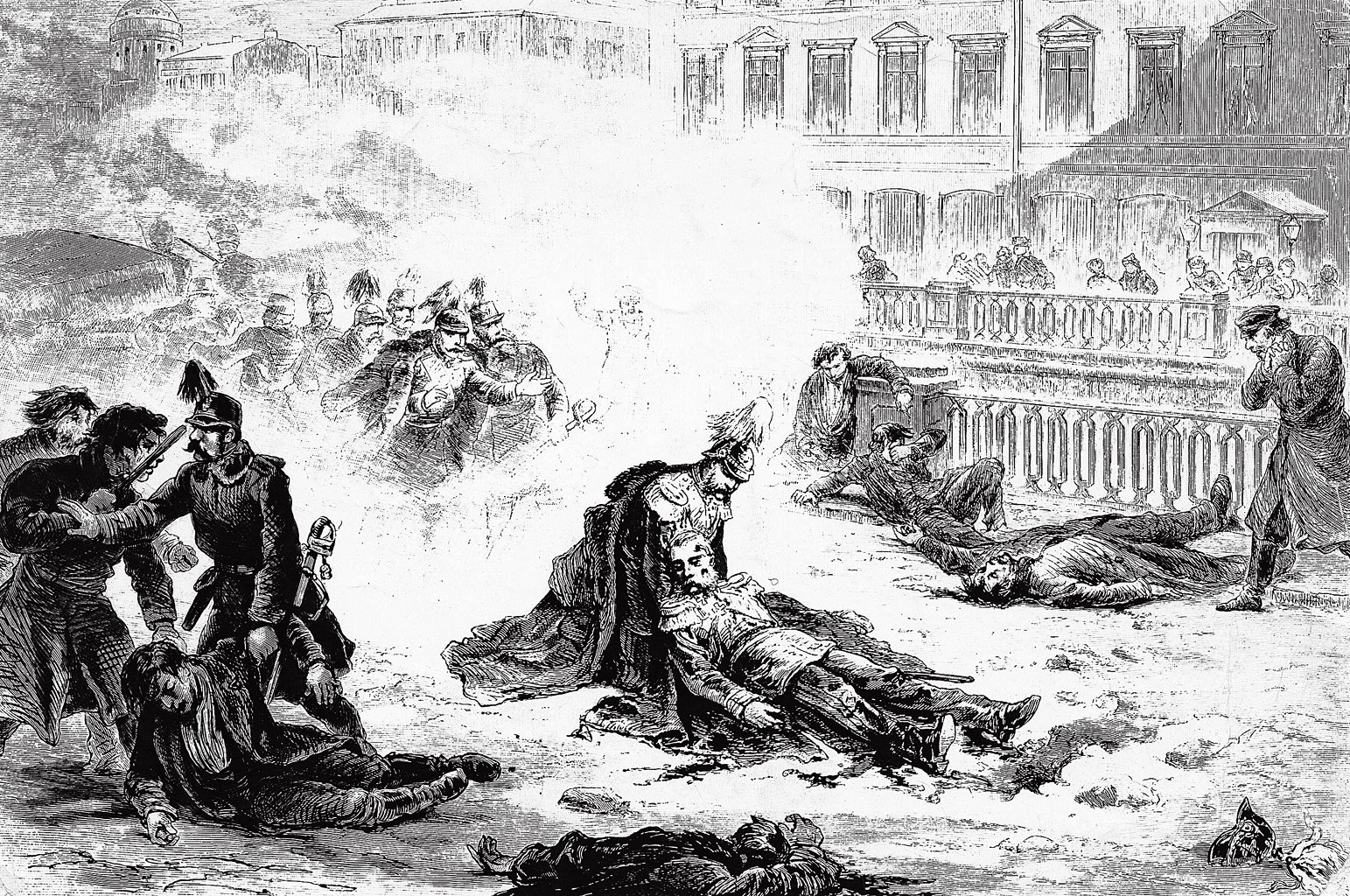
The revolutionary movement had then just begun to emerge from the stagnation into which it had been plunged after the destruction of the “Narodnaya Volya”, the bold terrorist organization whose chief accomplishment — the execution of the Tsar Alexander II in 1881 — was also the beginning of its decline. Practically all of its members were arrested before the middle of the eighties. What followed then was not so much a struggle against the ruling power, as theoretical discussions within the ranks of those who had either escaped abroad or completely withdrawn from any illegal activity. Until that time the Russian revolutionary movement — while still calling itself Socialistic presented a Socialism of a specifically autochthonous type. It was a struggle of the progressive layers of the bourgeoisie — notably the intellectuals — whose aim was the Europeanization of the country, the introduction of Western democratic institutions. But while in Western Europe the fight for democracy was carried through with the help of the industrial proletariat, there was in Russia no industrial working class to speak of. Quite naturally the Russian malcontents turned to another dissatisfied element — the peasantry. The then prevailing romantic illusion that the Russian peas- ant was a genuine Communist (because of his association with the mir, the quasi-communistic landholding system) gave rise to a belief that Russia need not pass through the capitalist stage, of Western Europe, but might proceed directly from feudalism to socialism. The bitter experience of whole generations of youthful propagandists who “went among the people” but usually succeeded only in getting arrested and handed over to the Tsar’s police by those same “communistic” peasants, turned the erstwhile propagandists and “goers to the people” into terrorists. With the killing of high officials and finally of the Tsar himself, they hoped to force the government to grant political freedom and western democratic institutions that would enable them to prepare the great masses of the ignorant peasantry for their socialist ideal. At present we know that all their Socialist phraseology was self-deception, was only an idealistic embellishment of their heroic struggle for bourgeois democracy.
They did not succeed. The government, shattered for a moment, had almost been induced to start negotiations with the “Narodnya Volya” — but after convincing itself that the strength of its opponents in reality reposed only on the heroism of a number of individuals, carried the struggle to an end and destroyed the organization.
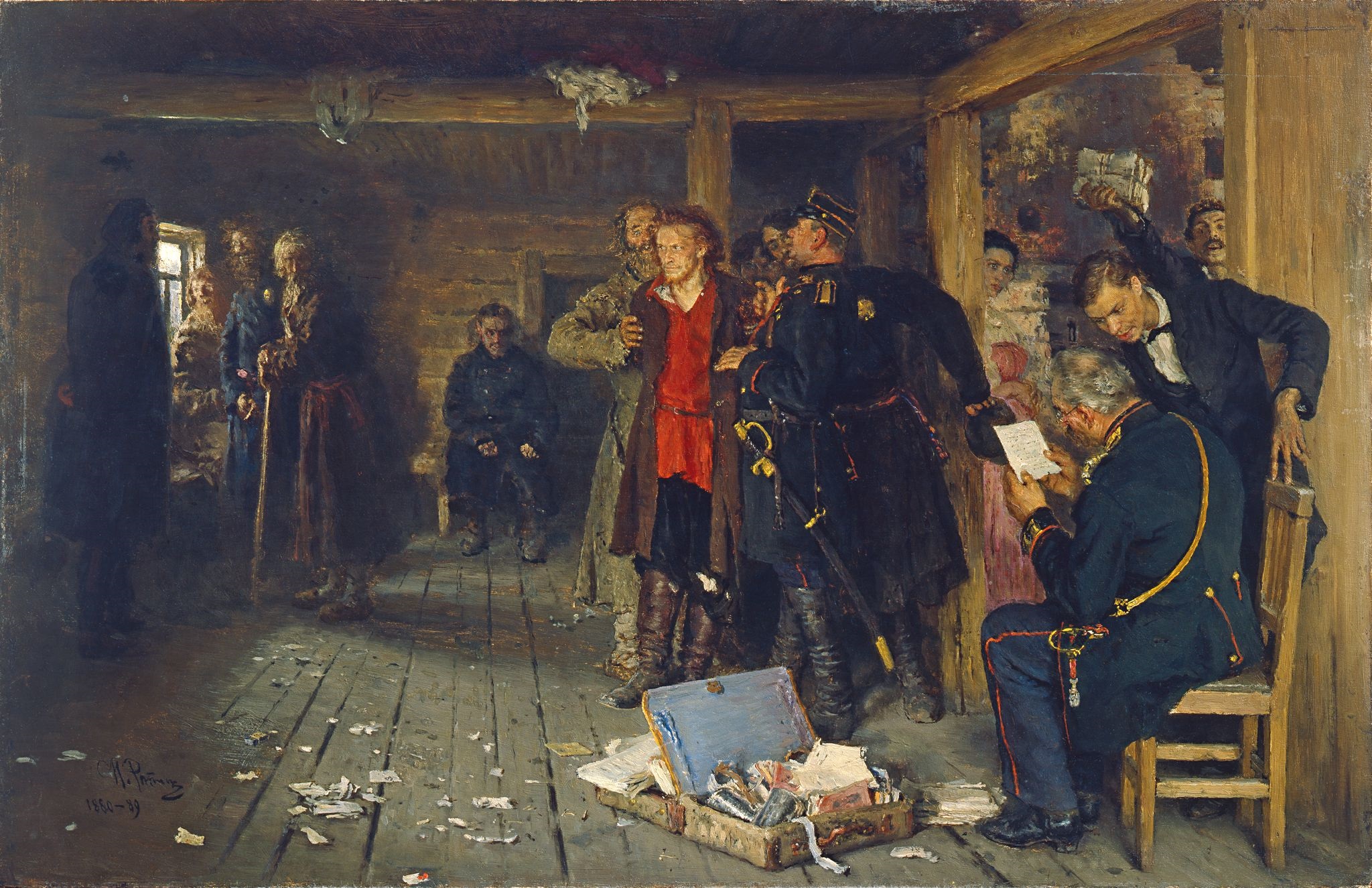
This defeat stirred a number of revolutionists to look for another way to defeat Tsarism. They found this way in the Marxian Socialism of Western Europe. The spokesman of this group was none other than George Plekhanov, who, together with Leo Deutsch, Paul Axelrod and the former active terrorist Vera Zasulich formed the group “The Emancipation of Labor,” which marks the beginning of the Social-Democratic movement in Russia. The industrial proletariat, which at that time had just begun to develop in the great Empire, was to become the main force for the overthrow of the Asiatic despotism. Even the adherents of the old genuine Russian socialism began to acknowledge the importance of the working class in the forthcoming task. In a discussion between Plekhanov and Tikhomirov, the then most important literary spokesman of the “Narodnaya Volya” abroad (he later recanted and became editor of a reactionary daily in Moscow) there were coined the notable sentences which almost in a nutshell show the stand taken by the old and the new ideology. Tikhomirov said: “I admit that the proletariat is very important for the Revolution.” To which Plekhanov retorted: “No, the Revolution is very important for the proletariat” The whole stand taken by Plekhanov later on, especially during the war and the Revolution of 1917, shows that while the terminology was different, at bottom they were in agreement Only Tikhomirov was more cynical in his readiness to use the workers frankly as a tool for his, the Bourgeois Revolution — while Plekhanov, more circumspect — meant that the Bourgeois Revolution was of paramount necessity for the workers themselves; The workers might make their choice…
Social Revolutionists and Social Democrats
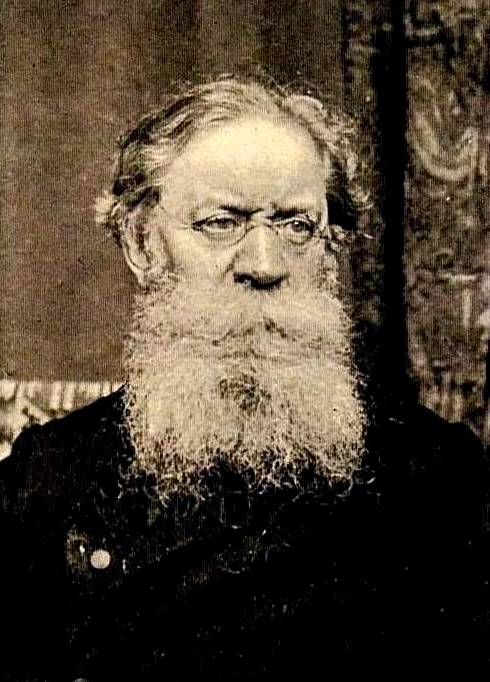
Out of the remnants and admirers of the “Narodnaya Volya”, based on the ideology of Lavrov and Mikhailovsky, developed in the beginning of the twentieth century the Party of the Socialist-Revolutionists (usually called after their initials, the S.R. or “Eser’s”). Although “in principle” they recognized the class-struggle, they considered as the main forces of the revolution the intellectuals and the peasants. Their favorite means of combat was terrorism, and they have to their credit some of the most admirable types of heroes and idealistic martyrs, such as Balmyov, Yegor Sazonov, Kalayev, Gershuni. But with all due respect to the heroism of their fighters — the aims of the party were purely bourgeois; its goal was bourgeois democracy of the French or English type; after this was reached, they were to stand in the extreme right of the Socialist movement, together with Bernstein, Henderson, and all he reformists for whom sometimes even the Second International is too revolutionary. And it is a grim joke that the two leading spirits of their terrorist fighting organization, especially after the arrest of Gershuni, were the two supermen of spydom and white-guardism — Azev and Savinkov. This is the party that brought forth Kerensky, Qiemov, Avksentyev, Chaykovsky and so many other heroes of Russian and European counter-revolution.
Parallel with this party there developed, after the beginning of this century, its great rival on the revolutionary field, the Marxian Social Democracy. In its aims it did not differ very much from the Social-Revolutionists. Both were fighting for the same “ideal”, the democratic Republic. They differed only in their means and in some purely theoretical conceptions. Not sharing the S.R.’s view as to the important role of the individual, they rejected terrorism as unnecessary and even harmful, for individual heroism, detached from the masses, might, according to them, create in the masses the illusion that they need not themselves fight. And they concentrated all their efforts on organizing the industrial workers for the struggle for political liberty.
When speaking of the coming revolution — both revolutionary parties had exclusively in mind the bourgeois democratic revolution. If the Social- Democrats sometimes spoke of the “revolution of the proletariat,” or the “proletarian revolution,” they meant it in a somewhat Pickwickian sense: the fighters in the revolution were to be proletarians, but the goal was to be democratic, which sounded better than “bourgeois”. Nothing was more remote from their minds than the Social Revolution; for, first, most of them were bourgeois intellectuals or intellectual declasses, for whom bourgeois democracy really meant a great step forward. And what is good for ourselves we usually consider as good for others too. It is the old mechanics of unconscious deception and self- deception that may be observed in every revolution. And second, even in the industrially highly developed Western Europe the proletarian revolution was a distant dream — was it then worthwhile to speak about it at all in a backward country like Russia?
Dissenters
But nevertheless there appeared some individuals and groups who in that period, shortly before and after the first revolution (1905) began to speak of a Social or Workers’ Revolution as against the bourgeois revolution heralded by the two great parties. They usually were, so to speak, the illegitimate offspring of the two parties, as well as of orthodox Anarchism, the Anarchism of Kropotkin, which, while theoretically preaching Social Revolution in Europe, practically did not differ at all from the S.R. and the S.D. in its conceptions as to the purely political character of the coming Russian revolution.
Machajski and the “Makhayevtsy”
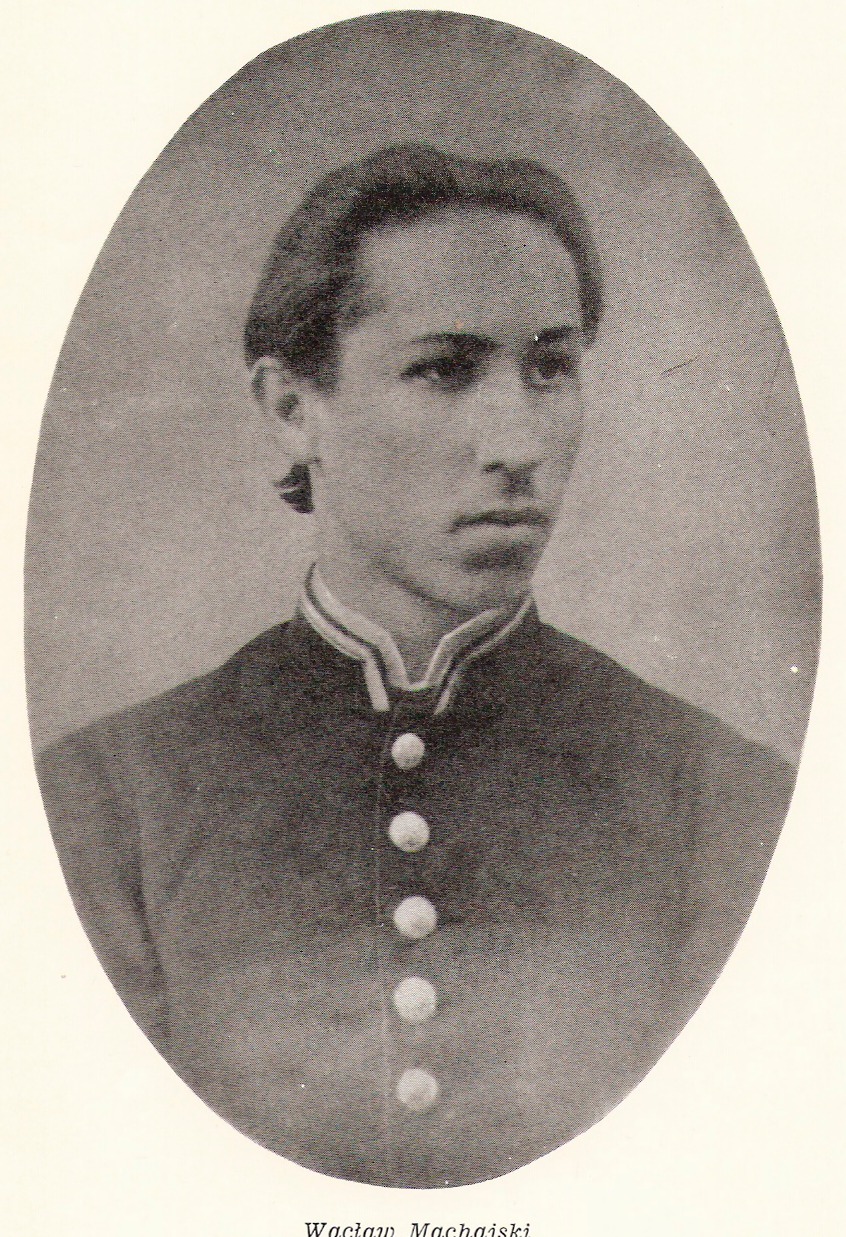
One of the first “dissenters” of this epoch was the Polish-Russian revolutionary Marxist, W. Machajski (A. Wolski), who in 1902 published in his Siberian exile an interesting pamphlet under the title “The Evolution of Social Democracy” (the first part of his large work “The Intellectual Worker”) in which, proceeding still from the Marxian point of view, he criticizes the bourgeois character of the Socialist parties, the prevalence of the class interest of the intellectuals in their policy, and advocates the immediate seizure of power and dictatorship of the proletariat for the immediate abolition of the bourgeois exploitation. The insight with which he exposes and almost predicts the future anti-proletarian and anti-revolutionary role of the Socialist parties is most amazing, and his criticism of bourgeois democracy, which at that time was quite unusual and was considered an exaggeration even by most of the Anarchists, has since 1917 become almost a commonplace for Communists. He later somewhat modified his views, and his theoretical system, which brought forth a rather voluminous literature, was often called a combination of Marxian, Blanquist, Bakunist and Syndicalist elements. He and his adherents founded a number of groups (“Makhayevtsy”) in Petrograd, Odessa, Warsaw (and Cracow, on Austrian Polish territory), concentrating their activity mostly among the unskilled workers and the unemployed, whom they urged to come out with immediate concrete demands addressed either to their employers (higher wages) or to the Government (to provide immediately for work for all unemployed). According to them the workingmen were always ready to fight, if only the object was obviously in their interest, such as higher wages or providing of work for the unemployed. The further development of this struggle, assisted and organized by a secret organization, was to bring about a decisive clash between the whole working class, using the weapon of the general strike, followed by insurrection, and the forces of the Government. The outcome was to be the dictatorship of the working class which, however, in Machajski’s view, was somewhat different from the conception commonly prevailing since 1917.
This group was not very successful in its activities. Most of its members were soon arrested and dispersed. Some of them are at present active in the Communist movement Machajski himself after the November Revolution (the latest news of him reached us in 1918), admitted that part of his predictions had not come true — viz. the Bolsheviks had turned out to be better than he expected. And he was not sorry.
“Beznachalye” and “Chomoye Znamya”
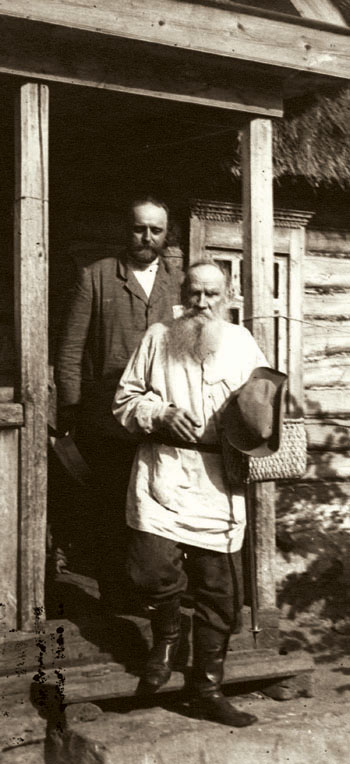
On the opposite pole, although likewise appealing to the unskilled and unemployed, was the Anarchist group “Beznachalye” (Without Authority). Founded by two picturesque young men, an Armenian student with the strange name of Nicholas Romanov who, quite different from his illustrious double, was famous for his wit and cleverness, and a former theological student with (then) Tolstoyan leanings (hence his nickname “Tolstoy”), the group claimed to be the direct contmuator of the gospel of Bakunin and Nechayev. Like Machajski, they argued that the masses are always ready to revolt; but while Machajski, being a cold realist, wanted to employ this rebellious spirit for the struggle for immediate concrete demands, and was absolutely opposed to any idealist slogans such as “Socialism”, “Anarchy”, etc., which according to him could not bring about the workers’ revolution, the “Beznachaltsy” urged the masses (or rather the few hundred readers whom their papers and leaflets reached) to kill, to rob the rich, to take revenge upon the bourgeois class, until after a long series of individual reprisals the whole mass of the people would rise in revolt for the beautiful ideal of Anarchy. The group met with a sad fate. Nicholas Romanov was arrested in Russia, with bombs in his possession, and got fifteen years of hard labor. “Tolstoy” tried to rob a bank in Switzerland, killed two clerks and citizens who pursued him, and finally committed suicide in prison by burning himself with a kerosene lamp. A number of other members found their death on the scaffold. In general, the group disappeared. In a way, Makhno might be called their epigone. Very near to this group was another Anarchist circle called after its organ “Chomoye Znamya” (The Black Flag). Its founder, Judah Grossman (“Roshchyn”), was a very brilliant speaker, who could enthrall his listeners with clever paradoxes. He borrowed much of his thunder from Machajski, and consequently did not like him very much. His two new contributions to Anarchist terminology were the “commune” and the “unmotived terror”. His idea of the “commune” consisted in “seizing a city” if only for a couple of days, abolishing all authority there — and thus giving a shining example to the workers of the country. This plan remained forever dead theory. He had more success with his “unmotived terror.” It consisted in throwing bombs into fashionable hotels, cafes, theatres or even in killing the first bourgeois one met on the street. It was called “unmotived,” as opposed to the regular terrorism which was practised by other Anarchists on capitalists who for some reason had become obnoxious to the workers; his terrorism was to be practiced without any special motive. Of course, he was quickly contradicted by some still more consistent rivals, who declared that killing bourgeois could not be called “unmotived” in any case, for the very fact of being a bourgeois was to the Anarchist already a criminal offense. There were such “unmotived” bombs in Odessa, Yekaterinoslav and Warsaw. A number of his personal friends and followers were executed. Grossman himself somehow survived and is now cooperating in Moscow with the Soviet Government as leader of the “Sovietsky,” i.e., pro-Bolshevist, Anarchists, bitterly attacked of course by many of his former admirers.
“Marxian” Anarchists
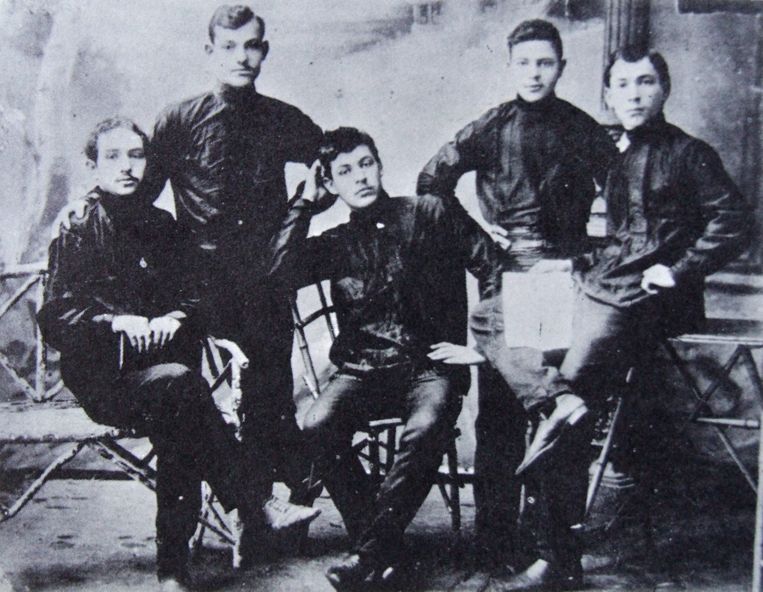
In this connection we must also mention the group of Marxian or “Syndicalist-Anarchist-Communists,” formed around the paper “Novy Mir” (1905), which was founded by a former Social- Democrat (of the Bolshevik faction, if we are not mistaken) who assumed the name of “Novomirsky.” He was strongly opposed to the “expropriations” (i.e., armed robberies), which had become a kind of favorite sport of a great number of Anarchists, and opposed to their heroic suicide-mania, some- thing that was very much akin to French Syndicalism. However, Communist-Anarchism for him soon became only the “program minimum,” and he was about to withdraw to a purely philosophical Anarchism, when he was arrested and condemned to eight years of hard labor. After escaping from Siberia, he came to New York, determined to withdraw from politics for good, when the Russian Revolution of 1917 induced him to return again to his country. He is now a frequent contributor to Russian Communist reviews, and it is most likely that the old-time rivalry of the two Anarchist hereiarchs, Grossman-Roschyn and Novoyirsky, has come to a close, now that they are both working for the Soviet Government.
The “Maximalists”
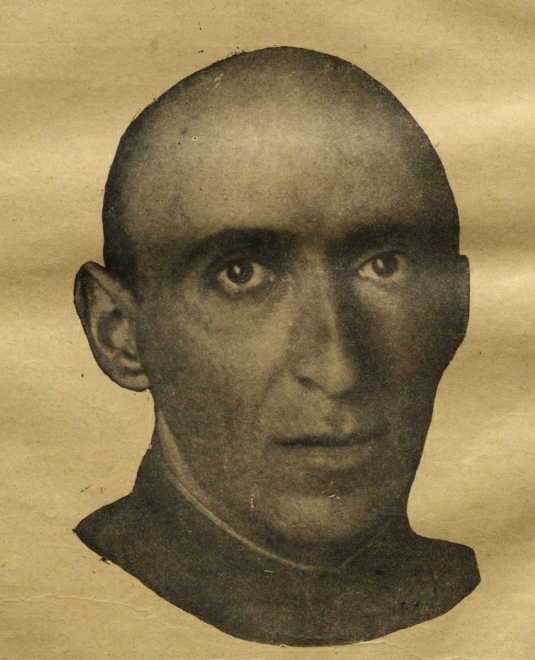
The Social-Revolutionists also gave birth to a current that already in 1905-1906 was advocating the Social Revolution. It was at first only an opposition within the party, the main controversy being, if we are not mistaken, the question of the agrarian terrorism (terrorism against the big landholders) and the armed attacks for expropriating government money for party purposes. The official party, bent upon its respectability, was against these two forms of terrorism, and recognized only the killing of obnoxious government officials. Finally, that opposition founded a separate party calling itself “Socialists-Revolutionists-Maximalists,” meaning that their revolutionary activity was bent upon immediate conquest of the maximum program, i.e. Socialism itself. One of their first theoreticians was Eugene Lozinsky, a writer of great learning and ability, who later embraced the gospel of Machajski. This party stands out among all other terrorist groups that ever existed in Russia, through the almost incredible daring with which they, in large groups, organized their terroristic attacks against the leading officials or the property of the Government. Most of them perished in the unequal struggle. It was their name (Maximalists) that was attached ten years later, after the March Revolution of 1917, by the bourgeois press to the Bolsheviks.
Among the present champions of Social Revolution in Russia it was strangely enough the then Menshevik Leon Trotsky who at that time, after the downfall of the Revolution of 1905, was the first to propagate the idea of the Social Revolution, not as something that was far distant, but as the task of the actual moment This stand, of course, separated him from his former associates; he formed among the Russian Social Democrats a class by himself. No wonder that he joined the Bolsheviks, who had always formed the left wing of the Russian Social Democracy, when during the war they took the stand that in the course of time made them the party of the Social Revolution.
Soviet Russia began in the summer of 1919, published by the Bureau of Information of Soviet Russia and replaced The Weekly Bulletin of the Bureau of Information of Soviet Russia. In lieu of an Embassy the Russian Soviet Government Bureau was the official voice of the Soviets in the US. Soviet Russia was published as the official organ of the RSGB until February 1922 when Soviet Russia became to the official organ of The Friends of Soviet Russia, becoming Soviet Russia Pictorial in 1923. There is no better US-published source for information on the Soviet state at this time, and includes official statements, articles by prominent Bolsheviks, data on the Soviet economy, weekly reports on the wars for survival the Soviets were engaged in, as well as efforts to in the US to lift the blockade and begin trade with the emerging Soviet Union.
PDF of full issue (large file): https://www.marxists.org/history/usa/pubs/srp/v4-5-soviet-russia%20Jan-Dec%201921.pdf

