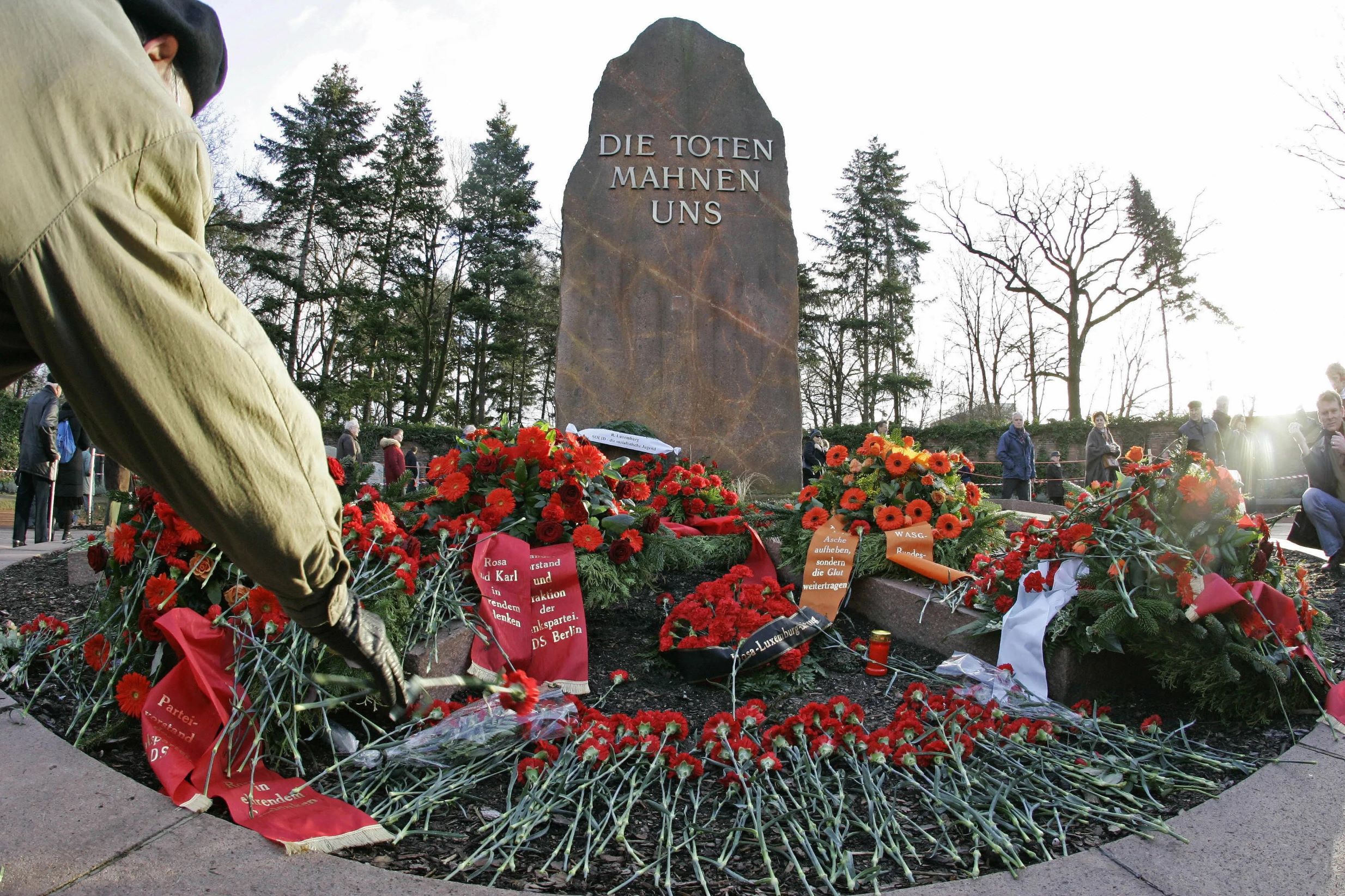
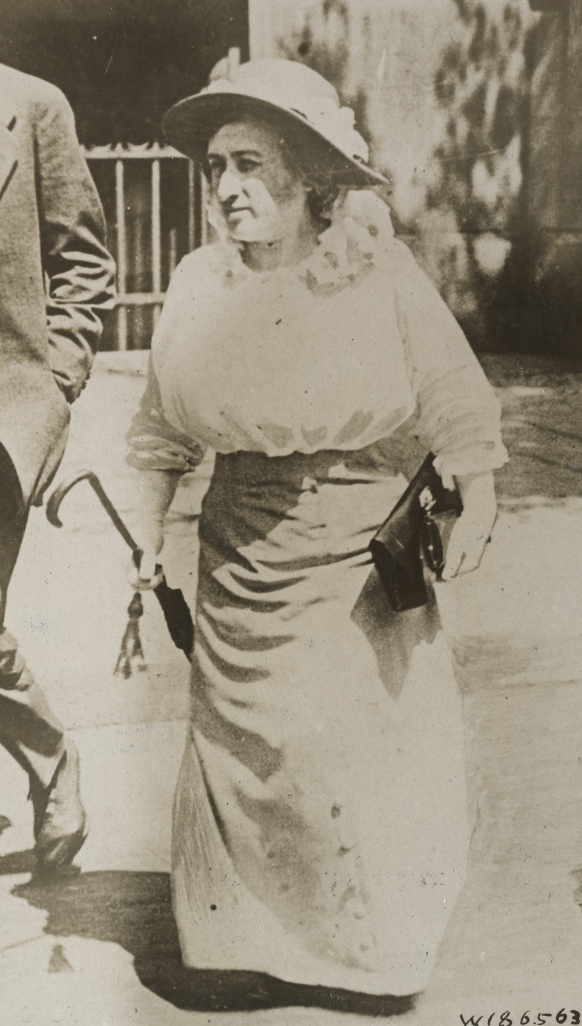
Pioneer U.S. Communist, editor of Revolutionary Age, Louis C. Fraina in homage to Rosa Luxemburg and Karl Liebknecht immediately after their murders January, 1919.
‘They are not Dead, O Comrades!’ by Louis C. Fraine from Revolutionary Age. Vol. 1 No. 16. February 1, 1919.
THE assassination of Karl Liebknecht and Rosa Luxemburg by hirelings of the old regime, and characteristic of the regime, was a brutal act. But the American press, which hysterically condemns the “terror” in Russia, indicates its delight, after perfunctory expressions of regret, purely formal, by smug variations upon the theme they that take the sword shall perish by the sword.
The sword, used in the corrupting service of Capitalism, evokes approval and applause; the sword, used in the liberating service of Socialism, evokes condemnation and moral attitudes they that take the sword shall perish by the sword…
Imperialism in Germany and in Russia, in Austria and in Britain, France and Italy, took up the sword of reaction and plunged the world into a war of slaves-war that disintegrates the mind and the body of man. But in the flames of this universal war there was forged a new sword, tempered, glorious, irresistible, the sword of the proletarian revolution, of the armed revolutionary proletariat. And when this sword was invoked by the oppressed masses in Germany and in Russia, there was a unanimous protest from those who had justified the war, whose hands were dripping with the blood of slaughtered millions, protest, moreover, from the infamous Ebert-Scheidemann majority “Socialists” of Germany, who during four and a half years approved and supported the reactionary war waged by Imperial Germany, and who, through their “Socialist” government, are responsible for the assassination of Karl Liebknecht and Rosa Luxemburg.
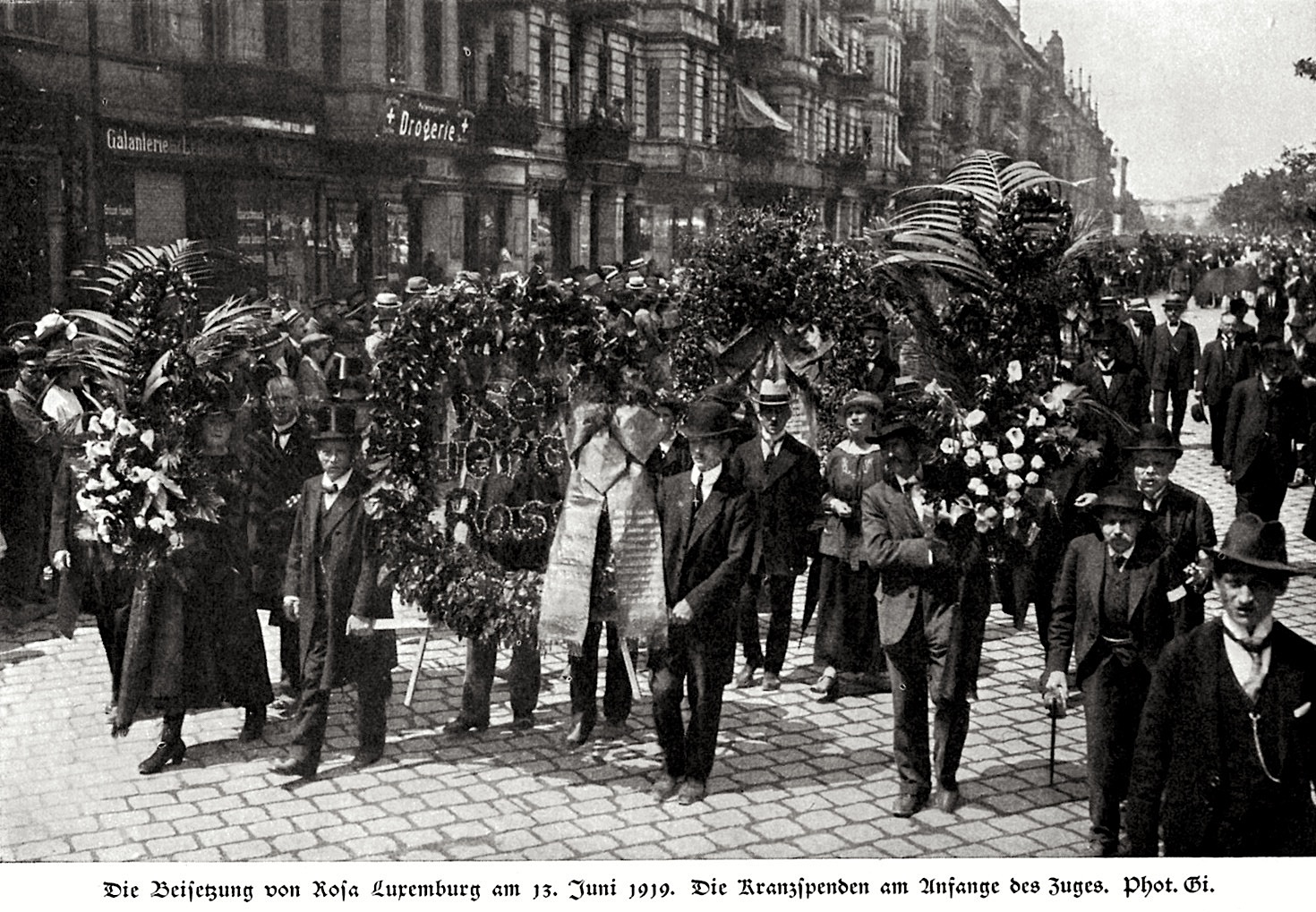
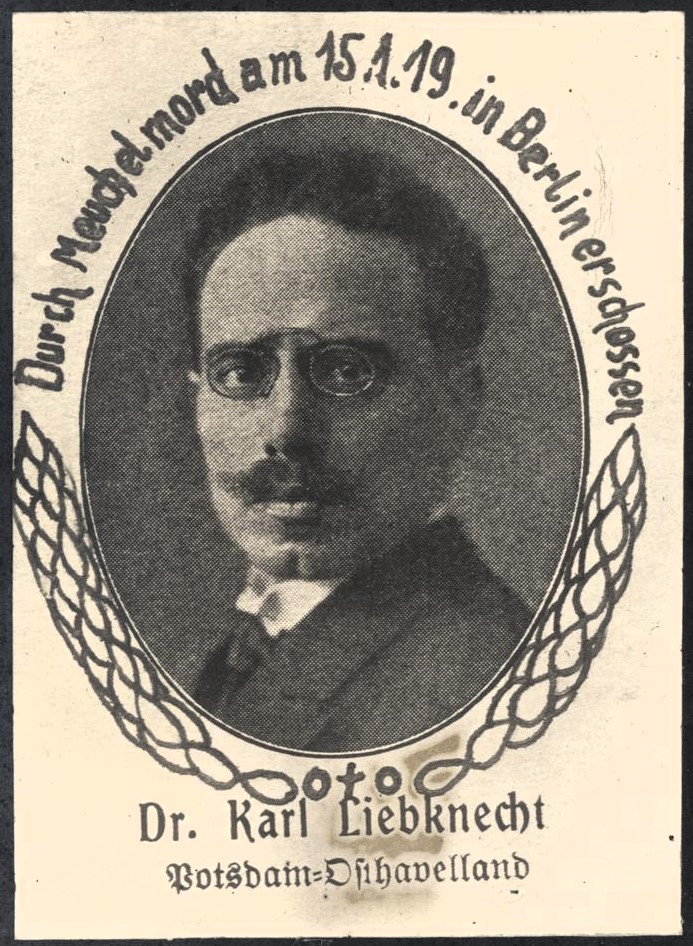
While this man and woman heroically waged war against German Imperialism and Kaiserism, their official murderers were fawning upon and sustaining Imperialism and Kaiserism.
While this man and woman were loyal to Socialism, their official murderers were betraying and befouling Socialism.
While this man and woman will secure the reverence of revolutionary Socialism and of history, their official murderers will be scourged as traitors, murderers, scoundrels.
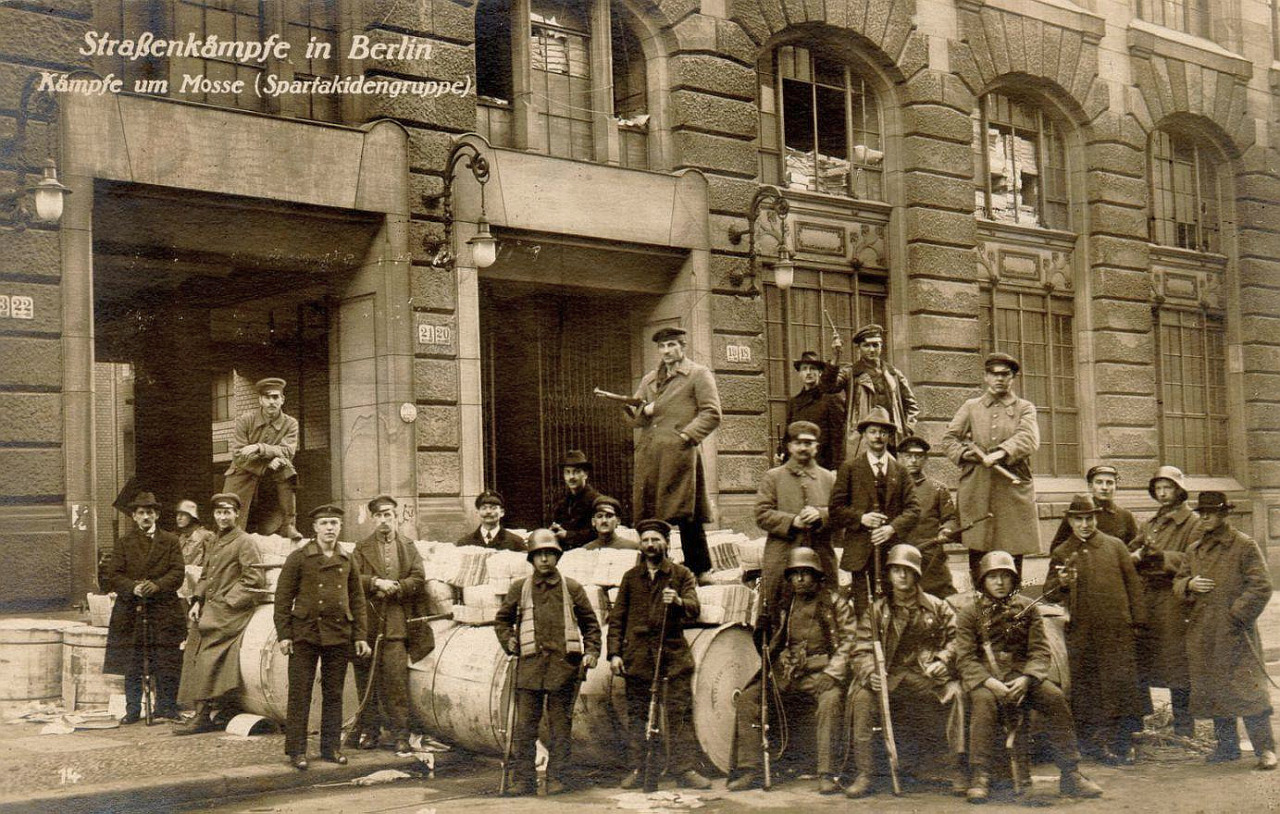
The Ebert-Scheidemann “Socialist” gangsters- their government for the suppression of Socialism- are responsible for the assassination. They concluded a defensive and offensive alliance with the worst elements of the old regime against Socialism and the proletarian revolution: they retained in authority and protected Marshal Hindenburg and the counter-revolutionary general staff; they demobilized and disarmed revolutionary troops, retained reactionary army units and brought these to Berlin to crush the revolutionary masses. And these reactionary troops, coldly brutally, assassinated our great comrades.
This is the responsibility of Ebert, Scheidemann & Co. This is their crime of crimes.
The crime is done. What do the apologists of the Ebert-Scheidemann Government say? – They that use the sword shall perish by the sword. What does the Government say? – Force to the utmost will be used to “maintain order,” that is to say, order over and against the revolutionary masses. What does the Government’s military director, Noske, – also “a Socialist”- say?-We shall investigate!
Our tribute to the dead comrades is not comprised in tears. The dead did not cry at the moment of dying; nor shall the living cry in sorrow. They died the death supreme, our comrades Karl and Rosa, they died as they had lived, glorious, courageous, inspiring; and what finer death is there, O comrades. No; our tribute is not tears, nor sorrow. Glorious in life, our comrades are still more glorious in death; they are still of us, their struggle and their ideals, terminating in the blood and the agony of their death. Their’s was a life of service to revolutionary Socialism and their death may yet constitute the supreme service. They cannot still the spirit. O comrades.
No; our tribute is a revolutionary tribute- out of their death shall we snatch new life, new energy and courage. We shall avenge their death- not in Germany, it is true, but Germany is merely one part of the international field of battle; we shall avenge their death by a new and more intense struggle for the Social Revolution.
We shall not say farewell, O comrades, for you are still of us; you are still struggling, and you are still an inspiration and a source of life; though your bodies are in death. Accept our homage, great comrades; accept as the final tribute, you who contributed the final service our determination to struggle uncompromisingly and unflinchingly for the Social Revolution.
The flaming beauty of their death is a challenge. It is a challenge to each of us; it is a challenge to Socialism. But the beauty of their death is not all: there have been martyrs in every cause, good and bad.
It is easier to die greatly than to live greatly. The beauty of their death is in this, that it was the final measure in the full cup of their devotion to revolutionary Socialism.
Not in their death, but in their life- not in their martyrs’ end but in their principles- shall we garner their real offering to our cause.
Rosa Luxemburg and Karl Liebknecht- the Lenin and Trotzky of Germany- flamed in revolt against the war; but they equally flamed in revolt against the “Socialist” apologists of the war. They flamed in revolt against Capitalism and Imperialism; but they equally flamed in revolt against the petty bourgeois, “majority” Socialism that sustains Capitalism and Imperialism.
War against moderate, petty bourgeois Socialism is a necessary phase of the war against Capitalism; our Karl and Rosa waged this war- war on two fronts; and they were assassinated by the hirelings of Capitalism protected by the government of moderate, petty bourgeois “Socialism.”
While moderate “Socialism” in Germany fawned upon the bourgeoisie and Woodrow Wilson, our Rosa and Karl struggled to complete the proletarian revolution in Russia by spreading it in Germany and Europe.
While moderate “Socialism,” in Bourbon fashion, learnt nothing and forgot nothing, our Rosa and Karl were in tune with the new rhythm of the Revolution.
Rosa Luxemburg and Karl Liebknecht were representatives of revolutionary Socialism. They had seen the older Socialism enter the service of Imperialism; they had seen it crumble, and then become mud; and they refused to let this mud swallow them.
There is one real tribute we can pay our martyred dead- not only our Karl and Rosa, but our other comrades, who have met death in the great struggle- and that is to recognize that their spirit and policy are the policy and spirit of the new Socialism, of the new International, of the final struggle, and victory: war against Capitalism and Imperialisms war against moderate, petty bourgeois Socialism; on with the great struggle by means of revolutionary mass action and the dictatorship of the proletariat!
Except in Russia. in Italy and in Norway, moderate, petty bourgeois “Socialism,” actual or potential betrayer of our revolutionary cause is dominant. It is, officially at least, dominant in our own country, in our own party.
The New York Call pays its tribute to our Karl and Rosa, in words. But it says that time alone will tell whether our two comrades were “right” or whether Ebert-Scheidemann & Co. were “right.” Blasphemy! The attitude of the compromiser, of the potential betrayer of Socialism!
Our Karl and Rosa waged the struggle for the proletarian revolution, precisely as it was waged in Russia; Ebert, Scheidemann & Co. acted against the proletarian revolution at a time when the fate of the proletarian revolution in Russia and the world depended largely upon the revolutionary proletariat in Germany. And the Call, in a style characteristic of its Menshevik, compromising, petty bourgeois ideology, says with monstrous complacency that time alone will tell who was “right.”
The Call’s “tribute” is really an insult to our martyred dead.
Their tribute shall not be words of honey, no! but deeds of iron shall be their tribute the new revolutionary reconstruction of Socialism is the indispensable preliminary to the international proletarian revolution.
***
I am in my prison cell. Beyond the iron bars of my cell loom, starkly, the iron bars of my tier, and, still beyond, are the windows, with their iron bars. It is night, and I am imprisoned.
But I know that, to-morrow, day will flame forth in all its fiery, inspiring beauty.
But I know that the iron bars that now imprison me will yield, and I shall emerge into the world of action.
It is night in the world of International Socialism; but look, there is the rising sun of the Revolution in Russia, irradiating Germany, about to irradiate the world.
Night must yield to day.
There are iron bars that now imprison Socialism and the revolutionary proletariat; iron bars of fears, of traditions, of deceptive policy and purposes; but these iron bars will yet be snapt asunder.
Socialism and the proletariat must emerge into the world of revolutionary action.
And then, in us and through us. O my comrade Karl and my comrade Rosa, will flame your ardent spirit and your great ideals.
They cannot still the spirit, O comrades!…
The flaming Rosa and the passionate Karl are now among the myriad martyred dead of the struggle to fill the mind and the soul of man.
They died greatly, gloriously.
Let us live their ideals greatly, gloriously. If needs must, let us die as they did.
To die in the cause of Life is not death, but life everlasting.
The Revolutionary Age (not to be confused with the 1930s Lovestone group paper of the same name) was a weekly first for the Socialist Party’s Boston Local begun in November, 1918. Under the editorship of early US Communist Louis C. Fraina, and writers like Scott Nearing and John Reed, the paper became the national organ of the SP’s Left Wing Section, embracing the Bolshevik Revolution and a new International. In June 1919, the paper moved to New York City and became the most important publication of the developing communist movement. In August, 1919, it changed its name to ‘The Communist’ (one of a dozen or more so-named papers at the time) as a paper of the newly formed Communist Party of America and ran until 1921.
PDF of full issue: https://www.marxists.org/history/usa/pubs/revolutionaryage/v1n16-feb-01-1919.pdf

