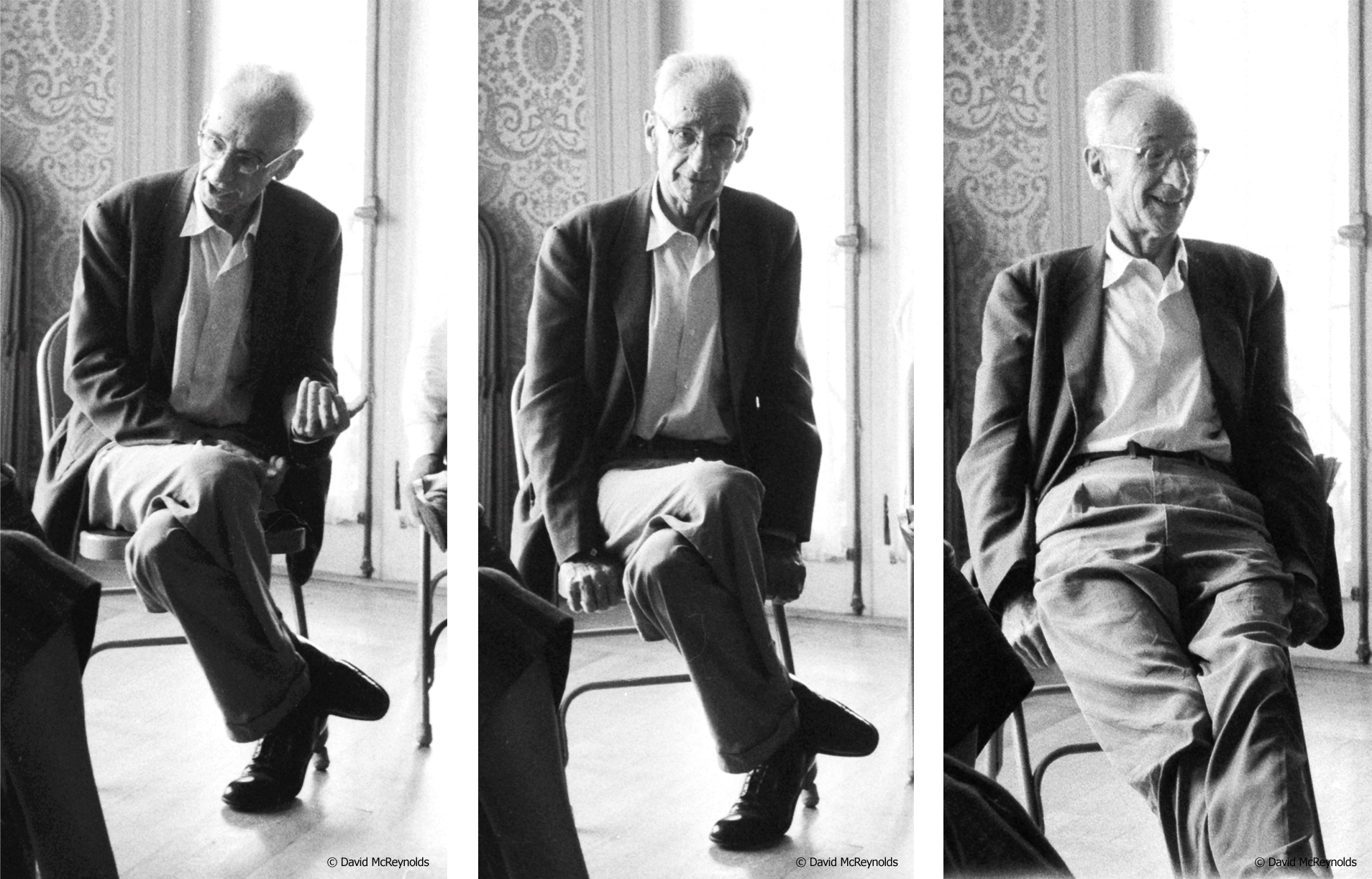
‘Workers’ Education and the Unorganized’ by A.J. Muste from Labor Age. Vol. 17 No. 4. April, 1928.
A FRIEND of mine has recently been visiting A one of our great industrial centers. This is part of his report on conditions there: “The turnover of labor in the shops is estimated at 75 per cent. Dissatisfied workers simply quit as individuals and go to any one of the great number of shops here or within a radius of fifty miles. Any one remotely resembling what may be called a machinist or tool and die maker can get a job at any time at rates per hour higher than anywhere in the United States, and with unlimited opportunities for overtime that bring weekly wages up to $75 to $150. Since | have been here I have seen a walkout of nearly one hundred unorganized die makers who went on strike to work more overtime! Attempts by the Machinists’ business agent, a fine progressive fellow by the way, to get them to join the union or to tell the men who were coming in to take their jobs of conditions existing in the shop were flatly turned down. All the so-called strikers knew where they could get other jobs just as good or with even more overtime. The psychology of the workers, as I see it, is to get all you can while the getting is good. Some save it, many spend it, and in doing the latter patronize everything from crap games to blind pigs which abound everywhere. The lure of big wages even among the semiskilled seems to make the job of finding students for labor classes difficult. Even our radicals want the money rather than a training.”
Such a report brings up again the whole problem of organizing American workers in the basic industries today to which LABOR AGE has been devoting so much attention. It suggests, however, a special angle of the problem that we shall discuss briefly in this article.
Restlessness Prevails
These workers are not satisfied. The turnover in the shops and the feverish character of their social life are clear indications of that. It is indicated also that they are not any too sure of the future. They have an attitude of “let’s grab while the grabbing is good; let’s eat, drink and be merry, for tomorrow we die!”. They are taking no steps however, to apply a real remedy to the condition in which they find themselves. If things go on at this rate they will be no better off, no more secure, no more content, a year or five years from now than they are today.
It is possible to take a fatalistic attitude toward such a situation, as some of us do, and to say that one of these days there will be a big crash and then these workers will wake up and want to organize. There is no assurance, however, that merely being hit over the head will put sense into a man’s brain. Something more is needed.
Furthermore, a modern business man certainly would not adopt such a fatalistic attitude toward a similar problem. He would say that what is needed here is a campaign of education, of advertising, if you please, that these people need something, are unhappy without it, but don’t know clearly what it is, and if they do, cannot make up their minds to buy it. Therefore, the business man would say that it is necessary to put our knowledge of psychology, of how human beings behave, into practice, show these people just what they need and get them into the mood of buying it.
So also the problem of organizing the unorganized is in the first instance one of education. We are convinced that it is organization they need. They are not so convinced. Some of them don’t think anything ails them. Others know that they are not all right but don’t know what is wrong.
Others again may know what they really need but they cannot bring themselves to pay the price for the article they ought to have. Until some thorough, large scale educational work has been done, these people certainly will not join the labor movement.
It may be pointed out also that at present in many localities and industries it is difficult or impossible to make a direct organizational appeal to these workers. They themselves may not want to listen to a union representative. If they do, it is not healthy for them; discharge is likely to be the result. In plenty of instances, the union organizer cannot get into the town.
Of course, in the suggestion that we should use the educational approach to these people there is nothing startlingly new, and by means of labor papers, addresses of leaders of the movement, the radio and so on, there is a constant attempt to influence the opinion of the general public and particularly of the unorganized workers. What I am doing is urging that we give some additional thought to this approach and suggesting some definite ways in which it might be followed up.
Extension Courses
For example, why shouldn’t our workers’ education enterprises develop what might be called extension departments? Everyone has observed how in recent years the colleges and universities have developed their extension departments and how people by the thousands have flocked into their courses. Columbia University alone has more than eleven thousand people in its extension courses. The extension movement is carrying the university to the people instead of waiting for people to come to the university. Why not carry workers’ education to the workers instead of waiting for the workers to come to our labor colleges?
For the most part the latter is what we have been doing so far. Our workers’ classes, conferences, etc., deal almost with the organized groups. In some cases the nonunion man has been definitely excluded although this is not a general practice. In no case, however, are our labor educational enterprises deliberately developing extension departments with the definite purpose of carrying workers’ education persistently, aggressively, continuously to the unorganized to teach them what unionism means and win them with it. Surely the question of how we might accomplish this is worth serious consideration.
There is still another way in which this problem might be attacked. In a certain railroad center a group of workers have settled down during the past couple of years. They were not originally railroad workers but miners, metal workers and so on who were thrown out of work in their own trades. Some of these men had attended workers’ classes. These latter together with a number of other workers in this center now live together in a common boarding house. A couple of evenings a week, the whole group gets together along with any friends from the shop who may wish to join them and they have a more or less organized discussion. One person acts as chairman, a different one each evening. Some topic such as unemployment, the miners’ strike, a contention which has arisen in the shops, is chosen for discussion. Those who have previously attended workers’ classes remain as much as possible in the background, but in reality steer the discussion to a great extent. They know of books and pamphlets on the subject and call the attention of others to them. Here is workers’ education of the most vital kind going on. Here leadership for this particular railroad center is being developed.
In a few other cases similar experiments have been carried on under the guise of a social or athletic club. Such groups might undertake the distribution of literature on a large or small scale, secretly or openly, as circumstances dictated, might presently organize an open forum, get some liberal agency to bring labor speakers into town and bring some of the unorganized workers to hear them, etc. Other concrete suggestions might be found and the present writer would be very glad to receive them from any of his readers. Where suitable literature in the form, for example, of brief, simple, interesting leaflets or pamphlets is not yet available, such might be developed.
Incidentally we may remind ourselves that in the discussion of large scale workers’ education we ought never to lose sight of the educational possibilities that might be available in election campaigns and at other times if we had a movement for independent political action.
Mental Ills of Unorganized
In conclusion, I want to make a suggestion as to the nature of the educational work that is to be done with American workers today. As the quotation which we gave at the beginning indicates, the whole psychology of American workers today is wrong from the labor standpoint. They are mentally sick, twisted, tied up. They need to be psychoanalyzed, we might say, need to have their own thoughts and feelings laid bare before their own eyes. They know too many things that are not so, they are living in a dream world, not a real world, in a world of fears, illusions, fairies and bogey men.
What are some of these fairy tales and illusions of which the American workers’ mind must be cured before he is ready to organize and to play his part in modern life? For one thing, there is the get-rich-quick fever. The psychology of nearly all of us in this wealthy land is not a psychology of labor but of speculation, of gambling, in other words. To get something for nothing, to get it quick, and to get it by means that bring home the bacon, that is our obsession. It is impossible to build unionism, to develop solidarity on such a basis. Graft and corruption in politics and in labor spring out of such a mental bias.
Closely connected with this is the individualistic bias of the American worker—everyone for himself and the devil take the hindmost. The psychology of every man standing on his own feet was on the whole sound enough in the early days here in America when Americans were farmers, when there was land to be had by nearly all and when the well-being of an individual and those dependent on him hinged chiefly on how industrially and intelligently he as an individual applied to farming his own tract of land. But when the American workers no longer confronting his fellow farmer stands up today in front of Ford, Mellon, J. P. Morgan, the aluminum or steel trusts, the financial lords of Wall Street and says: “Every man stands on his own feet, every man for himself, one of us is as good as the other,” what does it mean? Not surely that every individual worker is in any real sense on an equality with these men or institutions, but simply that every worker competes with every other one for a job and every worker in the end becomes the devil who has to take the hindmost.
Only a little better under present conditions than the every-man-for-himself illusion is the every-craft-for-itself illusion. Every man for himself never built a union. Every craft for itself never built a labor movement under advanced industrial conditions.
Present Day Myths
The myth that there are no classes in America is another that needs to be dynamited. Even in the early days of the Republic to which we have referred, such leaders as Alexander Hamilton, James Madison and Thomas Jefferson saw clearly enough and stated in the plainest possible language that the merchants of the coast states were an economic class whose interests were different from those of the town workers or the farmers. What sort of mental confusion is it that makes it possible for seemingly intelligent people to keep on saying that Andy Mellon, J. P. Morgan and Oil Sinclair, for example, are in the same economic class as coal miners, textile workers of New England, hill billies or negro tenant farmers of the south?
With that goes the myth that there is no class struggle in America. Passaic, Colorado, Western Pennsylvania have passed before our eyes in recent months. Spies, thugs, coal mine police, murders, are part of the worker’s life in this country when the first feeble stirrings of revolt on his part begin, but there is no class struggle!
Another thing with clear thinking and intelligent action on the part of American workers is the Bolshevik bogey. If you have a radical idea, a fresh idea, nay, a moderately progressive idea, if you make a sincere move to change a rotten or oppressive condition in politics or business, then you are a Bolshevik and that ends it. And there are plenty of American labor leaders who join in the hue and cry. Owen D. Young, the head of the General Electric Company, can say in dedicating a five million dollar business school for Harvard University that he hopes the day will come when the great business corporations will be controlled by and belong to the men who are giving their lives and their efforts to them, that is to the producers, that a day will come when these producers will use capital as a tool and that there will be no “hired men.” But to say the same thing in a good many American unions today is regarded as treason.
To mention but one more of these psychological hindrances to right thinking and acting in America today, there is the myth of Patriotism. A decent love of the land where one lives, of the ideas it is supposed to stand for, of what it might mean to its own people and as one of the family of peoples on the earth is a noble enough sentiment. But what does it mean practically today when we are exhorted to be patriotic, to be “good Americans”? It means to be loyal to, not to disturb seriously the America of Calvin Coolidge with his little private war in Nicaragua where daily American marines are being killed although we are at peace with that little country; the America of Andy Mellon of the aluminum trust; the America of injunctions and brutality in labor disputes; the America of the Republican party, big business and the oil scandals. Until we learn to get rid of this bunk of patriotism and dare to say that we are workers first, last and all time, until we dare to have a labor psychology, a labor slant, labor ideals instead of this nationalistic mush and slime, we shall have no labor movement in America worth talking about, and no America worth living in. “If this be treason, make the most of it.”
Let us develop the extension work of our workers’ education enterprises. Let us not wait for the workers to come to our classes. Let us take labor education to the workers. But this will be significant only if the education we are carrying is realistic, fearless, straight forward and calculated to deliver the workers from the illusions, fears, obsessions, fairy tales and bogies that prevent all clear thinking and effective action today.
Labor Age was a left-labor monthly magazine with origins in Socialist Review, journal of the Intercollegiate Socialist Society. Published by the Labor Publication Society from 1921-1933 aligned with the League for Industrial Democracy of left-wing trade unionists across industries. During 1929-33 the magazine was affiliated with the Conference for Progressive Labor Action (CPLA) led by A. J. Muste. James Maurer, Harry W. Laidler, and Louis Budenz were also writers. The orientation of the magazine was industrial unionism, planning, nationalization, and was illustrated with photos and cartoons. With its stress on worker education, social unionism and rank and file activism, it is one of the essential journals of the radical US labor socialist movement of its time.
PDF of full issue: https://www.marxists.org/history/usa/pubs/laborage/v17n04-apr-1928-LA.pdf

