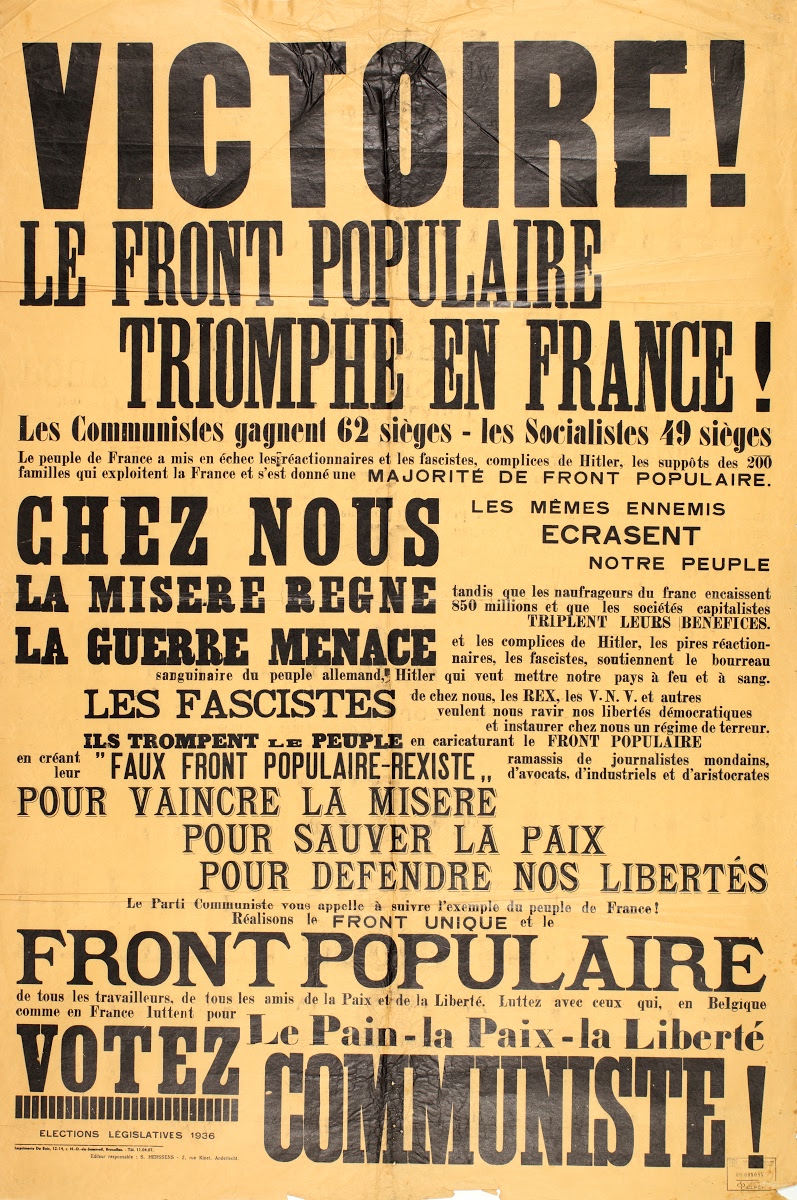
The Militant comments on the first round of the 1936 French elections which brought the Popular Front to power. It would be the last French general election until 1945.
‘Peoples Front Salvages Bankrupt Radicals in First French Election’ from The New Militant. Vol. 2 No. 17. May 2, 1936.
Real Issues Will Be Decided in Streets Not By Ballot Box
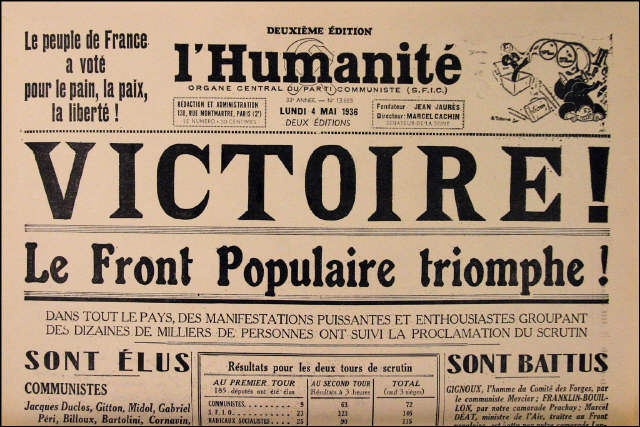
The first ballot in the French general elections was held last Sunday, April 26. The 618 Chamber seats were contested by almost 5,000 candidates, representing more than a score of political parties. The French Fascists (Croix de Feu) did not participate directly in the elections, but supported the extreme reactionary candidates.
A clear majority was obtained by candidates in only 183 constituencies, less than one-third of the total, making necessary 435 run-off elections which will be held next Sunday, May 3. This unprecedented confusion is symptomatic of the crisis that grips French “democracy.”
It will be possible to determine the actual relationship of forces in the new Chamber only after the results of the second ballot are known. But the essential trends and facts pertaining to the parliamentary arena are already quite clear.
Left Vote Mounts
The elections show that the French masses are moving sharply to the left under the pressure of the economic and social crisis, which is becoming more and more aggravated. The popular vote gives the preponderance to the so-called left parties, and the People’s Front candidates will indubitably carry the majority of the seats in the run-offs.
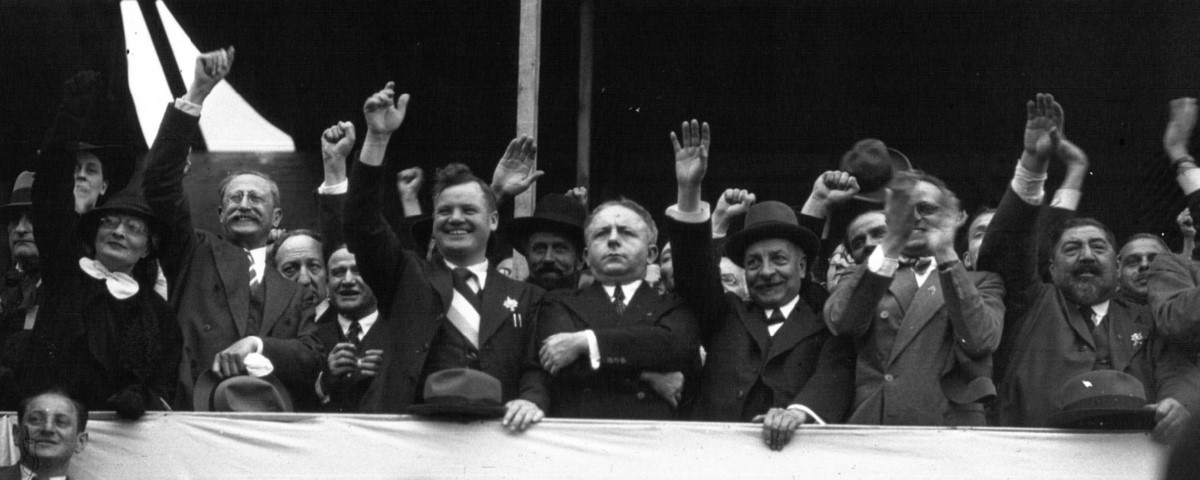
But there are also equally clear indications that a section of the French petty bourgeoisie has already began to shift in the direction of reaction and Fascism. This is indicated by the fact that only a minority of the deputies elected on the first ballot were those representing the parties in the People’s Front; and also by the fact that the greatest relative gains in the first ballot were scored by the reactionary Right Republicans.
In this we have a clear reflection of the process now going on in France which is dividing the nation into two camps.
This process must continue at an accelerated pace, and it can proceed only at the expense of the party of the Radical Socialists. This party is the traditional party of the Third Republic; it is the traditional parliamentary representative of the French petty-bourgeoisie; it has played the “historic role” of being the largest single party in the Chamber.
Doom of the Radical Socialists
Time and again we have pointed out in the columns of the NEW MILITANT that the crisis in France signified above all the doom of the Radical Socialist Party. Its collapse is inevitable. Despite the cover afforded the bankrupt Radicals by the People’s Front, this party has suffered very serious and very significant losses. The turn of the middle classes away from the Radicals is very sharply illumined by the case of M. Edouard Herriot. M. Herriot is the parliamentary leader of the Radicals, one of the vice-Presidents of the Chamber, who had never before failed to get elected on the first ballot, and who was generally conceded to have an easy win at Lyons. M. Herriot not only failed to get elected, but even to head the list, running second to a reactionary [Herriot, however, will be elected on the second ballot].
A question arises as to what would have happened to the Radical Socialist Party as a whole had it not been propped up from the “left” by the People’s Front? Even this assistance has not stopped but only retarded the rapid process of disintegration. The policies of the People’s Front not only prop up the bankrupt Radicals but also undermine the position of the working class, because this support causes the disillusioned middle-class following of the Radicals to lose confidence both in the latter and in the labor partners as well.
The Fascists alone stand to gain from the debacle of the Radicals, so long as the working class parties pursue a policy of collaboration with Herriot-Daladier instead of waging an irreconcilable struggle against them.
People’s Front Saves Radicals
The elections provide very clear evidence of just how the People’s Front has benefited the Radicals. And in this sense, the Daily Worker is quite correct in stating that “the ‘left’ critics of the People’s Front prophesied that the Radical Socialists would gain at the expense of the working class parties” (April 28, 1936).
Such has been our prognosis, and it has been verified by the elections. But the Daily Worker indignantly denies this. “Nothing of the kind happened. Sunday’s ballot showed that those Radical Socialist candidates who faithfully adhered to the People’s Front also gained while those who flirted with reactionaries lost ground.”
Even the Stalinist editor–after a heated denial–has to admit that those Radical Socialists who fully utilized the assistance afforded them by the People’s Front (those who “faithfully adhered to it”) were the ones who “also gained.” At whose expense? The “doubtful friends” like Herriot, who did not wholeheartedly pose as People’s Front men, “lost ground” which they will recoup on the second ballot, once again at the expense of the workers.
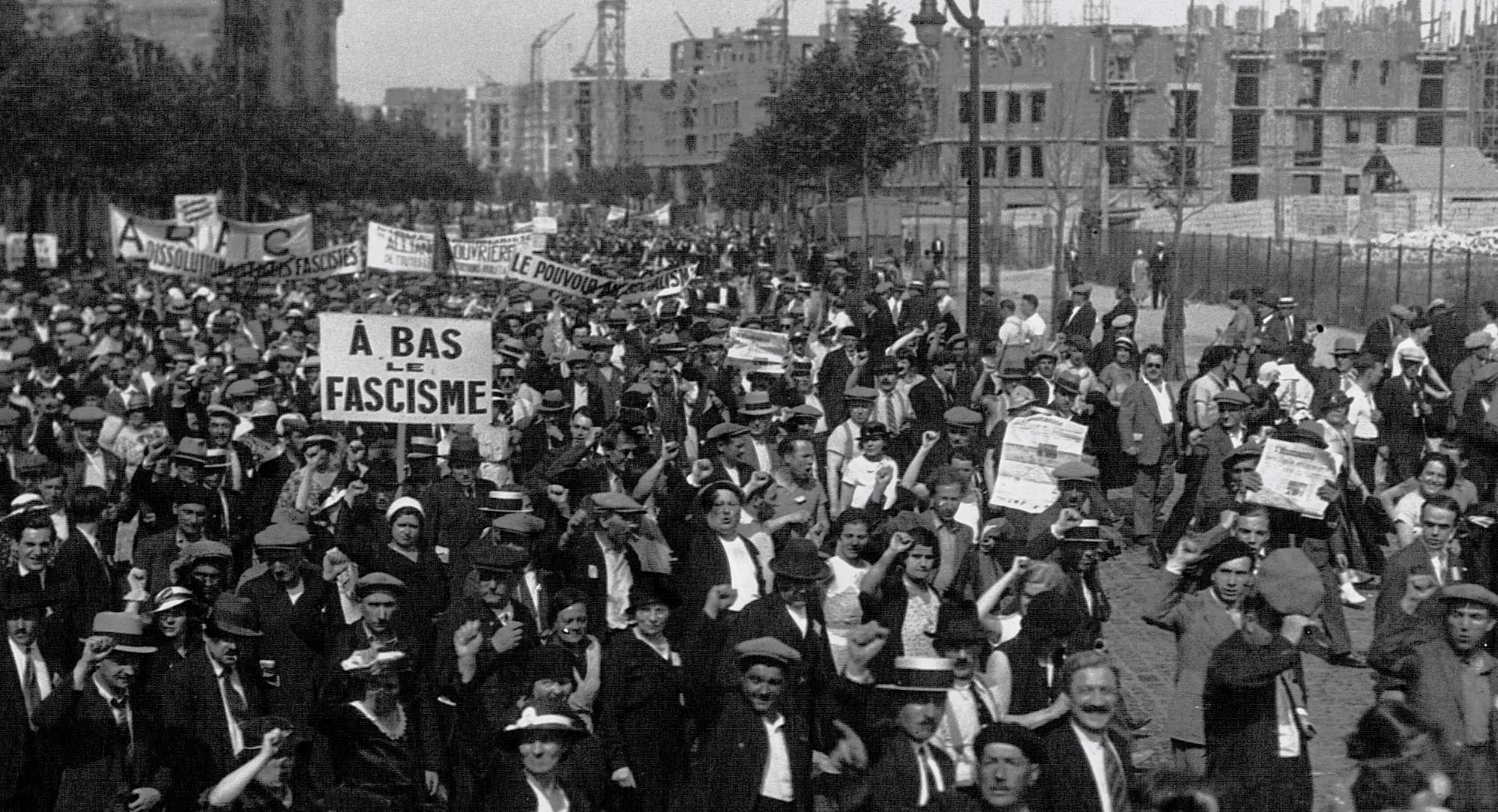
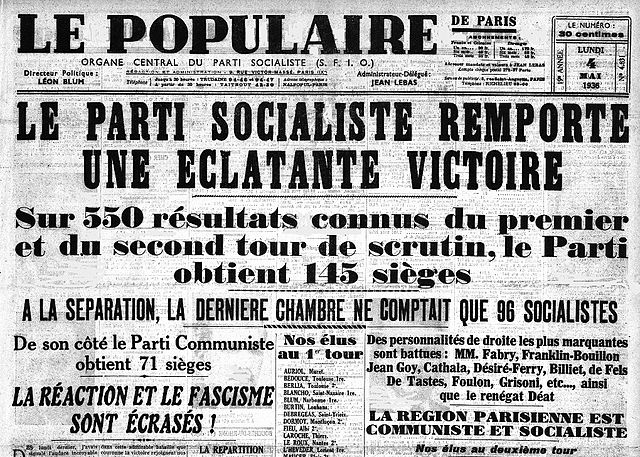
In the last Chamber, the Radicals held 151 seats. It is doubtful whether they will get more than 120 in the new Chamber. The Socialists are having exalted visions of supplanting their Radical partners in the People’s Front as the leading and largest party in the Chamber. Leon Blum, as is evident from his editorials in Populaire, already sees himself Premier. (The Stalinists prefer Daladier.)
Herriot-Daladier Will Crack Whip
What is the extent of the “victory” of the People’s Front? Without waiting for the results of the run-off election, we can state with assurance that it matters very little whether or not the Socialists outnumber the Radicals. It is Herriot-Daladier who will crack the whip in the Chamber and not Blum-Cachin.
According to the most sanguine estimates of Populaire and l’Humanite, Blum-Cachin dream of a total of some 200-220 seats for the S.P. and the C.P. combined, with the Radicals numbering from 100-120. In essence, therefore, even should the most sanguine hopes of the engineers of the People’s Front be realized, the relationship of forces in the new Chamber will differ little from that in the last.
In the last Chamber the “left” bloc numbered 314 out of the total 611 (of these the Radicals had 151; S.P., 93; C.P., 10; the dissident communists, 10; and Paul Boncour’s “left” Socialist and Republican Union, 39).
In the new Chamber, a majority-320-340 out of 618-can be had only with the participation of the Radicals, including both the “faithful” and the dubious friends of the People’s Front.
In other words, if the Radicals choose (i.e., if they are so ordered by French finance capital), they may agree to head a People’s Front government, or even participate in it with Leon Blum as Premier; or they may prefer to enter into a bloc with the reactionaries of the Center or the Right as they have done innumerable times in the past.
The Merry-Go-Round Again
Thus, the “victory” merely reproduces under more tense conditions the main aspects of the Chamber that was elected in 1932. The old Chamber was also the result of a “leftward sweep,” it was likewise headed by the “left” government of Daladier-Frot, the government which capitulated in 1934 to the Fascists. We have the same setting, and even the same leading actors from Daladier down, supported by an extra cast of Stalinists and Socialists.
It is the good old merry-go- round. It is therefore not surprising to find that the editor of the New York Sun holds the same views on the subject of the French elections as does the Manchester Guardian and Ludwig Lore of the New York Post, who, in turn, is in agreement with Harry Gannes and the Daily Worker.
On April 29, the New York Sun carried an editorial entitled “A Blow at Fascism,” which points out that Fascism took “a beating” at the ballot boxes. The English liberal Manchester Guardian sees the Fascists turning into “respectable conservatives.” Ludwig Lore prophetically foretold in his column a few days before the elections that the “French Fascists Seem About to Join the 3-toed Horse”; and Gannes and the Daily Worker shout with him that “Fifty Million Frenchmen Can’t Be Wrong!” (April 29), and that “Fascism was effectually smashed by the results of the elections on Sunday in France.” (H. Gannes in D.W., April 28).
Fascist bullets and knives cannot be exorcized by ballots, not even by such magicians as Lore or Gannes.
While the misleaders of the French working class are celebrating the “defeat” of Fascism, the agencies of finance capital are swinging into action.
Finance-Capital Into Action
Even though the leftward movement of the masses is being dissipated by the bankrupt and reactionary labor bureaucracies of the C.P. and the S.P., it constitutes a dire threat of the rulers of France. They mean to stem the movement and sow demoralization even before the run-offs. The prices on the stock market are tumbling, and preparations are being completed to suspend the threat of devaluating the franc (which can be done by the bankers whenever they choose) over the victory-drunk.
Under the cover of these moves, the Fascist hordes, now numbering close to 700,000 are being prepared for more intensive operations on the extra-parliamentary field. With gun and knife the armed thugs will try to stem the tide and to spread the demoralization, for which the policies of the People’s Front lay the foundation. In short, instead of being crushed, Fascism will proceed to redouble its activities. There are clear signs, however, that the French workers have learned from the experience of Italy, Germany, Austria, and Spain. The struggle will be decided not in Parliament but in the streets; and the revolutionary cadres under the banner of the Fourth International are making their presence already felt.
The New Militant was the weekly paper of the Workers Party of the United States and replaced The Militant in 1934, The Militant was a weekly newspaper begun by supporters of the International Left Opposition recently expelled from the Communist Party in 1928 and published in New York City. Led by James P Cannon, Max Schacthman, Martin Abern, and others, the new organization called itself the Communist League of America (Opposition) and saw itself as an outside faction of both the Communist Party and the Comintern. After 1933, the group dropped ‘Opposition’ and advocated a new party and International. When the CLA fused with AJ Muste’s American Workers Party in late 1934, the paper became the New Militant as the organ of the newly formed Workers Party of the United States.
PDF of full issue: https://www.marxists.org/history/etol/newspape/themilitant/1936/may-02-1936.pdf
 Revolution's Newsstand