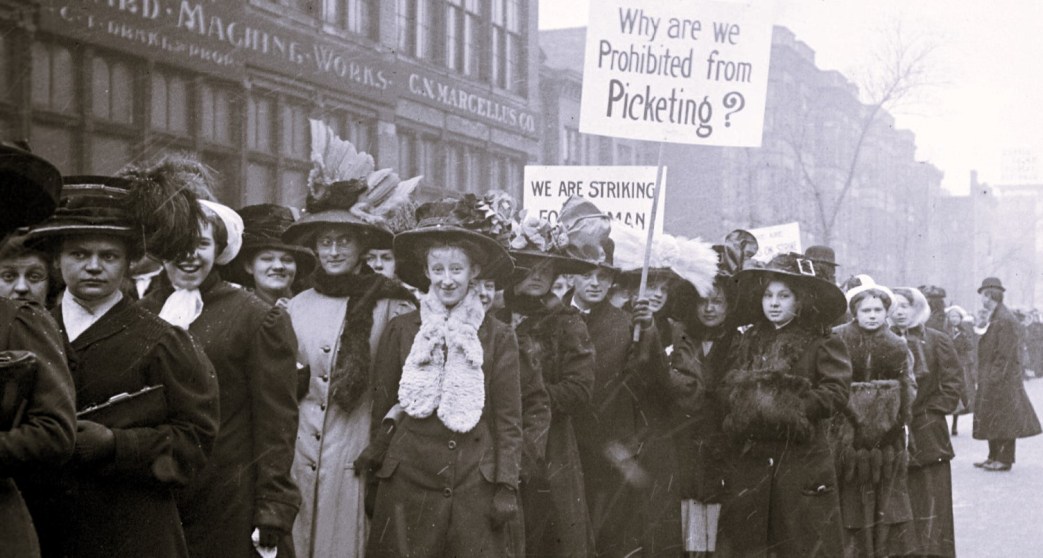
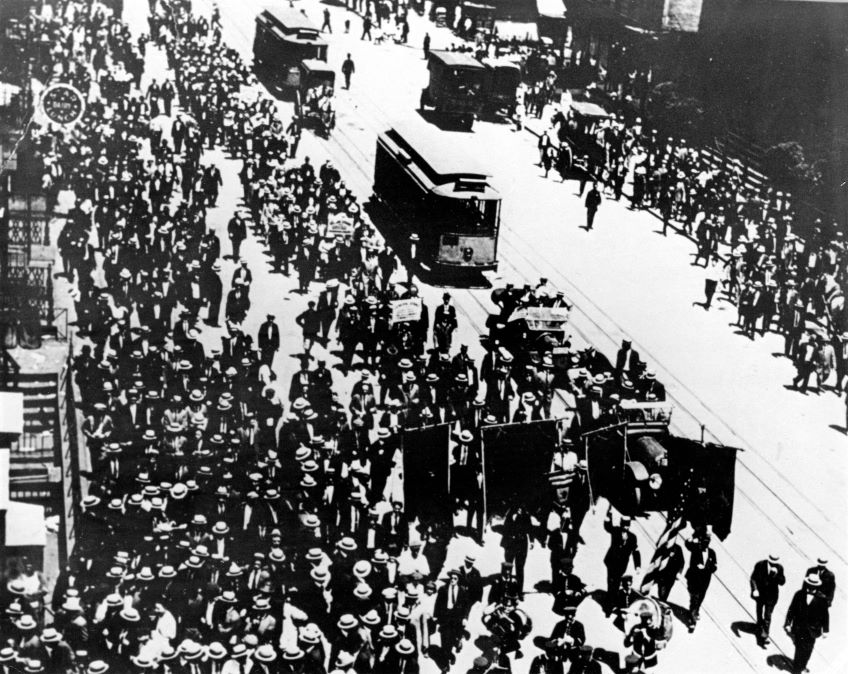
The area around Pilsen Park (today’s Little Village) is the scene of an hours-long attack by police on garment strikers which saw the neighborhood emerge from their homes to defend the assaulted workers. Lots of wonderful detail in this story from just one day in the great strike of 1910.
‘Cossacks Ride Chicago Streets!’ from the Chicago Daily Socialist. Vol. 5 No. 8. November 3, 1910.
NO ONE NOW SAFE
Public Indignation Sweeps City As Lawless Police Clubs Seek the Garment Strike’s End.
INDIGNATION MEETING PLANNED FOR BIG PROTEST
Early this morning the slugging of people walking in the loop district began in earnest.
Several hundred additional workers left the shops of Hart, Schaffner & Marx and were immediately set upon by the police.
Men and women were trampled under the feet of horses driven into the crowds by the mounted guards of the tailoring concerns and clubs descended right and left upon unprotected heads of men and women going to work.
Police Out Early
On the northwest side where some of the shops of Hart, Schaffner Marx are located the police were on duty as early as 6 o’clock in the morning hurrying people along and in some instances using their clubs on those who were not lively enough to get out of the vicinity of the firm’s domain.
In the loop district the mounted police ride the streets ready to mass when a call is issued and rush into a crowd of people no matter where located or what purpose.
As a result of this haphazard rushing scores of persons in no way connected with the strike or strikers have been sent to the hospital or police station with broken heads and injured limbs. A storm of public indignation is sweeping the city as result of the brutal tactics pursued by the police in guarding property in no way endangered.
Public Indignation Aroused
Citizens are beginning to ask if the police department, paid by the taxpayers, is working in co-operation with the large clothing firms to aid them in winning the strike against their underpaid and abused employes.
A warning was issued today to the club and society women that no attention will be paid to their standing and that they will be treated no better than the rest of the strikers.
Chief Issues Order
“The police are going to maintain order” declared “The Chief.” They are not going to be brutal, but when necessary they are going to use their clubs.
“I have heard a whole lot about police brutality during this strike. When the trouble is over I will take up any complaints that may be made and Investigate them thoroughly.”
Arrangements are being made by committee composed of citizens who have viewed many of the unprovoked assaults upon the strikers by the police to hold a giant mass meeting either in the Coliseum or the First Regiment Armory for the purpose of decisively and definitely protesting against the outrages.
Mass Meeting
At this meeting the merits of the strike will be thoroughly discussed. The meeting will be held this week if no hitch occurs.
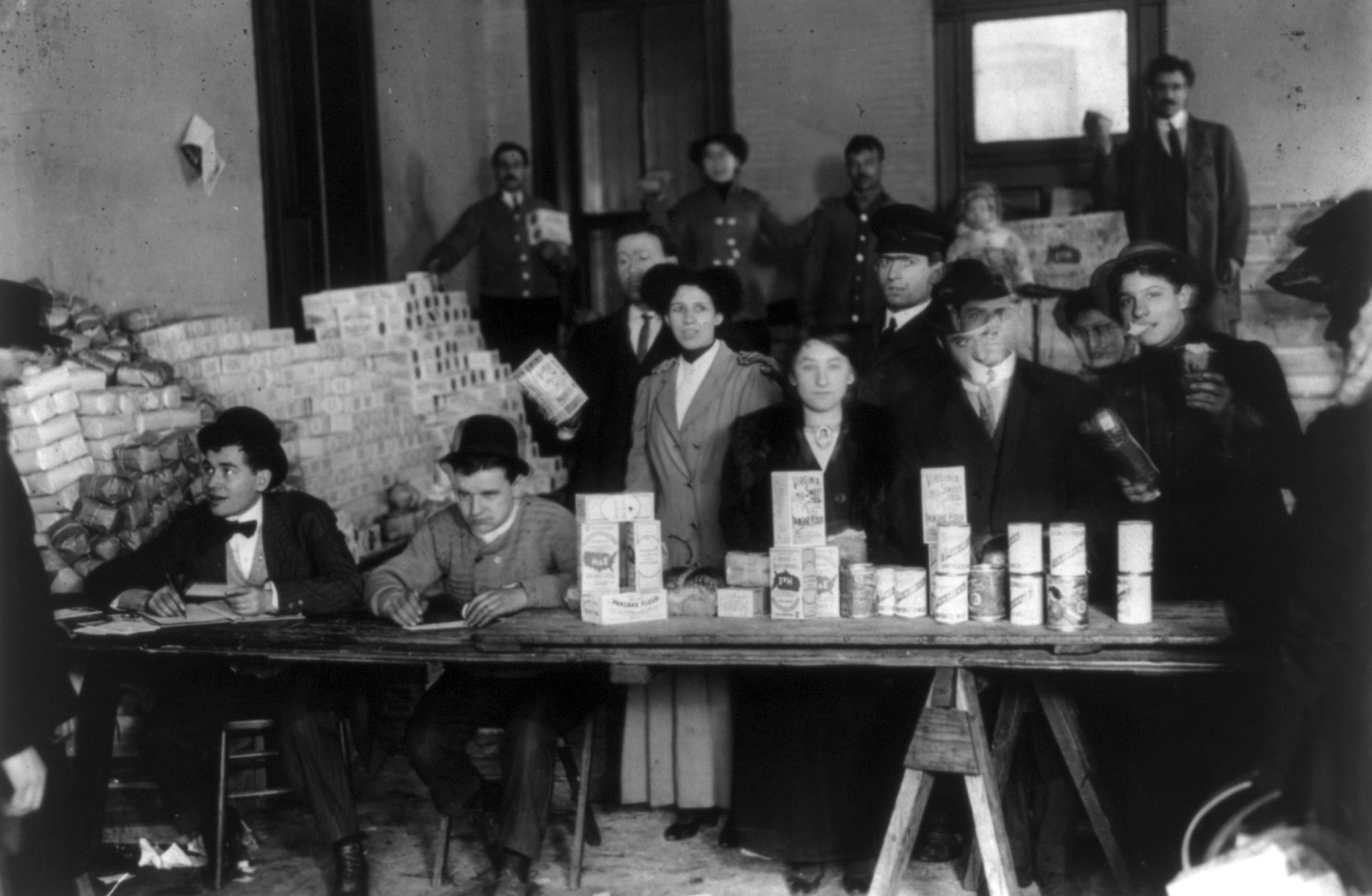
The Jewish daily newspaper, the “Forward” special strike issues, which have been issued in Chicago for some time, comes to the front this morning with a donation of $500 for the strikers.
$1,000 Contribution
A donation of $1,000 was handed over to the striking garment workers by the German Hod Carriers union and Benevolent Society local No. 1. The donation is accompanied by a letter of encouragement and promise of further moral and financial aid if necessary.
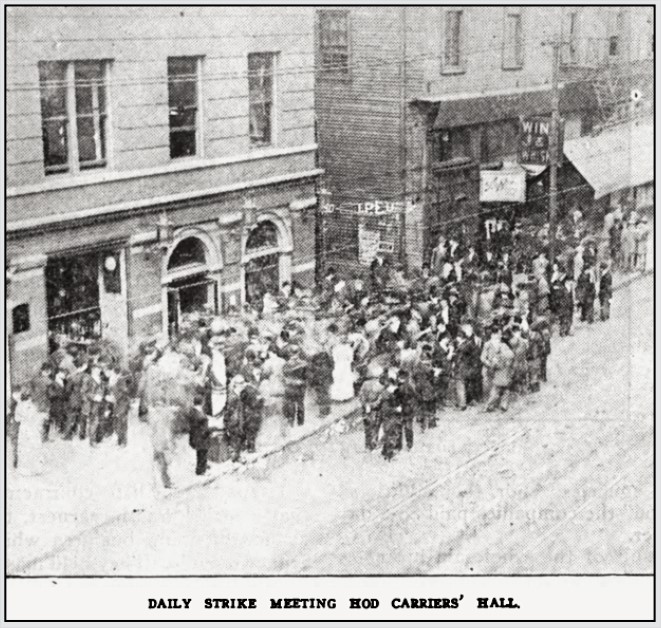
Employes and friends of the Daily Socialist took up a collection in the Dally Socialist building and $8.45 was the result. This sum will be turned over to the striking garment workers. Workers employed in the leather workers trade met at a union meeting and after a collection had been taken up, $11.65 was found in the hat. This sum is donated to the garment workers for use in their present fight.
Thirtieth Ward, Too
At a meeting of the Thirtieth ward branch of the Socialist party, several of the members took up a collection, and $125 goes to the strikers. The small sum is accompanied by the best wishes of the Socialist party members of the Thirtieth ward.
CITIZENS AND STRIKERS ALIKE SENT TO JAIL
Drunken policemen, headed by Sergeant Scully, shot at and pummeled thousands of peaceable men and women in the neighborhood of Trumbull and Twenty-fifth Streets Tuesday night.
At least fifty men and women were injured and thirty arrested. Hundreds of others, among them many business men, were insulted by the cursing and yelling, drunken demons in police uniforms.
Meeting Was Orderly
The bloody melee was the outgrowth of a monster meeting of striking garment workers held Monday afternoon in Pilsen Park, Albany Avenue and Twenty-sixth Street.
Ten thousand men, women and girls were present in the park applauding the speakers who cautioned them to be orderly.
About half past four the meeting adjourned and the thousands, most of whom lived in the immediate neighborhood, began to march home.
Arriving at Trumbull Avenue several hundred turned north and walked to Twenty-fifth Street where Peklo’s tailor shop is located.
Policemen on Job
This shop has for some weeks been under police guard. Reaching the shop, someone in the crowd whistled. The next minute the doors of the shop flew open and policemen poured out.
Seeing the police and the revolvers in their hands the people began to scatter until barely fifty of those who had been in the park remained in the immediate neighborhood.
The policemen were not satisfied, however, and firing shot after shot into the fleeing citizens they gave pursuit.
Young Girl Victims
One policeman picked out a young girl for his victim and began to chase her down the street. His legs gave in, however, and he tumbled over amid the cheers and laughter of those gathered around.
After several vain attempts to gain his feet the unfortunate and overloaded cop threw his club into the crowd and was later picked up by several of the newly arrived policemen.
A riot call had been sent in from somewhere during the initial sally of the police and a patrol wagon loaded with officers from the Lawndale Avenue police station arrived on the scene.
Headed by Sergeant Scully there dashed into the crowds of onlookers and played havoc with the limbs and heads of everyone within reach.
Scully Is “Hero”
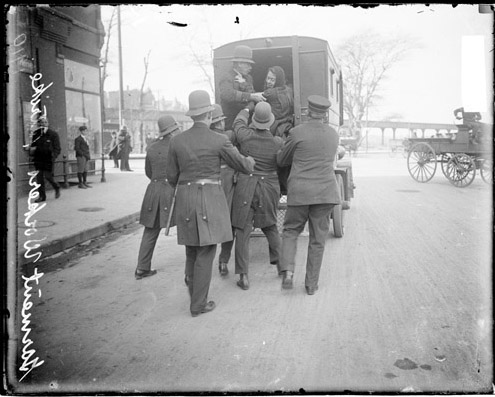
Three girls, escorting a fourth one towards Ogden avenue, where she lived, were set upon by Scully. One of them, Mary Boucek, 2518 Sawyer Avenue, was hit by Scully on the arm. Grabbing hold of the two girls, Scully, amid much cursing pulled them to the wagon. They were dumped in notwithstanding the protests of another one of the girls who tried to explain, their presence in the locality.
Citizens Intervene
Growing indignant over the brutal treatment accorded the girls, hundreds of citizens living in the block gathered around and taxpayers tried to curb the viciousness of the policemen. Blows and curses were heaped upon them by the policemen. Several persisted in remonstrating and were set upon with clubs until they beat hasty retreat. Driven into a frenzy by the uncommentary comments upon his activity Sergeant Scully began to vilify some of the scores of policemen present for their visible inactivity and commanded them to get busy.
As it to show the kind of work expected he dashed into Merhaut’s saloon and began to club the men sitting or standing at the bar.
The men scattered to the rear door and several glasses were smashed in the melee.
Merhaut Protests
Merhaut protested against such unprecedented action and received a slur for his pains. He persisted and was told that unless he shut up his head it would be caved in.
From the saloon Scully who had lost all control of his senses dashed up the steps of various residences and clubbed people who had gathered there to watch the massacre. Some scattered and were driven out of their own homes. Those who refused to leave their own property were dealt with in “Cossack” style.
For over an hour the police were busy and when finally their whisky brains cooled off and their arms and feet grew tired they quit.
Prison Cells Full
Four loads of people had been driven over to the Lawndale Street station and thirty citizens were crowded into the cells. Of these two were girls.
Peklo, the cause of all the trouble in the neighborhood, from the very start of the strike grew frightened when he heard the revolver shots.
Even his employes, who have thus far refused to join the strikers, grew indignant. Fearing bodily harm from some of his neighbors Peklo closed up his shop and drove the employes out into the street to fall victims to the clubs.
Then he locked the doors and pulled down the window shades.
At the Station
At the station one of the men arrested in Merhaut’s saloon refused to submit to being placed into a cell and threatened to prosecute the police. He was a musician by trade. After some argument he was allowed to leave.
While the prisoners were being booked further evidence of the insane and promiscuous action of the police arrived in the shape of Fred Baumgart, an employe of the Daily Socialist.
He was arrested while on his way downtown with a bundle of papers under his arm.
It was almost 7 o’clock before the prisoners were finally booked and half past eight before all were released on cash ball or bonds. The following are the names of those arrested:
Those Arrested
Joe Fenick, 1709 Center Ave.: John Boucek, 2518 S. Sawyer Ave.: Paul Bezdech, 1828 Fisk St.; Rudolph Rabak, 3141 Hermitage Ave.; Stanley Barasch, 1659 W. 17th St.: Louis Piskora, 2433 S. Whipple St.: Anton Kernsin, 965 W. 18th St.; Charles Kernsin, 965 W. 18th St.: James Ulmin, 3033 S. Trumbull Ave. Joseph Selin, 11291 W. 18th St.; Edward Zach, 1818 S. May St.: Frank Kubicek, 1738 W. 22nd St.: Frank Tucek, 543 S. Spaulding Ave.; Frank Semerad, 1643 S. Throop St.: Mary Boucek, 2518 S. Sawyer Ave.; Albert Sebek 2341 S. Troy St.: Louis Dolec, 2517 S. Homan Ave.. James Pech, 4103 W. 16th St.; James Hodek, 2640 S. Spaulding Ave.: Louis Drda, 1164 W. 19th St.; Joe Bezdech, 2717 S. Homan Ave.; F. W. Baumgart, 1717 W. 13th St.: Frank Chval, 1913 S. May St.; Joe Brodsky, 3100 S. Ridgeway, Ave.: Eddie Becka, 950 W. 18th St.: Jos. Taborsky. 2421 S. St. Louis Ave.: Joe Knoch, 1430 W. 18th St.; Celia Hnetynka, 3019 S. Troy St.
This Case Serious
Frank Kriz, 2624 S. Trumbull Avenue, was brought into the station in a serious condition. His wrist was swollen to almost double its size.
His neck bore a wide welt, his shoulder was almost dislocated and his face was severely bruised.
Miss Hnetynka and Mrs. Boucek told the following story at the police station when arrested:
Women Tell Story
“We were walking south down Trumbull Avenue, together with two other girls when we saw the great mob of people on the street.
“We stopped to look for a moment when Sergeant Scully dashed up and grabbed us by the arms. We protested and he hit Mrs. Boucek on the arm with his club. Our protests did no good and we were rushed to the wagon.
“One of our friends demanded that she be taken, too, because she was just as guilty as we. She was shoved away.”
So enraged were the citizens living in the neighborhood of the brutal clubbing that committees were organized last night headed by several business men.
Demand Settlement
These committees will call upon Mr. Peklo, the tailor contractor and demand that he settle up with the union or order the police away from his shop.
Others of the committee will call upon Lieut. Ptacek and demand that such an occurrence should never be repeated.
Lieut. Ptacek, when seen by a prominent business man declared that such measures as were used against the peaceable citizens were the only proper ones against a bunch of “green horns” and that they did them good.
The Chicago Socialist, sometimes daily sometimes weekly, was published from 1902 until 1912 as the paper of the Chicago Socialist Party. The roots of the paper lie with Workers Call, published from 1899 as a Socialist Labor Party publication, becoming a voice of the Springfield Social Democratic Party after splitting with De Leon in July, 1901. It became the Chicago Socialist Party paper with the SDP’s adherence and changed its name to the Chicago Socialist in March, 1902. In 1906 it became a daily and published until 1912 by Local Cook County of the Socialist Party and was edited by A.M. Simons if the International Socialist Review. A cornucopia of historical information on the Chicago workers movements lies within its pages.
PDF of full issue: https://www.marxists.org/history/usa/pubs/chicago-daily-socialist/1910/101103-chicagodailysocialist-v05n008.pdf

