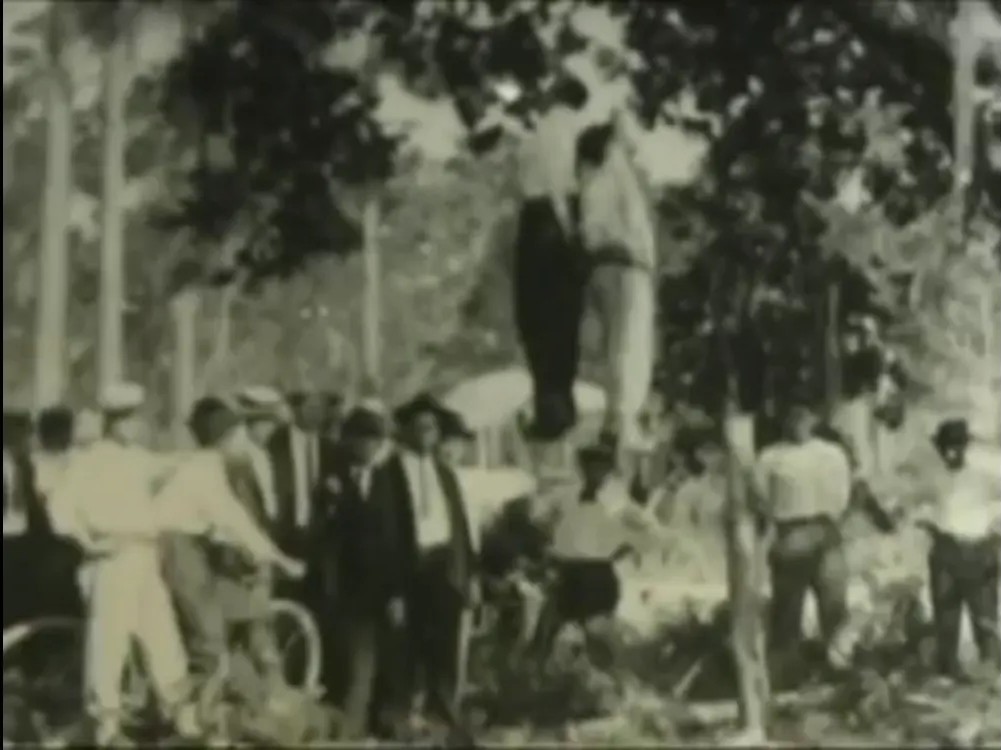
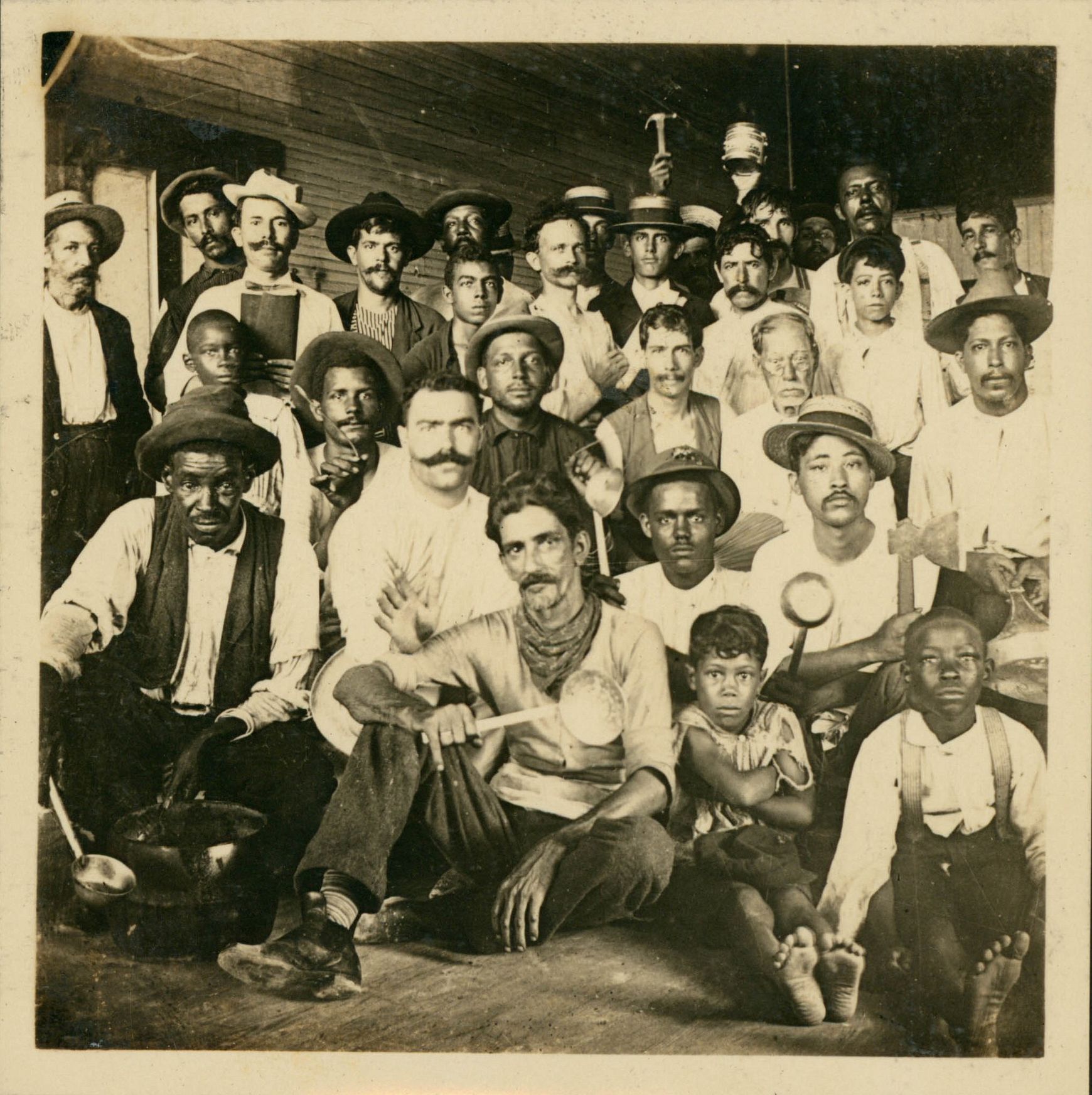
No other city in the South has a labor tradition like Tampa. An editorial from the New York Call on the mass arrests, midnight raids, deportations, and at least five lynchings, some public, of workers, including two Sicilian immigrants, Angelo Albano and Castronse Figarretta, that accompanied the 1910 strike of Tampa’s cigar makers. The assailants? The “great and the good” of that city.
‘The Reign of Terror in Tampa’ from International Socialist Review. Vol. 11 No. 8. February, 1911.
CIVIL war has been raging in the city of Tampa, Fla., for about six months past.
Not a figurative civil war, but an actual civil war.
A civil war with all the most aggravated features of such a war.
A civil war with a reign of terror.
A civil war with deprivation of the citizens’ constitutional rights.
A civil war with the murder of citizens in the streets.
A civil war with the hanging of suspects.
A civil war that has driven many of the inhabitants to flight and exile.
For six months this strike has been raging as the result of a strike of the cigar workers against the cigar capitalists. But the governor of the state of Florida took no notice of this war. And the people of the United States took no notice of this war.
The people of the United States were kept in ignorance of the state of affairs. The daily newspapers, metropolitan and other, their columns filled with all sorts of worthless information, were silent about the civil war in Tampa.
But the governor of the state of Florida, was he silent because he knew nothing of this civil war, or did he keep silence for the reason that in this civil war the capitalists of Tampa had the upper hand of the workers of Tampa?
At last, however, this conspiracy of silence as to the bloody goings on in Tampa has been broken.
It has been broken by the Socialist and Labor press, and by the magnificent solidarity exhibited by the cigar workers throughout the country.
For months past the Call has been publishing news items, contributed articles and speeches exposing the reign of terror in Tampa. The organized cigar workers throughout the country have been taxing themselves for the benefit of their striking brothers in Tampa. And Tampa cigars have been laid under an effective boycott, so that the dominant industry of that city is practically at a standstill.
It is this last fact, above all, that has finally loosened the speech of the authorities in Tampa and in Florida. The most sensitive nerve of the capitalist is his pocket nerve. And the virtual destruction of the leading industry of Tampa has finally compelled the mayor of that city and the governor of the state to attempt to justify themselves through the medium of the Call, before the forum of public opinion.
Public opinion will give small heed to the words of the mayor of Tampa. His statement abounds with flat denials and charges of falsehood. These denials and charges are themselves transparent falsehoods. For instance, of the charge that the pliant officials of the city of Tampa handed over the two workingmen prisoners to a small gang of lynchers who hanged them, he says that it is “false from beginning to end.” From this one would Infer that there was no lynching at all.
Further on, however, this precious public official admits the lynching, but says that the prisoners were ‘in charge of county officials, who arrested them “in the adjoining town of West Tampa,” and that “the men were never within the limits of the city of Tampa from the time of arrest till the lynching occurred.” So while men were lynched, the mayor of Tampa was in no way concerned. Nevertheless, he says still further: “Had I known that it was contemplated, I feel sure that I could have prevented it.” But if the lynching occurred “in the adjoining town of West Tampa,” how could the mayor of Tampa have prevented it?
But the mayor of Tampa is no other than Donald B. McKay, who, according to general report, was one of the “Citizens’ Committee” that, in 1901 kidnaped prominent members of the Cigarmakers’ Union and had them transported to the wilds of British Honduras, while other men active in the union were flogged, placed on trains, and taken out of Tampa. Naturally, it is not safe for union men to walk on the streets of Tampa while Donald B. McKay is mayor.
But now comes the governor of Florida. He starts out, in the usual way, with the assertion that he is a friend of the unions. Let us see how his friendship works out in actual fact.
Friendship No. 1.—”There were charges that men were forced to go to work. These charges were supported by the affidavits of four laborers.” But the governor was not convinced. “The testimony in rebuttal showed in each case a different result.” And to justify his dismissing the charge, the governor wants us to imagine—”as you can well imagine”—that “a great many men had been forced to quit work by the strikers.”
When we are called upon to “imagine” one thing, why may we not also “imagine” that the “rebuttals showing a different result in each case” were also “imaginary”?
Friendship No. 2.—It was claimed that two representative union men had been forced to leave the city—deported. But the governor found that “both men left voluntarily—on account of the fear for their personal safety.”
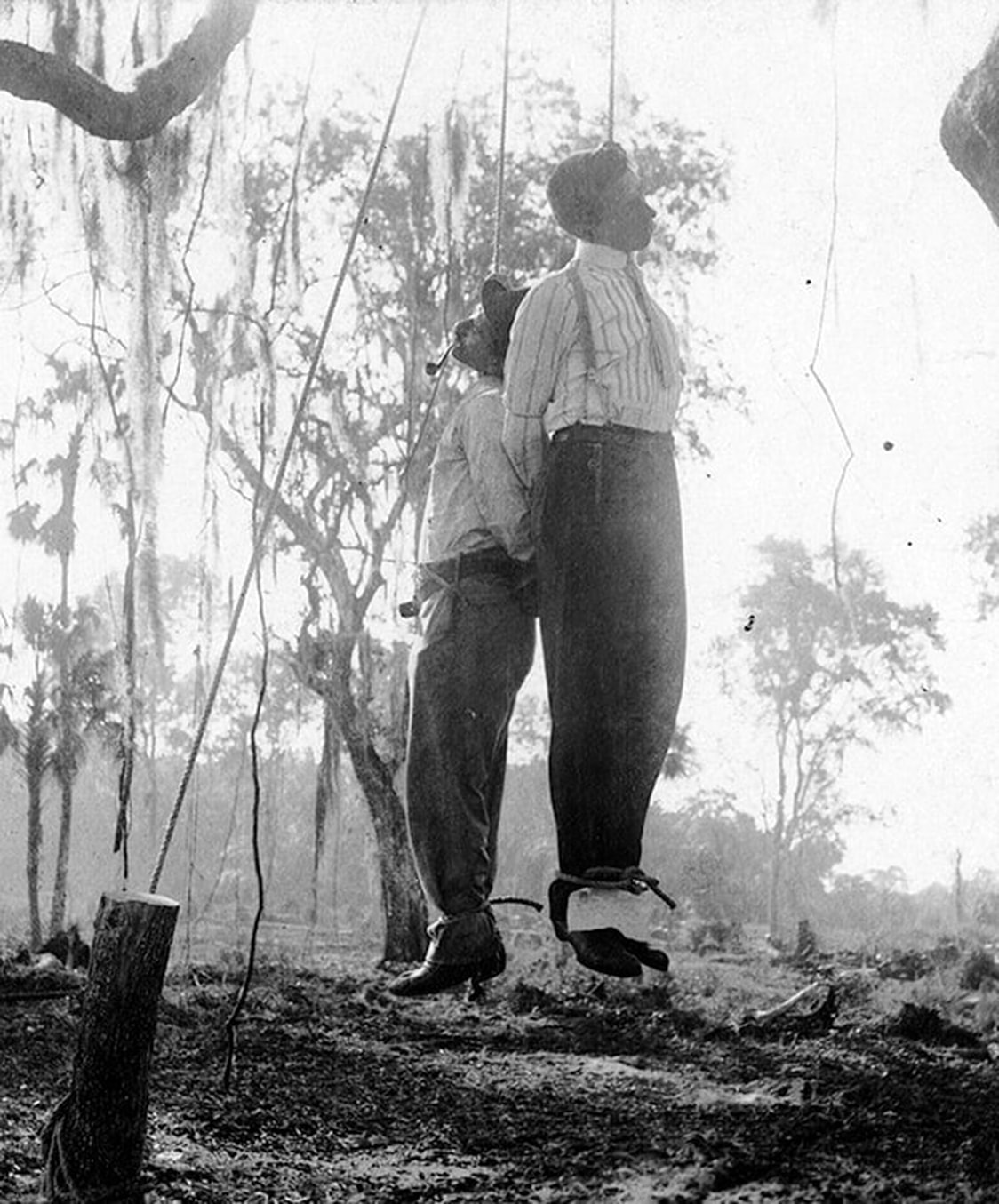
Friendship No. 3.—Two workingmen were arrested and lynched by the swell mob. But “one of them had been tried for murder three times and had always proved an alibi.”
Friendship No. 4.—The union hall was smashed up, closed, and the records seized. This is admitted. But Governor Gilchrist tells us that later on the hall was reopened! Sure enough, you can’t lynch a hall, as you can a workingman, into eternity!
Friendship No. 5.—Three strikers were tried by a jury, found guilty and sentenced. The strikers complain of a prejudiced court and a packed jury. Does the governor know anything about it? He doesn’t know and he doesn’t care. “As to the merits of this trial I know nothing, and if I did it would not be in my province to criticize one way or the” other, either favorably or unfavorably, the actions of the jury and the trial officers.”
Governor Gilchrist of Florida! There was once a governor of Illinois, a member of your party. Several men had been lawfully murdered by a prejudicial court and a packed jury, and two men were sentenced to long terms of imprisonment by the same court and jury. And when this honest Democrat—not a damned hypocrite—became governor of Illinois, he pardoned the two innocent survivors of that horrible conspiracy, and published the facts to the world. That man’s name. Governor Gilchrist, is immortalized in history as that of one of the world’s great moral heroes, while your name will be disgraced as a foul coward who besmirches the name of the helpless dead, and a damned hypocrite who pretends to be fair to Labor while he has sold his soul to Capital!
The International Socialist Review (ISR) was published monthly in Chicago from 1900 until 1918 by Charles H. Kerr and critically loyal to the Socialist Party of America. It is one of the essential publications in U.S. left history. During the editorship of A.M. Simons it was largely theoretical and moderate. In 1908, Charles H. Kerr took over as editor with strong influence from Mary E Marcy. The magazine became the foremost proponent of the SP’s left wing growing to tens of thousands of subscribers. It remained revolutionary in outlook and anti-militarist during World War One. It liberally used photographs and images, with news, theory, arts and organizing in its pages. It articles, reports and essays are an invaluable record of the U.S. class struggle and the development of Marxism in the decades before the Soviet experience. It was closed down in government repression in 1918.
PDF of full issue: https://www.marxists.org/history/usa/pubs/isr/v11n08-feb-1911-ISR-gog-Corn-OCR.pdf

