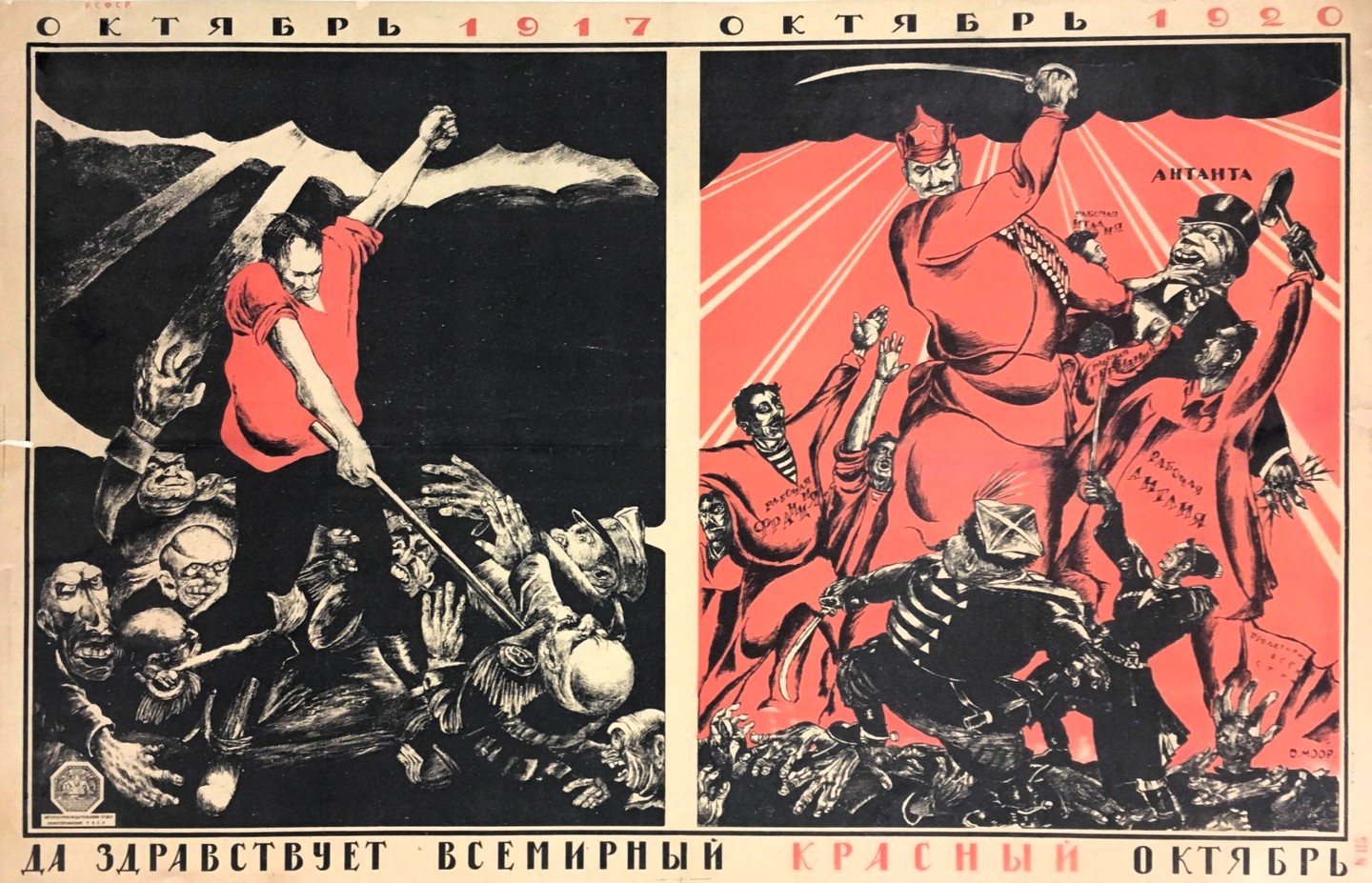
Foster on the emergence of Soviet Russia from the famine, Civil War, and profound economic dislocation of the immediate revolutionary period with the aid of the N.E.P. and the Red Army.
‘Russia Out of the Shadows’ by William Z. Foster from Labor Herald. Vol. 2 No. 2. April, 1923.
FOLLOWING the overthrow of the Kerensky regime, the success of the Russian revolution depended upon the solution of three great problems. First, the workers and peasants had to devise and establish a proletarian government, next they had to construct an army capable of defending it, and finally, they had to reorganize and rehabilitate industry. So appallingly difficult was the situation that world experts were practically unanimous in declaring these great political, military, and industrial problems totally insoluble by a Communist program. But by efforts never equaled before in human history, the Russian revolutionaries are accomplishing the seeming miracle. The first two problems, the political and the military, have been definitely solved. The third, the industrial, is well on the way to solution. The success of the revolution is assured.
All the world now admits the mastering of the political problem. The workers and peasants, with no historic experience to guide them, have built the Soviet system of government and made it work. In these later days evidences multiply of the strength of the Government: the confiscation of church valuables for famine purposes, the occupation of Vladivostok, the affiliation of the Far Eastern Republic, and the voluntary consolidation of all the Soviet Republics from a loose alliance into a closely-knit organization. The power of the Communist Party, in city and country, grows steadily. The Workers’ Government is definitely established. The bourgeois political wiseacres, who said it could not be done, are totally confounded.
Likewise, the revolutionary workers conquered brilliantly the “insoluble” military problem. Taking a war-weary people, starving, pestilence-ridden, industrially paralyzed and confronted by the armed forces of a hostile capitalist world, the rebels have enthused them, given them fresh courage and organized them into what is unquestionably the strongest army in the world. This time it was the capitalistic military experts who had to eat their words and to admit that the impossible had been accomplished.
The Third Great Problem
Now we come to the third great problem, the industrial question. This was the supreme problem among all the terrible difficulties presented by the revolution. The old industrial system was wrecked by counter-revolution, sabotage, and the abandonment of the capitalist mode of production. Industry was at an almost complete
standstill. The blockade throttled the country. Famine-stricken, in rags, destitute of tools, materials, seed, fertilizer, and draft animals, the workers and peasants could not operate the industries or work the farms. “Surely,” cried the world’s economists, “though the revolutionists solved their great political and military problems, they can never lift themselves out of this frightful industrial state.” With unanimous acclaim, they declared that if Bolshevism went on, the Russian people would perish.
But now, to the consternation of this school of experts also, the despised revolutionists are clearly solving the great industrial problem upon which, more than any other, depends the fate of the revolution. The reports of economists to the 10th Congress of the All-Russian Soviet, the dispatches from capitalist newspaper correspondents, the reports of delegates and visitors returning from Russia, all tell the same story. Russian production, industrial and agricultural, is rapidly increasing. The standard of living of the people is on the rise. The corner has been turned. The economic crisis is breaking. The master problem is being solved. The revolution is traveling to victory.
Breaking the Blockade
One of the most difficult features of the industrial problem was the terrible blockade set up by the capitalist nations against Russia to throttle her industries and to force her into submission. To break this blockade has been a major point in Russian policy. Important success has been achieved. Despite the resistance of the capitalist giant industrial corporations and reactionary politicians, economic treaties have been set up with England, Germany, Italy and other countries. Foreign trade, practically abolished by the blockade, is picking up rapidly. Already, reports Trotzky, imports amount to 25% of pre-war figures, and exports to 5%. Exports have increased 600% in the past year, and foreign trade generally is rapidly expanding.
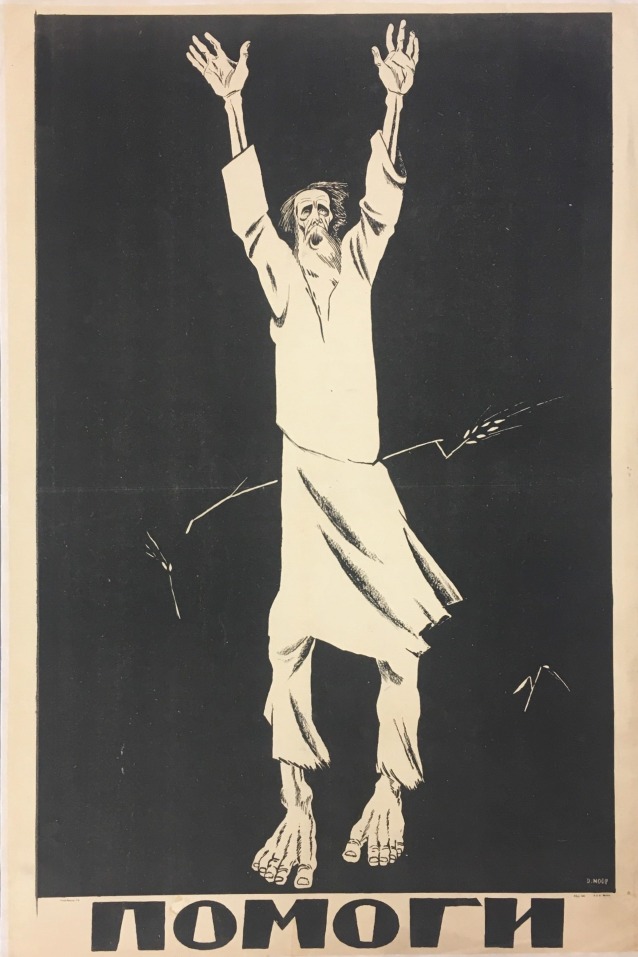
Another phase of the blockade was financial in character, the capitalists of the world refusing to loan Russia the capital she needed so badly to rehabilitate and develop her industries. But the revolutionists have broken through this front also. Capitalists of all countries are now flocking to Russia to take up concessions, on terms which mean victory for the Revolution. In 1922, according to Kamenev, 500 applications were received for concessions. Of these 25 have been accepted and 250 are pending. The great Urquhart concession was refused because England insisted on political conditions contrary to Soviet interests. Like the commercial, the financial blockade is also being shattered.
Still another aspect of the general capitalistic blockade against Russia was the political phase. The capitalistic world attempted to place and keep Russia in the role of an international outlaw, refusing her representation at all meetings of the nations and denying her every diplomatic intercourse. But the Russian revolutionists have irretrievably smashed this political front of world capitalism even as they have the other fronts. Recent international developments prove this. Moved by the facts that the Communists had definitely established the Soviet Government, had built up an army entirely capable of defending it, and were setting up a trade with the world in spite of all their enemies’ efforts to the contrary, the international capitalist class, during the past year, was compelled to swallow its pride and to sit down around the diplomatic table with the hated Russian Reds. Necessity compelled them to lift their political blockade somewhat and to invite the Russians to the Genoa conference.
The seating of the Communists at Genoa was an open admission by the world clique of exploiters that the efforts to strangle Russia by military, commercial, and financial blockade had failed. Now it was proposed to accomplish by diplomatic weapons what could not be done through industrial, financial, and military warfare. But the Russians were equal to this occasion. They went to Genoa as victors, not as vanquished. Determined to deal with the nations one at a time rather than all at once, they smashed the united front of world capitalism by steadfastly refusing the slavish conditions offered them. Then they boldly signed the Rapallo Treaty with Germany. The Genoa conference went on the rocks. Alarmed, the allied capitalist nations summoned Russia to the Hague conference, for another try at shackling her, but with the same negative results. The Communists carried off the palm of victory. The Hague conference collapsed like its predecessor. The capitalist diplomatic line went to smash. Since then Russia has signed treaties with several individual countries, including Checho-Slovakia, Norway and Sweden. More will follow in the near future.
Production Increasing
Although the blockade, in its various aspects, still bears heavily upon Russia, its evil effects are steadily diminishing. The revolutionaries have pierced it definitely in its three essential features, commercial, financial, political. Now they are rapidly widening these breakthrough points. Soon the whole structure will collapse. We can say positively that the great blockade has been broken. This steel clamp, crushing and devitalizing, has been stricken from the heart of the Russian revolution.
Side by side with the breaking of the blockade goes a steady increase in Russian industrial production. Reporting to the 10th All-Russian Soviet Congress, Bogdanov, of the Supreme Economic Council, declared that in the past year production increases in the various industries range from 150% to 400%, which brings the general average of production in all industries up to about 25% of pre-war times. The ratio of increase gains with the passing months. Textiles are at 70% of pre-war figures, and petroleum at about 50%. In 1921, the low point of production generally there were 1,000,000 poods of cotton yarn produced; in 1922 this was increased to 2,800,000. Coal has reached 34% of 1914 figures, and Bogdanov declared the final crisis practically solved. In 1914 car loadings, all kinds of freight, averaged 30,000 daily. By 1918 these had fallen to 6,000. In 1921 they mounted to 9,500, and in 1922 they went up to 11,500. Now the increase is taking place faster than ever. In 1918 production of gold stopped altogether; in 1922 it reached 20,000 pounds; and in 1923, at the lowest estimate it will be 50,000. Production in the heavy metal industry, while showing 100% improvement in the past year, still lags and is very inadequate.
In the “Economichskaia Zhizn” of Dec. 20, 1922, are cited statistics showing substantial production improvements during October as against September, in 775 state plants. The following gains are typical:
Chemicals 16%, rubber 18%. The number of workers making matches increased by 28%, the number of days worked by 143%, and output by 164%. The improvement in the paper industry continued during the month. There was an increase in the number of leather workers and in the output per worker; production rose by 23%. The number of tobacco workers was reduced, but production increased considerably. For all industries the number of factories working increased; they worked more regularly and there were fewer stoppages or none at all. There was an increase in the number and individual output of the workers. The total output increased.
Finance Reforms
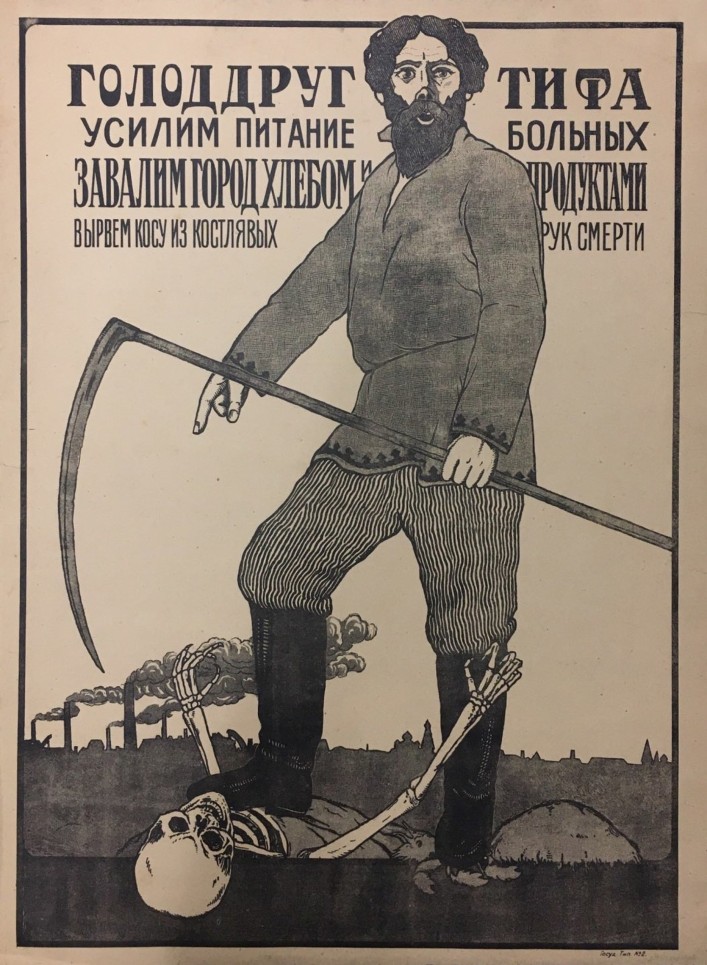
Lenin, at the 10th Soviet Congress, showed the improving condition from another angle, by stating that in 1921 the total goods put on the market in Russia were worth 600 million gold roubles. In 1922 the figure increased to 1,000 millions. The skilled workers, who scattered to the farms in the revolutionary crisis, are returning to the factories more reconciled to the new social order. Industry is fast getting into a healthy condition. The famine is being overcome in the agricultural districts.
A great factor in the Russian economic crisis was the huge deficit in the government budget. Because its legitimate receipts fell far short of its expenditures, the government was compelled to make up the shortage by issuing paper money in unbelievable quantities. This enormously depreciated the rouble, practically ruining the medium of exchange and demoralizing industry. Important headway has been made, by various economies, towards wiping out this ruinous budgetary deficit, and therefore the rouble is being stabilized. In 1921 the deficit, made up by issuing paper money, amounted to 84%; in 1922 it was reduced to 50%, and in 1923, according to news dispatches, it will be cut to 25%.
One factor in this stabilization process is the setting up of a state banking system to develop credit. Another is the issuance of government loans. During 1922 a 10 million gold rouble grain loan was successfully handled. Now there is a 100 million gold rouble loan being floated among the people. Proof of the stability of the present regime, as well as of the collapsing blockade, is the fact that foreign capitalists have asked to be permitted to participate in this latest loan. The rouble is still falling in value, and the government has been compelled to cut off whole strings of noughts from the denominations. This has bred the current Russian quip that in Moscow one can see wagonloads of these detached noughts being hauled from the mint to the dump. But the rouble’s fall grows relatively less rapid. Its speed downward is now much slower than that of the German mark. From Jan. 1st, 1922, to Oct. 1st of the same year, the rouble fell 24 times in value, but the mark dropped 85 times. Russia is now recovering from its paper money disease and its economists are challenging the capitalist nations to do likewise.
The Rise in Wages
Most important of all, as indicating the dissolving industrial crisis, is the rapid increase in the workers’ standard of living. Wages are getting up fast. Consequently the toilers are getting more to eat and to wear. They are emerging finally from the long continued period of semi-starvation which almost ruined the revolution. Their bettered conditions at once give them more interest and faith in the new society, as well as added physical strength to still further increase production. The old situation was that the workers could not work because they had nothing to eat, and they could not get anything to eat because they did not work. This vicious circle is now broken. On the matter of the increasing wages of Russian workers, V. Solsky of Moscow, says (International Press Correspondence, p. 55):
We need only cite certain figures to show how rapidly and in what proportions the real wages of the Russian workers are increasing. To render our figures more correct, we have reckoned the wages of the Russian workers in gold roubles. Thus, in January, 1922, a textile worker earned on the average 4.50 roubles per month; a mechanic, 5.30 roubles; a tanner, 3 roubles. In September, 1922, we find these wages more than doubled, the weaver earning 8.60, the metal worker 13.32, and the tanner about 12 roubles.
And the raising of wages continues. What are they at this moment in December? Here is a table of what is being accomplished. It shows that real wages are well on the way to equal those before the war. For the purpose of comparison, the wages of 1913 are reckoned as 100 and present-day wages calculated in relation to this standard. Metal Industry 42.9%, Wood 57.9%, Shoe-making 33.3%, Chemicals 58.6%, Textile 42.1%, Sugar 66%, Baking 81.9%, Tobacco 131.5%.
Which gives us in Moscow a general average of 60%, not to mention the special privileges enjoyed by state workers, such as free municipal service, wood at cheap rates, provisions at cost price. We are certainly justified in concluding from this that the real wages of the Russian workers are fast approaching their pre-war standard. Nor will they stop there. Soviet Russia is the only country in the world where the least improvement in the economic condition translates itself almost immediately into an improvement in the condition of the workers.
In this rising standard of living of the Russian workers is foreshadowed the victory, not only of the Russian revolution, but of the world revolution, as we shall see further along in this article.
The Control of Industry
For the benefit of those faint-hearted skeptics who believe that the growing prosperity of the Russian people, dating from the inauguration of the New Economic Policy in 1921, is due to the reestablishment of capitalism in Russia, it will be well to cite a few facts about the control of industry, as brought out by Kamenev, Bogdanov, Trotzky, and others at the 10th Soviet Congress. The Workers’ State owns 4,100 industrial undertakings, comprising all the basic industries and employing 1,300,000 workers. It also owns. the railroads and all other means of transport, which brings the total number of state workers up to 3,000,000. As against this, private employers, many of whom are workers’ cooperative societies, own 4,000 undertakings, employing 70,000 workers. In commerce, where private capital is most active, 70% of the total turnover goes to the State and the cooperatives, and 30% to independent concerns. Foreign trade, both. export and import, is entirely in the hands of the State. The land is all owned by the State. In the face of this showing, it is idle to talk of Russia being conquered from within by capitalism. When we recollect also that the workers have complete control of the State, the army, the courts, the press, the schools, etc., such talk becomes absurd. Two great facts stand forth from the present situation in Russia; first, the “economic retreat” is over, with the result that the toiling masses are gradually but surely lifting themselves out of the devastating industrial crisis; and second, the workers are firmly in control of the victorious new society. No wonder the Russian leaders’ somewhat downcast spirit of two years ago has lately given way to one of optimism and burning enthusiasm. Success. has crowned their bitter struggle.
The Revolutionary Significance
The breaking of the Russian industrial crisis, expressed in its fundamental aspect of profound betterment in the workers’ standard of living, is of major political importance, not only to Europe but to all the world. It must inevitably cause such a tremendous outburst of revolutionary spirit and effort as to shatter, if not entirely destroy, international capitalism. Since the end of the war things have gone steadily from bad to worse in all capitalist European countries. But the workers, horrible though their conditions were, hesitated to rise and end the industrial system that was ruining them, because they feared an even worse fate if their revolution won. Proletarian Russia, starving and apparently a gigantic failure, stood as a warning menace to any working class that dared to overthrow capitalism. The yellow leaders successfully preached the doctrine that the workers’ society could come only by a gradual evolution from capitalism. It was fundamentally an anti-revolutionary situation.
But the dissolving of the Russian industrial crisis is rapidly giving the situation a positive and dynamic revolutionary character. Soon Russia, instead of being a horrible example and a deterrent to revolution, will be an inspiration to the workers and a powerful spur to have done with their economic masters. All over capitalist Europe, as the industrial system disintegrates, the living standards of the workers are falling; while in Russia, with the new system evolving, the conditions of the workers are constantly bettering. In Germany the real wages of the workers amount to only 25% of their pre-war value, and still they fall; whereas, in Russia wages are already at 50% of pre-war levels and are steadily increasing. This creates a decidedly revolutionary condition. When its import sinks into the minds of the workers, and this will not take long, their faith in the revolution will mount sky high and they will develop a determined offensive against capitalism. Up till now the one factor wanting, to produce a really revolutionary situation in Europe, has been a demonstration by Russia that the revolution could be made a success. That demonstration is now just about at hand. The solving of the Russian industrial crisis sounds the death-knell of capitalism.
The Labor Herald was the monthly publication of the Trade Union Educational League (TUEL), in immensely important link between the IWW of the 1910s and the CIO of the 1930s. It was begun by veteran labor organizer and Communist leader William Z. Foster in 1920 as an attempt to unite militants within various unions while continuing the industrial unionism tradition of the IWW, though it was opposed to “dual unionism” and favored the formation of a Labor Party. Although it would become financially supported by the Communist International and Communist Party of America, it remained autonomous, was a network and not a membership organization, and included many radicals outside the Communist Party. In 1924 Labor Herald was folded into Workers Monthly, an explicitly Party organ and in 1927 ‘Labor Unity’ became the organ of a now CP dominated TUEL. In 1929 and the turn towards Red Unions in the Third Period, TUEL was wound up and replaced by the Trade Union Unity League, a section of the Red International of Labor Unions (Profitern) and continued to publish Labor Unity until 1935. Labor Herald remains an important labor-orientated journal by revolutionaries in US left history and would be referenced by activists, along with TUEL, along after it’s heyday.
Link to PDF of full issue: https://www.marxists.org/history/usa/pubs/laborherald/v2n02-apr-1923.pdf

