Art Shields travels to the Southern lumber district five years after the last attempt at unionization and finds that ‘misery stalks unchecked.’
‘In the Southern Sticks’ by Art Shields from Labor Age. Vol. 18 No. 9. September, 1929.
Where Misery Stalks Unchecked
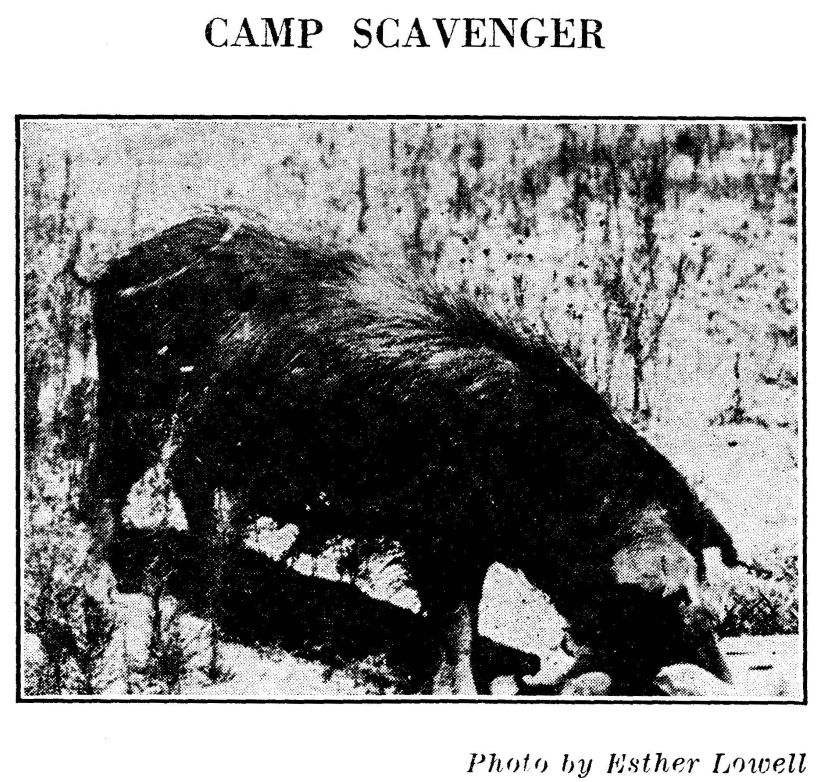
WHENEVER we visit a sawmill town or a logging camp in our southern travels we see misery. If we come to a logging camp the razorback hogs are rooting around the shacks, many of the shacks one-room boxes on stilts. Here the family lives above while the hogs root below. Sawmill villages are a little better, almost as good as the worst cotton mill towns, but not quite.
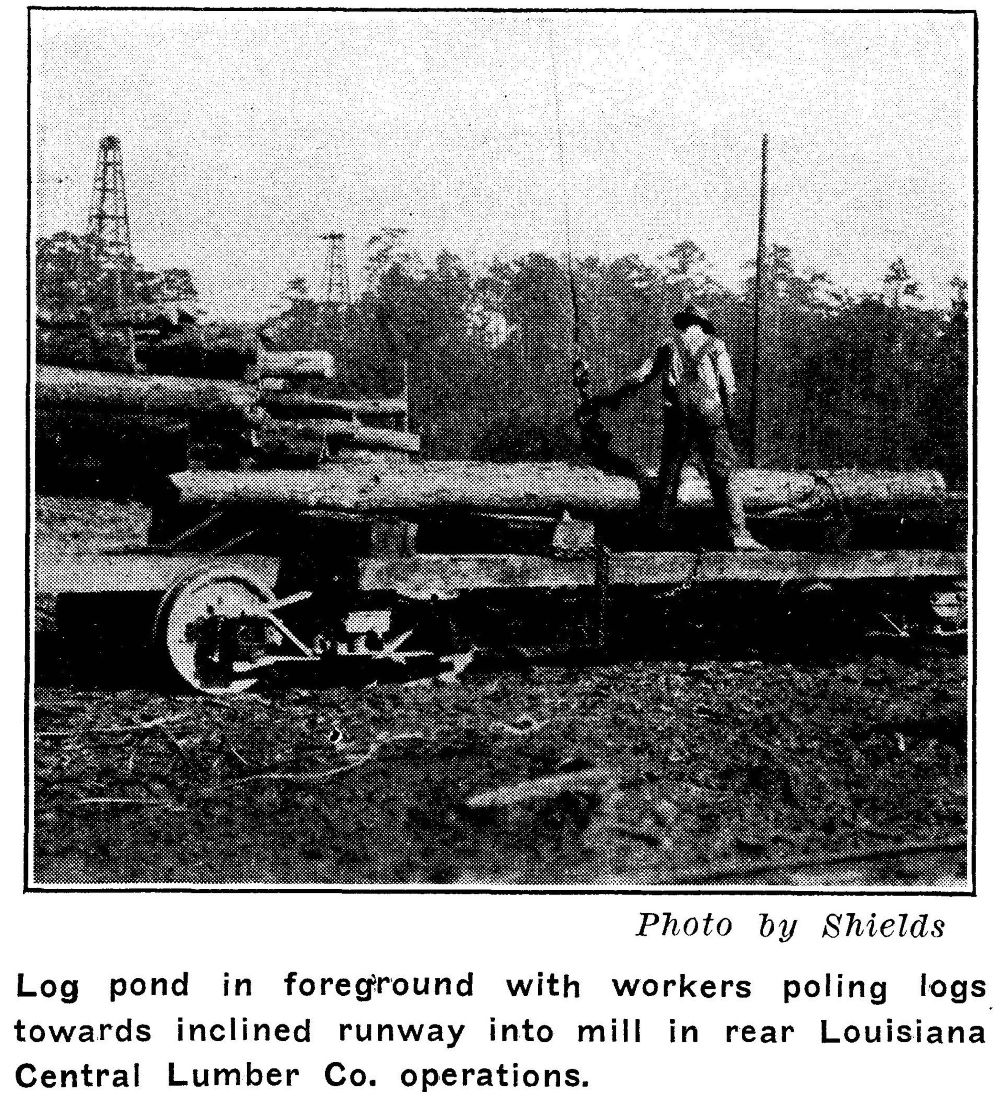
That is the housing side of the open shop in a very important basic industry employing more than a hundred thousand workers in the southern states. [*Over 200,000 if all timber by-product workers are included.] These are the workers who cut the southern longleaf pine, that famous structural material. They work in the swamps and hew out the cypress trees, the “wood eternal” that never rots under water. They bleed out the turpentine that makes the paint that “saves the surface.” They are builders of America. Their products go round the world, and they live like dogs because they have no union, not the vestige of one.
Rangy white Americans, husky Africans, dark-eyed Arcadian French, they have fought for unionism in various battles but always the gunman—that personnel worker of the lumber industry—and starvation, beat them in the end. They were beaten because their battles were isolated struggles of a backwoods’ village or a few logging camps against powerful employers. The bosses helped each other through such agencies as the Southern Pine Association, but the labor movement of the country at large gave little money, little publicity and no sympathetic strikes.
Publicity might have prevented the Bogalusa massacre of 1919 when President Lum Williams of the central labor union and two other American Federation of Labor men were blown to death with buckshot, two more dying later 1rom wounds, a total of five in all. Williams had been told he must die when he refused a $2,500 bribe to leave town. One lesson Bogalusa taught is that the bosses fear publicity. The strategy of the Great Southern Lumber Co. was devoted to suppressing the news. Files of the TIMES-PICAYUNE of New Orleans of that period say the company was greatly disturbed at the publicity it was getting—though the news stories sought to protect the company as much as possible. Great Southern wanted its victims buried in silence. Union men tell me the first attorney the widows retained to handle their damage suits against the company was crooked. One of the ways he betrayed his clients was by ordering “no publicity.”
The hey-day of later union effort in the southern woods was from 1919 to 1921. The crest of the campaign was in 1919 when the Bogalusa mill, then the largest in the United States, was organized for several months by the International Timber Workers and a group of craft unions. They all perished after the massacre.
But in other sawmill towns the unions sprang up again in the next two years, only to be quickly smashed. I have talked to several veterans of these campaigns and I find that the lumber companies had developed a standard technique. It was to beat up the leaders, run them out of town, then mop up on the rank and file remnants. Many of the timber workers were illiterate and with their leaders gone they lost contact with the outside world, could be misled and driven back to work.
Few northern unionists knew of the reign of terror that was driving the A. F. of L. out of the southern woods. The conservative unions were being attacked with all the savagery used against the I.W.W. in the northwest. Had the national A. F. of L., with all its resources, made a burning issue of the southern lumber terror, as the radical movement of the northwest made the Centralia, there might have been a different story to tell.
How many organizers were beaten up, I don’t know. One gets such information piece-meal from the men themselves. The International Timber Workers can’t tell now for it no longer exists. But we have talked to W.L. Donnells and Charles Frenck, representing the Brotherhood of Carpenters and the Timber Workers, respectively, who were beaten unconscious by a company gang when they entered Sumrall, Miss., in 1920 and to John E. Winstanley, who was crippled for life in west Florida in 1921.
Kidnap and Beat Leader
I met Winstanley in Mobile where he heads the city central body. He is still active on the ground but he can’t climb ladders at his trade as painter since that Florida night when strong men laid him over a railroad track and whipped him til he fainted. They had taken him off a railroad train at the gun point, the superintendent of the St. Andrews Bay Lumber Co. directing the kidnapping. Winstanley had victoriously led a strike for the timber workers who borrowed him from Mobile. The bosses repudiated their agreement while he was away. Then as the leader was rushing back to renew the fight they kidnapped and half killed him, then whipped the rank and file in detail.
The outside labor movement raised money for Winstanley’s court suits but it did not prosecute the Florida campaign again. Pity, for the Florida sawmill towns, logging and turpentine camps were hells. It was in a Florida camp—one operated by convict labor—that Martin Talbert, a young Dakotan, was whipped to death as a casual matter of job discipline some months after the Winstanley outrage. What publicity opportunities has the labor movement not lost?
There was nothing new about this violence. sixteen or seventeen years ago an I.W.W. movement in west Louisiana was shot out with a massacre comparable to that in Bogalusa. Bill Haywood’s Book refers to it and George Speed and other old wobblies carry the details fresh in their minds.
For the last six or seven years the southern lumber workers have had no labor organization to turn to. No A. F. of L. international claims full jurisdiction in this field since the timber workers’ union gave up its charter in ’23. The I.W.W. has its hands more than full in the northwest. The Old Knights of Labor which lingered in west Florida till shortly before the war, Winstanley tells me, has vanished. And in another six or seven years the opportunity will be almost gone. Few stands of virgin timber will be left. Few large sawmills will still be operating. The inadequate reforestation being done will bring back little sawmill work for a generation, though paper mills and other by-product plants using short growth stuff will take up part of the slack.
The labor movement must pay the price for its neglect. As their jobs disappear they are coming out of the cut-over lands into the cities to compete with union workers for their bread and butter. Unorganized and used to low standards of living they work cheap. President Stanley Carvin of the Gulfport longshoremen tells me their last strike was beaten by men from the sticks. But the ex-timbermen are still workers, with workers’ needs that may be appealed to by vigorous organization campaigns.
Labor Age was a left-labor monthly magazine with origins in Socialist Review, journal of the Intercollegiate Socialist Society. Published by the Labor Publication Society from 1921-1933 aligned with the League for Industrial Democracy of left-wing trade unionists across industries. During 1929-33 the magazine was affiliated with the Conference for Progressive Labor Action (CPLA) led by A. J. Muste. James Maurer, Harry W. Laidler, and Louis Budenz were also writers. The orientation of the magazine was industrial unionism, planning, nationalization, and was illustrated with photos and cartoons. With its stress on worker education, social unionism and rank and file activism, it is one of the essential journals of the radical US labor socialist movement of its time.
PDF of full issue: https://www.marxists.org/history/usa/pubs/laborage/v28n09-Sep-1929-Labor%20Age.pdf

