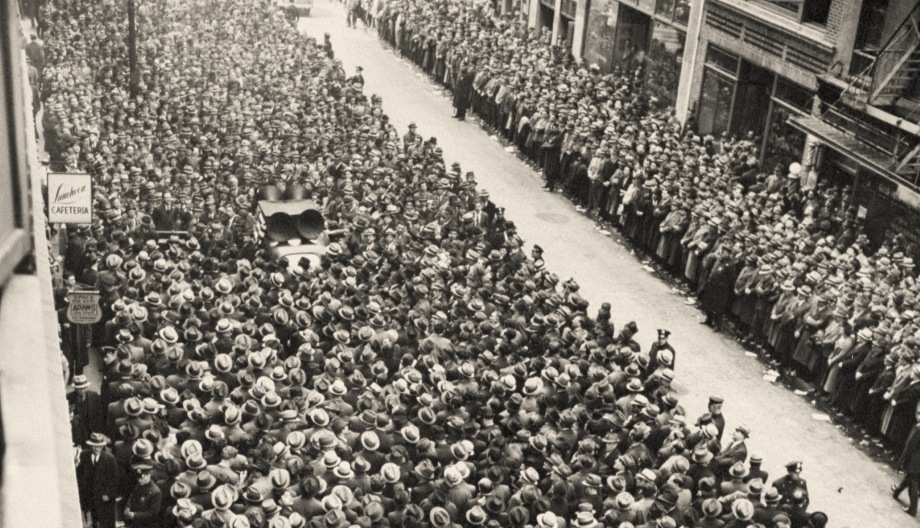
Winning a strike for the 40-hour week, the story of how Communists won leadership in the 13,000-member New York Fur Workers’ Union.
‘The Left Wing: From Opposition to Leadership in the Furriers’ by Ben Gitlow from Workers Monthly. Vol. 5 No. 9. July, 1926.
The Furriers Strike–A Victory for the 40-Hour Week
THE New York Fur Workers’ Union was the first union in the United States of any importance to come under the leadership of the Communists and of the Left Wing. This union has approximately 13,000 members. The New York union functions in an industry that produces 80 to 85% of all the fur garments manufactured in the United States. This accounts for the position the New York union holds in the International Fur Workers’ Union of North America and Canada. It is the financial backbone of the International and comprises over 75% of its membership. The International, however, is not controlled by the Left Wing. At the last convention the Sorkinites, who were the allies of the Left Wing: broke away and united with the reactionaries and the Socialists and gained control of the organization. The International Fur Workers’ Union is therefore in the hands of the right wing machine that still maintains its hegemony over the majority of needle trade unions.
The Original Demands of the Furriers.
Early in January the New York Furriers’ Union presented the following demands to the manufacturers:
1. Forty-hour, five-day week.
2. Thirty-two-hour week during the slack periods.
3. Equal division of work throughout the year.
4. Unemployment insurance fund to be raised by contributions from the manufacturers at the rate of 3% of the wages paid, distribution of the fund to be completely in the hands of the union.
5. Manufacturers to be punished for failing to obey the agreement.
6. A twenty-five per cent increase in wages over the present minimum scales.
7. All skins must bear the union label.
8. Foremen must not be permitted to work in the shops on skins.
9. Shops to be inspected by the representatives of the union.
The Manufacturers Reject the Demands.
The demands were rejected by the manufacturers who are divided into three associations—the Greek Fur Manufacturers’ Association, the United Fur Manufacturers and the Associated Fur Manufacturers, Inc. The Associated Fur Manufacturers, Inc., represents the big dominating manufacturers, those financially most powerful. This association succeeded in uniting all the others in a common struggle against
the workers. The bosses followed up their rejection of the workers’ demands by declaring a lockout of the workers employed in the shops of the Associated Fur Manufacturers, Inc. This was answered by the union with a strike of all the 12,000 workers employed in the shops of the three associations.
The United Front of the Right Wing and the Bosses.
The strike which was fought out most bitterly and lasted 17 long weeks would have been settled much sooner had the manufacturers not depended upon the following two factors from the very beginning of the strike:
1. The manufacturers had assurances from the Right Wing and the Socialists represented by the Jewish Daily Forward that the Left Wing Communist leadership during the course of the strike would be discredited and eliminated, thus enabling the Right Wing to gain control of the strike situation and pave the way for a satisfactory settlement in the interest of the manufacturers.
2. The manufacturers were assured by the same elements that the funds of the union were insufficient for carrying on a long struggle and that if the manufacturers would prolong the struggle the strike would collapse on account of lack of funds.
The manufacturers opened the attack upon the strike by raising the cry of Bolshevism. They declared the strike did not involve trade union questions, that the leaders of the strike did not represent the workers but were Communists, that the demands presented were not in the interests of the workers. but in the interest of Communism, and that undoubtedly the strike was being engineered by Moscow and that the Communist leaders were receiving funds from that quarter. The Right Wing took up the cry of the manufacturers and made it their cry thus forming a united front with the bosses against the workers. The Jewish Daily Forward declared that the Communist leaders were more interested in the championing of their particular political views than they were in fighting for the demands of the workers. They charged that the demands presented by the Communist leaders to the manufacturers were utopian demands and that the Communist leaders might as well have demanded that the shops be turned over without compensation to the workers.
The united front of the bosses against the strikers included the Tammany Hall city government through the police and courts, the Sorkin, Winick elements on the joint board of the New York Furriers’ Union, the majority of the officials of the International Fur Workers’ Union, the Right Wing machine in the needle trades, the Beckerman reactionary forces in the Amalgamated, the Socialists dominated by the Jewish Daily Forward and Morris Hillquit, and the reactionary bureaucratic machine of the American Federation of Labor.
The Forces of the Workers.
Against this formidable united front of the bosses the union had to depend first upon its own forces, their determination and militancy, and second, upon a united front of all honest working class elements in support of the strike. The Furriers’ Union did not take a sectarian position in the face of this formidable opposition. To have done so would have resulted in certain defeat. The Furriers’ Union insisted that it was part of the recognized labor movement of the United States. the American Federation of Labor. The union answered the charge that it was not part of the labor movement by getting the Central Trades and Labor Council to officially indorse the strike. All elements of the working class movement were officially invited to address strike meetings and support the strike. It was this policy pursued throughout the strike that accounts for the successful tactics used in conducting the strike to a victorious conclusion. The union never abandoned the official labor movement. It entrenched itself so well in the American Federation of Labor that every attempt to dislodge it failed. In spite of every provocation of the Right Wing to force a break between the union and the American Federation of Labor the union maintained its position. It did not fall a victim to the splitting dualistic opposition tactics so often resorted to by militants in the American Labor movement in similar situations.
The Leadership of the Union and the Rank and File.
This policy of the union was backed up by a Left Wing leadership composed of a large number of Communists, and by a militant fighting rank and file. The union was fortunate in having a solidified capable leadership. Comrade Ben Gold is a young, astute, capable and energetic mass leader. From the beginning of the strike he had the complete confidence of the masses. He was ably assisted by Comrades Gross, Shapiro, Warshofsky and others. In this strike the rank and file fought and not the hired sluggers and professional gangsters formerly used. The rank and file picket committee displayed the finest qualities of proletarian sacrifices and courage. The picket committee was backed up by the whole membership of the union. Militancy and mass action characterize the Left Wing methods of conducting this strike.
It was not unusual to witness from five to ten thousand workers on the picket line. The strikers fought against cut throats, sluggers, gunmen, and brutal clubbing police. Hundreds of workers were arrested. Many are now under very heavy bail. Some have been sent to prison.
The Role of the Needle Trades Right Wing, the Forward and the Socialist Party.
The needle trades Right Wing saw an opportunity in the Furriers’ strike to recuperate the power it had lost. The Left Wing had succeeded in conducting a successful opposition fight in two organizations, very strategically situated. From an opposition the Left Wing became the administration, first, in the New York Furriers’ Union, and then in the International Ladies’ Garment Workers’ Union in New York. These two Left Wing administrations have charge of a membership of approximately 78,000 workers. The Right Wing fully recognizes that, if the Left Wing administrations can prove that they can in addition to managing the affairs of the organizations, lead the workers successfully in struggles against the bosses, then the Left Wing will not only establish itself permanently in the organizations it now controls but will so win the confidence of the masses in the needle trades that the continued dominance of the Right Wing bureaucracy will be menaced. The Furriers’ Union of New York must therefore not be allowed to win the strike. Everything must be done to sabotage and smash it. It was recognized that the strike could not be successfully attacked by the Right Wing in the Furriers’ Union alone. The situation demanded that the whole Right Wing in the needle trades with the assistance of the Socialist Party under the driving leadership of the Jewish Daily Forward would be necessary for this well thoughtout conscious plan to betray and smash the strike in order to discredit the Left Wing. These elements became, in the fight against the Left Wing, the direct strike-breaking agents of the bosses. A few events will prove this contention.
At the beginning of the strike the Forward differentiated between the strikers and the Communist leadership that was “misleading” the workers. This campaign to break down the confidence of the workers in their leaders and thus the morale of the strike, it conducted under the guise of supporting the strike. The Socialist Party did not object to this undermining work of the Forward and by its silence acquiesced.
Early in the strike the Right Wing leaders of the Fur Workers’ International Union met in the office of the International together with a representative of the Forward and adopted the following dastardly plans for smashing the strike.
1. That the Forward shall print news to the effect that the workers are dissatisfied with the strike leadership and the manner in which the Communist leaders are conducting the strike.
2. That Abraham Beckerman, manager of the New York joint board of the Amalgamated Clothing Workers’ Union, shall supply sluggers who shall beat up innocent strikers and that then the Forward should charge that the non-Communist strikers are being beaten up by the express orders of the Communist strike committee.
3. That the officers of the International who are right wingers, shall take over the leadership of the strike.
4. That the strike funds shall be attached so that the Communist leaders shall not have the wherewithal to carry on the struggle.
5. That the Fur Manufacturers’ Association in whose interest the moves were to be made, shall contribute $100,000. Did the Socialist Party repudiate this nefarious plot and condemn the Forward? Following the exposure of this plot Norman Thomas repudiated the activities of the Forward and rallied to the defense of the strikers. The official speakers of the Socialist Party, however, who addressed the strikers at their meetings never condemned the action the Forward but instead minimized the importance of the leadership, deprecated the quarrels which they termed personal quarrels between leaders, stated that the old leaders had rendered service and made sacrifices for the union and in general spread pessimism. In this case the silence of the Socialist Party and its failure to repudiate was nothing else than an indorsement of the schemes of the Right Wing to smash the strike. It was therefore not surprising that during the course of the strike many workers abandoned the Socialist Party, that demonstrations took place against the Forward and that the representatives of the Workers (Communist) Party were given the most enthusiastic welcome.
When the Right Wing tied up the funds of the union the International Bank controlled by the Right Wing of the International Ladies’ Garment Workers’ Union, the Jewish Daily Forward and the Socialist Party carried out directly upon the advice of Morris Hillquit their orders to keep the money from being turned over to the General Strike Committee. Morris Hillquit advised the bank to withhold the funds even after the Joint Board of the Union had made the necessary legal changes required in the personnel of the custodian of its funds. The recognized leader of the Socialist Party here also played the role of strike breaker and used a labor bank not in the interests of labor but against labor.
The Left Wing Must Fight as a United Force.
Many more cases could be cited but it is useless. Important are the lessons to be drawn. The Right Wing now attacks with its united strength. The Left Wing in the needle trades must learn to do likewise. The failure of the Left Wing in the needle trades to properly support the Left Wing fight in the Amalgamated made possible the advent of Beckerman, the most reactionary force in the needle trade unions. The craft attitude on the part of the needle trades Left Wing must be abandoned. The Left Wing must fight as a united force for the entire industry and must broaden out from a local to a national scale.
The Role of President Green and the American Federation of Labor.
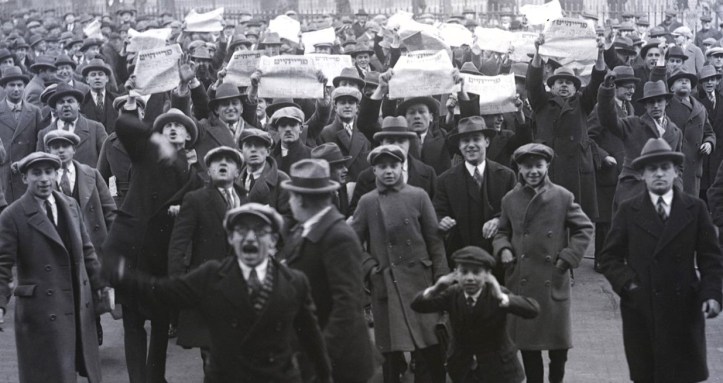
The plots of the Right Wing, the Jewish Daily Forward and the Socialist Party were shattered against the solidarity and determination of the rank and file. The Right Wing and the bosses had to bring in fresh forces against the strikers. The result was that Hugh Frayne, organizer of the American Federation of Labor, and William Green, President of the A.F. of L., were brought into the strike arena. A letter was sent by the International officers to all the members of the New York Fur Workers’ Union. The letter intimated that a satisfactory settlement was in sight and that announcement of the terms would be made at a meeting in Carnegie Hall at which Green would speak. In addition to reiterating the deep concern of the International officers in the strike the letter also enclosed a ballot which was to be returned unsigned to the international officers, upon which the workers wei2 to vote whether or not the International officers should have the right to negotiate a satisfactory settlement of the strike. This maneuver failed because the General Strike Committee to the surprise of the right wing did not boycott the meeting but instructed the strikers in full force to attend and give a concrete demonstration of what they think of the new method devised to betray the strike. The leaders of the strikers were debarred from the hall. The same fate was experienced by every recognized Left Winger and Communist. Hugh Frayne could not still the demand that Gold be permitted to speak. The rank and file gave its answer. The meeting had to be adjourned. The maneuver with the A.F. of L. was defeated. President Green’s prestige received a serious blow. He had to retreat and make peace with the leaders of the strike. Following the meeting in Carnegie Hall that could not be held, Hugh Frayne made public the basis upon which the strike was to be betrayed. They were as follows:
1. The old agreement shall form the basis for a settlement.
2. Elimination of overtime work as much as possible.
3. A three-year agreement.
4. No apprenticeship from Feb. 1, 1926, to Feb. 19, 1928.
5. No sub-contracting.
6. A ten per cent increase over the present minimum wage scales.
7. At the end of two years there shall be one minimum wage scale instead of two. 8. A 42-hour, 6-day week, 4 hours’ work to be done on Saturday.
Hugh Frayne rushed to the Central Trades and Labor Council of New York and had them withdraw their indorsement of the strike. He planned to settle with the manufacturers on the eight points, order the workers back to the shops and if they insisted on striking to declare it an outlaw strike and to use the tactics of Berryism to smash it. The leadership of the Furriers’ Union, however, were not to be caught napping. They got Green into conference. They insisted on their official standing and recognition by the American Federation of Labor. An agreement was reached in which the eight points were rejected, a mass meeting arranged to be held at which President Green was io speak and indorse the strike together with Shachtman, the president of the International, and Ben Gold, the leader of the strikers. These events prove that to have boycotted the Carnegie Hall meeting would have been a left sectarian tactic which would have permitted the Right Wing and the A.F. of L. to isolate the Left Wing leadership and betray the strike. At the 69th Regiment Armory, President Green, representing the reactionary old class-collaboration forces, the reigning reactionary bureaucracy of the A.F. of L., spoke along with Gold, the young Communist. the Left Wing leader representing the militant revolutionary new forces arising in the American labor movement. And Green had to listen to the thunderous applause for Gold and the Left Wing he represents.
Green a few weeks later returned to New York in order to act as a go-between between the manufacturers and the strikers. He came to “settle the strike.” According to the press report, Green acted as a sort of impartial chairman. This is a new angle on class-collaboration—the labor bureaucracy acting as peace agents between the workers and the bosses and not as champions for the workers’ demands.
The Forty-Hour Week.
What Green’s position was to the demands of the workers at the negotiations is not publicly known. However, following the breaking up of negotiations, Green came out with an indorsement of the main issue of the strike—the 40-hour week. The Furriers’ Union used this indorsement by Green of the forty hours to build a broad united front in support of the furriers’ strike on the basis of support of a fight to establish a forty-hour, five-day week throughout industry. A forty-hour mass meeting was held in Madison Square Garden. Twenty thousand workers were present. The Central Trades and Labor Council of New York officially indorsed the forty-hour week and had speakers present at the meeting. Indorsements came from all over the country. The Left Wing became the champion of the shorter work week. The strike now had the backing of all organized labor. All the maneuvers of the bosses, the Right Wing, and the reactionary bureaucrats to break the strike had been defeated. The bosses had to recognize the fact. They had to deal with the Left Wing. The end of the strike is a victory for the forty-hour, five-day week and a victory for the Left Wing. The Left Wing has emerged from an opposition to a leader of the masses in the struggle against the bosses.
The Terms of Settlement.
The strike was settled upon the following terms:
The basic 40-hour week, which is so important to them for the protection of their health, has been won. They still have their ten legal holidays, only three without pay and these in the dull months. They have a 10% increase in their minimum wage scales and a reclassification of work which makes a further pay raise for a great many of them. No workers can be discharged the week before a holiday–the employers’ old trick to avoid payment for the workers’ day off. No apprentices are to be taken on for two years.
Overtime is not allowed, except during the four months from September to December, inclusive, when employers may hire workers for four hours extra on Saturday—at extra pay. There is to be no sectional contracting. Other points agreed upon deal with the more technical phases. The contract runs for three years, retroactive to Feb. 1, 1926, when the old agreement expired.
In addition an agreement was reached that all the scabs are to be discharged and their future disposition left in the hands of a special committee of the union. This is the first time such a provision has been won by a union.
The announcement of the terms of the settlement was greeted with wild enthusiasm by the workers. It was a victory, a clear-cut one. The provision to exclude apprentices for a period of two years is very unfortunate and is to be severely criticized: The Left Wing does not favor the policy of the reformist leaders of unions of skilled workers towards the youth. The Furriers’ Union has depended much in the strike upon the fighting calibre of its youth. To interpret the clause as an exclusion justification would be a serious mistake. Rather the union with this clause should be free to adopt a well working policy of regulating the entrance of youth workers into the trade.
The Fur Workers’ Union has won a victory. It faces new struggles. The victory of the strike must be turned into a victory to win the International Fur Workers’ Union and to pave the way for unification of the Left Wing forces in the needle trades, for a national movement, and for the amalgamation of all the existing needle trade unions into one powerful union for the entire industry.
The Workers Monthly began publishing in 1924 as a merger of the ‘Liberator’, the Trade Union Educational League magazine ‘Labor Herald’, and Friends of Soviet Russia’s monthly ‘Soviet Russia Pictorial’ as an explicitly Party publication. In 1927 Workers Monthly ceased and the Communist Party began publishing The Communist as its theoretical magazine. Editors included Earl Browder and Max Bedacht as the magazine continued the Liberator’s use of graphics and art.
PDF of full issue: https://www.marxists.org/history/usa/culture/pubs/wm/1926/v5n09-jul-1926-1B-FT-80-WM.pdf

