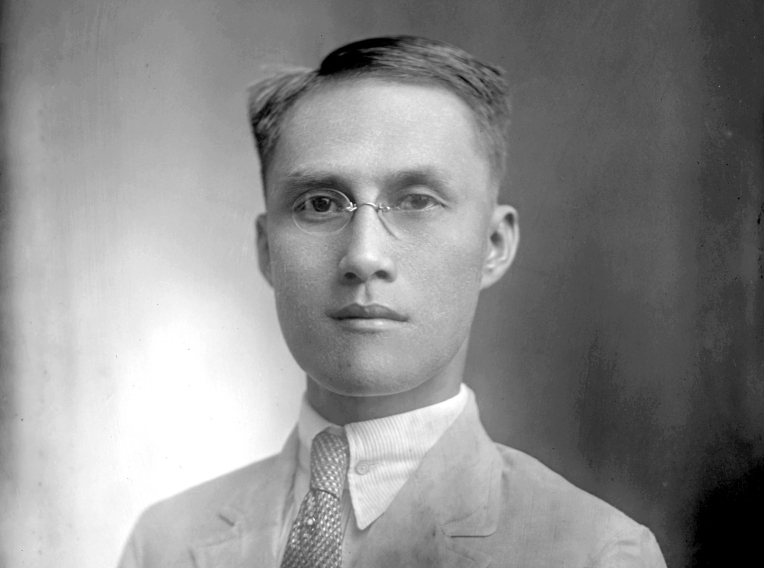
A central figure in Hawaii’s militant, multi-national labor movement of the 1920s, Filipino worker and later lawyer Pablo Manlapit was a founder of the Filipino Labor Union on the islands and leader of the 1920 Oahu Sugar Strike hounded into jail. Here, he is on parole and touring California.
‘Brief Sketch of Pablo Manlapit’s Activities’ by Amado Dino from The Daily Worker. Vol. 5 No. 3. January 5, 1928.
YOU do not know the fighting spirit of the Filipino until you know Pablo Manlapit!
He was born in Lipa, Batangas, Philippine Islands, some 36 years ago. No silver spoon in his mouth when he was born, and lived not the life of gilded youth; and it was well these were so; the result was much in favor in the moulding of his character. At this writing there is this fair build of a man, less than six feet tall, middle-aged, healthy, robust and ever- pleasant in his attitude toward life whatever the circumstances are.
Years ago, when he was dallying with his schoolmates in a public school in Tondo, Manila, not one of them knew that some day, in a foreign land, this classmate of theirs was going to be a dominant figure over a situation fraught with difficulties caused by the exploitation of the masses, by graft and merciless treatment of the poor laboring strangers by the powerful interests in Hawaii. The test of a man’s courage and character comes at a time when a crisis is at hand. In the peaceful, care-free pastimes of the youthful students, young Pablo had no chance to reveal his gift for leadership. But later in his manhood, he passed the acid test and showed the courage and the fighting spirit characteristically Filipino.
On Sugar Plantations.
In February, 1910, he shipped to Hawaii as a common laborer. He was only nineteen years old then. For three years he worked in the sugar plantations. It was during that period that he realized the inadequacy of wages paid the laborers working in the plantations. The laborer, for a hard day’s work of ten to twelve hours—for twenty-six days (rain or shine)—was paid the meager wages of only $20.00 per month! Certainly, not commensurate with the labor performed. This aroused his sense of justice and the urge to ameliorate the existing conditions became implanted in his heart. He began to prepare himself for the service of his countrymen who were in servitude to the big-moneyed men of the Hawaiian Sugar Planters’ Association. Within the next few years he applied his time to the study of law. In December 919, he passed the bar examination and in the same month obtained the license to practice law in the district courts of the Territory of Hawaii.
His first program was to put himself to task, starting the agitation to increase the wages of the laborers. It was his first big fight, and a big fight at that; and the people of the Territory began to take notice of him. Laborers of all nationalities were involved. The outcome was successful, gaining fifty per cent increase in wages for the laborers. At that time there were 20,000 Filipino laborers in the Territory and 25,000 Japanese. The wages increased from $20 to $30 per month.
Bosses Betray Workers.
It did not last long, however. The machinations of the sugar planters’ officials undermined this new wage scale and before long, about eleven months—it was reduced to $26 a month. That, of course, drew the ire of the Filipinos. Manlapit again was prevailed upon by his countrymen, who were virtually the bestialized victims of the exploiters. In the meantime, Manlapit, aside from his law practice, busied himself in organizing the high wages movement. George Wright, outstanding American in the labor movement in Hawaii, volunteered his services to the newly-formed organization. The Filipinos, in recognition of his sympathetic attitude towards the movement, elected him to be co-chairman with Mr. Manlapit. All officers of this body gave their services free, with no remunerations whatsoever from any sources, except traveling expenses and per diems when on duty.
To solidify the strikers and to make the plans concrete, Manlapit published a weekly paper, “Ang Bantay,” as the organ of the High Wages Movement. It was published in Tagalog and in English, mostly in the former.
New Demands.
The year 1924 was the year of the crisis. Manlapit was determined to recover for the laborers what had been gained in the previous strike. He started the active campaign to support the movement. Within a short time he had gathered ten thousand bona fide signatures of Filipino laborers in the different plantations to the petition which contained the following requests:
1. Minimum basic wage from $1.00 per day to $2.00 per day.
2. Eight hours to constitute a day’s work.
3. Time and a half to be paid for all overtime work; double time for work on Sundays and holidays.
4. Equal compensation for men and women engaged in the same kind of work.
5. A proportionate increase in the wages paid to skilled and semi- skilled employes.
6. Abolition of all forms of “bonus” based on the price of sugar or on the number of days worked each month.
7. Recognition of the principle of collective bargaining and the right of employes to organize for their mutual benefit and protection.
As mentioned before, the laborers received $26.00 a month for twelve hours work a day. The requests mentioned above were reasonable. But the Hawaiian sugar planters’ people were adamant. Despite the continued efforts of the leaders and supporters of the movement, the moguls of the plantations entirely ignored the appeal. To a faint-hearted leader the situation was discouraging. The territory of Hawaii controlled by the big bosses of the sugar company! And the same big bosses run the government! There did not seem to be a way out.
Faced Handicaps.
Notwithstanding these handicaps, Manlapit, fully conscious of the righteousness of his cause and fully confident of support pressed the fight on. He made trips to the different plantations in the interest of the movement.
On April 1st, 1924, the strike began—after a persistent struggle of one whole year, with all the hardships and sufferings attendant upon a situation of the like. By April 10, the Inayuda baby was evicted from the hospital in Waipahu, owned by the Oahu Sugar Company, member of the Hawaiian Sugar Planters’ Association. The baby belonged to a couple who supported the strike. The father was out of work and the baby was seriously ill in the hospital. The fact that it was a striker’s baby was enough to bring about eviction of the infant from the Sugar Planters’ Hospital. It was quite against the ethics of the medical profession to execute an order of throwing away a dying baby from a hospital, the affiliations notwithstanding. But as it turned out later, the doctor ordered the baby out, turning a deaf ear to the pleadings of the parents.
The baby died.
Try to Get Manlapit.
“Ang Bantay’’ published a brief item regarding the case. Now the sugar planters’ men saw their chance to “get Manlapit.” By hook or by crook they were going to get him Their stool-pigeons had had their feed. On that account Manlapit was accused of criminal libel. On April 22nd he was arrested. His arrest was the culmination of the long-drawn struggle between the oppressed and the oppressors, labor and capital in Hawaii.
When he was sent to prison on May 29th, 1925 the strike collapsed The reason was obvious. There was no leader. The sentence was from two to ten years of hard labor. And he was eligible for parole by January 5, 1927, on condition that he left the territory of Hawaii for the Philippines. This imprisonment of his has been the live topic of all the newspapers in the territory and even in some remote parts of the world.
Details of Frame-up.
It was learned later that those who testified against Manlapit were hired by the sugar men for the purpose; that they were promised fat sums in addition to their fare to the Philippines if they could only lie in order to have Manlapit convicted. The affidavits of these men have been obtained by Mr. Manlapit’s friends in the Philippines when the paid men in question reached the homeland and squealed after having discovered that they were cheated by the plantation men by giving them only $100 each instead of $15,000 as was originally promised each one of them.
When the time for his parole came, Manlapit was not released, because he did not want to leave for the Philippines. Under the same offense prisoners have been paroled without any conditions attached thereto. But Manlapit’s case has been an exception. It was well-known throughout Hawaii that he was discriminated against; that the sugar bosses, including the governor were doing their best to retain him in prison; to release him only should he agree to leave the territory; for he was their most dangerous’ foe. As the Honolulu Advertiser, leading newspaper in Hawaii, said in one of its editorials, “…a feeling has been created in the mind of the public that Manlapit has been discriminated against; that unfair parole conditions are being forced upon him.”
Finally he agreed to leave the territory for the mainland. (U.S.A.) The warden testified to his excellent deportment while in prison. Parole was granted last August 13, after the petitions from different labor organizations in the United States, from congressmen and other persons in the United States. He arrived in the United States last August 19th.
Speaking In U.S.
Ever since his arrival in Los Angeles he has been occupied in delivering speeches before different organizations to which he was invited. At present he is preparing to make a tour of the big cities of the United States under the auspices of the All-America Anti-Imperialist League. Although in his speeches there will not be anything touching directly on his case, for his speeches will be on the topics mentioned below, he is fully confident that the people of Hawaii are still his great and trusted friends and sympathizers, because he knew that he stood and fought for the right of the exploited countrymen of his in Hawaii.
The topics of his speeches are:
1. Labor conditions in the Philippines.
2. Exploitation of our resources
by Wall Street absentees.
3. Labor conditions in Hawaii.
4. Exploitation of imported laborers from the Philippines and other countries.
5. Philippine independence.
6. The sugar tariff.
Pablo Manlapit is a fighter. This time he fights for the rights of hir oppressed countrymen and he will fight it to the end. When you hear and know Pablo Manlapit you will know the fighting spirt of the Filipino!
The Daily Worker began in 1924 and was published in New York City by the Communist Party US and its predecessor organizations. Among the most long-lasting and important left publications in US history, it had a circulation of 35,000 at its peak. The Daily Worker came from The Ohio Socialist, published by the Left Wing-dominated Socialist Party of Ohio in Cleveland from 1917 to November 1919, when it became became The Toiler, paper of the Communist Labor Party. In December 1921 the above-ground Workers Party of America merged the Toiler with the paper Workers Council to found The Worker, which became The Daily Worker beginning January 13, 1924.
PDF of full issue: https://www.marxists.org/history/usa/pubs/dailyworker/1928/1928-ny/v05-n003-NY-jan-05-1928-DW-LOC.pdf

