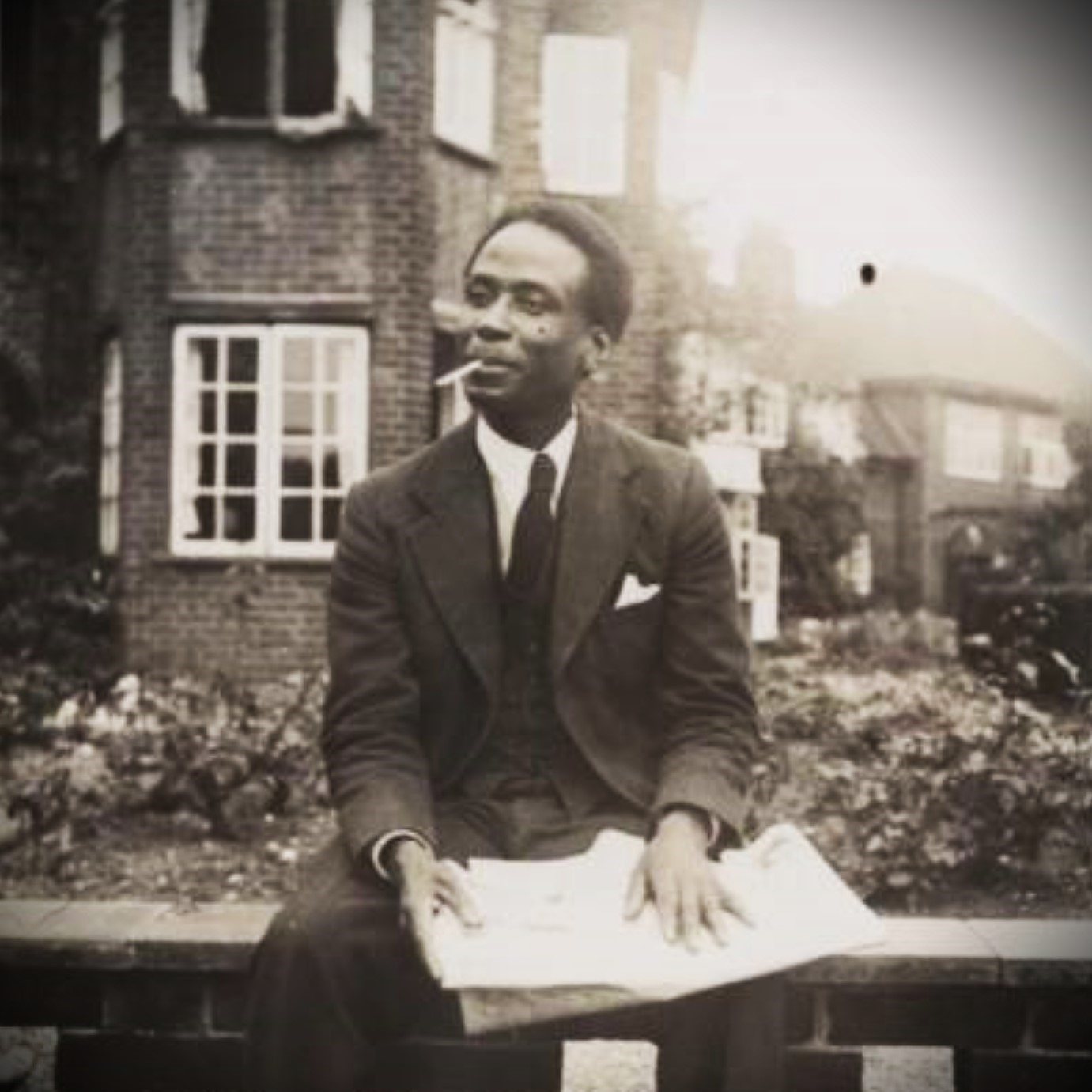
Labour prime minister Ramsay MacDonald presides over British imperialism’s suppression of the ‘Women’s War’ begun as Igbo women rose against the imposition of a new tax and new ‘chiefs’ contrary to all tradition by the colonial administration.
‘British Imperialism in Nigeria’ by George Padmore from International Press Correspondence. Vol. 10 No. 36. August 7, 1930.
The bloody policy of British imperialism increases in proportion as the British bourgeoisie find themselves enmeshed in the crisis of world capitalism. Faced with the rapid disintegration of the Empire, the imperialists are turning their attention more and more to the colonial and semi-colonial countries in order to unload the full burden of the crisis on the backs of millions of dark skin slaves. The crisis has affected with particular force the millions of super-exploited Indians and Negroes who live under the iron heel of British imperialism. It has aggravated unemployment. Wage cuts and speed up are being inflicted upon these colonial workers in the most merciless way. The situation is even more accentuated among the peasantry. In Africa and India, millions of peasants are being expropriated from their lands, while entire villages are faced not only with economic ruination but rapid depopulation.
However, these colonial workers, goaded to desperation. are answering the offensive of their imperialist slave drivers by ever increasing mass struggles.
Of particular significance was the mass revolt which spread over the South-eastern province of Nigeria. That this revolt took place in the next largest British possession after India is of tremendous significance, for it shows that the struggle of the oppressed black slaves against their imperialist overlords is no isolated phenomenon, but part and parcel of the world wide struggle of the toiling masses for liberation. British finance capital, desirous of procuring a broad economic base in West Africa, is attempting to develop large scale plantations. To facilitate this prospect, the Government, in collusion with the dominant agricultural and trading interests, introduced a law to the effect that all peasant women must pay a head tax. The purpose of which is to force these women to leave their holdings and seek employment from the imperialists in lieu of which their land holdings will be confiscated by the Government and turned over to British corporations.
The United Africa Company Ltd., composed of a merger of all the big West Africa Trading Companies, has recently been organised with a capital of millions of Pounds Sterling for the purpose of exploiting the agricultural resources of the country. This policy of land robbery of British imperialists was the cause of the revolt which broke out on December 11th, 1929. The peasant women refused to pay the tax and organised a protest demonstration in which it is estimated that over 30,000 participated. The Government determined to carry out its high handed policy ordered troops to the scene, and without any notice being given to the demonstrators opened machine-gun fire, resulting in the death of over 80, many of whom were pregnant and carrying children on their backs at the time. In some places, especially in Aba districts, where the uprising assumed tremendous proportions, the soldiers bayonetted a number of women and children and drowned them in the river. For days dead bodies lay about in the villages. According to the evidence of Dr. A.W. Howells, Bishop of the Niger, before the Commission of Inquiry, the massacre was carried out in the most ruthless manner. People were not only shot down, but a number of homes were also set on fire by the soldiers in order to force the people into submission. This barbarous act has had a tremendous effect in intensifying the bitterness of the masses against the British, as a result of which the sections where the revolt occurred have been converted into armed military camps for fear of renewed uprising.
In order to add insult to injury, and to justify the atrocious outrage perpetrated against black toilers, Dr. Drummond Shields. Labour Under-Secretary of State for Colonies. has instructed the Governor of Nigeria to impose a fine of 850 upon the natives of Aba in order to provide funds to compensate the British merchants for whatever losses they sustained during the rising.
In consequence of this, mass meetings have been held and telegrams despatched to the Central Government in Lagos, protesting against this fine. The native peasants who are already over burdened with taxation have refused to pay and will resist any attempts of the Government to distrain upon: their crops. It is interesting to know that all European residents at Aba are exempted from the tax which applies only to natives of all classes. Even the “Nigerian Dally Times” the semi-official organ of the Government in its issue of June 9th states editorially:
“The punishment of the Government on the people of Aba will undoubtedly open sores which were on the way of being healed.”
This action of the MacDonald Labour Government as well as its prohibiting the holding of the First International Negro Trade Union Conference in London, is sufficient to convince the most backward Negro colonial workers that they cannot expect anything from the Social Imperialists but cold steel and machine-gunfire. Negro workers in the colonies must carry on a more and more intensive campaign to organise their own ranks and to draw the peasant masses into the struggle against the imperialist oppressors as well as their own capitalist and reformist exploiters. It is also the task of the workers in the imperialist countries, especially the British workers, to rally to the aid of these colonial masses by doing everything in their power to expose to role of MacDonald and other agents of British Imperialism.
International Press Correspondence, widely known as”Inprecorr” was published by the Executive Committee of the Communist International (ECCI) regularly in German and English, occasionally in many other languages, beginning in 1921 and lasting in English until 1938. Inprecorr’s role was to supply translated articles to the English-speaking press of the International from the Comintern’s different sections, as well as news and statements from the ECCI. Many ‘Daily Worker’ and ‘Communist’ articles originated in Inprecorr, and it also published articles by American comrades for use in other countries. It was published at least weekly, and often thrice weekly.
PDF of full issue: https://www.marxists.org/history/international/comintern/inprecor/1930/v10n36-aug-07-1930-inprecor-Virginia.pdf

