David Riazanov with an essay all students of Marx will want to read where, in ending his collection presenting Marx as the full human, he analyses Marx’s answers to a series of stock questions, ‘confessions,’ put to him by his daughters as a sort of Victorian personality inventory. Riazanov was founder of the Marx-Engels archive whose life’s work of collecting and contextualizing the existing writings of Marx and Engels remains, and will continue to be, an invaluable contribution to Socialism.
‘Karl Marx’s “Confessions”’ by David Riazanov from Karl Marx: Man, Thinker, and Revolutionist; a Symposium edited by David Riazanov, Translations by Eden and Paul Cedar. International Publishers, New York. 1927.
I.
“A calumnious, insolent, cantankerous, and snarling monster!” Such was Marx, if we are to believe his chief opponents. He was a sullen and morose revolutionist, a man whose dark spirit was brimming over with hatred and contempt, one whose mind was full of malice and sarcasm, one to whom “the sublime and the beautiful” were utterly alien. Since to him nothing was sacred, he took a fiendish delight in the contemplation of all the more repulsive aspects of human nature. Sombart goes so far as to assure us that Marx was constitutionally incapable of discerning good in his fellows. Marx, we are told, suffered from a hypertrophy of the intellectual faculties, and this was the explanation of his “heartlessness.”
Our Russian ex-Marxists go even further. Formerly, in their quarrel with the “subjectivists” and with the narodniks (who were sentimentalists), they made such a parade of the objectivism of Marx’s teaching, they insisted so vehemently that Marxism was non-moral, that now, in parrot fashion, they continue to repeat: “Marx had no heart, and he was absolutely non-moral.”
Bulgakoff doubts whether love of his fellows and sympathy with their sufferings can have played any part within the psyche of such a creature as Marx.
Tugan-Baranoffsky declares that Marx was “soulblind” to all the nobler promptings of the human spirit. “He could experience a feeling of dislike for evil, but sympathy with the oppressed had very little part in this sentiment…He knew almost nothing of love for his fellows. On the other hand, he was amazingly prone to hate, so that in him hatred of the oppressors had extinguished love of the oppressed. Who can be surprised that persons capable of softer feelings arc horrified when they contemplate this moral anomaly?”
I do not question the sincerity of those cordial sympathies with human sufferings which have always distinguished our sometime Marxists. On the contrary, I am sure that in their case love of the oppressed has long ere this extinguished hatred of the oppressors. But they are not original in their assertion that nature deprived Marx of a heart while compensating him by giving a double allowance of brain. The worthy officer Tyehoff, said as much sixty years ago. Meeting Marx in London, he made “a thorough study” of the author of Capital (he was in Marx’s company for about an hour and a half!) He gave his impressions in a letter to his friends in Switzerland, saying: “If only Marx had as much heart as intelligence, as much love as hatred!” Obviously Tyehoff himself was endowed with more heart than brain!
When the “kindly” Vogt, wishing to hammer into the minds of all well-disposed persons the conviction that Marx was a monster, printed Tyehoff’s letter, Marx cynically rejoined: “Tyehoff is making a great to-do about my ‘heart.’ I magnanimously refuse to follow him into this domain. ‘Ne parlons pas morale’ [Don’t let us talk about morality], as the Parisian grisette said when her friend strayed into politics.”
Nor have I any desire to safeguard Marx’s reputation as the possessor of a “heart.” No one will trouble to deny (Marx himself would never have denied) that some of the feelings of the human heart were less congenial to him than others. “II y a fagots et fagots” (Various kinds of sticks are made up into a faggot—i.e., people are variously compounded bundles of qualities). It is true that Marx never appeals to the “heart”; but he would be a rash reasoner who should deduce from this that Marx had no feeling of sympathy with the oppressed. Indeed, he himself tells us that love for mankind is one of the sources of communist philosophy. But this is a small matter. It is not enough to have a “heart” which suffers in sympathy with others’ suffering; we must also have a “head”—must possess an understanding of the historical process. Marx, therefore, was implacable in his hostility to all sentimentalism, and to the socialism of sheep who are eager to advocate the morality of the wolves.
It is also true that Marx remorselessly exposed all the acrobats (whether Christians or freethinkers) who are so fond of talking about love, and who in their tedious writings (whether learned or popular) tell us we must “sympathise with the oppressed,” but are so “loving” that there is no room in their hearts for wrath against the offenders, while they urge the workers to be moderate and to trust in the “distributive justice” of the capitalists.
Moreover, it cannot be denied that Marx, in his fierce struggle to promote the interests of the working class, was prone to make “savage” onslaughts, not only upon declared enemies, but also upon halfhearted allies. That was characteristic of the man even in those early days when he was a bourgeois democrat, and when his comrades in Berlin were horrified by his ferocity.
It is true, likewise, that Marx did not open his heart to every chance comer. But even though Jesus the son of Sirach may exaggerate when he says “the heart of fools is in their mouth” (Ecclesiasticus, xxi., 26), still he must be a fool who attributes “heartlessness” to every one that chooses to keep his feelings to himself.
Madame Roland tells us in her memoirs that her singing-master used to complain because she did not put enough heart into her songs. “The good man,” she says, “failed to understand that I had too much heart to put it into my songs.”
Marx was by no means expansive, was never “gushing” even in his letters to his nearest and dearest. Seldom if ever has there been a more ardent affection than his love for his wife and daughters. The loss of his wife was a cruel affliction; and the death of his eldest daughter, Jenny Longuet, was a blow from which he never recovered. Yet he was reserved even in his letters to the younger Jenny, the only one of his daughters who had shared the worst hardships of her parents during the early days of their exile—the girl who had been helpmate and companion in his work. The letters, indeed, are most loving. Especially towards the close of his life, when Marx himself was already in very bad health, they bear witness to the writer’s earnest endeavour to avoid saying anything that may add to the ailing Jenny’s anxieties. He does his utmost to keep her cheerful. Nevertheless, even these letters do not contain a single “sentimental” phrase. The same remark applies to the letters to Engels, from whom Marx hid nothing. He writes about “business” or about theoretical questions, but is remarkably sparing in personal effusions. How much anguish, however, finds vent in the following lines, written to Engels under date March 1, 1882, from Algiers, whither he had been sent in the hope of recruiting his health after Jenny Longuet’s death:
“By the by, you know that few people [are] more averse to demonstrative pathos; still, it would be a lie to confess [deny] that my thought [is] to great part absorbed by reminiscences of my wife, such a part of my best part of life! Tell my London daughters to write to old Nick instead of expecting him to write himself first.”1
No doubt this aversion to “demonstrative pathos,” to “sentimentalism” of all kinds, interferes with the portrayal of Marx’s inner life, impedes the discovery of his most intimate sympathies and antipathies. We generally learn very little about these from the man himself. If at times he becomes autobiographical (as in the preface to the Critique of Political Economy, or in Herr Vogt), this is only in so far as will promote the interests of the matter in hand, or will elucidate his theoretical views. It is as if he wanted to say: “Judge me by my works, not by what I tell you about myself.”
This is why any attempt to delineate Marx, the man, upon the basis of his own utterances, encounters almost insuperable obstacles. His inner world was hidden away from strangers. The tenderness of his heart; his sensitiveness, which was a source of attraction to Heine, the most vigorous and most subjective of the German lyric poets, and also to Freiligrath, the singer of freedom; his ungrudging readiness to share his intellectual riches with others; his willingness to make allowance for others’ weaknesses, in conjunction with a pitiless self-criticism—all these qualities were hidden from the world beneath armour of proof.
Only in the memoirs of Lafargue and Liebknecht do we find an attempt to portray Marx as a man. Both of them had plenty of experience of the chastisements inflicted by this “ferocious” teacher. Alike in conversation and in writing he often gave them “sound scoldings” for their political activities, berating them in a way that was very damaging to their self-conceit. They often thought him mistaken, and at times they considered his handling of them unduly rough; but these little differences were easily smoothed out. Paul Lafargue and Wilhelm Liebknecht were men of strong character. They knew that Marx’s little weaknesses (when these, and not their own deficiencies, had caused the trouble!) were but “the obverse of the medal”; and they were not inclined to call him to account for every trifle. If, in contrast to the critical pictures limned by Marx’s adversaries, Liebknecht and Lafargue in their memoirs incline to the other extreme, they err, not so much in respect of their portraiture of Marx as a man, as in respect of their account of him as a thinker and a revolutionist. Liebknecht, more than Lafargue, goes astray in these matters. But he excels when describing Marx as father, friend and comrade. The more knowledge we gain of Marx’s private life (from his friends’ letters, from various sources hitherto unutilised), the more fully is Wilhelm Liebknecht’s account confirmed.
A brilliant light is thrown upon Marx’s inner life, upon his personal psychology, by the document here published, the “Confessions” which a lucky chance has preserved for us.
II.
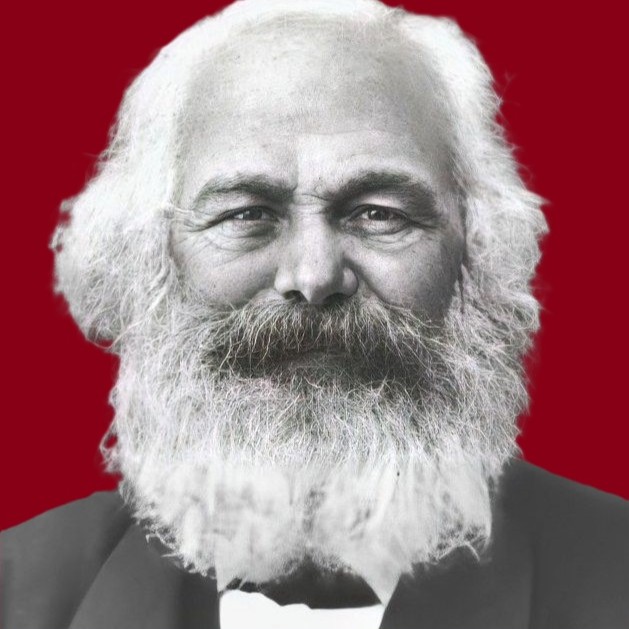
In the summer of 1910, I was working for a few weeks at Draveil in the house of Lafargue, who had generously placed a mass of Marx’s posthumous papers at my disposal. Laura Lafargue was good enough to let me use her study, one of the greatest ornaments of this room being the portrait of Marx which is badly reproduced in Spargo’s biography. A white-haired old man smiled down on us from the wall, smiled good-naturedly through half-closed eyes. To me this was a new Marx, not the profound thinker whose face is preserved for us in the most familiar of his photographs (one of the best, according to Laura Lafargue). One might have thought that this kindly old fellow’s chief ambition had been to master the art of being a good grandfather. How vividly this portrait called up in my mind Liebknecht’s spirited description of the author of Capital turned into an “omnibus,” with his grandson Johnny riding on the box-seat—i.e., Marx’s shoulder. Johnny was “coachman,” with a whip; and Liebknecht and Engels were the much-belaboured “horses.”
During one of my conversations with Laura about her father (I cannot now recall in what connection), I said it was a great pity that there was so little “subjective” material among Marx’s posthumous papers. Laura suddenly remembered that she and her elder sister, Jenny, had once made their father answer a set of questions, this game of “Confessions” being popular at the time. By good fortune, she was able to put her hand on the document, and she gave me a copy of it, which I reproduce here.
CONFESSIONS.
Your favourite virtue.—Simplicity.
Your favourite virtue in man.—Strength.
Your favourite virtue in woman.—Weakness.
Your chief characteristic.—Singleness of Purpose.
Your idea of happiness.—To fight.
Your idea of misery.—Submission.
The vice you excuse most.—Gullibility.
The vice you detest most.—Servility.
Your pet aversion.—Martin Tupper.
Favourite occupation.—Bookworming.
Poet.—Shakespeare, Aeschylus, Goethe.
Prose writer.—Diderot.
Hero.—Spartacus, Kepler.
Heroine.—Gretchen.
Flower.—Daphne.
Colour.—Red.
Name.—Laura, Jenny.
Dish.—Fish.
Favourite maxim.—Nihil humanum a me alienurn puto.2
Favourite motto.—De omnibus dubitandum.3
KARL MARX.
Obviously in these “confessions” we must not take everything in dead earnest. The framework is one of jest—but we shall see that a good deal of the content is earnest after all.

First, a word or two as to the date when the “confessions” were written. Laura Lafargue could not give me precise information. However, from the answer to the question as to the favourite name4 we may infer that we have to do with the early sixties, when the third daughter, Eleanor, was still too young to understand the joke.
Some of the answers are manifestly playful. “Daphne” is his favourite flower; daphne is a kind of laurel (laurus), and this brings us to Laura. In giving “fish” as his favourite dish, he is simply guided by the rhyme.
The answer to the third question is the expression of good-humoured irony. Marx’s wife was his valiant fellow-soldier in all the hard fights in which he was engaged. She had endured with truly “virile” fortitude the blows of fate, the death of four children—victims of the dire poverty in which she and Karl had had to live during the earlier fifties. But she had found it less easy to bear the inward struggles of their expulsions. Though Marx had kept his own counsel about the worst happenings, she had learned enough to disturb her peace of mind. Especially had she taken the Vogt affair to heart. She was too “weak” to accept all this without repining.
“Simplicity,” which Marx mentions as his favourite virtue, was, in fact, his own most characteristic quality. There was nothing which stirred his bile so much as posing, play-acting, showing off.
“Marx,” writes Wilhelm Liebknecht,5 “was one of the few persons I have ever known (whether great, small, or average), who were quite free from pretentiousness. He was too great and strong for this—and too proud. He never posed, and was always his natural self.” Professor Kowalewski, too, in his memoirs, tells us that Marx, in contradistinction to other great men he had known, “never put on side.”6
Frau Marx was equally simple. Let me quote Kowalewski once more: “I have rarely known a woman who welcomed guests so cordially as Frau Marx did in her modest home; and seldom can any one in such simple surroundings have so admirably preserved the manners of what the French style ‘une grande dame.’”
A fortnight after his wife’s death, Marx wrote to Jenny as follows: “These letters of condolence which are pouring in from far and near, and from persons of such various nationalities and of so many different professions, etc., are, in their estimate of Mohmchen, animated with a truthfulness and inspired with a profound sensibility such as are not often to be met with in letters of this kind—which for the most part are purely conventional. I account for this by the fact that everything about her was natural, sincere, and unconstrained; that nothing was artificial. That is why the impressions formed of her by these others are so vivid and luminous.”
With the foregoing considerations in our mind, we can understand why Marx tells us that “Gretchen” is his favourite heroine. He may be jesting, but there is an underlying current of earnest. In the whole of German literature, there is no more wonderful embodiment of naturalness, sincerity, and simplicity.
III.
“Singleness of purpose,” Marx tells us in his confessions, is his chief characteristic. It would in truth be hard to point to any one whose life was a more typical manifestation of this than the life of Karl Marx. To quote the Russian poet Lcrmontoff, he knew only “the power of one thought, one single but burning passion.” He offered up everything to the cause he had most at heart. For decades, he toiled day and night, with the one goal always before his eyes, and never allowing himself to be diverted from his aim. Unceasingly he strove to provide a firm foundation for the workers’ struggle for freedom, to supply the proletariat with an inexhaustible arsenal of weapons for the fight with bourgeois society. With iron consistency, he battled for this throughout his career. Singleness of purpose was equally characteristic of the man and his work, both being fashioned out of the same substance.
Marx is perfectly serious, too, when he writes that his idea of happiness is “to fight,” and his idea of misery is “submission.” He was always a fighter, both in the theoretical and in the practical field. In the Communist League and in the International Workingmen’s Association, he was never weary of calling upon the workers of all lands to join forces for the struggle against subjection and slavery in every form—against poverty, mental degeneration, and political dependence. Though he was never declamatory, never emotional in his appeals, he could always find simple but moving words when it was fitting to speak of those who had fallen in the struggle.
The vice he detested most was “servility.” This was the simple truth. There was nothing he loathed more, whether in public life or in private. Though he was never straitlaced, never fond of preaching morality, in this matter he was inexorable. Above all, he hated servility towards the powers that be. Marx pilloried servility in his criticism of the speech Kinkcl made in his own defence; and he censured the servility of Schweitzer’s attitude towards Bismarck. With good reason did he extol the sturdy simplicity that made Rousseau avoid even the semblance of compromise with those in authority. He was ruthless, too, in his condemnation of that form of servility which manifests itself in concessions to what is called public opinion. He hated a sycophant; and the more talented the sycophant, the more remorseless was Marx in his judgment. Liebknecht is right in saying that Marx had a sovereign contempt for popularity. Successes of the moment were nothing to him; and public applause was valueless. He was equally averse to scientific charlatanry and to political opportunism, both of which spring from the same source.
“Martin Tuppcr” as his pet aversion symbolises for Marx the acme of all that is trivial and commonplace, which can flaunt in popular favour. Tupper, now forgotten, and absolutely ignored by most of the historians of English literature, was born in 1810 and died in 1889. In the fifties he was one of the most popular and successful of British writers, his Proverbial Philosophy, the book which made his fame, having sold to the extent of more than a million copies. He was throughout life the butt of serious critics in his own land, and elsewhere; but I will quote what a German writer has to say of him, G. Kellner, in a history of Victorian English literature, published in 1909: “His poems were characterised by a complete want of talent; they were the opposition and the repudiation of all poetic faculty, combined with a pitiful stupidity…He was blind to poetry, deaf to rhythm, unthinking and uncritical to the finger-tips.” Marx refers to him thus in Capital (Moore and Aveling’s translation of Vol. I., p. 622): “Bentham is among philosophers what Martin Tupper is among poets. Both could only have been manufactured in England.” Here, I think, Marx errs. There are similar poets in other lands—in Germany and Russia, for instance. But so striking a success on the part of so commonplace a writer could perhaps have been secured only in England, where servility to “public opinion” is peculiarly dominant even to-day.
A study of Marx’s writings shows that he is telling the simple truth in his confessions when he says that his favourite poets are “Shakespeare, Aeschylus, and Goethe.” We know what Paul Lafargue had to say of Marx’s Shakespearean studies. Furnivall, the Shakespearean scholar, who died as a very old man in 1910, was a friend of the Marx family. What Marx wrote of Shakespeare in some of his English articles was often masterly in point of style, and his aroused the wonder of competent English critics.
In Aeschylus, Marx admired the great poet who was the first to wrest from the ancient Prometheus myth the profoundly moving image of one who is a dauntless champion in the fight against the existing order. In the preface to his doctoral dissertation (penned early in 1841) on the “Difference between the Democritean and the Epicurean Natural Philosophy,” tells us that “Prometheus is the most distinguished among the saints and martyrs in the philosophical calendar,” and quotes the bound Prometheus’ reply to Hermes, the “servile messenger” of the Gods:
I prefer my unhappy lot to thy bondage.
Be sure of this, I would never change places with thee;
For I deem it better to be chained to this rock
Than to be the servile messenger of All-Father Zeus.
A surprise is in store for us when Marx tells us that “Diderot” is his favourite prose writer. Even Paul Lafargue, in his reminiscences of his father-in-law, makes no mention of his eighteenth-century compatriot. But Marx shared with the greatest of German poets, with Lessing and Schiller and Goethe, this fondness for the renowned French encyclopaedist. Moreover, modern historians of French literature sound the same note. Diderot has withstood the criticism of time better than any of the other apostles of the eighteenth-century enlightenment—both as thinker and as writer. Le neveu de Rameau (Rameau’s nephew), which Marx doubtless had in mind, remains today a masterpiece pf French prose. More than all his colleagues, Diderot shunned phrasemaking. His language was clear, and closely in touch with the actualities of life; his reasoning and his wit were equally brilliant; he was a genius in the clarity with which he could describe all the happenings of daily existence; he lashed French society pitilessly, through the very mouths of its parasites—have we not here enough, and more than enough, to explain why Marx and Engels valued him so highly?7
We learn that Marx’s favourite heroes are “Spartacus and Kepler”; the former, obviously, as man of action, and the latter as thinker. It may well be that these names came into his mind under the promptings of recently read biographies of the two men. We get a hint as to this, as far as Spartacus is concerned, in a letter to Engels under date February 2 7, 1861, where Marx writes: “In the evenings, for recreation, I have been reading Appian’s account of the Roman civil wars, in the original Greek. A most valuable book. The fellow was an Egyptian to begin with. Schlosser declares he has ‘no soul’—presumably because Appian looks for the material causes of these wars. Spartacus is presented to us as the finest figure in classical history. A great general (not a Garibaldi), a man of noble character, a real representative of the antique proletariat.”8
It is as a proletarian hero that Spartacus is depicted in Giovagnoli’s well-known historical novel, which is widely read by the revolutionary youth, not in Italy alone, but also (in Russian translation) in the Soviet Republic. Spartacus may, of course, be viewed from a very different angle. But what interests us here is to know what qualities Marx prized in this leader of a slave rebellion.
What attracted Marx to Kepler? Was it the scientific honesty for which Ricardo praised the astronomer so highly? Or was it the “freedom of the spirit” which, as Kepler’s biographers say, enabled him to lift himself far above earthly cares and activities into the aether of a scientific speculation directed towards the noblest ends?
Like Marx, Kepler had throughout life to battle with the direst poverty. He, too, never faltered in his devotion to principle. Neither force nor lures could make him deviate from the path traced out for him by his convictions. He worked unrestingly to disclose the laws of the universe, and was as poor as a church mouse when he died.
No mortal, yet, e’er rose so high, ’tis true,
As Kepler rose—to die in want of bread.
To please men’s minds was all the art he knew,
And so their bodies left him quite unfed.
Again and again Marx must have recalled these words, above all in the early sixties, when he was once more harassed by want and illness, which came near to making an end of him9—so that he began to feel seriously afraid that he would never be able to finish the work in which he was disclosing the main laws regulating the motions of the capitalist universe.
Marx never wearied in the pursuit of knowledge. This may make some readers feel that it was rather contradictory of him to say that his favourite motto was: “Doubt everything.” But the contradiction is only on the surface. He does not mean doubt for doubt’s sake; he does not mean crude scepticism. His doubt is directed against the semblance that veils reality. Distrust of appearances in nature and in political and social life, was for Marx the starting-point of all critical investigation. The task of science is to strip off this semblance, to apply everywhere the sharp scalpel of analysis, in order to discover that which is hidden beneath the vesture of appearances, to disclose the underlying essentials, to reach the core of actuality. We must not allow ourselves to be fooled by the fair visage of capitalist society, in which, to outward seeming, liberty, equality, and justice prevail. Armed with this doubt, to which nothing is so sacred that it can be permitted to wear a veil, Marx probed to the innermost secret of bourgeois society—the fetishism of commodities, thanks to which the producers become the slaves of the products of their own labour.
When Marx declared that his favourite occupation was “bookworming,” he was making fun of a passion which his friends had often good-humouredly derided. Engels, himself a bookworm, would try to curb his intimate’s excesses in this matter.
With each new language that Marx learned, he plunged into a new ocean of books in order to widen his knowledge. The passion was closely interconnected with the meticulous conscientiousness of all his work, and with the desire to master every detail of the subject under consideration. But his wife and Engels were right in contending that his enthusiasm for detail was what prevented his finishing Capital!
Marx is laughing at himself, too, when he says that “gullibility” is the vice he is most ready to excuse. Marx was no recluse. He was far too much busied in practical matters for this. But intense and prolonged intellectual labour always has a seamy side. The person over-engrossed in mental work tends to become “absent-minded,” as far as the things of everyday life are concerned—and Marx was certainly absent-minded at times. He did not mix enough with his fellows to be able to rely upon his judgment of personal character. Furthermore, as Wilhelm Liebknecht rightly insists, he was constitutionally incapable of wearing a mask and of giving himself out to be other than he was. For all these reasons combined, he was often gullible when he came into contact with charlatans—whether in the political field or elsewhere. It is true that in due course he was usually able, even without the help of Engels or his other friends, to detect the humbug under the quack’s fair seeming. None the less, as Marx frankly acknowledged, he was gullible at times, and it would not be difficult to quote some striking instances of this little weakness.
When his daughters (who must have known his weakness better than any one else) asked his favourite maxim, Marx quoted Terence, writing, “I regard nothing human as alien to me.” He might have made the same answer to his adversaries, to all those who with much parade of wit and lively self-satisfaction were so fond of dilating upon his deficiencies. However much an individual may have reason to complain of the manifold faults of contemporary society, he always remains bound to that society by a thousand threads. It is difficult, almost impossible, for any human being to rid himself of his share of our common heritage from primitive man. Marx did not escape his portion. He erred at times, both as a man and as a politician.

Any one who has read his letters to Engels, Becker, and Weydemeyer, cannot but marvel at the way in which he endured the manifold troubles of poverty. (It was not until 1869 that he found himself in comparatively easy circumstances.) His cheerfulness was amazing to all his friends and acquaintances. The rude blows of fate sometimes drew from him harsh and angry words, even towards his nearest and dearest. But he always rallied, always threw off the burden of daily troubles, always applied himself with renewed energy to his life’s work.
When Engels, in one of his letters (not for the first time) urged his friend to make up his mind at long last, and send Capital to the press, Marx replied, under date June 31, 1865: “I cannot decide to send any part of the book to the printer until the whole work lies ready before me. Whatever shortcomings they may have, the merit of my writings is that they form an artistic whole, and this is only attainable thanks to my decision never to print them until they are quite finished.”
The same may be said of Marx’s life. Whatever its shortcomings, in the entirety it forms an artistic whole of such rare beauty as can hardly be equalled in the history of our race.
NOTES
1. Marx’s letters to Engels are written mainly in German, but he is continually breaking into some other tongue—especially English. This English is vigorous and idiomatic, but not always grammatical. The passage just quoted was penned by Marx in English. The bracketed words are conjectural emendations.
2. “I regard nothing human as alien to me.”
3. “Doubt everything.”
4. Jenny was his wife’s name as well as that of nis eldest daughter.
5. Liebknecht’s memories are not free from errors, especially when he is describing Marx as a thinker and as a politician. He does not always record the facts accurately. But his account is unique in so far as it conveys the impression which Marx, the man, made upon him.
6. “Marx is usually described as a gloomy and arrogant man who flatly rejected all bourgeois science and culture. In reality he was a well educated, a highly cultured, Anglo-German gentleman, a man whose close association with Heine had developed in him a vein of cheerful satire; and one who was full of the joy of life, thanks to the fact that his personal position was extremely comfortable.” Kowalewski is, of course, wrong in what he says about Heine’s influence, and in his belief that Marx had an “extremely comfortable” position in life; but as regards the matters of education and culture he is certainly quite as competent a judge as the professors in Freiburg and Breslau.
7. In Anti-Duhring, Engels speaks of Rameau’s Nephew as a masterpiece of dialectic. Marx quotes Diderot in the Holy Family and again in Capital.
8. Mommsen, too, was most friendly in his handling of Spartacus.
9. This was when the American Civil War had cut him off from sending regular contributions to the “New York Tribune,” which were at that time one of his chief means of livelihood.
‘Karl Marx and Metaphor’ (1903) by Franz Mehring from Karl Marx: Man, Thinker, and Revolutionist; a Symposium edited by David Riazanov, Translations by Eden and Paul Cedar. International Publishers, New York. 1927.
Contents: Introduction by D. Ryazanoff, Karl Marx by Friedrich Engels, Engels’s Letter to Sorge concerning the Death of Marx, Speech by Engels at Marx’s Funeral, Karl Marx by Eleanor Marx, The June Days by Karl Marx, The Revolution of 1848 and the Proletariat A Speech by Karl Marx, Karl Marx by G. Plehanoff, Karl Marx and Metaphor by Franz Mehring, Stagnation and Progress of Marxism by Rosa Luxemburg, Marxism by Nikolai Lenin, Darwin and Marx by K. Timiryazeff, Personal Recollections of Karl Marx by Paul Lafargue, A Worker’s Memories of Karl Marx by Friedrich Lessner, Marx and the Children by Wilhelm Liebknecht, Sunday Outings on the Heath by Wilhelm Liebknecht, Hyndman on Marx by Nikolai Lenin, Karl Marx’s “Confessions” by D. Ryazanoff.
PDF of book: https://archive.org/download/in.ernet.dli.2015.54746/2015.54746.Karl-Marx-Man-Thinker-And-Revolutionist_text.pdf

