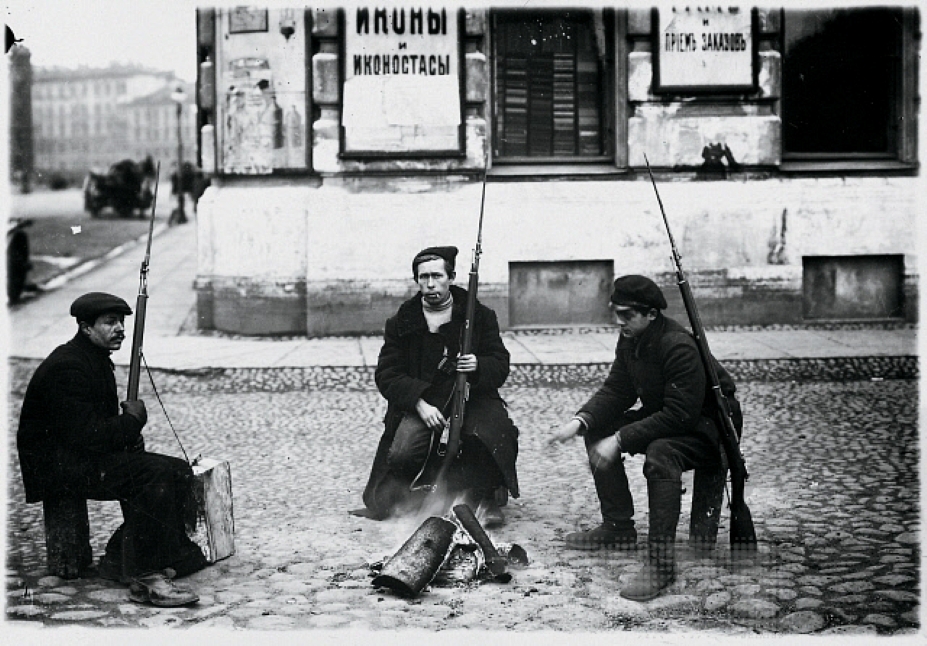
The Bolshevik’s municipal program as published in Pravda during May, 1917.
‘What Do the Bolsheviki Demand of the Municipality?’ (1917) from International Press Correspondence. Vol. 7 No. 33. June 2, 1927.
(Published in the “Pravda” of May 22nd and 25th 1917).
General Theses.
1. The urban public administrative bodies are autonomous in their administrative, cultural and economic activities just as are the urban district administrative bodies.
The reciprocal relations between the chief urban administrative body and the district administrative bodies are determined by practice. The principle to be adopted is that of the highest measure of autonomy for the urban districts. Only that which by its nature demands centralisation, i.e. a more extensive concentration of activities, passes over to the highest and central institutions.
3. At the demand of a twentieth of the municipal electors, the municipal council is obliged to submit any question of communal policy which interests the citizens in question to discussion and to subject it to general voting. The same applies to the electors of the district councils.
The Franchise.
1. Every person, not under eighteen years of age, without distinction of sex, religion or nationality, living in the district in question, is entitled to vote for the district council; any person not under eighteen years of age etc. can be elected as a district councillor or as an official of the district council, independently of where he resides.
2. The election of the members of the town councils will be held on holidays.
3. The town councillors as well as the district councillors will receive compensation for every time they attend a meeting as well as for carrying out the duties imposed on them by their office.
Remark: The amount of the compensation will be determined by the town council.
4. The town councillors, the members of the municipal authority and the officials in responsible posts will be freshly elected every year. In these elections, some categories of officials (for instance judges, teachers, officers of the militia, tax inspectors) will be elected by original voting in the districts.
Remark: The circle of officials who are to be elected directly by the people will be determined by the town council.
5. The employees of the urban administrative bodies, as indeed all public officials, receive compensation.
Financial Policy.
1. The local administrations, including the district councils have an unrestricted right of autonomy to satisfy the requirements of the local population.
2. If the money procured through direct taxation is insufficient, the local administration will receive support from the higher central authorities.
3. Plan and principles of taxation:
a) Abolition of all forms of indirect taxation, both open and secret.
b) Exclusively direct taxation of the people in the form of taxes determined by the local administration itself and in the form of additional taxes imposed by the higher administrative authorities (for instance the Town Duma in Petrograd).
c) Forms of taxes: income tax, tax on capital, inheritance tax, tax on sales, tax on increased values etc.
4. The tax collecting offices for collecting both national and communal taxes must be organised on a strictly democratic basis and under the control of the local administration.
The system of financial policy developed here is closely bound up with general national and even international policy, and for its realisation, it is necessary that the working class and those strata of the population which side with it, should carry on a decisive fight against the ruling classes:
1. for the next special economic reforms such as the nationalisation of the land, of railways, mines, banks, syndicates etc.
2. in order to bring to an end the imperialist war which is devouring many milliards, destroying the forces of production and devastating whole countries.
The Housing Question.
The autonomous local administrations must:
1. register all dwellings and other premises.
2. fix rents.
3. requisition those premises whose owners refuse to let them at the prices fixed and
4. hand over to those without a roof over their heads empty or partly empty (not densely inhabited) houses and premises (warehouses, castles etc.) in accordance with the actual lack of housing, also premises used for purposes of no social value such luxurious restaurants, businesses which sell articles of luxury and palaces etc.
As a provisional measure, until the whole of the land in the country is nationalised, our party demands that all waste plots of land in the environment of towns be handed over to the local administrations for the erection of houses, laying out of parks etc.
The Party cannot hide from the population the fact that the lack of building materials, the ruin of transport, the lack of workers and other general phenomena connected with the war and with the rule of the bourgeoisie have almost completely arrested practical building activities.
Undertakings of Public Utility.
The urban administration and, if it is technically and economically possible, the district administrations also, must take under their control a number of undertakings of public utility which are still in the hands of private persons or syndicates.
1. Mills, means of river transport, soap-boiling works and other undertakings connected with the production and distribution of articles of general necessity must be in the hands of the people itself.
2. The following must also be communalised: baths, hospitals, chemical, hygienic and bacteriological laboratories and all other institutions of a hygienic and medical character.
3. Crematoria must be built.
B. It is also necessary that a water supply with good drinking water should be provided everywhere, as well as that sewage should be laid everywhere and that the waste matter be rendered harmless in sewage beds by way of biological cleansing.
C. Electricity and gas should be communalised.
***
In carrying all this out, neither existing nor new institutions of the urban or district administrations shall be the cause of indirect taxation of the people. The majority of the undertakings must therefore cost the population absolutely nothing, and only in individual cases must the cost price be paid.
The Labour Question and the Protection of Workers.
1. In all urban undertakings, the conditions of labours of the workers and employees must be model ones and must be determined by collective treaties to which the trade union representatives are a party.
2. In all urban undertakings, a minimum wage will be fixed. a) Equal pay for equal work. b) Equal pay for the work of men and women.
3. In all urban undertakings a maximum of eight hours’ work will be fixed.
4. In all urban undertakings the following will be abolished: a) Overtime. b) Night-work. (With the exception of cases where it is technically necessary, to which the trade union organisations give their consent.)
A weekly time of recreation of 42 hours will be fixed.
5. The urban administration recognizes April 18th (May 1st new style) as a legal Labour Day as well as a number of other proletarian holidays and days of mourning.
6. Urban employees and workers will be granted an annual holiday of one month with full pay.
Remark: All the regulations enumerated in §§1 to 6 are also binding for urban tradesmen.
7. The urban administration shall take part in the national insurance against sickness, old age, accidents, disablement, maternity, widowhood, orphanhood of its workers and employees as well as in unemployment insurance at the cost of the urban administration, while granting complete autonomy to the insured persons.
8. Women employees of the urban administration shall be freed from work eight weeks before and eight weeks after their confinement on full pay.
9. The urban administrations shall organise urban inspection, elected by the local labour organisations, for the protection of wage earners and especially of child labour, as well as for supervising that labour legislation in general be exactly carried out.
10. With the object of supporting the unemployed, the urban administrations shall, with the participation of the trade unions, organise public works and workshops and shall financially support the trade unions in their fight against unemployment.
11. Free legal help for workers.
12. With the object of regulating the supply and demand of work, the urban administrations shall organise a department of labour, one task of which shall be the collection of statistical data about questions of the life of the workers, about the supply and demand of work; in connection with these there shall be organised labour exchange offices free of charge.
Schools and Education.
1. General, obligatory, free, secular education at the cost of the State, which is brought into harmony with the manifold forms of productive work.
2. Establishment of as large a number as possible of creches and schools for mothers for children under school age.
3. Homes for destitute children, and schools for the abnormal, for the deaf and blind.
4. The organisation of special technical courses in factories and works under the management of special technicians and under the control of representatives of the labour organisations.
5. Free distribution of warm breakfasts, school requisites, clothing and shoes to all pupils.
6. School colonies, children’s playgrounds, libraries, museums and people’s clubs.
7. Obligatory medical supervision of the school premises.
8. The teachers to be elected by the whole population, and autonomy in the schools.
International Press Correspondence, widely known as”Inprecor” was published by the Executive Committee of the Communist International (ECCI) regularly in German and English, occasionally in many other languages, beginning in 1921 and lasting in English until 1938. Inprecor’s role was to supply translated articles to the English-speaking press of the International from the Comintern’s different sections, as well as news and statements from the ECCI. Many ‘Daily Worker’ and ‘Communist’ articles originated in Inprecor, and it also published articles by American comrades for use in other countries. It was published at least weekly, and often thrice weekly.
PDF of full issue: https://www.marxists.org/history/international/comintern/inprecor/1927/v07n33-jun-02-1927-inprecor-op.pdf

