B.H. Williams, here writing as a national S.L.P. and I.W.W. organizer, takes in the vistas of Southern California through his class conscious eyes and sees a state built on speculation, graft, and exploitation.
‘Southern California’ by B.H. Williams from The Weekly People. Vol. 16 No. 6. May 5, 1906.
THE LAND OF BIG FARMS AND BIG MONOPOLIES.
One of the First Runs Through Three States–One of the Second Owns Kern County and Kern River–Conditions Little Better than Peonage for Employes.
Phoenix, Ariz., April 24. In my last letter to The People from Northern California, I referred to the concentration of the natural and social opportunities of that section into the hands of a few big capitalists, with the consequent removal of all hope of “advancement” for the working class. A few additional facts gathered on my tour of Southern California will prove of interest in that connection.
The great valleys of the Sacramento and San Joaquin rivers, extending north and south for more than six hundred miles through the center of California, are practically owned by two or three capitalist concerns. A land grant from Congress in the 60’s gave the Southern Pacific Railroad Company a huge slice of this territory, at the same time reducing to tenants or hurling down into the working class a host of settlers who had been hugging the good American delusion of “independence.” Simultaneously, other capitalist concerns were reaching out after and gathering in the remaining areas of agricultural, timber, and mineral resources. Among these rivals of the Southern Pacific corporation stands preeminent the firm of Miller & Lux, whose possessions range through the three States of California, Oregon and Washington, and are estimated to cover an area of 14,000,000 acres. It is a common saying in California that Mr. Miller, the surviving member of the firm, if he chose, might start on an overland journey from a point in Southern California and in due season arrive in Central Washington without once being under the necessity of getting “off the grass” of his own State.
Another capitalist concern that has a good start on the average workingman of that locality is the Kern County Land Company, whose headquarters are at Bakersfield. This company was formed about thirty years ago, and now holds title to more than 400,000 acres of land in Kern County. In addition to these large holdings, which consist mainly of stock ranches, hay and grain fields, and orange groves, the company also owns and controls the water supply for irrigation purposes in the Kern River; it owns the street railways, electric light, water and gas works of Bakersfield, numerous warehouses in that city, two banks, an oil refinery, a sandstone and brick manufacturing establishment, planing mill, blacksmith, plumbing, paint and machine shops, flouring mill, livery stable, wood yards, and many houses for rent in the city. Six miles from Bakersfield, on Bellevue ranch, the company has established large packing houses, while near town it maintains an athletic park. Last, but not least, this corporation owns the Armory hall in Bakersfield, where a flourishing militia company is kept in trim for possible conflicts with the wage slaves of that section. General Superintendent Jastrow of the Kern County Land Company, for twelve years has also held the office of county supervisor of Kern County, while another company official named Minser is city trustee of Bakersfield. Mayor McDonald, of Bakersfield, is also connected in some way with the Kern County Land Company, and among various holdings in the mayor’s name are practically all the houses of prostitution in the city, from which he is said to derive a net revenue of $100 per day. Bakersfield’s chief executive is also agent for the Wieland Brewery Company, of San Francisco, and, so I was informed, derives further income from the sale of tickets in a Mexican lottery.
An incident in connection with the Kern County Land Company’s control of the water supply for irrigating purposes, is worth relating. Twelve years ago the company induced about five hundred immigrants from England to come to Kern County selling them irrigated land at from $50 to $75 per acre, on “easy payments.” In due time the corporation shut off the water on the plea of “scarcity,” the land dried up, the settlers were unable to continue payments on their ranches, and these latter, plus improvements, reverted to their original owners the company.
As to the condition of ranch hands and other wage slaves working for this corporation–that condition is little better than peonage. Hours of toil are excessive and wages low, averaging a dollar a day and board for unskilled workers. Throughout the Sacramento and San Joaquin valleys similar conditions prevail everywhere among tenants and farm laborers. The middle class is vanishing in California; the working class through concentration of land and capital is being brought face to face with its only enemy, the capitalist class.
Revolutionary Socialism and Industrial Unionism find many eager listeners throughout that section of California. I left Fresno with a local of the Industrial Workers of the World in process of formation, which was subsequently organized with about twenty charter members; while at Bakersfield I had no trouble in one week’s time to form an Industrial Workers of the World local with twenty-two members. Most of the men composing these two locals are Socialist party members who have worked themselves free of the illusion that a political party is sufficient to emancipate our class from wage slavery.
Southern California is a land of tourists, both of those tourists who ride overhead in the Pullmans, and those who ride underneath on the “bumpers.” The latter are for the most part made short shift of by the municipal authorities–either ordered out of town or, under the “thirty days rule,” set to work improving the streets and highways. For, be it remembered, the cities and towns of Southern California must always present a “respectable appearance” to the hordes of lily-fingered parasites who swarm into that region to pass their winters in the “most equable climate in the world.”
Los Angeles is essentially a city of residences. Her beautiful palaces, trim little cottages, surrounded by beautiful flowers and shrubbery, her magnificent hotels, and public parks, impress one at first with the thought that here at last is an oasis in the capitalist desert. But alas! closer inspection discovers the illusion. “Our” city of “the angels” also has her slums; her army of unemployed; her social contrasts. The class struggle rages there as elsewhere, with all its characteristic manifestations.
Section Los Angeles, Socialist Labor Party, and Local 12, I.W.W., have more than the usual quota of freak organizations and ideas to combat. The reformer is in his glory in Los Angeles. His name is legion and his following by no means inconsiderable. Also the pure and simple unions, especially those of the building trades, are in better condition in Los Angeles than in most cities of the west. Nevertheless, the Socialist Labor Party and Industrial Workers of the World are making headway with the working class of that city and the two above-named organizations, as well as Local 24, of the Transportation Department, are on a solid basis.
South of Los Angeles, the principal cities I visited were San Pedro, San Diego, and Riverside. At the first-named place I found a small Socialist Labor Party section and a local of the Industrial Workers of the World, with evidence of lots of work having been done by comrades down there. One member of Section San Pedro deserves particular mention. This comrade keeps on hand a large supply of revolutionary literature and never misses an opportunity, when a vessel comes into harbor, to interview the sailors and supply them with some of this literature. It is needless to say that this work has made a decided impression upon the seamen, longshoremen and lumber handlers of San Pedro, as I could readily see by the large crowds and the interest manifested at street meetings.
San Diego has a good sized Industrial Workers of the World local organized a short time before my arrival there. Among its members are quite a number of carpenters, who are also members of the pure and simple carpenters’ union. Every officer of the A.F. of L. organization is a member of the Industrial Workers of the World and one of them told me that in the event of an order coming from the International Carpenters’ and Joiners’ organization to expel all Industrial Workers of the World men, it would result in breaking up the pure and simple union.
Thus the Industrial Workers of the World spirit is developing all along the like in California. Comrades here and there, isolated from their fellow comrades, surrounded oftentimes by apathy and indifference, are nevertheless performing the Hercules labor of spreading enlightenment among the rank and file of the working class in their communities, and are digging deep into their pockets to supply the sinews of war for the widespread work of agitation and organization.
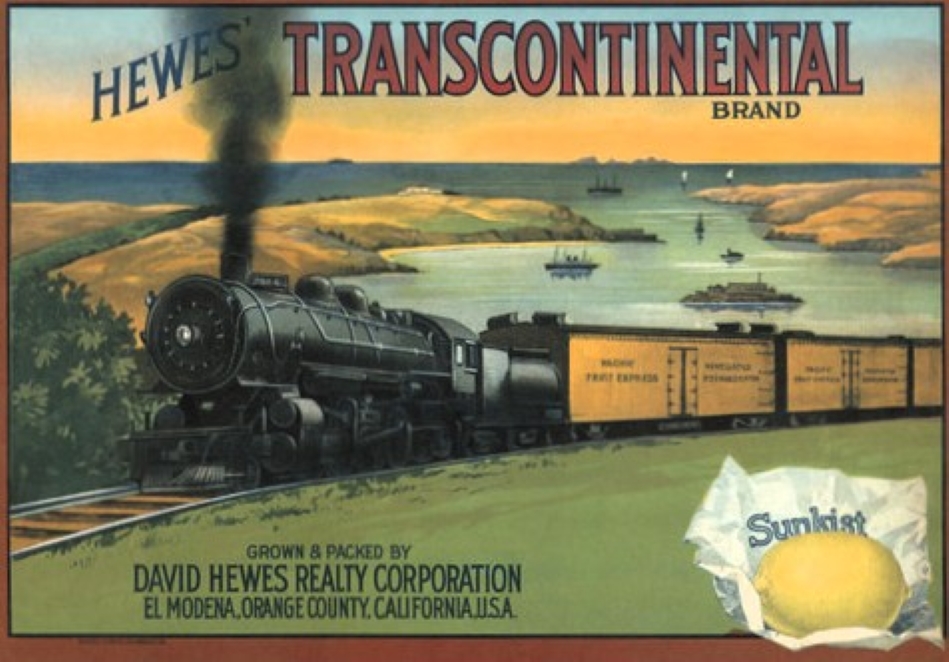
Riverside is near the center of the orange belt of California. There are a number of large and small orange packing establishments in that city, employing mainly women and girls. The oranges are packed by hand, the sorting and sizing being done previously by machinery. It is all piece work, and packers are paid at the rate of four cents per box, which keeps them hustling to make living wages. A box-making machine is a recent labor-displacing device that turns out complete orange boxes at the rate of five a minute or 3,000 in a day of ten hours. Two men operate the machine, with which they do easily the equivalent of ten men’s work by hand. In the orange groves piece work is also the rule, and pickers work hard from daylight to dark to earn a wage of$2.50 to $3.00 per day. Their season is short, constant shifting from one locality to another is necessary, and during a part of the year orange pickers are barely able to subsist. Their only hope is to unite with their fellow workers in the Industrial Workers of the World and the Socialist Labor Party and do their share towards the emancipation of our class from wage slavery.
“Beyond Eden lies the desert” After California comes, Arizona, the land of cacti, volcanic rocks and Mine Owners’ Associations. Physiographically, the change is great from California to Arizona, but socially conditions are similar. The miner and sheep herder here take the place of the lumber “jack” and fruit picker, but the same class struggle exists and must be fought in the same way as in California and the rest of the United States, i.e., on the part of the workers by class organization, political and economic.
B.H. Williams. National Organizer, S.L.P. and I.W.W.
New York Labor News Company was the publishing house of the Socialist Labor Party and their paper The People. The People was the official paper of the Socialist Labor Party of America (SLP), established in New York City in 1891 as a weekly. The New York SLP, and The People, were dominated Daniel De Leon and his supporters, the dominant ideological leader of the SLP from the 1890s until the time of his death. The People became a daily in 1900. It’s first editor was the French socialist Lucien Sanial who was quickly replaced by De Leon who held the position until his death in 1914. Morris Hillquit and Henry Slobodin, future leaders of the Socialist Party of America were writers before their split from the SLP in 1899. For a while there were two SLPs and two Peoples, requiring a legal case to determine ownership. Eventual the anti-De Leonist produced what would become the New York Call and became the Social Democratic, later Socialist, Party. The De Leonist The People continued publishing until 2008.
PDF of full issue: https://www.marxists.org/history/usa/pubs/the-people-slp/060505-weeklypeople-v16n06.pdf
 Revolution's Newsstand