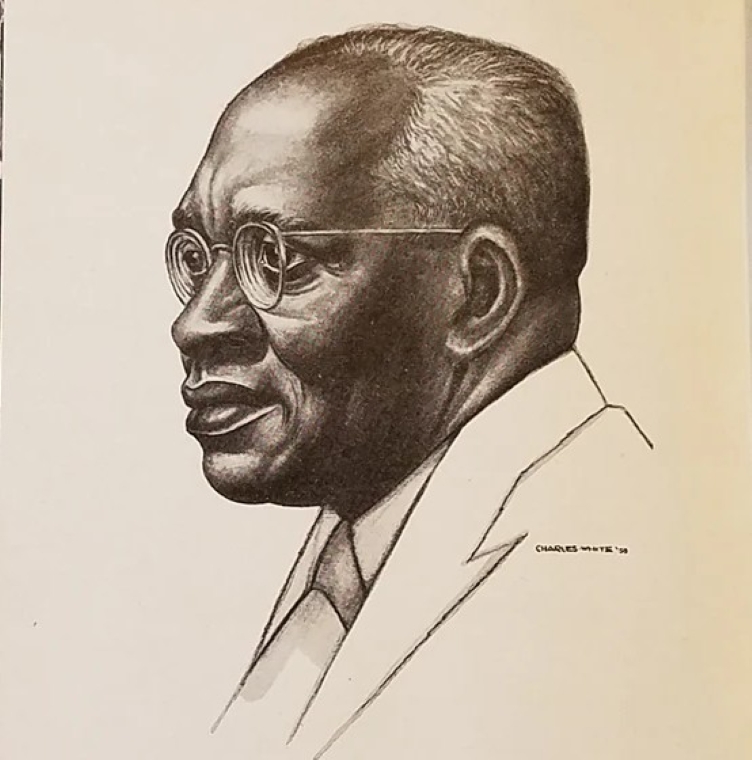
In the run-up to First International Conference of Negro Workers, Patterson reviews the condition of Black workers under the Butcher’s Apron.
‘The Black Masses and the British Empire’ by William Wilson (William L. Patterson) from International Press Correspondence. Vol. 10. No. 27. June 5, 1930.
Any uncertainty which the Negro workers and black toiling masses of the colonial world of British Imperialism may have entertained as to their place, economically, politically, and socially in the Empire must now be cleared away. The answer of the “Labour” Government refusing the request of the International Committee of Negro workers that it be permitted to arrange and hold the first international Negro workers’ conference in London is clear and distinct and its implications are not to be easily misunderstood.
The black colonial world of the British ruling class has seen some of its most “worthy” sons knighted, it has been then “honoured” as doctors of law and of medicine, it has seen them lauded for their prowess on the field of sport, and it has come to regard itself as such as part of the Empire which if denied certain rights at home might expect to enjoy the full floor of British Democracy in England. The Negro masses were under the illusion that the King Emperor could deny his loyal subjects nothing, albeit behind his back his agents, the governors, the lieutenant governors and their tools, the paramount chiefs and also the chiefs abused their powers.
This “abuse of power” explained for the black workers and toiling masses of the colonies and semi-colonies the existence of forced labour, hut and head taxes, slavery, Pass Laws, the compound system in the mines of South Africa, the system of native reserves. It even prevented their bringing their just grievances to the ear of his most gracious majesty the King owing to the denial of passport privileges. In their minds these ideas were carefully planted and more carefully nurtured. The strength of this illusion was the strength of the Empire. No ruling class ever more thoroughly imbued the minds of their exploited and oppressed masses with the idea of the “community of interests”, the “oneness of their destiny”, than have the rulers of the British Empire.
But the International Committee of Negro Workers had quite another point of view. It saw in the economies of Imperialism the source of the political and social policy of the colonial administrators. To it, the theory of the “abuse of powers” did not cover the shooting down of unarmed native women in Nigeria, the ruthless savagery with which the so-called Beer riots of Durban, South Africa, were suppressed, the brutal attempt to stay the organisation of the native workers in Bathhurst, Gambia, with the use of the armed forces of imperialism, the relentless expropriation of the laud of the natives of Kenya and the stirring up of inter-tribal war, the implanting in Kenya of racial animosity between the Indians who have been placed as a “buffer” between native and the imperialist colonist. All this appeared to the members of the provisional committee as a series of provocative acts of tactical measures arising from a definite policy of imperialism. “Divide and rule” was the slogan. The division necessitated the setting of the working people in the metropolitan area against the colonial slaves; the engendering of racial, national and religious hatred among the colonial peoples. This was “the white man’s burden”, the civilising influence and mission of British imperialism in the colonies. The Liverpool dock riots between white and black workers; the riots between black and white workers in Cardiff in 1919; the South Shields riots between blacks, Arabs and white workers of very recent date evinced the efficacy of the divide and rule programme. And this programme, while during moments of “prosperity” withdrawn slightly to the rear of the stage, in moments of economic crisis which are featured by a rising wave of militancy of the workers at “home” and a revolutionary upsurge in the colonies becomes that stage prop upon which great dependence is placed.
The black colonies of the British Empire are far-flung and spread into the Eastern and Western hemispheres, but the problems of the native populations are largely similar. Each knows an infant and adult mortality rate that has no parallel outside of the Indian portion of the Empire. The masses in each are steeped in ignorance and superstition after having for more than a century enjoyed the civilising mission of imperialism. Native industry is non-existent, while agriculture proceeds along the most backward and primitive path. The cultural and political institutions of the native peoples have been destroyed and participation in the political institutions which make the laws by which they are now governed is denied them. The existing “cultural” institutions teach only the “virtues” of imperialism. Poverty, disease, sickness and death mark the cycle of existence of the Negro population of the British Empire.
To these almost dehumanised masses the International Committee desired to bring the message of organisation– trade union organisation primarily. Sure this could find no point of conflict with what is ostensibly the programme of the Labour Party.
To these masses the committee hoped to bring an account of the preparation of the imperialist powers for the war they are now designing. The new world war is destined to bring about a redivision of the colonies. A war in which these masses will be forced to struggle to the death with other colonial peoples and the white workers of the “mother” countries.
To these masses the committee wished to bring the message of international working class solidarity, to destroy the myth of racial superiority, and supplant it with the facts of the uneven development of capitalism, the economic causes of this unevenness and the subsequent existence of “backward” peoples.
The committee had for its object the foundation of an international organisation exposing to the black masses the forces making for their further and continued enslavement. The organisation would show to them the common characteristics in the exploitation and oppression of all colonial peoples and their common interests.
But the Labour Government has said that British democracy does not embrace the black masses of the Empire: that the white workers whose standard of living is being constantly lowered through the ruthless exploitation and oppression of the colonial masses shall not see the alliance with the colonial world as the only way to their own emancipation. The Labour Party, the standard bearer of British Imperialism, says there will be no black workers’ conference in London. But the answer of the International Committee of Negro Workers will be to make that answer the basis of the exposure before the black workers and toiling masses who come what may–will have the first international conference of Negro workers in July, 1930.
International Press Correspondence, widely known as”Inprecorr” was published by the Executive Committee of the Communist International (ECCI) regularly in German and English, occasionally in many other languages, beginning in 1921 and lasting in English until 1938. Inprecorr’s role was to supply translated articles to the English-speaking press of the International from the Comintern’s different sections, as well as news and statements from the ECCI. Many ‘Daily Worker’ and ‘Communist’ articles originated in Inprecorr, and it also published articles by American comrades for use in other countries. It was published at least weekly, and often thrice weekly.
PDF of full issue: https://www.marxists.org/history/international/comintern/inprecor/1930/v10n27-jun-05-1930-inprecor-Virginia.pdf

