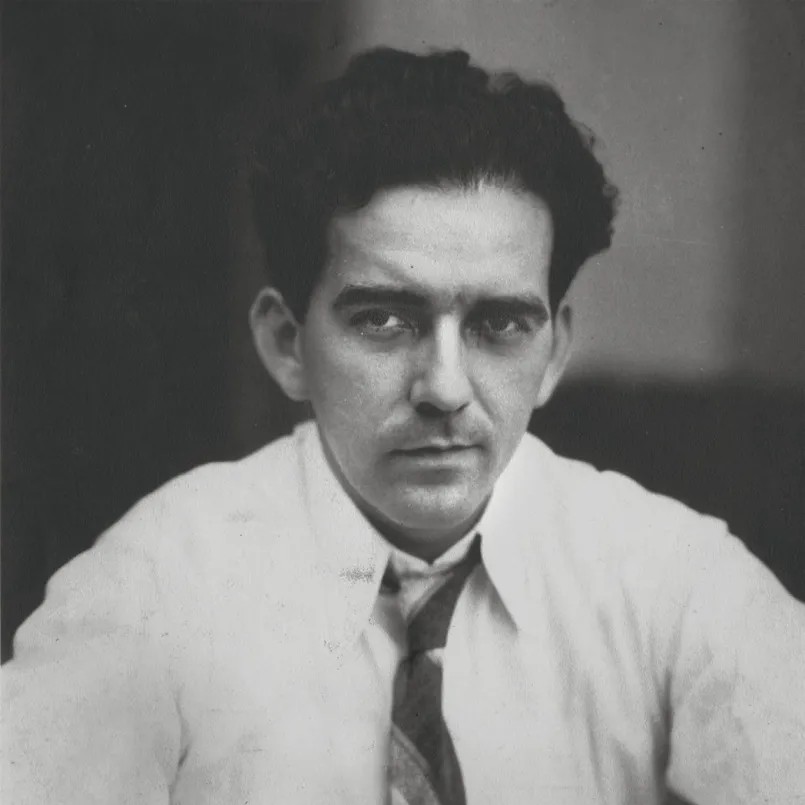
High drama as Pablo de la Torriente-Brau writes of the collapsed March, 1935 General Strike against Batista’s rule and his own escape to Miami from the bloodbath that followed. This diary being published just days after being written. The Puerto Rican-Cuban revolutionary journalist, novelist, and editor Pablo de la Torriente-Brau was in his mid-30s and had already had an eventful activist career in Europe and the Americas. Setting in New York City, he was sent to Spain as a correspondent for New Masses as the Civil War began…and quickly became a direct participant. One of perhaps 1000 or more Cubans, many hundreds being killed and wounded, who would fight against fascism in Spain. Joining the militia, Torreiente-Brau became a Commissar with the creation of the 3rd Mixed Brigade and was deployed in the defense of Madrid. There he he fell on December 19, 1936 his body lying exposed for days before burial. Retreating Cuban comrades removed his remains to Barcelona in 1939, where they became lost as the Cuban government has sought for decades to find and repatriate them.
‘I Escaped from Cuba’ by Pablo de la Torriente-Brau from New Masses. Vol. 15 No. 1. April 2, 1935.
(The following is a few leaves from the diary of one of the editors of Masas, an anti-imperialist magazine which the Mendieta government suppressed just before the general strike in Cuba. More fortunate than some of his colleagues, Torriente-Brau, hunted for days by the Gestapo of the Mendieta-Batista-Caffery government which is rapidly establishing a Hitler dictatorship on the island, managed to escape to the United States only two weeks ago. We present this vivid first-hand account of three days of terror in Cuba in the hope that our readers will protest against Batista’s terroristic methods against the 800 imprisoned students, peasants and workers, a number of whom are sentenced to be executed.–THE EDITORS.)
March 7, 1935.
EVEN THOUGH they are after me I still go to the University, to the meetings of the Strike Committee. It is easy, after all, to come in and go out by all the numerous entrances in the beautiful building. The boys are working feverishly in the basement. Apparently everything is quiet. The University is empty, as in vacation days. X– and Y–, however, have gone to a meeting of the Sindicates, in order to complete certain details. They are the two who have worked hardest to bring about the strike. Despite all the activity, there is a certain hesitancy among us. Very soon it will be necessary to form an effective. General Committee of Struggle. This afternoon there will be a meeting of all the delegates, of the secretaries and other associates, in order to give the date of the strike. Yesterday I saw Pepelin. He had scars on his back from the butts of rifles and blackjacks when Sargento Lopez took him out to the suburbs to kill him.
I had a hunch I ought not go to the University this afternoon. The police surrounded the building and besieged it. Inside there were Tete, Maria Teresa, Alberto and a lot more friends. The employes and teachers who were holding an important meeting were attacked. Immediately the radio stations broadcast the news, and the city is in a state of high tension. You feel a serious situation developing. I took advantage of the moment to go to the University. I went around trying my best to evade the Perseguidoras (Pursuers). I saw it was difficult to make a getaway from the University. I hid my identification cards, so that in case of arrest I could give a different name. From the University I went in my car to the house of Z–. They were not searching cars yet. Together with Z– I found V–. We debated how to get a car and a machine-gun out of the University. By accident a machine-gun had been left inside. If the soldiers decided to get into the University and found a machine-gun there, the authorities could claim that we used the University as a place to hide our arms–which would be untrue. In Q–‘s home, I learned that W– and K– were planning to attack the University so as to be able to free those inside. I thought this would be an impossible thing to do, and tried to locate them to dissuade them, but could not find them. I naturally believed that in the event we were the aggressors, the people inside would be the sufferers, as the soldiers would fire on the University if the aggressors tried to help the prisoners. Besides, on account of the wide-open stretch surrounding the University, the people inside would scarcely have time to make a getaway. But those boys have guts. Unable to find them I went back to the University to join the group in case they decided to attack.
But the soldiers were smart. About nine o’clock they left the University and allowed the besieged to get out. All the comrades who had been imprisoned were released. I went back to my hide-out. A little later they told me that one of the boys had wanted to get out and had been stopped. They also told me how all the boys had kept their chins up all the time, and even exchanged jests with police and soldiers surrounding them.
They informed me that the police and the army have entered the University grounds. Too late, though, to find anything. If they stay in the University, we’ll know what to do.
March 12, 1935.
A few days have passed and I haven’t had time to write anything. The atmosphere is charged with uneasiness. A fiery reign of terror, worse than Cuba has ever before witnessed, has been the Government’s answer to the strike movement. Armando Feito, “funny, fatty Feito,” so many times imprisoned during the Machado regime, he who was always so obliging in our prison days and many times prepared breakfast for his comrades (President Mendieta among them, the Mendieta who today is the docile mule of Colonel Batista), Feito was assassinated in the vilest manner, torn away from his family together with his father-in-law, despite the pleas of their wives. Feito said goodbye to his little son, only a few months old. It was no use trying to get justice from the police. The bodies of Feito, and his father-in-law were found full of lead in the suburbs. Feito was holding handfuls of grass and earth in his hands.
I was lucky this time. When they tore down the electric cables and most of the city was left in darkness, heavy shooting broke out that lasted more than a half-hour. When the cables were again connected, the army started to search every building in the neighborhood. I was within the area, and it would have been impossible for me to evade the search. But they did not reach the place where I was hiding. Very early the following day, I moved.
The rumor spread that they had killed Dr. Gustavo Aldereguia, a leading authority on the treatment of tuberculosis, but, fortunately, the news was not true. The same was said about Dr. Alfredo Nogueira. They murdered many, however, because they resembled these men. Rene Lago was murdered. They say he talked before he died. Enrique Fernandez, the best brain among the Autenticos, was assassinated. Somebody in the Parque Maceo heard him shout when he was carried to his death. And he was also found in the suburbs, together with the chauffeur of ex-President Carlos Hevia, their bodies riddled with bullets. Fernandez’s forehead had been crushed in by the butt of a gun! Their bodies were left, undressed, on the wet grass, robbed of everything they had on…Eight more bodies have been found in the suburbs. Another died in the first-aid ward. They say that in the last two days in Havana thirty more have been murdered. The secret service, inspired by Batista, had a list of forty-five names. From the interior, only rumors. Every time one goes into the streets, one comes back with the feeling of disaster. The streets are empty. A man walking along the avenues is an unusual sight. He attracts attention. Everybody follows him with his eyes, from balconies and windows. In the street one sees only boys, playing baseball, unconscious of what is going on, happy because they can play freely without fear of passing cars. It is almost worth one’s neck to go out in the street. Yesterday, when I went out, I was, for a moment, scared to death. One of the soldiers I had accused in the Presidio Modelo of various crimes, passed close to me…But he was proudly displaying his new uniform and didn’t even look at me. If he had recognized me, I would be six feet under by now…One sees only marines, soldiers, policemen and Porristas.
We are handicapped by lack of means of communication. I am writing daily reports to be broadcast, in order to counteract the news of the Diario de la Marina, and the lying army releases that this paper prints. The hatred against this yellow sheet cannot be described. But our radio station is very weak and doesn’t work properly. Through Q– I have attempted to contact T– find out if we can broadcast from another station…But he told me that this is impossible for the moment, and warned me that I should protect my skin. Yesterday they didn’t come to get my reports, and this angered me. If they don’t come before three o’clock today I will take them myself, to the house of A–.
The total lack of news depresses the people. The government frantically resorts to lies. They announce that everything is back to normal. But just today the bakers have gone on strike, and there’s no bread, or coal, or meat…The city is impressively quiet. There are decrees legalizing shooting. I can’t understand why the opposition hasn’t started systematic attacks against the armed forces. If the opposition political If the opposition political parties don’t get into the struggle, the cause will be lost. I feel violent and impotent. What are they waiting for?…Do they expect the workers’ party alone, and the students, to overthrow the government for them to take over? But it is early yet. Even today something very important might happen. Later on I’ll write more.
March 13, 1935.
Today the strike has been completely lost. Yesterday was the decisive day. It was heart-rending to realize the total lack of unity among all elements in the struggle. By noon they came for news. I made an attempt to contact our group, because they assure me something will be done tonight, out of desperation. But it seems it’s all a lie. Nothing effective and well organized is intended. None of my four companions knows anything about it. They are also desperate, half-crazy, flinging cruel invectives against the leaders who fooled them. A.B.C.’s, Autenticos and Guiteristas are responsible for the collapse…
We experience only a few hours of such intense emotion. I sent Tete to the home of her parents, who haven’t heard from us for several days. When Tete left I felt it was the last time I would see her. And I wanted to caress her because I had been mean to her lately. The government, through its spy system, discovered that during the night a desperate attack would be attempted, and issued a proclamation forbidding, under penalty of death, traffic of cars and pedestrians after nine o’clock. This measure seriously impeded the slow machinery of the opposition and the mobilization of shock-groups (in the event such a move had even been considered). Promptly at nine the shooting commenced, begun by the police, marines and soldiers. The shooting lasted a few hours. From the roofs snipers weakly responded to the fire of Springfields and machine-guns with pistols…
Today, the discouragement that began yesterday is clearly visible. Many have been forced to escape to Miami, Fla. The street cars run normally again. There is talk of printing the newspapers. The government threatens to take over the printing plants. They have already destroyed the newspaper La Palabra, the weekly La Semana Comica, and Accion. The armed forces occupy the offices of La Semana, Ahhora, El Mundo and El Pais, and have also sacked the Federacion Medica (Medical Federation), even seizing the safety-deposit vaults. Batista has handled the situation well, for he is sure of Caffery’s aid. He has smashed the movement and now what’s left? The military forces, buoyed by this new and sensational victory, will grow–if that is possible–more insolent, more powerful. The people will remain oppressed. Corporals and sergeants are now mayors. A corporal will be Dean of the University, over which flies the army’s flag…barbarism will reign and Cuba will be–more than ever–a colony subdued by the terror and exploitation of the cruelest imperialism. Batista’s triumph rests on the aid lent by Caffery, who realized that the general strike was a struggle against Yankee imperialism…
But where is the political vision of the opposition parties in Cuba? Weren’t they aware that there have been many psychological moments to strike?…Weren’t they aware of the necessity for desperate struggle, because defeat meant a smash-up. I don’t know what they thought!…I only know that we must continue fighting begin again…I think that at least the Cuban masses learned a definite lesson in this last struggle. They learned the truth of our slogan: “The united fight against Yankee imperialism is our only way to liberation.”
March 17, 1935
Miami. Yesterday afternoon I arrived by plane. After going from house to house, the University Committee agreed that I must leave Cuba, because of my role in the campaign against the Army and the constant murders that they have committed. Lately there has not been much difference between the Machadistas and us–we have been treated like Porristas. We have been sought out, our houses where we lived have been destroyed. And with the butts of guns they destroyed the pictures of Mella, Trejo, Pio Alvarez, Rubierite, and other heroes of great struggles!…
After our arrival we were told not to mention how we had escaped, because Roosevelt’s government is a friend of Batista’s government!…That is why I do not dare to say more…
The New Masses was the continuation of Workers Monthly which began publishing in 1924 as a merger of the ‘Liberator’, the Trade Union Educational League magazine ‘Labor Herald’, and Friends of Soviet Russia’s monthly ‘Soviet Russia Pictorial’ as an explicitly Communist Party publication, but drawing in a wide range of contributors and sympathizers. In 1927 Workers Monthly ceased and The New Masses began. A major left cultural magazine of the late 1920s and early 1940s, the early editors of The New Masses included Hugo Gellert, John F. Sloan, Max Eastman, Mike Gold, and Joseph Freeman. Writers included William Carlos Williams, Theodore Dreiser, John Dos Passos, Upton Sinclair, Richard Wright, Ralph Ellison, Dorothy Parker, Dorothy Day, John Breecher, Langston Hughes, Eugene O’Neill, Rex Stout and Ernest Hemingway. Artists included Hugo Gellert, Stuart Davis, Boardman Robinson, Wanda Gag, William Gropper and Otto Soglow. Over time, the New Masses became narrower politically and the articles more commentary than comment. However, particularly in it first years, New Masses was the epitome of the era’s finest revolutionary cultural and artistic traditions.
PDF of full issue: https://www.marxists.org/history/usa/pubs/new-masses/1935/v15n01-apr-02-1935-NM.pdf
 Revolution's Newsstand