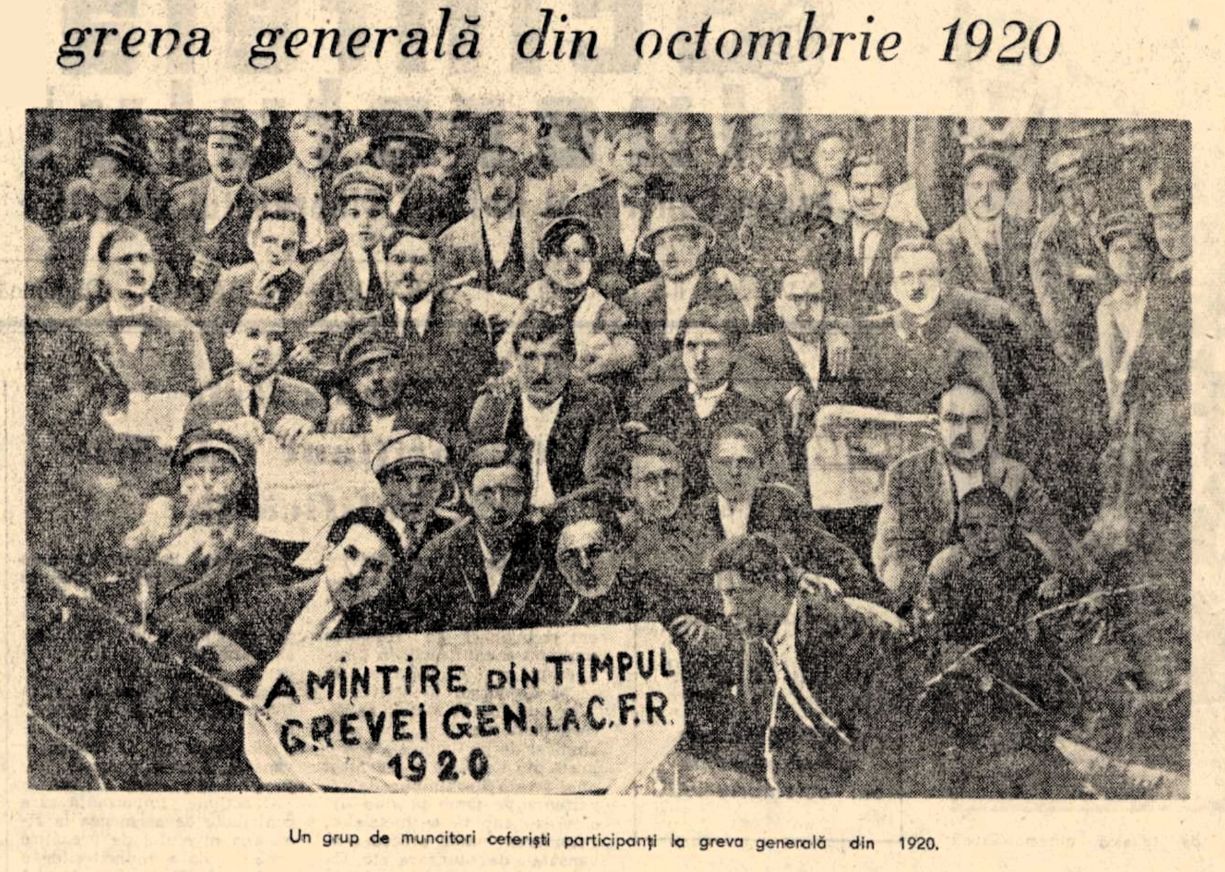
In the cauldron of class struggle that was the 1920s Balkans, a look at the union movement in Bulgaria, Yugoslavia, Greece, and Romania.
‘The Fight for Trade Union Unity in the Balkans’ by Robert from International Press Correspondence. Vol. 6 No. 3. January 14, 1926.
The question of the unity of the trade union movement has received the greatest actuality in the Balkans also. The pressure of the masses and of the independent trade unions in the Balkan countries has already succeeded in compelling the Reformists to agree to enter into negotiations. The Reformists had hoped that, thanks to the savage persecutions of the independent trade unions, the mass of the workers would join their trade unions which were unmolested by the authorities. Their hopes were however bitterly disappointed; the workers did not come to them, they are demanding an alliance of all existing trade union forces in order successfully to overcome the offensive of capital and reaction.
As is well known, there are in the Balkan countries, besides the reformist trade unions which are weaker than the Red, independent trade unions, other numerous autonomous trade unions, which belong neither to a national or an international centre As a result of this disunion and splitting, the workers in the Balkans are in an incomparably worse situation than the workers of other countries. The class-fighting independent trade unions are mercilessly persecuted in every country and are formally or actually placed outside the pale of the law.
The unprecedented economic crisis which is constantly be coming more acute and is expressed in an army of unemployed, numbering hundreds of thousands incidentally, there is no State support of the unemployed in any of the Balkan countries and in an enormous increase of the cost of living and a disregard of the simplest regulations for the protection of the workers, compels the workers in view of this intolerable situation, to demand the unity of the trade union movement; the initiative of the independent trade unions in this respect is absolutely prompted by the vital interests of the broad masses of workers.
In the following we give a survey of the present position of the fight for trade union unity in the individual Balkan countries.
Jugoslavia.
The fight for trade union unity is becoming visibly more accentuated. The Reformists, having in the beginning concealed themselves under the mask of demagogic confidence-tricks in order to reject unity, resorted to a large scale manoeuvre with the object of splitting up the independent trade unions when, in summer 1925, the pressure of the masses was becoming more and more intense and when they were supported by the treachery of the centralists in the Central Committee for the independent trade unions. It is true, they gave up their demand for unconditional recognition of the Amsterdam International which they had made for the sake of prestige, but demanded instead equal representation (instead of proportional) at the Unity Congress. When however the independent trade unions unmasked the treacherous attitude of the centralists, and the manoeuvre of the Reformists, who only wanted unity from above and put into the background the chief task, that of creating unity from below, and revealed these machinations to the broad masses; the Reformists, supported by the police, changed their tactics to an attack on the independent trade unions. Thus for instance, on October 8th, two days before the “Unity Congress” called by the Reformists, the independent trade unions were excluded from the local Chamber of Labour in Belgrade, on the pretext that they had shown themselves to be opposed to unity (!), that they were not political but party organisations and kept up relations with the Red Trade Union International etc. The Minister for Social Welfare even declared that as long as these accusations of the Belgrade Chamber of Labour were justified, the independent trade unions could not be recognised as trade unions at all.
The “Unity Congress” fixed by the Reformists for October 10th-12th, was de facto only a Congress of the reformist “Central Workers Federation”. It was plainly evident that not only had the manoeuvre to split up the independent trade unions failed but that they had been unable to attract the autonomous trade unions. There were 100 delegates at the Congress. The nature of the Congress was cleverly characterised by a delegate from Saitschar (Serbia) who said that they were not representatives of workers but paid employees of the Chambers of Labour and of the sickness insurance societies, elected by no one. Even the bourgeois Press described the solemn proclamation of “unity” as a failure, as the delegates at the Congress were not workers but employees.
Simultaneously with this “Unity Congress”, the plenum of the independent trade unions was sitting, and it proposed to the delegates of the “Unity Congress” the following as a platform for unity. The foundations of trade union unity shall be; the class war, independence from parties, democratic centralism, the fight for the demands of the day, the right of coalition, amnesty, resistance to the persecution of the working class. The Unity Congress is to be elected on the basis of proportional representation and to decide the question of international affiliation by a simple majority and also to elect the Central Committee in proportion to the strength of the individual groups. The united trade unions shall affiliate to the Anglo-Russian trade union committee.
The fight for trade union unity is being continued on this platform. The centralists who have exposed themselves both by their treacherous attitude and their subsequent denunciation of the other members of the Central Council of the independent trade unions as “paid agents of Moscow”, are condemned by their own members and are now completely isolated. The approaching Congress of the independent trade unions will consider the question of trade union unity as one of its chief tasks and will undoubtedly give a new and vigorous impulse to the movement for unity.
Roumania.
After the Congress at Cluj, the organisations which were excluded from the reformist Trade Union Federation found themselves compelled to form the “Unitarian” trade union Federation, which immediately made proposals to the Reformists with regard to unity; these were however rejected. At the present moment, the will of the Roumanian proletariat to strengthen its fighting front by re-uniting the trade union forces, is so strong that this question has become the central question of the Roumanian Labour movement. The Reformists who, until a short time ago, slandered and calumniated the partisans of unity, can no longer directly resist the negotiations for unity. They are therefore turning it into a question of principle.
Apart from the reformist and unitarian trade unions, there are in Roumania a number of autonomous trade unions.
At a conference of a number of unitarian trade union associations, which was held in Temesvar on March 1st and 2nd 1925, the following proposals for trade union unity were made. The foundations of trade union unity are the proletarian class war, freedom of speech and criticism within the statutes, autonomy with regard to the political parties. The Unity Congress will decide the question of international affiliation. The Conference further proposed the appointment of a committee to make preparations for a unity congress.
To these proposals, the Reformists replied:
1) The Trade Union Council joyfully accepts any Labour organisation which has freed itself from the principles of other groups, and which apply for admission in the spirit and the tactics of the Amsterdam International and, in the future, honestly fulfils its functions in this spirit.
2) If the wish to join us is expressed in this spirit, we are prepared to get into touch with the representatives of your organisation with regard to unification or affiliation. We regard as hopeless any efforts to enter into negotiations on another basis.
3) Arrangements agreed upon on the above basis, are only valid when they have been ratified by your Union Congress and the next National Congress.
It is perfectly evident that the Reformists, by insisting on this “fundamental” point of view, sabotage the establishment of unity. The carrying on of the unity campaign continues to be in the hands of the unitarian trade unions; it will again be brought up in its full significance at their approaching National Congress and will receive fresh impulse and new valuable inspiration.
Bulgaria.
As a result of the serious defeat of the Bulgarian Labour movement, the General Federation of workers’ trade unions which is affiliated to the R.I.L.U. was made illegal at the same time as the whole communist movement. Large numbers of leaders of the trade union movement, were either murdered or condemned to long periods of imprisonment.
As the Red trade unions are actually the only real trade union organisation of the workers in private industry, the trade union movement is, in consequence of their dissolution, weakened, split up and disorganised. The social democratic trade unions even to-day have only organised a very small part of the workers in private industry, and are almost without significance. The recently formed independent trade unions being new organisations, are also still weak but they are developing a more lively activity and are at present the representatives of the fight for trade union unity in Bulgaria.
Recognising that the disunity between the workers in State and private undertakings is the main source of their weakness, the independent trade unions have issued the central slogan: “unity of the Bulgarian trade union movement!” and have thus opened the campaign for the re-establishment of a strong trade union movement.
Whereas the workers joyfully took up the slogan of trade union unity, the social democratic leaders and trade union leaders opposed it with great acrimony. They even denounced the independent trade unions as secret communist trade unions etc. In reply to the proposals for unity of the independent trade unions, the Reformists declared that unity was only possible if the independent trade unions joined the free trade unions, if the leaders were chosen by the Reformists and if the affiliation of the united trade unions to Amsterdam were proclaimed immediately.
Under the pressure of the masses however, the Reformists were forced to give up open sabotage and to enter into negotiations. The independent trade unions proposed as the platform for unity, complete equality of rights for both organisations, election of the leaders by the Unity Congress, and decision as to international affiliation by the First General Congress of the united trade unions The negotiations which were started, dragged on for a very long time and had finally to be broken off, as the Reformists insisted on their point of view.
The independent trade unions however are continuing their campaign for unity. In the number of their organ “Edinstwo” (“unity”), published on December 2nd 1925, they define their point of view as regards this question, by giving expression to their regret at the failure of the negotiations and to their desire for their resumption. With regard to the crisis in the negotiations, they express the opinion that it is to be attributed in the first place to the question of international affiliation. As they are in favour not only of national but also of international trade union unity, and as the re-opening of the question in its whole breadth at the present moment might lead to a revival of the old dissensions and feelings of hatred, which would be detrimental to unity, they propose to leave this question open until the First General Congress of the united trade unions.
Until the Unity Congress, the trade unions of both groups should be under the management of a central committee on a footing of equality, without regard to the number of members. They further propose the resumption of negotiations not only with the free but also with all the other trade unions, on the basis of definite preliminary conditions.
The Reformists however are still trying in every possible way to avoid negotiations and to sabotage the unity of the trade union movement in Bulgaria.
Greece.
The trade unions in Greece like the whole Labour movement, are suffering under terrible persecution and oppression. Since the beginning of August, the central organ of the trade unions has been prohibited, and altogether only very scanty news reaches us from Greece.
A very large part of the Greek workers is organised in trade unions. Most of the trade unions take their stand on the class war and the Red Trade Union International. The influence of the Yellows in the trade union movement is insignificant, but there are strong reformist and centralist currents in the two large unions of the railwaymen and the seamen.
In the last few months, the Pangalos Government has been making efforts to disperse the trade unions through its paid “agents provocateurs”. They also have the trade union offices raided and their leaders arrested. A few months ago they prevented the National Congress of the trade unions of Greece being held. The Fascists are also trying to penetrate into the trade unions. They attack the local groups of the trade unions and the local workers’ clubs.
The campaign for the unity of the trade union movement in Greece finds expression principally in resisting these attempts to disperse the unions. Unfortunately we do not know whether the question of unity takes the same important place on the agenda as in other countries.
International Press Correspondence, widely known as”Inprecorr” was published by the Executive Committee of the Communist International (ECCI) regularly in German and English, occasionally in many other languages, beginning in 1921 and lasting in English until 1938. Inprecorr’s role was to supply translated articles to the English-speaking press of the International from the Comintern’s different sections, as well as news and statements from the ECCI. Many ‘Daily Worker’ and ‘Communist’ articles originated in Inprecorr, and it also published articles by American comrades for use in other countries. It was published at least weekly, and often thrice weekly. A major contributor to the Communist press in the U.S., Inprecorr is an invaluable English-language source on the history of the Communist International and its sections.
PDF of full issue: https://www.marxists.org/history/international/comintern/inprecor/1926/v06n03-jan-14-1926-inprecor.pdf

