From his Kerr-published ‘Evolution of Banking’, Robert Howe writes not of the role of money, but of the medium used for exchange.
‘The Story of Money’ by Robert H. Howe from The International Socialist Review. Vol. 16 No. 2. August, 1915.
THE division of Labor caused the invention of money. As soon as money was invented and came into use to any considerable extent, means were taken to introduce substitutes or representatives which were of nominal value.
The earliest mediums of exchange used were the skins of animals. When these were too bulky and inconvenient to handle, a small irregular piece was cut out of the skin. This was the token that the skin from which it had been cut belonged to the holder of the small bit of leather, and ownership was proved by fitting it into the place from which it had been cut.
Leather money was used by the Carthaginians and Romans and was in circulation in Russia as late as the reign of Peter the Great. Leather money made from the skins of white deer was in use in China before the Christian era.
Paper money was in circulation in China four or five hundred years before it was issued by the Bank of England, and the Emperor of Tartary issued both paper and leather money during the fourteenth century.
In China the paper money was called “flying money” and when it became soiled or mutilated it could be returned to the treasury and exchanged for new notes. The same was true in Tartary and Persia.
The use of skins as a medium of payment was nearly universal in the early history of America. The transactions of the Hudson Bay Company were based on “skins.” One beaver skin was supposed to be worth two shillings; twenty skins would pay for a gun worth about forty shillings. Sometimes a gun was sold by standing it upright on the ground and piling skins beside it until the pile reached as high as the muzzle of the gun. All kinds of skins were included and the pile would contain not only coon, beaver and deer skins, but often sea otter, arctic fox and other rare and valuable furs. This method of dealing with the Indians and trappers undoubtedly explains why the guns of that period had such extraordinarily long barrels.
During Colonial days in America not only were beaver and coon skins used as money, but also musket balls. Wampum, which was made by the Indians out of shells and which they strung in the shape of belts, was another medium of exchange and was made legal tender in Massachusetts to the amount of forty shillings. Cows were also legal tender for taxes, but, as might be expected, the thrifty New Engenders always paid with the scrawniest specimens.
In Virginia and Maryland, on account of the scarcity of coin, corn and tobacco were used in payment of debts—the tobacco at the rate of three shillings per pound, and a refusal to accept carried a penalty of three years at hard labor. Women brought over from England by the London Company were sold to the settlers as wives for one hundred pounds of tobacco. The price was afterwards raised to one hundred and fifty pounds.
In the West Indies raw produce, such as sugar, rum, molasses, ginger, indigo and tobacco, was similarly used. In Newfoundland dried codfish was used at a very recent period. Every country of Europe and Asia gives evidence of the use of vegetable and manufactured products as money.
Wheat from the time of ancient Greece to the present has been used, and in Norway it was deposited in banks and borrowed and lent.
Along the shores of the Mediterranean olive oil and in some places almonds were used, as was also salt in Abyssinia, Mexico and Sumatra, and in the latter country cubes of beeswax.
In Western China and Thibet tea pressed into small, hard cubes, called “brick tea,” passes current. Fiji Islanders have a currency in whales’ teeth and one red one is of the same value as twenty white ones.
In passing from barter, or the use of vegetable or manufactured articles, to metallic coins as money, an evident attempt was made to connect the coin, either by shape or design, with the article it was supposed to represent. In China cloth and knives having to a certain extent been used as a standard of value, the earliest coins were made to resemble pieces of cloth or knives. In ancient Rome the substitution of coin for cattle was marked by impressing upon the coin a design of an ox or sow.
Coins being once invented, their utility was easily perceived and their use spread into all the channels of trade and greatly stimulated commerce.
The next step in the evolution was the use of token, or representative money, in place of the standard coins whose nominal value was coincident with their metallic value.
The transportation of any considerable amount of gold or silver coins was attended with a large amount of labor and risk, and this was obviated by depositing the coins in bank and transferring the title by means of a bill of exchange.
The Bank of Venice and the various banks of deposit in Europe are prominent milestones which mark the path of progress from primitive barter to an ideal financial system. The experience thus gained aided in the further extension of the use of book accounts in transferring credits or offsetting debts.
The traders of medieval Europe had a method of offsetting debts that closely resembles the modern system of clearing checks by banks today. The great fairs that were formerly held all through Europe during the middle ages were attended by traders from many countries, who came with long caravans, and exchanged the merchandise manufactured in their country for the goods brought to the fair by the traders from other countries.
The retail trade in these fairs bore only a small proportion to the whole volume, the largest share of the trade being in bulk between traders. At the close of the fair they met in a large room for the purpose of settling their accounts. This was accomplished by mutually offsetting their debts and credits with each other, only the differences, which were usually . small, being paid in cash. Boisguilbert tells of one fair held at Lyons, France, at the close of which debts to the amount of 80,000,000 francs were thus balanced against each other without the use of a single coin.
About the year 1775 or 1780, after the use of bank checks was introduced, the clerks of some of the London bankers instead of going to each bank to collect the money on the checks made an arrangement with each other to meet at a certain place and “swap” their checks, afterwards paying the difference only in cash. The safety and convenience of this method led a few of the London bankers—then all private bankers—to rent a room where their clerks could meet privately and exchange their checks, notes and bills. It was kept a profound secret from the public, and a number of bankers refused to join, as they believed it to be a very questionable business arrangement. But as time went on the economy of time, as well as work, together with the elimination of the risk consequent on uselessly transporting coins daily through the street from one bank to the other, and then back again, won the day, and since then the Clearing House has become a highly respectable institution.
The Clearing House, as at first established, was a great labor-saving institution, and saved the use of money between banks in the payment of checks, except for the balances, which average only about 5 per cent of the total.
But even this 5 per cent is not now paid in the majority of Clearing Houses. In London all the member banks, and the Clearing House itself keep an account with the Bank of England, and the differences are settled by means of checks, which transfer the amounts from one account to the other on the books of the Bank of England.
It will thus be seen that the immense commerce of England is carried on by means of book accounts, bills of exchange, and checks, and these latter are paid and cancelled without the use of a single coin or bank bill. This also includes the country banks of England, who are also members and whose checks are cleared through the Clearing House.
The same is true to a large extent in this country. While in some Clearing Houses in America balances are presumably paid in cash, they are in a large number of cases “traded”—the banks having credit balances giving orders on the Clearing House to the debtor banks with which to pay their debit balances.
These orders are paid for by a cashier’s check, which goes through the Clearing House the next day.
In the Philadelphia Clearing House no money whatever is used, as they have adopted the London system of paying balances by check. In the smaller towns the banks exchange checks with one another and the difference is settled by giving a bank draft on Chicago or New York. In times of panic the New York and Chicago Clearing Houses revert to the use of Clearing House certificates in place of money in paying balances.
It ought to be patent to any one watching the current of events that money in the generally accepted sense is becoming obsolete as a means of exchanging services or commodities. This work, formerly done with a vast amount of labor and risk, is now being done in an enormously increased volume, in a convenient, safe and economical manner, by means of book accounts, bills of exchange, checks and the clearing system.
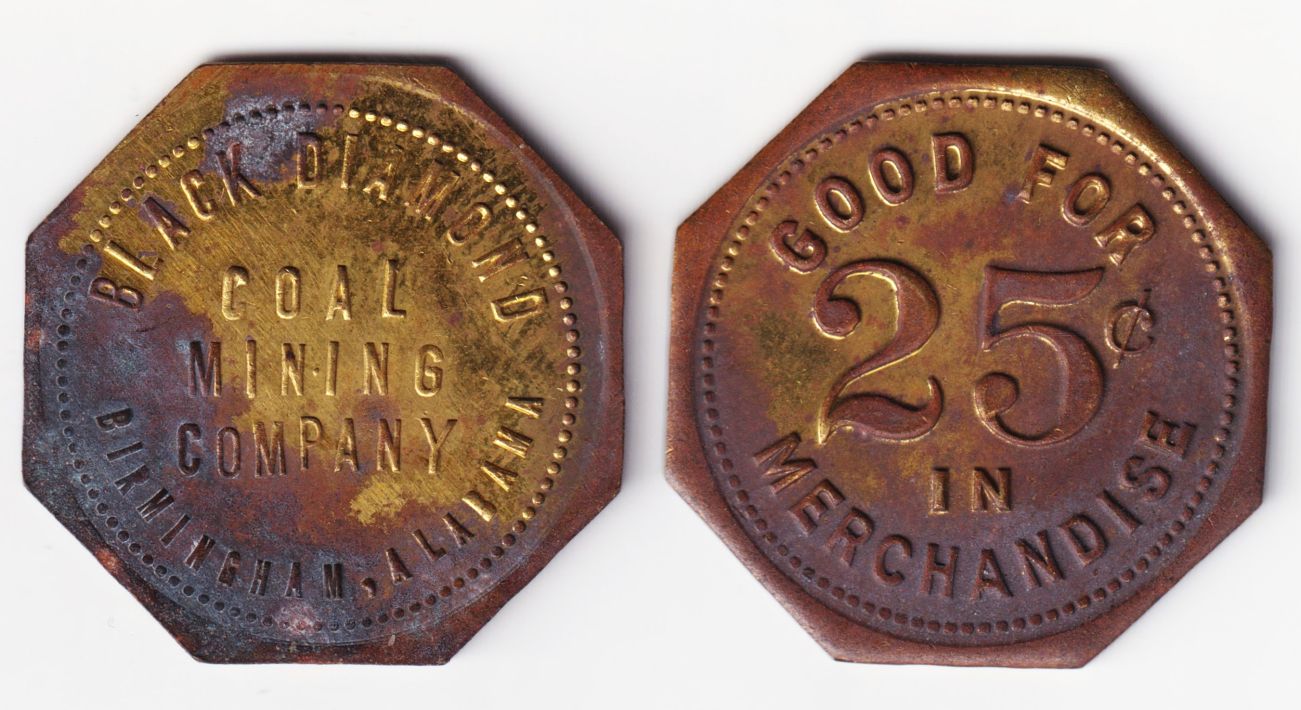
The coins of America have almost entirely disappeared from circulation with the exception of the .silver coins used in retail trade, and these are merely tokens and are worth as bullion only about one-half their nominal value. The same is true of the nickel five cent pieces and the copper cents. These coins are used merely as counters.
With the elimination of gold coins the last vestige of commodity money will have finally disappeared, at least so far as America is concerned.
Any commodity which fluctuates in value either from the effect of a diminishing or increasing supply, or from the increase or decrease in the cost of production, is a poor instrument by which to measure the relative exchange value of other commodities with itself or with each other.
The labor time necessary to produce an article will ultimately be the standard by which its exchange value will be estimated.
Any financial legislation in the future must be based on a full knowledge of the history of money and banking. It must be in harmony with the evolutionary tendencies ascertained by a study of their development. Society must be protected from disastrous results, such as were caused by errors in the past, so far as human intelligence can be depended upon.
Some day society will take the place of the capitalist as the organizer and director of industry, and then production can and will be carried on for use and not for profit.
The International Socialist Review (ISR) was published monthly in Chicago from 1900 until 1918 by Charles H. Kerr and critically loyal to the Socialist Party of America. It is one of the essential publications in U.S. left history. During the editorship of A.M. Simons it was largely theoretical and moderate. In 1908, Charles H. Kerr took over as editor with strong influence from Mary E Marcy. The magazine became the foremost proponent of the SP’s left wing growing to tens of thousands of subscribers. It remained revolutionary in outlook and anti-militarist during World War One. It liberally used photographs and images, with news, theory, arts and organizing in its pages. It articles, reports and essays are an invaluable record of the U.S. class struggle and the development of Marxism in the decades before the Soviet experience. It was closed down in government repression in 1918.
PDF of full issue: https://www.marxists.org/history/usa/pubs/isr/v16n02-aug-1915-ISR-riaz-ocr.pdf

