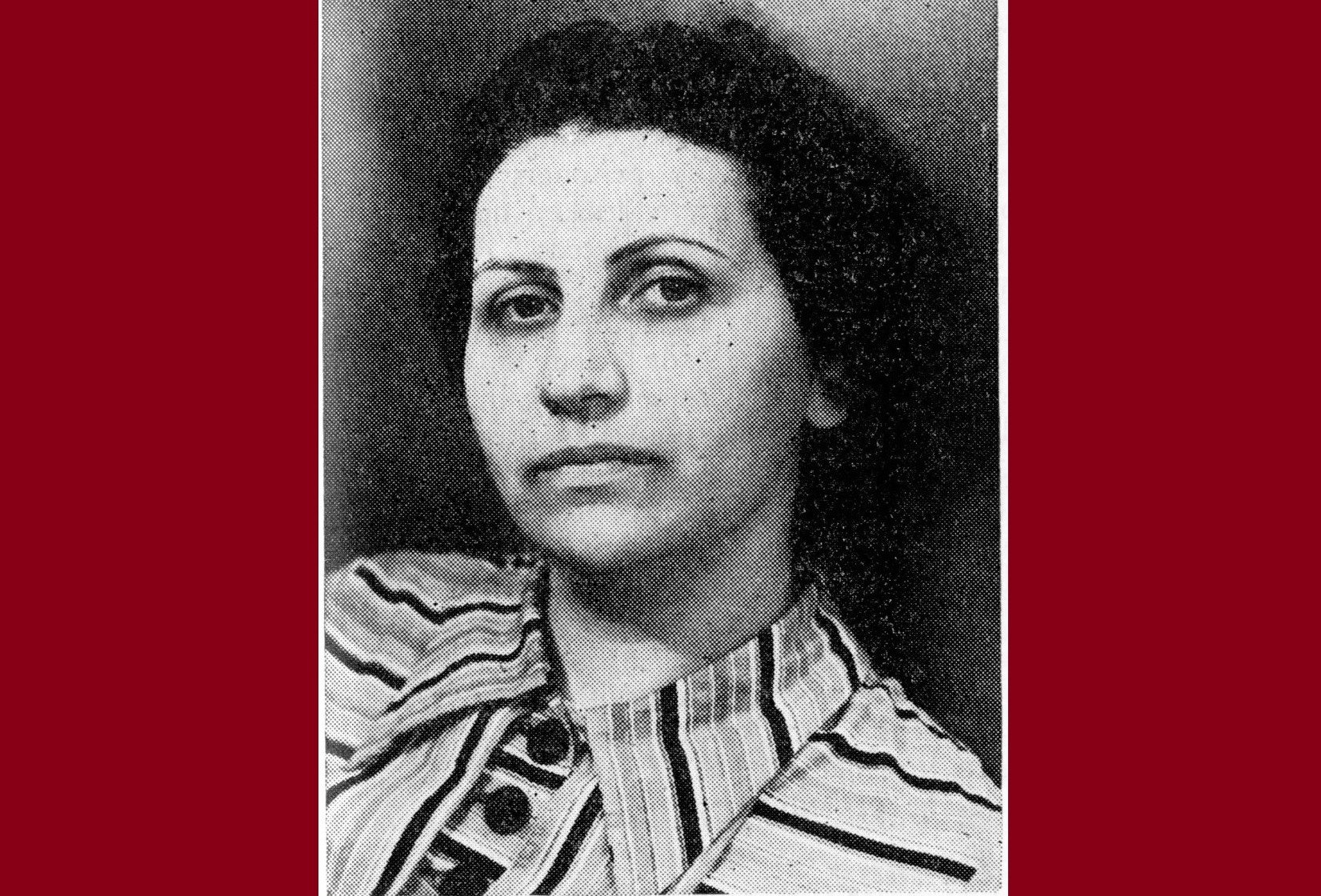
Surveying changing conditions over the past decade, Damon says that even if the A.F.L. wanted to organize women, its craft union philosophy would leave them out, the vast majority being then employed as ‘unskilled’ labor. With more and more women, especially Black women entering the labor force and industry, it would be the task of militant in the Trade Union Unity League, organizing industrially and outside of the A.F.L.’s confines, particularly in the South, to unionize women workers.
‘The Working Woman in U.S. Class Fight’ by Ann Damon from The Daily Worker. Vol. 6 No. 265. January 11, 1930.
Since the imperialist war of 1914, working women have become a most important factor in American industry. Today, working women are a cheap source of labor for the capitalists, used in preference to men. They have been drawn into practically every industry, particularly the basic and war industries. The number of Negro women in industry has increased from 1910 to 1920 by 300 per cent and a much greater extent since that time.
From 1910 to 1920 men working as semi-skilled, have increased 1,408 per cent in the automobile industry, in the iron and steel industry 145 per cent, as semi-skilled operatives and doubled the number of unskilled laborers. In the electrical supply factories (especially important in war time), women operatives increased 148 per cent. In the rayon manufacturing, which practically developed in the last ten years, 60 per cent are women. In the knitting mills, tobacco factories, laundries, radio manufacturing, large numbers of women have replaced men.
Simplification of production, efficiency methods, the conveyor belt system, gang work, have reduced the number of workers generally, and decreased the number of skilled to a smaller percentage. It has replaced the skill of men with machines attended by women and children, who receive half or even less than half of the previous wages paid to men for the same work. Women thus comprise one of the lowest paid sections of the working class.
The low wages paid to the workers, the high cost of living, force the wives and daughters, mere children, to slave in the mills and factories. The Negro and white women run machines in the basic industries at a terrific rate of speed, which saps their life and energy. The Negro women in industry are even more exploited, by the capitalist assigning them to the dirtiest and hardest work for half of the wages paid the white women workers. At the age of 35, the working woman is thrown on the scrap heap. Her labor is no more desired. Younger women are hired by the bosses. In the textile, steel, radio industries, the number of young girls is rapidly increasing, making up a large percentage of women workers. These girls feel heavily the effects of capitalist rationalization. Their low wages can not supply them with the so-called “luxuries,” silk stockings, paint and powder, which are necessities imposed upon thorn by the capitalist class. These American “flappers,” the supposedly frivolous “jazz-age” girls, have learned a lesson taught them by capitalist rationalization. Their fathers, brothers and mothers unemployed make them in many instances the only supporters in the families. Their wages being so low that it does not supply them with food, $6 to $8 a week being considered wages.
A great wave of discontent has spread throughout the United States. Strikes in the mining, textile, needle, shoes and food industries are going on and are rapidly increasing. In these strikes and struggles of the working class, against the ruthless exploitation of the bosses, the working women are playing a very important part. Not only do the older women, those with revolutionary traditions from Europe, participate in these struggles, but native American women and particularly young girls, are actively participating and leading picket lines, fighting the police, the bosses and the A. F. of L. betrayers, side by side with their men folks.
In the present strike of Illinois, conducted by the National Miners Union, the daughters and wives of the miners came out on the picket lines, facing and battling the police and hired gangsters of the bosses and the American Federation of Labor.
The strike of the textile workers of Gastonia, which lasted for many months, under the leadership of the National Textile Workers Union, had a very large percentage of women workers, who in face of dire need, hungry children, thrown out of their homes, showed a determination for fight against the capitalist system. They took up arms in defense of their strike, their union leaders, their organization. During the course of the struggle, Chief of Police Aderholt was killed, which resulted in heavy sentences for the leaders of the N.T.W.U., ranging from seventeen to twenty years in jail. Numbers were beaten up and wounded. Ella May Wiggins, a mother of five children, one of the most outstanding militants, was murdered by the hirelings of the bosses. The death of Ella May and the long jail sentences imposed upon the strike leaders, the massacre in Marion, served to steel the revolutionary spirit of the workers. At the N.T.W.U. convention, held on December 22-23 at Paterson, N.J., there was a determined spirt for militant struggle in 4ho industry to improve the miserable conditions of the textile workers, men and women, Negro and white.
The strike of over 1,500 dress-makers in N.Y. led by the Needle Trades Workers Industrial Union in March, 1929, was an outstanding militant struggle against the bosses and the corrupt officials of the A. F. of L. and the socialist party. Today, strikes are being carried on in the needle trades industry by the N. T.W.I.U. Arrests of hundreds of women workers are the order of the day. The women workers are militantly fighting under the leadership of the T.U.U.L. and the Communist Party.
The growing radicalization of the women workers is part of the general radicalization of the working class in the United States. The large number of women in industry, their extreme exploitation, and the militant struggles carried on in the past year and at the present time, are proof that the working women are an indispensable factor in the class struggle, and an integral part of the working class and, as such, must be won away from the bourgeois influence, for the class struggle, for the revolution. This is the task of the revolutionary vanguard, the task of the Communist Party of the U.S.A.
The social-reformists, the socialist party and the A. F. of L. never paid any attention to the organization of the women and to their special needs. In the past, they have set up all sorts of craft divisions and barriers, which kept the women workers, especially the Negro women, out of the unions. At the same time, they wrote long resolutions at their conventions on the need of organizing women workers. Then concerned themselves with the most skilled and highest paid workers who, certainly, did not include the women, 92 per cent of women workers being unskilled and semi-skilled, 4.8 per cent laborers and only 3.3 being skilled workers.
At the present time, the A. F. of L. and its women’s organization, the Women’s Trade Union League, have given up all semblance of being a working class organization and have gone over part and parcel to the bosses. The women’s locals in the A. F. of L. have lost a great number of their members, in the shoe, textile, food, etc. What is left of the women’s locals are being used by the officials to sell out the workers in their struggles.
Trade Union Unity League to mobilize the working women in the U.S. for the class struggle. Special attention must be paid to women in industry. Special programs of work, special demands must be worked out by the various industrial unions, to win large numbers of women for the unions.
Every member of the Party must rid himself of whatever remnants of social democratic tendencies still exist with regard to work among women must learn special means of approach, how to win them for the class struggle, how to get the most militant and class conscious into the Communist Party.
The Party must win every section of the working class for revolutionary struggle. This is its task at the present time. But it cannot fulfill this task if it leaves it to the women’s section of the Party alone. To mobilize the miserably exploited section of the working class and not to leave them to the mercy of the social reformists and the capitalist class—this is the Communist task.
The Daily Worker began in 1924 and was published in New York City by the Communist Party US and its predecessor organizations. Among the most long-lasting and important left publications in US history, it had a circulation of 35,000 at its peak. The Daily Worker came from The Ohio Socialist, published by the Left Wing-dominated Socialist Party of Ohio in Cleveland from 1917 to November 1919, when it became became The Toiler, paper of the Communist Labor Party. In December 1921 the above-ground Workers Party of America merged the Toiler with the paper Workers Council to found The Worker, which became The Daily Worker beginning January 13, 1924. National and City (New York and environs) editions exist.
PDF of full issue: https://www.marxists.org/history/usa/pubs/dailyworker/1930/v06-n265-NY-6th-Ann-Ed-Sect-2-jan-11-1930-DW-LOC.pdf

