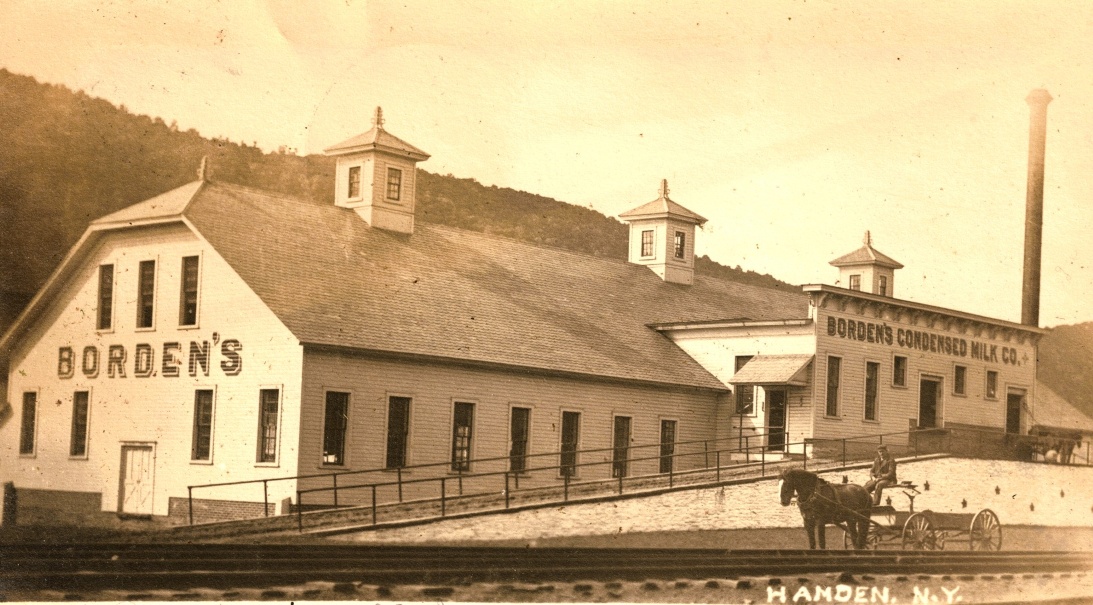
A fine investigation from Ebert on the emergence of an ‘agricultural-industrial’ belt in Upstate New York where the farm and adjacent processing and canning plant are owned by the same company creating new, now-familiar, food-producing relations.
‘Eastern Agriculture: The Farm and the Corporation’ by Justus Ebert from One Big Union. Vol. 2 No. 1. January, 1920.
(Note—Agriculture is one thing on the prairie, another thing in the marshy lands of Louisiana, and still another thing in the orchard country of California or the Northwest. That agriculture should assume strange and hitherto unknown features around the great industrial centers of the East was to be expected. The writer here vividly portrays these novel features, illustrating them with statistical data. Always ready to adjust itself to conditions, the I.W.W. here finds a new, virgin field of activity. Editor.)
CHAPTER I
There used to be a time when the farm was the center of manufacture in this country. Within the farm house, or in little outbuildings erected especially for the purpose, the farmer and his family pursued a variety of interrelated occupations in connection with the cultivation of the soil. Flax and hemp, wool and cotton were spun into yarn, woven into cloth and made into garments for home wear or barter. Everything, from beds and pillows to farm implements and food preserves, was made and put up on the farm from its raw products.
Today there is a marked change—a revolution—noticeable. Textile corporations spin and weave and make garments for sale for profits. And in the matter of those products still held to be typically agricultural, the farm is often an appendage to some packing, canning, preserving, or milk company. Such a company may cultivate its own lands, or else command the products of the farm communities in which its plants and operations are located. These companies are corporationizing and industrializing many functions that were once held to be a part of farm manufacture and inseparable from the cultivation of the soil. They are dominating agriculture, dictating its prices and trend. They are, also, creating a working class in farm communities, are revolutionizing agriculture in fact, in conjunction with the bankers and the controllers of the system of transportation.
The revolution in agriculture is due to the invention of machinery and the steam railroad, combined with the growth of large cities, which have made agricultural-industrial corporations both possible and necessary. This is a significant condition, as agriculture is believed to be impervious to tendencies making for large production and a working class by means of corporations.
New York ranks high as an agricultural state. Unlike the great Western states, with their far-reaching prairies and extensive cereal farming, New York, with its rolling country and varied soil, is more diversified and intensive in agricultural development. Yet, notwithstanding these presumably favorable conditions, New York is acquainted with such widely different phenomena as the abandoned farm and great canning, preserving and dairying corporations. There may be no direct relation between the two, but the fact that they exist, often side by side, is worth notice.
Certain it is that many farmers have made attempts, for instance, to become independent of the big mill companies, whose bottling plants, creameries, condenseries, etc., determine prices in counties throughout the state, and whose corporate activities extend beyond the state into other states.
We recall, in this connection, the Six States Milk Producers’ Association, formed in Orange county about 12 years ago. It died shortly after birth, while the “milk monopoly” which it was created to fight lived on and is now larger than ever before, having extended its operations to even more states and even operating its own farms, in addition to all its other phases of activity. Farm operation by corporations is the result of inefficient small farming, due to low prices. The large corporations, having squeezed the small farmer to the wall, is compelled to step in and become for itself the source of supply that the small farmer formerly was. Taken together, with all the other facts mentioned above, corporation farming indicates that farming in New York state is not the independent, self-reliant, self-sustaining pursuit that farming in general is said to be. New York state farming is very much hedged in, encroached upon, and regulated by corporations and corporate activities.
In 1918, the state of New York issued “The Industrial Directory of New York.” This industrial directory has since been discontinued. It contains a factory register. One thing that strikes the student of this register is the large number of corporations and firms operating factories in more than one farming community. In New York state, the chain factory system is decidedly conspicuous in the industry where one is taught to expect it least, to wit, in the agricultural industry. This chain factory system spreads across many counties and embraces many branches of the industry.
In the most conspicuous instance, it even crosses into many other states. The Borden Condensed Milk Co., for instance, operates 51 factories, employing 1,638 persons, in 17 counties. A corporation that can operate 51 factories with an average of 32 employees each is not a small proposition even in cities. What then must it be in country places? In a variety of specialized products too! This, in itself, would be impressive enough, but the Borden Co. operates also in many other states. According to “Moody’s Manuel,” this $30,000,000 corporation operated upwards of 180 factories in the states of Connecticut, Illinois, Maine, Michigan, New Jersey, New York, Pennsylvania, Washington, Wisconsin and Vermont—or in 10 states, all told. This was in 1913. Since then, the Borden Co., in combination with other companies, has expanded still more.
The Borden Condensed Milk Co. was organized in 1899 to succeed the New York Condensed Milk Co. It has been in the “succeeding,” that is, absorbing, business ever since. In 1902, it acquired the plants of the Anglo-Swiss Condensed Milk Co., for instance. It originally engaged in the manufacture of the Gail Borden Eagle Brand Condensed Milk. But a recent booklet issued by it, gives a list of its present products as follows: Unsweetened Condensed Milk, Route Cream, Extra Heavy Cream, Certified Milk, Selected Milk, Pasteurized, Grade A.; Grade B Milk; Buttermilk, Ice Cream, Baccilac (Metchnikoff Scientifically Soured Milk) and Fern Brand Butter. This same booklet pictures the Borden pastures, cow barns, milk cooling houses, and bottling plants, with their big buildings, automatic machinery, various departments, and specialties; the interior of a milk railroad car, and the immense trucks and route wagons used in the distribution of the company’s milk and dairy products. In brief, what this booklet depicts is not the old farm supplying only its own needs, but a big agricultural undertaking, that has grown and expanded, until now it controls its own sources of raw supplies, manufacturing plants, transportation facilities and distributive outlets, just as in the oil, steel, iron and other industries, we have similar corporations, with similar histories and functions.
The present indications are that the Borden Co. will broaden its scope still more. It has recently organized a $17,000,000 “Farm Products Co.,” which will attend to the development of dairy-farming in all its phases, for the parent company. It looks as if the Borden Co. is taking a leaf from the book of the Armour Co., and is therefore intent on including all the products of the farm in its rapidly expanding growth.
There are other corporations with a chain of. factories in New York state that are engaged in the manufacture and sale of dairy products. According to The Industrial Directory of New York for 1913, there are approximately 115 factories, with 3,500 employees devoted to the manufacture of butter, cheese, condensed milk, the pasteurization and bottling of milk, milk sugar, ice cream, casein, dairy products and dairy products preparations. Four companies control 65 of these 115 factories and exploit 2,500 out of the 3,500 wage slaves employed therein.
Many dairy companies exist that own neither farms nor bottling plants, but simply distribute the products of others. The wonder is, that in a city like New York, for instance, all of the dairy companies should be so few. It is doubtful if more than 50,000 persons, all told, supply New York’s 5,000,000 mouths with dairy products. To such perfection has machinery and concentration attained in the manufacture, transportation and distribution of dairy products in New York state. Consider the number that the old methods would have required, and then score another one for the modern agricultural co-operation!
If we turn to canning, preserving, grape juice, and other agricultural-industrial fields in the Empire State, we shall witness therein the same intercity, inter-county, inter-state and interwoven chain of factories and corporations as in dairy farming and dairy products. This we shall do in the next chapter.
CHAPTER II.
The central-northern end of New York state is its great agricultural-industrial section. Along the Central railroad, from Utica to Niagara Falls, with Rochester as the main center, will be found its packing, canning and preserving industries. Within this territory many corporations operate, most with only a local plant, many with only two plants and quite a few with a chain of plants extending beyond their own home towns and counties; and some with even their own farms. In this article, consideration will be given to those that overflow their own original boundaries and cultivate their own soil. Let us start, in true biblical fashion, with the last first.
For instance, there is “The Fort Stanwix Canning Co.” According to “Moody’s Manual,” this is a New York corporation, organized in 1888 and reorganized in 1912, with a capital stock of $750,000 and assets of $1,058,754. Also owns entire stock of Fort Stanwiz Farms Co. Makes a specialty of packing fruits and vegetables. Owns and operate plants located at Rome, Fulton, Farnham and Irving, N.Y., Glassboro, N.J., and Hampden, Me.; or in three states.
“The Industrial Directory of New York for 1913” gives the factories of the Fort Stanwix Canning Co., together with the number of employees, as follows, Erie county, Irving, canned fruits and vegetables, 17; Farnham, ditto, 180; Oneida county, Rome, canned goods, 74; Waterville, canned vegetables, 38; Oswego county, Fulton, canned goods, 87. Three counties, 5 towns, 5 plants and 346 employees are thus represented in the New York state factory operation of the Fort Stanwix Canning Co.
Next to claim attention is the Burt Olney Canning Co. Also a New York corporation, organized in 1902; capital $800,000. Owns and operates 700 acres of improved farm lands located, according to “Moody’s Manual,” contiguous to the city of Oneida. Ketchup, peanut butter, porks and beans, and canned fruits and vegetables constitute its output.
The Industrial Directory of New York for 1913 gives the following facts concerning the Burt Olney Canning Co.: Madison county, Oneida, canned goods, 190 employees; Orleans county, Albion, canned goods, 221 employees. Two counties, towns and plants, with 441 employees, are embraced in this company’s factory Opera “The Investors’ Information Service” in The New York American of Nov. 24, 1919, shows that the Fort Stanwix Canning Co. and the Burt Olney Canning Co., united in Sept. 1918, with Winters and Prophet Canning Co., Cobb Preserving Co. and the W.H. Osborne Co., to form the New York Canneries Co., with a capital of $3,250,000. The American says of the new consolidation: “It packs and distributes a complete line of canned vegetables, also condensed milk has been added to the company’s list of products. It has twenty plants, seventeen of which are in New York, one in Maine, one in Maryland and one in New Jersey.”
From all of which it appears that concentration in agricultural-industrial corporations is not confined to those handling dairy products only.
Out of Rochester, two big companies radiate, that are worthy of notice. The Curtice Bros. Company’s main plant in Rochester, Monroe county, employs 618 persons. At Springville, in Erie county, 52 more are added to the company’s force of profit makers. At Bergen, Genessee county, 57 meet the same hard fate. At Vernon, Oneida county, 40 more wage slaves complete the list. Four counties, cities, towns and plants, with 767 employes make up the total of Curtice Bros. Co’s factory operations in the Empire state, according to the Industrial Directory of 1913.
The American Fruit Products Co., a $1,125,000 corporation, has three factories in Rochester, devoted to canning, vinegar making, and apple evaporating respectively, with 312 and 24 and 46 wages slaves respectively, or a total of 400 in round numbers. Other factories are located at Hamlin, Monroe county, evaporated apples, 32 employees; Pittsford, evaporated apples, 21; Gasport, Niagara county, evaporated apples, 24; Lyndonville, Orleans county, evaporated apples, 29; Waterport, evaporated apples, 35. A total of 3 counties, 7 cities and towns, 9 factories and 550 employees.
Two more corporations are also worthy of notice. First, the Fredonia Preserving Company, with plants and employees for the canning of fruits and vegetables as follows: Chautauqua county, Forestville, 92; Silver Creek, 184; Niagara county, Modeltown, 98; Newfane, 15; Wilson, 55. Total, two counties, five towns and plants, and 394 employees. The second is the most diversified company of all, namely, the Merrill-Soule Co. It operates, in Albany county, at Little Valley, a powdered milk and butter company, with 25 employees, In Madison county, at Chittemango, it has a vegetable canning factory, operated by 29 wage slaves. In Onondago county, at Fayetteville, the same sort of plant is run by 17 more people. In Syracuse, same county, the company shows its versatility further, by making mince meat, by means of the labor of 141 wage slaves. In Wyoming county, at Arcade, milk products are turned out by 55 exploited workers. In Chautauqua county, dairy products consume the labors of 29 more creators of wealth. Summed up, the Merril-Soule Co., manufactures 6 different kinds of products in 5 counties, 6 towns and cities and 6 plants, with 296 employees. Some diversity and territory, not to mention the wage slaves.
The Industrial Directory of New York for 1913 tabulates approximately 100 fruit and vegetable canning factories with 5,558 employees. Six corporations, namely, the Fort Stanwix, Burt Olney, Curtice Bros., American Fruit Products, Fredonia, and Merrill-Soule employ 2,900 persons, or more than one-half of all fruit and vegetable canning workers.
The Industrial Directory for 1913 also tabulates 222 evaporated apple, fruit and cider factories, with 4,207 employees; 46 bean and pea sorting factories, with 1,05 9employees, and 8 grape juice factories, with 300 employees. Thus there are about 16,000 persons employed in the five main divisions of New York’s agricultural-industrial development treated in this and the preceding article.
This is not an imposing figure. In view of the immense population fed, it indicates an extensive use of machinery. Also, in view of former primitive methods, a complete agricultural revolution.
This revolution is likely to proceed further. In Chautauqua county, in the so-called grape belt, developments are now going on worth noting. At Westfield, the half-billion dollar Armour Co. has gone into the manufacture of grape juice, in competition with the $1,000,000 Welch Grape Juice Co. and lesser companies. Other “outside” corporations, like Libby, McNeil and Libby, and the H. T. Heinz Co.—of “57 varieties” fame—have also entered New York state and are helping along its agricultural-industrial development.
For one thing, in New York state, they will have no union labor restrictions to contend against. The agricultural industries are notoriously anti-union. “Statistics of Trade Unions in 1914,” a book dealing with unionism in New York state, gives absolutely no trace of unionism in either the cities or towns in which these industries are located,
There has been much agitation and legislation affecting hours and conditions in the canneries. In certain seasons, the canneries are large employers of labor, consisting mainly of women and children from nearby cities. They are employed in sheds, at wages and hours and amid conditions that have aroused the indignation and activity of woman and reform societies. The latter have sought to alleviate conditions through legislative enactments, but, apparently, without success. New York has its Wheatland, too. But, up-to-date, it is without its Ford and Suhr.
The dairy corporations, especially “Bordens,” also vigorously combat unionism. Their urban factory employees are not known to have ever exerted themselves in their own behalf through their own organization. Only recently have their drivers and city employees taken the bit in their teeth, with very good results to themselves. Will the city employees’ success impel the urban employees to action? It ought to!
Many I.W.W. men are familiar with New York’s agricultural-industrial districts. The apple-producing sections especially are not unknown to them. Why shouldn’t they renew the acquaintance, and get on the job in the interest of Agricultural Workers’ Industrial Union No. 400, I.W.W.? With Rochester as the base of operations, there is a big field for 400 in upper central and northern New York state.
In conclusion, let us repeat a belief, oft expressed, viz., that New York state is leading the way in the revolution of agriculture on a medium-sized scale. There are no 150-mile Taft farms in New York, as in Texas. The development is smaller—more intensive—and more thorough and far-reaching.
One Big Union Monthly was a magazine published in Chicago by the General Executive Board of the Industrial Workers of the World from 1919 until 1938, with a break from February, 1921 until September, 1926 when Industrial Pioneer was produced. OBU was a large format, magazine publication with heavy use of images, cartoons and photos. OBU carried news, analysis, poetry, and art as well as I.W.W. local and national reports. OBU was also Mary E. Marcy’s writing platform after the suppression of International Socialist Review., she had joined the I.W.W. in 1918.
PDF of full issue:

