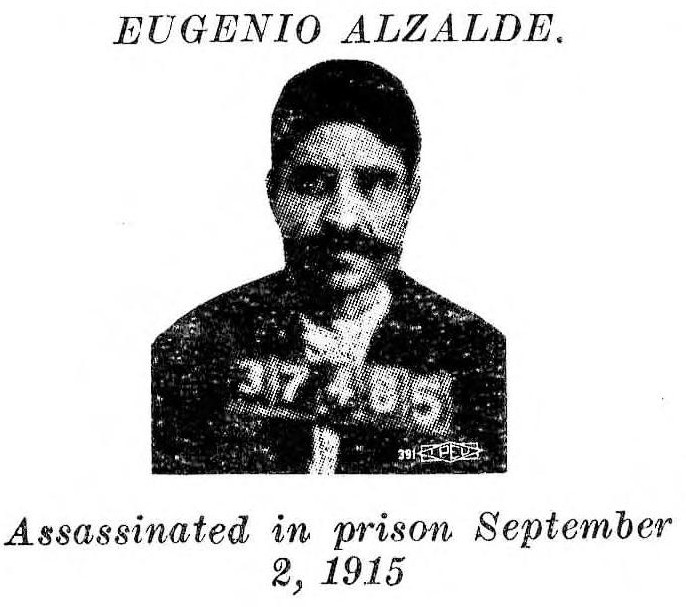
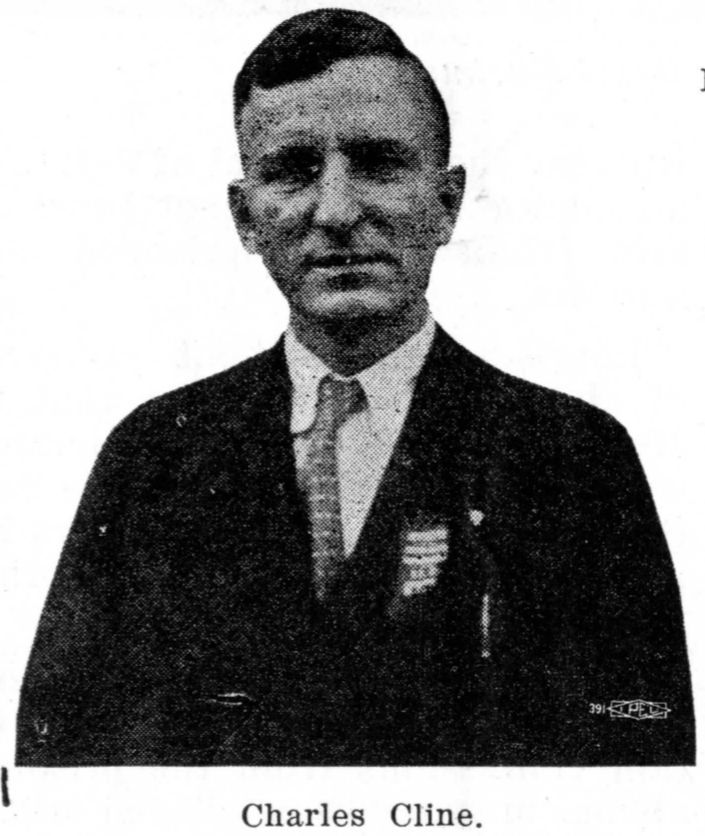
Georgia Kotsch was a champion of the ‘Rangel-Cline’ group of political prisoners held in Texas prison hells, a number to die there, and here reports on a Los Angeles solidarity meeting. The band was exemplary of the interwoven destinies of the revolutionary movement on either side of the Rio Grande. On their way across to Mexico as part of a cross-border organizing, many to join in revolutionary armies there, an armed band of twenty Texas Liberal Party members, wobblies, and Socialists (usually all three) were ambushed at Carrizo Springs by a sheriff and his deputies, who were captured and with one killed. A larger armed forces was sent after, and in the ensuing gun battle two insurrectos Juan Rincón and Silvestre Loma were killed while the rest captured. Among the six jailed were the revolutionaries’ leader Jesús M. Rangel and I.W.W. member Charles Cline. They would serve 13 long years in the hell of Texas prisons before being pardoned, as a consequence of the Mexican Revolution.
‘Texas “Justice” Threatens Workers’ by Georgia Kotsch from Solidarity. Vol. 5 No. 229. May 30, 1914.
Rangel-Cline Defense Meeting Makes Clear What These Fellow Workers Are Facing In That Benighted Section
At Los Angeles Labor Temple, Sunday night, May 17, a large crowd of earnest people responded to the call to consider the cases of the Texas prisoners. Attorney Fred Moore, who has just returned from San Antonio, was the chief speaker, and was followed by Anton Johannesson.
Mr. Moore reviewed the trial in which four men have been convicted upon the evidence solely of one man, and not one of whom is the man alleged to have fired the shot. A boy of nineteen has been sentenced for six years, one of twenty-two for five years, two other men for forty and ninety-nine years respectively. The court of criminal appeals has affirmed two of the verdicts.
Under the circumstances it seems the only thing possible to do now is to raise money to fight the cases for all these men who have had the courage to give their all for the ideals they and we cherish. Money to secure delays must be had at once if the men are to be saved.
The peculiar situation of labor in Texas and the southwest generally was dwelt upon by the speaker. The exceeding importance of labor all over the country rallying to the aid of these men was made manifest. This is not a sporadic, personal or detached case appealing merely to our human sympathies, but is an integral part of the working class struggle in America and pivotal in character, especially with reference to organizing the great southwest.
Mr. Moore said: The Chamber of Commerce in San Antonio met and demanded by resolution that the district attorney prosecute these cases with vigor. The district attorney’s fees there are based not upon salary but upon convictions and unless he secures convictions he receives no compensation. Texas is the only state which puts a premium upon sending men and women and children to the gallows.
The jury was influenced by prejudice, malice and ill-will. The district attorney brought into the court room the thirteen prisoners chained to each other–chains around their necks, hands and legs. Why does the state of Texas stand for this? Had Rangel been convicted of murder, arson, embezzlement, robbery, looting a bank? No. His crime is that he preaches the fundamental necessity of organizing the workers to defeat the law as far as it stands for property as against human rights. That the land belongs to the people and not to the railroads and the land corporations that control the country. This he has carried on for years and twice he has been sent to prison for two years. Again he went over the border and laid 36 hours on a battle field, after which he was in the military prison at Vera Cruz until Madero released the prisoners. Another of the group who stands a menace is Charles Cline. His record is one of unqualified devotion to labor. He has been active in strikes in Portland and Denver. He did as much as any one person to organize the lumber. workers in Louisiana and make the fight there possible. Day by day he kept us informed at Lawrence as to the murder trials at Lake Charles. He is fearless. No matter what the lumber barons said, he went into every village where he could reach the workers and taught the doctrine of their emancipation. They have attempted to break his will. For seventeen weeks before I saw him he had seen no one but the jailer, who once a day brought him half a loaf of bread and a little dish of food, locked the door and left him. He was alone in a cage about five by six feet in a room with five or six empty cells. There was not room for him to stretch out when he laid down upon his piece of canvas. He was suffering from a serious trouble with his back and kidneys, caused by a fall of thirty or forty feet when he was a steeple jack at the age of twenty-two. For eight or nine weeks he has had excruciating pain. We secured a doctor while I was there and got him removed to a larger cell with a cot. The reason given for putting him in solitary was that he was carrying on Industrial propaganda upstairs.
Justice in the courts is pretty much of a farce. You get out of them pretty much what you carry in in dollars. This is not to be a continuing situation. There is a greater power than the power of money. I look for a time when we will not submit our cases to learned gentlemen upon the bench and to twelve men whose sole prerequisites are that they never had an opinion nor sufficient intelligence to form one. To be eligible to the jury a man must be an imbecile, uneducated, unintelligent, or able to make people believe he is such. As a matter of fact, the state is able to approach by different channels and know whether a juror has sympathy for labor. Our cases go in on a gamble and our lawyers are expected to be able to penetrate the veil behind the countenance and see the workings of a prospective juror’s mind. It is a pretty dangerous experiment and if my life were in the balance I would not want to depend upon it. I hope the time will come when labor international will say, “Have your court room farce if you like, but we have tried this man at our own bar and he is innocent, for what he did was in labor’s behalf. We control the industries of the country and don’t you touch a hair of his head.”
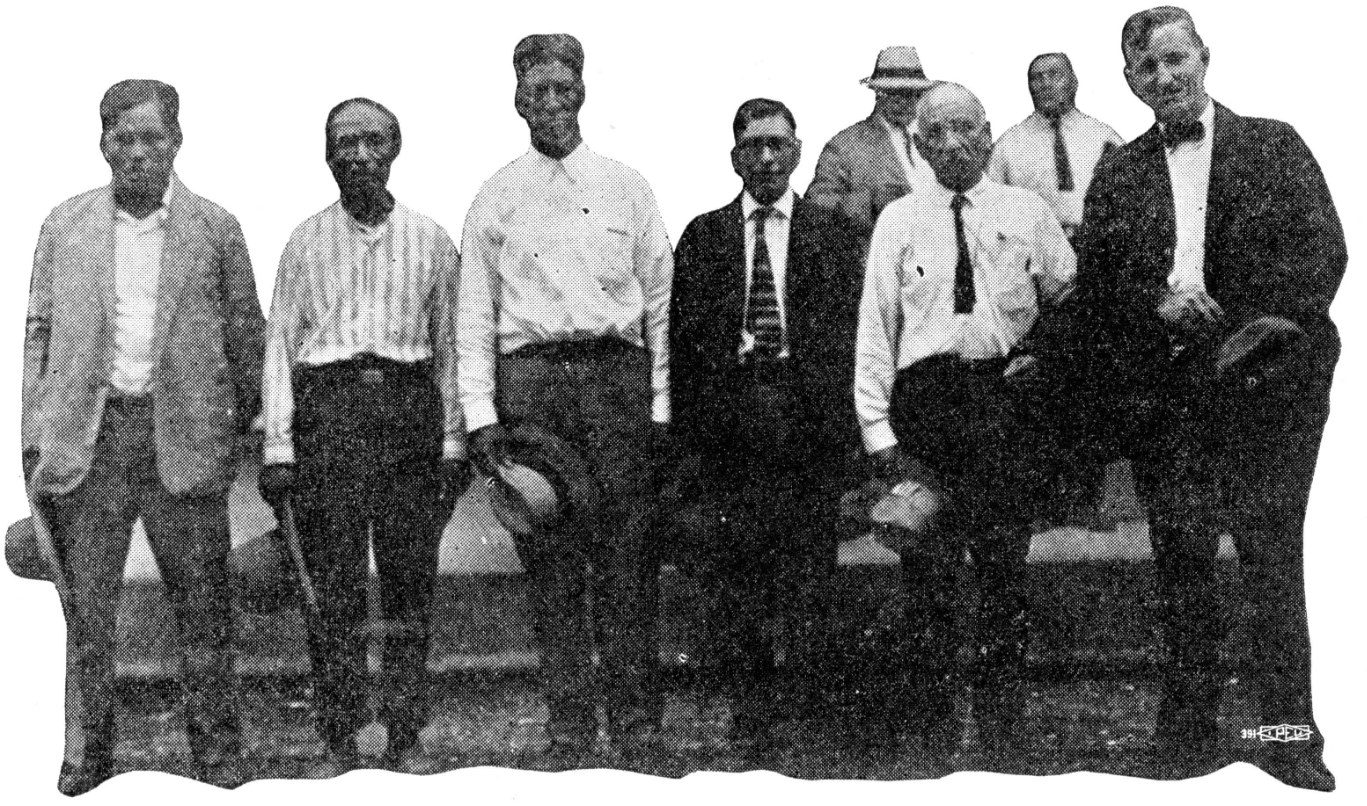
But we have not got to that point anywhere yet. Certainly not in Texas. In Texas the labor movement is similar to that of all the south. It lags. It has no power to protect these men, and unless the north arouses, there is a chance that ten will hang. Rangel and Cline will go to the gallows as sure as I am on this platform unless you sound the slogan, “Rangel and Cline must come out of San Antonio jail!”
Let us assume the crass, material philosophy that nothing is done except for selfish motives. The unskilled workers whom you have not reached at all yet are a menace to the trades already organized. The development of the machine has made them so. Unless you can give them the new social consciousness they will tear down what you have acquired during years of struggle. In all the great southern belt the section workers on the Salt Lake, the Union Pacific and the Southern Pacific are 99 per cent Mexican. There are more than a million workers engaged in mining, railroad work and agriculture in the southwest, with not a vestige of organization. What is the use of anti-war mass meetings if we refuse to make common cause with our Mexican brothers? They must be reached. We must do it for selfish reasons if no other, but I ask it on far larger grounds.
I asked Cline what we could do for him. He said, “If the boys outside could get together and get me some chewing tobacco.” That was all he asked for himself, but he said, “Go out and tell the country what the situation is.”
They are as fine a body of men as I have seen in any jail. I have never met thirteen men with a higher standard of personal devotion to their conception of liberty.
The law is a game where skill, money and training are vital factors–to discolor facts and stir up prejudice. In the pocket of a dead Mexican Liberal was found a flag inscribed, “Land and Liberty.” It was found by an old tenant farmer who never owned a foot of land in his life and he went on the stand to swear one of the boys into the penitentiary for 99 years. It is the kind of game we always face. The district attorney was shrewd. He knew the chains meant to the farmers that these were human beasts; knew the farmers were not intelligent enough to grasp the idealism of the flag. They do not understand the issues down there.
No fight made by labor ever leaves the community the same as it was before. It is our duty to go down there from this community and say to San Antonio, “We are going to attempt to present to you what underlies the flag to ask you to search your minds and see if you are not as much interested in ‘Land and Liberty’ as are these Mexicans.”
It will put new hope and confidence into the labor movement down there and lay the foundation for the future and when trouble comes on the Santa Fe and Southern Pacific you can carry the section hands with you if you play the game right.
You cannot create a new social consciousness in a day. If we do this educational work in the south–if we save these men, it will tend toward gathering our power together and creating a social consciousness which will make future convictions impossible.
Rangel and Cline are absolutely penniless. They have wired for fifty dollars to argue a rehearing and there is $1.25 in the treasury. We are past the stage of discussing abstract theories. We are facing the real issues of life. Shall our people go to the gallows and the rope; the gallows be made by workers; the news printed and read by workers? If we allow this thing to be done we are morally guilty. If we don’t we will create a precedent in this country for all time and draw into the labor movement a part of the workers without whom we cannot get along.
These men did their best. We may not like rifles, but the workers in Colorado as a last resort took up guns and they were justified and should be supported. So with these. There are two fathers and sons in San Antonio jail. It is a searching time for a father when he asks himself, “Was I justified in putting my boy in this position?” I want you here to answer tonight–not by resolution, but in terms of action: “They were justified.” I want you to go out and organize the state and make the protest of this coast reach San Antonio.
Chairman Bill Cook gave some of his own experiences in a Texas jail and Anton Johannesson followed with a tremendous appeal and a practical plan for work.
A large collection was taken up and the plan suggested by Johannesson is already being put into vigorous operation in Los Angeles city to secure money for the delay in the cases which just now is so vitally necessary.
GEORGIA KOTSCH.
The most widely read of I.W.W. newspapers, Solidarity was published by the Industrial Workers of the World from 1909 until 1917. First produced in New Castle, Pennsylvania, and born during the McKees Rocks strike, Solidarity later moved to Cleveland, Ohio until 1917 then spent its last months in Chicago. With a circulation of around 12,000 and a readership many times that, Solidarity was instrumental in defining the Wobbly world-view at the height of their influence in the working class. It was edited over its life by A.M. Stirton, H.A. Goff, Ben H. Williams, Ralph Chaplin who also provided much of the paper’s color, and others. Like nearly all the left press it fell victim to federal repression in 1917.
PDF of full issue: https://www.marxists.org/history/usa/pubs/solidarity-iww/1914/v05-w229-may-30-1914-solidarity.pdf

