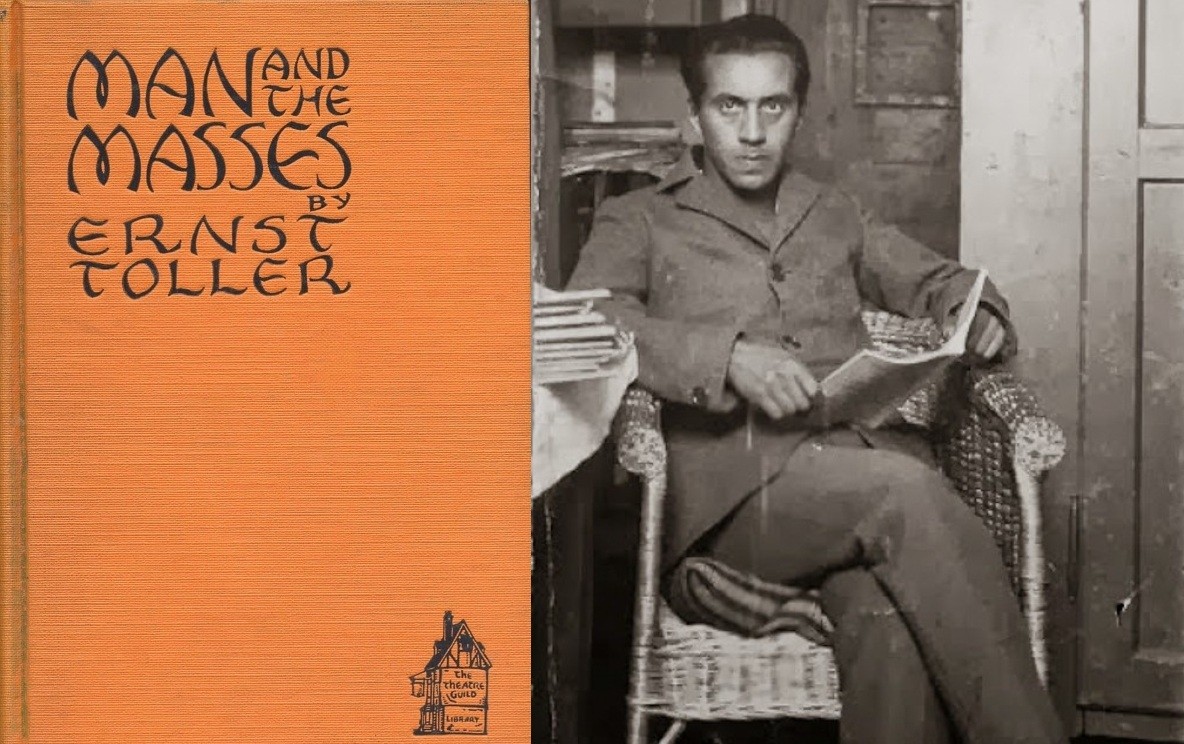
The Theatre Guild produced a book of their version of Toller’s 1919 play which included Toller’s 1921 Foreword to the German addition, a note to future producers of the impressionist play, while Louis Untermeyer, the translator, introduces the work around an exceptional autobiography written by Toller while in prison.
‘A Play of the Social Revolution’ by Ernst Toller and Louis Untermeyer from Man and the Masses (Masse mensch). Double Day & Co. Garden City, New York, 1924.
Man and the Masses (Masse mensch): A Play of the Social Revolution in Seven Scenes by Ernst Toller, Translated by Louis Untermeyer. Double Day & Co. Garden City, New York, 1924.
INTRODUCTION
I
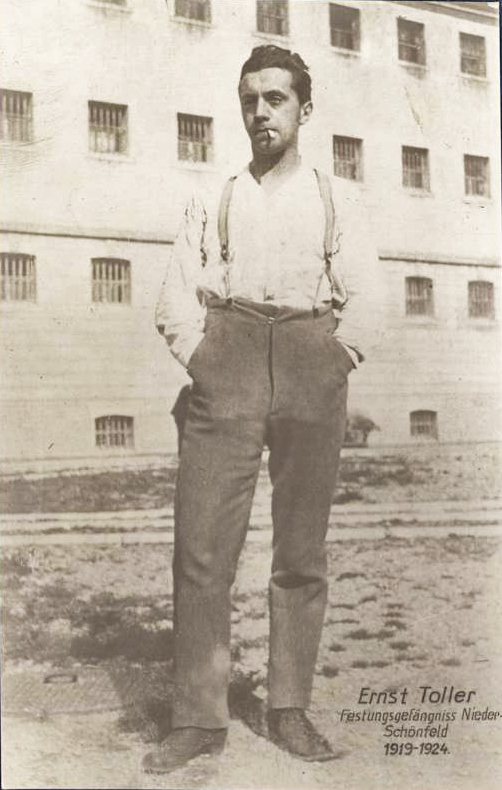
“Man and the Masses,” that agonized drama of a people’s revolution and self-revelation, was written in a Bavarian prison by a man in his mid-twenties. Possibly no better background can be given to the work itself than the autobiography which Toller has furnished for an introductory study of his plays (“Ernst Toller und seine Bühnenwerke”) written by Fritz Droop. Toller writes thus about himself:
***
Born December 1, 1893, at Samotschin, County Bromberg (At that time, part of German Poland. L.U.). His father, Max Toller, a merchant, died when the boy was sixteen. At first he attended public school, later a high school, whose management the bourgeois had confided to pensioned priests.
Finally he is the only pupil left, the school ceases to exist, and the twelve-year-old boy is taken to Bromberg. There he undergoes seven years of drudgery in a Prussian high school, a school given over to false teaching and militarizing. After passing the college entrance examinations, his wanderlust (which, while a boy, had carried him on a runaway trip to Bornholm and Denmark) takes him to France. He studies at the University of Grenoble and rambles about southern France and northern Italy.
The end of July, 1914, finds him at Lyons on his way to Paris. The German consul at Lyons, a man who possessed the same amount of vision as most German foreign representatives, quiets his disturbed fears (this is on the thirty-first of July) and advises him to proceed to Paris. That night he hears the shrill cry of the newsboys: “Declaration of War between Germany and Russia imminent.” He leaves Lyons by the last train that goes to Geneva. On the way, he is arrested, freed, rearrested, freed again, and after an adventurous journey, reaches Switzerland a few minutes before the French frontier is closed. In Munich he reports as a volunteer, with the firm conviction that it is his duty to defend his “attacked fatherland.” In the days in which he grows to be a soldier, he leaves the traditional sphere of the bourgeois, a departure with which he was acquainted when, in a newspaper article as a boy of thirteen, he sided with a pauper against the authorities, an action for which he was punished and dismissed from school.
He lives to see “the great Day!” but fights from the very first the hate and orgies of revenge of the journalistic and “literary” vipers. Thirteen months of service in the field. He believes in his duty–he murders, murders…and at last finds himself facing a heap of “French” and “German” corpses, in the Fôret des Prêtes. These corpses, in a ghastly embrace, seem to lift their stark fists in protest against a humanity which despoils itself, against a fate which gloats in the danse macabre of blinded nations.
He is convalescent, a penitent, yet laden with crime: a murderer whose hands can never again be clean.
He is discharged, invalided. He studies for a term in Munich. Slowly he finds himself. He is no longer weary, torn by a disgust of the age, and therefore shunning the events of the times. He has grown to be a rebel through and through.
He searches for comrades. He takes part in the “Kultur” congress at Burg Lauenstein, which the publisher Diedrichs has convened. He beholds the confusion, the cowardice, and the dejection of his seniors. He is in love with reality and, with angry words, censures those traitors to youth. He re solves to find revolutionary young blood. In the winter of 1917, he studies at Heidelberg and enjoys the privilege of being a guest at the house of Max Weber. (One of the few German bourgeois professors who was a politician. And a man of character–in Germany something even more significant!) He is invited to join a circle of students, young men and women, united by gloomy and uncertain impulses. They discuss the problems of the age; they all realize, with the full strength of their love of truth and justice, that discussion can bring no solution. His call to conspire against “the great Day” binds all these spirited youths. A cultural-political federation of German youth springs into being, its platform bears a naïve-socialistic, utopian-socialistic character. Fantastic ideas struggle toward materialization–the phalanx of German revolutionary youth is to unite with the revolutionary youth of the “enemy,” end the war, build by itself the League of Nations. How to rouse the youth?
The faith of “the guileless fools” clings to the godlike potency of words. Appeals will assemble those holding like views. The writer plans to publish plays of Tolstoi and Landauer, of Barbusse’s “Le Feu,” of Frank’s “Der Mensch ist gut,” in cheap pamphlet form. Like a Don Quixote of 1917, furiously attacked by the Pan-German fraternities, the federation holds its own. The attention of the notorious news bureau of the General Staff is attracted. A few of the students who are members of the federation are conscripted without any examination. (Among them is Bernhard Schottlaender, who was foully murdered in Breslau in 1920 by followers of Kapp.) Austrian girl-students are forced to leave Germany.
The writer succeeds in escaping to Berlin (This is during the war, in 1917. L.U.) Here he becomes acquainted with some kindred spirits. (Kurt Eisner is one of these.) He reads the political articles of the day and gains the, to him, staggering conviction that the German Government is not innocent of the outbreak of the war nor yet of its continuation that the German people are being deceived. He makes a close study of the management of the war, its aims and purposes, and the path that leads to the proletariat lies clearer and clearer before him.
In January, 1918, he comes to Munich and takes part in the strike of the munitions-workers. Reclaimed workers, escaped from service at the front, employed at high wages, arose and fought for their European brothers in the field. Peace without any annexations, open or secret, the certainty of self-determination of all countries, including Germany–these were the slogans of the awakened proletariat. After Kurt Eisner’s arrest on the first day of the strike, the workers elect the writer a member of the strike committee. He speaks at public meetings on the Theresienwiese, participates in the negotiations with the police commissioner which are begun to secure Eisner’s release, and at the end of the strike is arrested, charged with “attempted treason”! At the same time, he is again conscripted without a medical examination.
Months of scientific work in the military prison and the custody of the barracks. If, before this, he was a rebel from sentiment, he now becomes a revolutionary socialist through understanding. The drama “Wandlung” is created during walks in the dingy square of the prison yard.
The Revolution of November leads him to Munich. He is elected chairman of the Central Committee of Workers’, Peasants’, and Soldiers’ Soviets, and takes part in the meetings of the Bavarian National Congress, the first German Soviet held in Bavaria. In March, 1919, the Independent Socialist Party elects him chairman. Although he himself is a Communist, he combats the proclamation of a Bavarian Soviet, because he believes that the time is not yet ripe for it. Inasmuch as a Soviet had already been spontaneously created in many Bavarian cities, however, he feels that it is not a proclamation which is necessary, but the understanding and mastery of existing conditions, and he accepts the election to enter the government of the Soviet Republic. In the first Soviet he is Chairman of the Central Committee; in the second, member of the Red Guard. Recognizing that Munich is cut off on all sides, realizing the disaster of a bloody defeat of the workers, he attempts to prepare a dissolution of the Soviet, the end of April. Without success. The revolutionary uprising, last rash attempt of a vanguard of workers to save the German November Revolution, is beaten.
A price of 10,000 marks is set on the writer’s head. On June, 1919, he is arrested. On June 14th, 15th, 16th, he is brought before the Munich Court Martial. He is condemned to imprisonment in a fortress for five years.
***
Toller, student, soldier, worker, rebel, poet, and playwright–Herman Scheffauer calls him “the most dominant and flagrant genius hatched by the German Revolution”–was saved from the firing squad by his creative genius. At present (in 1923), he is serving the fourth year of his sentence despite the efforts of Gerhart Hauptmann and others to have it commuted–and his four volumes have already made him one of the outstanding figures in Central European letters. “Man and the Masses,” which has been a sensation wherever it has been presented, was preceded (and prepared for) by a drama related to it in intensity as well as theme. The earlier play was “Die Wandlung” (it translates itself inadequately into “The Transformation”), a man’s journey via six “stations” which, in turn, are divided into thirteen pictures. “Die Wandlung” is an outraged protest against war–a protest that is both unrestrainedly bitter and deeply ecstatic. It is definitely expressionistic and undoubtedly autobiographic—a man’s progress from the beginnings of war through its black hell to his own salvation. The play begins with a Prologue in which War Death (in steel helmet and a chestful of medals) and Civilian Death (in high silk hat and frock coat) meet on a field of graves to conduct their business; it ends, equally symbolically, with the destruction of a civic statue– “Our Victorious Nation”–and an anti-nationalist exhortation to the crowd before the church, an appeal to unite, to destroy the forces of destruction, to build only through love.
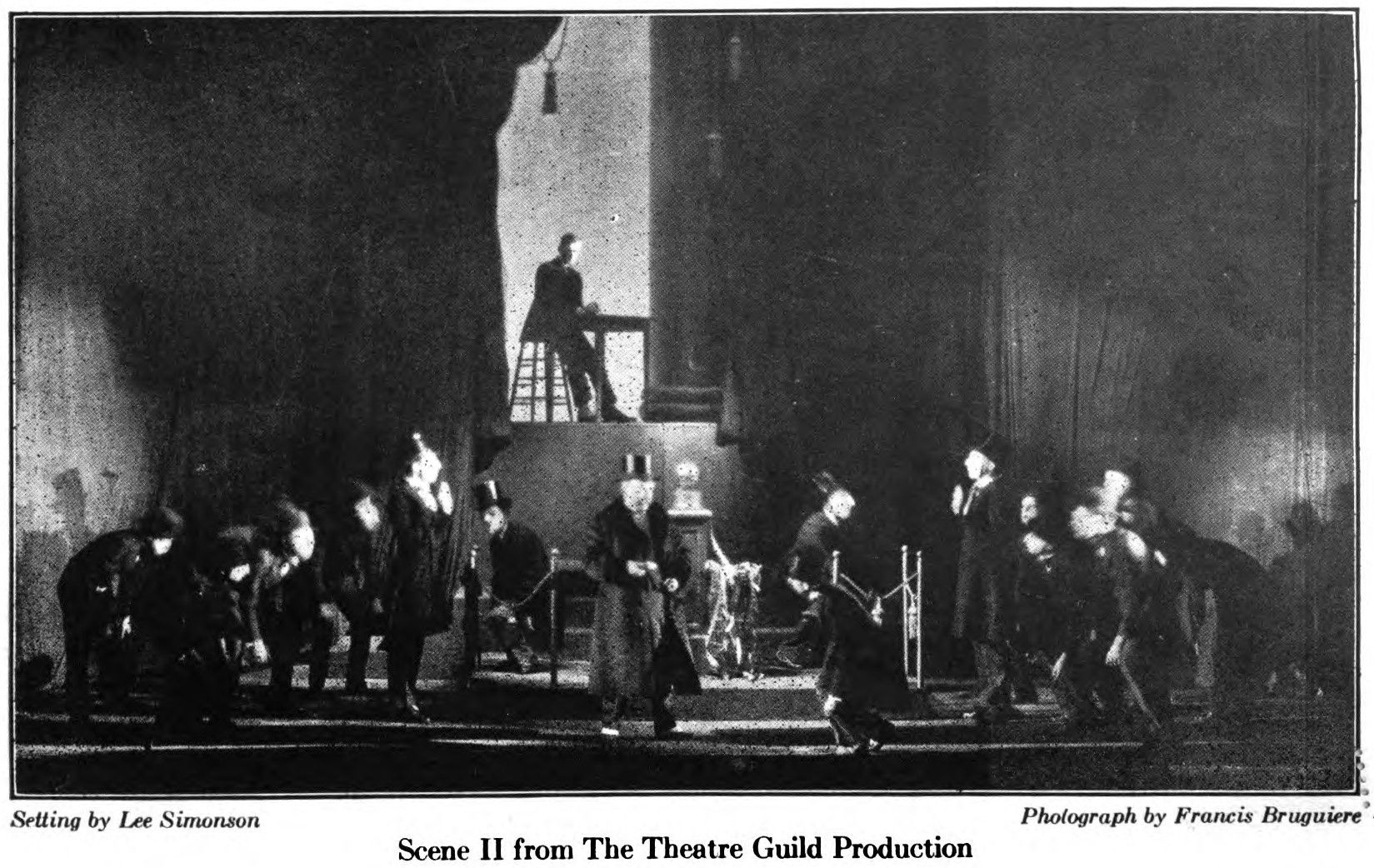
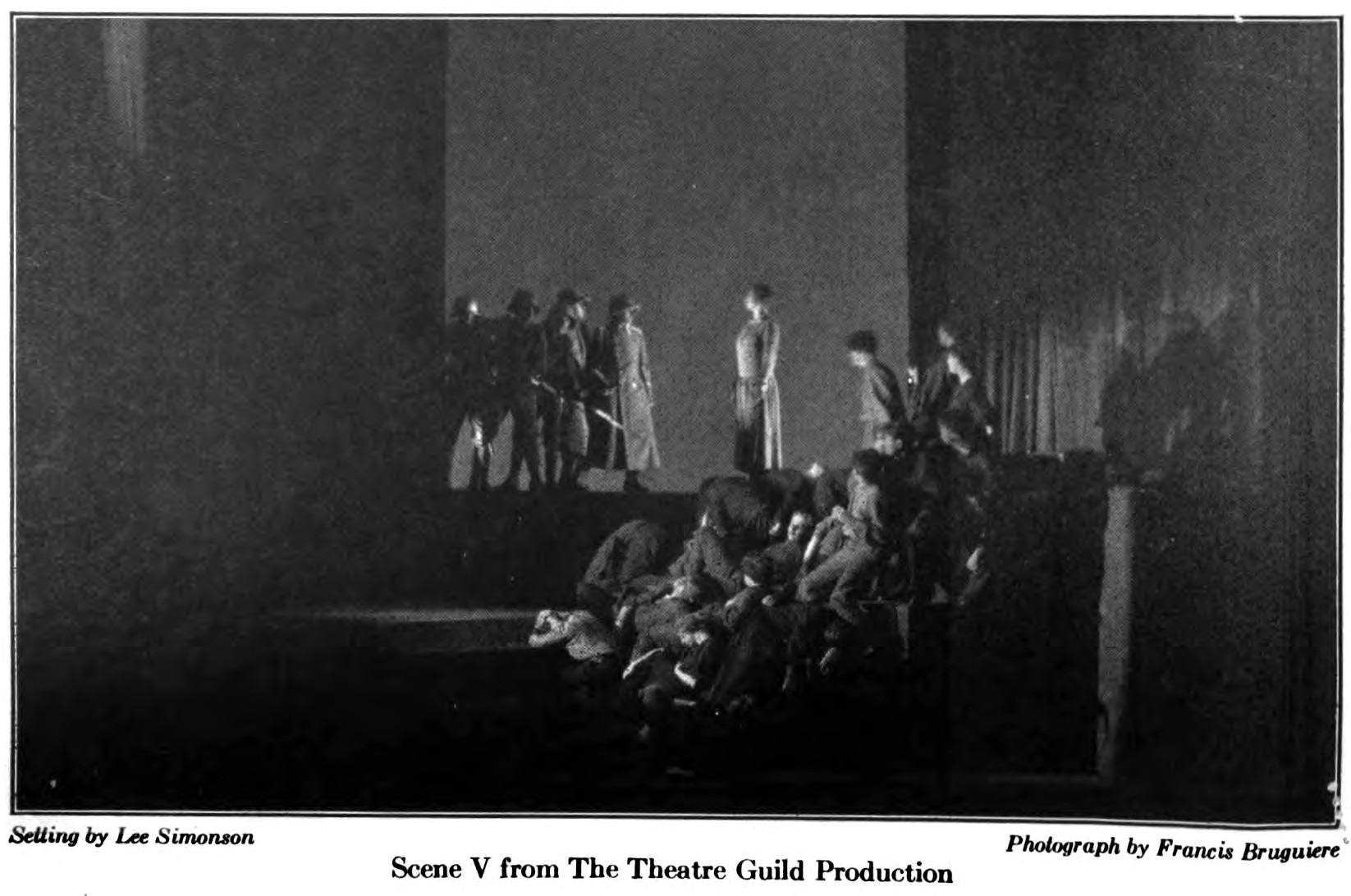
“Man and the Masses” takes up the theme where its forerunner left it. Here war is again the motif; but where in “Die Wandlung” it dominated the characters, in “Man and the Masses” it is no more than a sombre and intensely moving background. The struggle here is between the passions in man rather than between nations. Man as an individual against Man as a member of the community; Man as a part of the Mass alternately yielding to and repudiating the common impulses, the mob emotions of the Mass. This, in essence, is the spiritual conflict projected by Toller’s characters. These characters are, as Toller has pointed out in his preface to the second edition, types rather than persons–only one (the Woman, Sonia Irene L.) is given a name; the rest are just so many figures (the Man, the Nameless One, the Companion, etc.), mouthpieces for elemental and clashing forces. It is a triple struggle in which the three chief protagonists are only symbols. The Man represents the State, the unquestioned faith in government as God, in law-imposing and law-obeying bodies. The Woman is the radical humanitarian; she not only questions the existing order, she challenges it; man, chained to the machine and almost destroyed by the systems of modern civilization, must be freed to find his destiny–and divinity–in communal labour! To the Nameless One, this is pretty, futile sentimentality. The Nameless One stands for ruthless Revolution; men are no more sacred to him than to the reactionary worshipper of the State; he, too, is willing to send thousands to their death for a Principle. Between these opposed but equally merciless antagonisms, the heroine is sacrificed. Hers is the spirit of a new Christ when, her rescue dependent on the death of a single enemy guard, she refuses to escape and cries: “A leader has the right to sacrifice no. one but himself.”
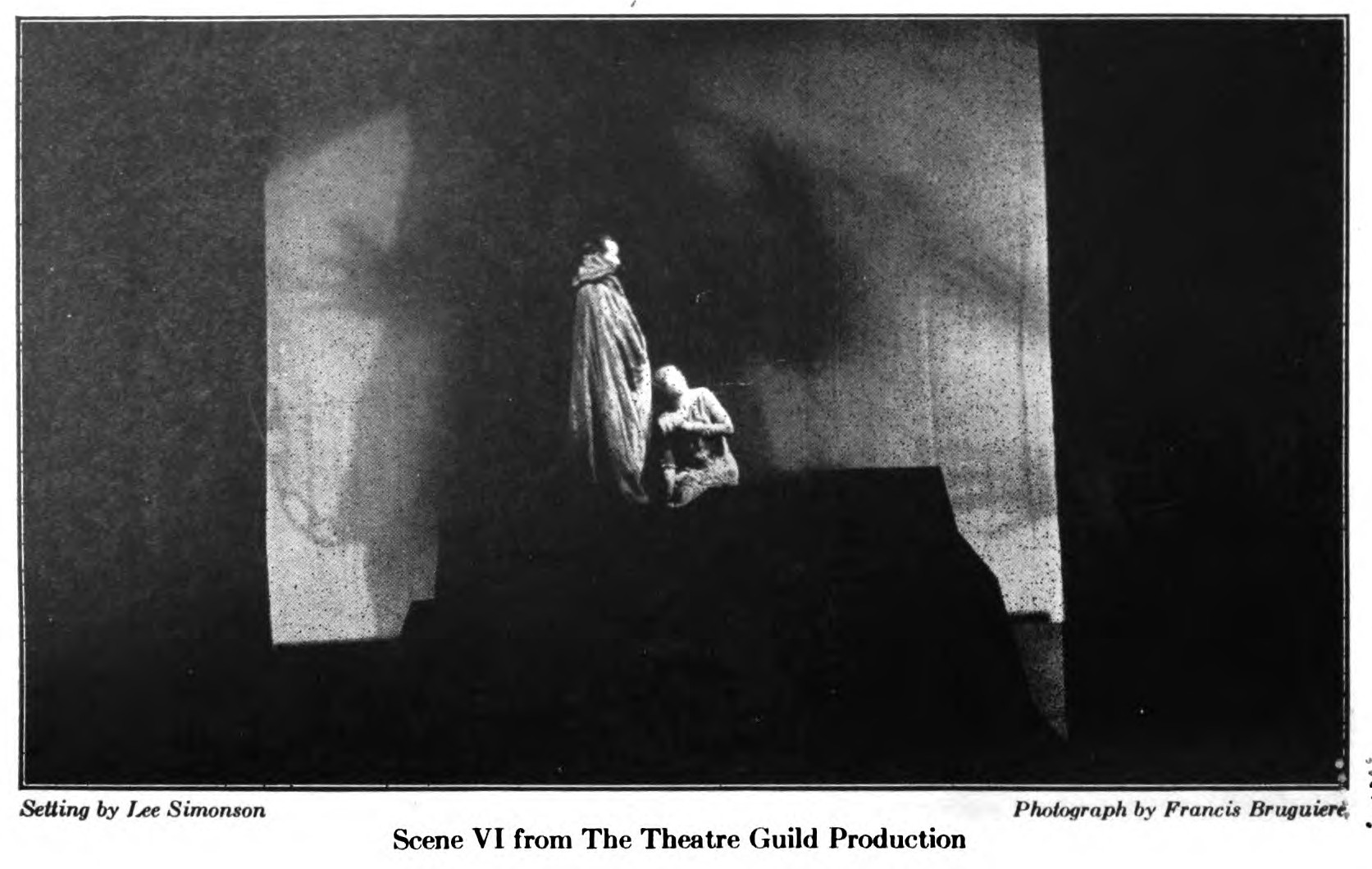
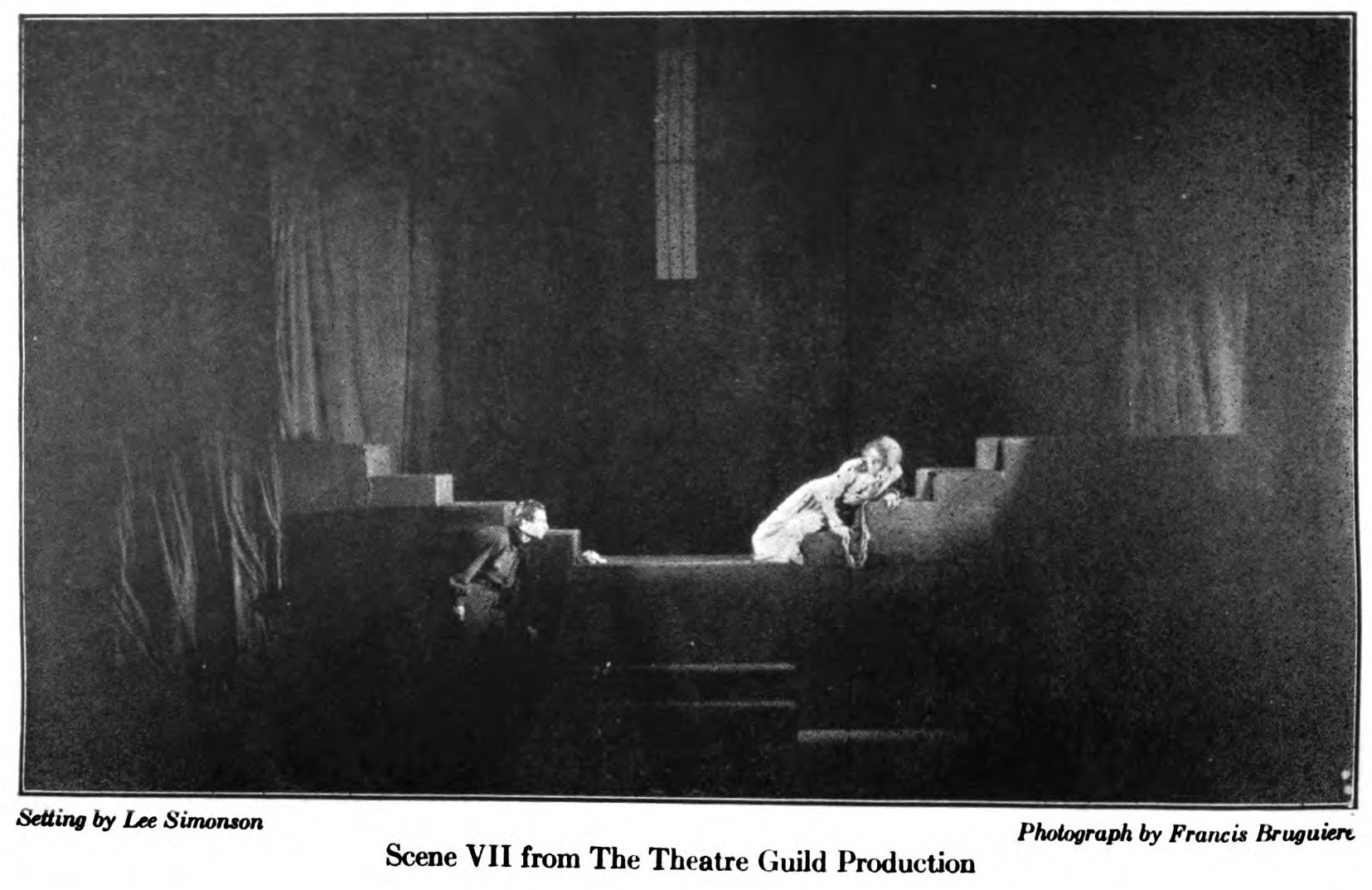
Although there are moments of personal poignance between the woman who has left her circle for the workers and her rigidly orthodox husband, the play is essentially a play of larger passions, in which the alternating scenes (the second, fourth, and sixth) are dream pictures. These scenes take place in the soul of the woman, distortions of fragments of scenes which have already taken place; vivid self-analyses, projections of her tortured mind. It is in these pictures that the dramatist suddenly lifts us to symbolic heights, mysterious, moving, unearthly.
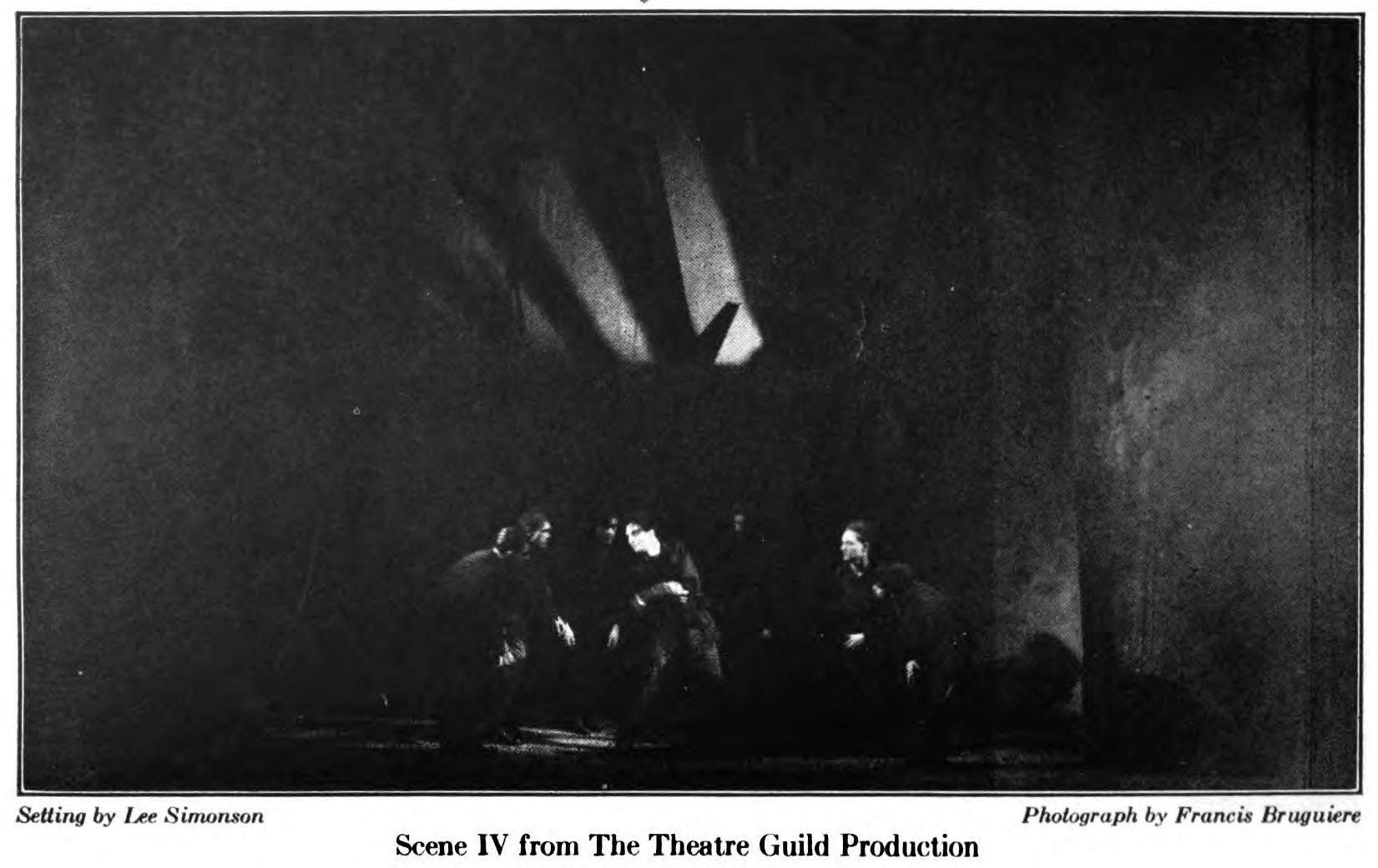
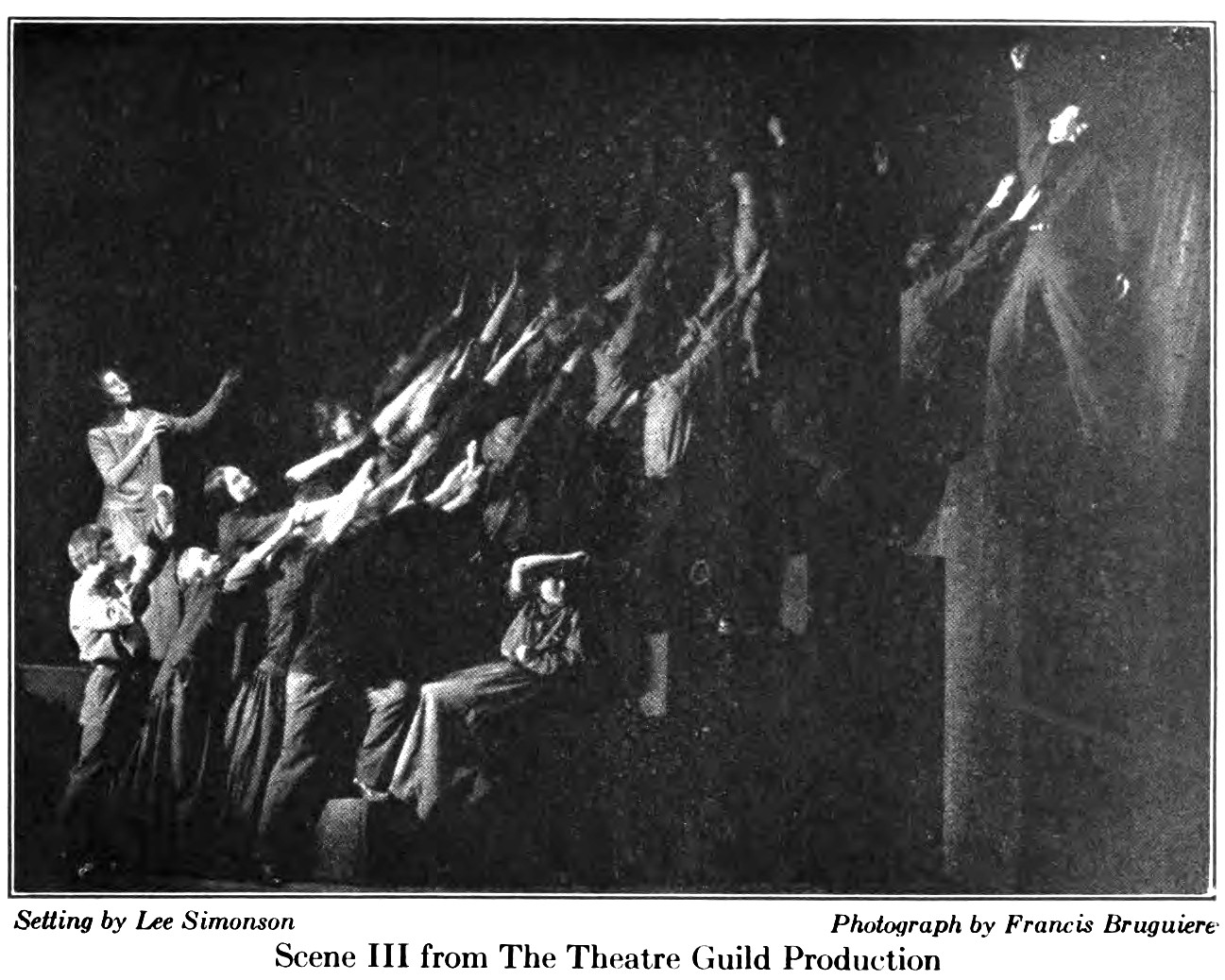
This sense of unearthly space, of a half-dusky, half-dazzling limbo has been created not only by Toller but, as his significant “Letter to a Creative Producer” indicates, even more by the man who staged and directed the play. Those who saw the original production by Jurgen Fehling and his stage designer, Hans Strohbach, at the Berlin Volksbühne (September, 1921), have declared it one of the most memorable expressions of the new simplicity in the theatre. Realism is completely discarded. Light is used arbitrarily, changing suddenly to indicate the rapid changes of mood. Even the author’s explicit directions for the “actual” scenes are thrown overboard. The first scene, for example, calls for a workman’s tavern. On the white-washed wall, pictures of heroes of the masses. But in the first scene, as Fehling and Strohbach produced it–and as Lee Simonson, following their lead, staged it for the Theatre Guild at the Garrick–there are none of these backgrounds and properties, no tavern, no walls, no portraits. There is only a platform with a few steps leading down into a seething darkness. “Upon this platform,” to quote Kenneth Macgowan, “spotted out with three shafts of light, are the two men and the woman in the taut attitudes of wrestlers as they clasp hands, the woman in the middle.” Throughout the play, this intensification of the emotional values is maintained. The voice of the mass rises out of crowded blackness (“Nothing like this voice, coming out of darkness in which faces vaguely begin to hover, has been imagined, much less attempted, in our theatre,” writes Macgowan), lights shoot down upon phalanxes of workers, colours ray out like a fan, flashing and twisting in macabre turbulence…Thus the most vital and spasmodic piece of expressionism has been interpreted on the stage.
II
Apart from these two dramas, Toller has established himself as poet as well as playwright. A sonnet sequence, entitled “Gedichte der Gefangenen” (“Poems of a Prisoner”) appeared in 1921. Two choral works, “Tag des Proletariats” (“Day of the Proletariat”) and “Requiem den erschossenen Brüdern” (“Requiem for Brothers who were shot”) have also been published. In all of these, the one flaming impulse is manifest: the liberation of humanity from the chains of its material slavery. The cry continually ascends: “When will this heavy, stifling night be at an end?” Sometimes Toller’s own reply is equally dark and doubtful—
We do not know. We only know that man
Goes armed against his brother. That no bridge can span
These separate streams of I and You. That no one sees
The way because of utter darkness. That we freeze.
At other times, the answer is more confident; his belief in the people is unshakable. “Perhaps,” he writes, “only after man is crucified can he achieve resurrection and liberty.”
Besides the preceding dramas and his purely poetic work, Toller is the author of “Die Maschinenstürmer” (“The Wreckers”–or, literally, “The Stormers of the Machine), published and produced in 1922—an explosive tragedy which has for its background the Luddite riots, in Nottingham about 1815–and he has in preparation “Die Rache des Verhöhnten Liebhabers” (“The Revenge of the Scorned Lover”) and “Eugen Hinkemann” (“Eugene Hinkemann”). “Die Rache des Verhöhnten Liebhabers” is Toller’s single departure from his chosen subject. It is a glorified puppet play in two acts, suggested by a story of Cardinal Bandello (about 1550) and is gracefully erotic in character. Of “Eugen Hinkemann,” which is a tragedy in three acts, Fritz Droop, Toller’s annotator, writes: “With Eugen Hinkemann,’ Toller returns to political drama…I believe it is not only Toller’s ripest work, but one of the most thrilling dramas of the last decade.”
Although it is true that Toller’s preoccupation with the sufferings of mankind motivates all he creates, it must not be inferred that he is a mere propagandist. He is, first of all, a poet, an emotional creator who is torn by his sympathy with both sides. He burns with one great cleansing flame but, as Scheffauer has said: “He offers his fire and brimstone in vessels shaped by his art.”
III
A word as to Toller’s idiom. Toller’s style is a highly individualized one, abrupt, elliptical, and rich in unspoken overtones. It is, for the most part, a grave, sonorous speech continually broken up by a sharp and intense staccato; the tone wavers between that of irregular blank verse and an almost ecstatic. prose. The translator, in an effort to maintain this flexibility, has had to compromise, sacrificing a syllable here, a nuance there. In spite of some of the sudden transitions, however, it seemed most important to preserve the pattern of this speech–a strange combination of elastic blank verse and vers libre interrupted by bursts of lyrical rhapsody. Many of the word arrangements in the original are Toller’s own, and any weakness in verbal design should be laid, not only to the limitations of the two languages, but to the translator’s own inadaptability.
It remains to say that–assuming the first person as I back toward the wings–I am grateful to Toller himself for much help, especially in the preparation of this preface, and to Lee Simonson and Lucy Wiener for many critical suggestions. I regret that, having listed Toller’s other work in the original, I cannot append a complete English bibliography. However, for those further interested, there are three essays of importance: “The Drama on Fire,” by Herman George Scheffauer (in The Double Dealer–a monthly magazine published at New Orleans–September, 1922), “The Machine-Stormers,” also by Scheffauer (in The Freeman, January 17, 1923), and the chapter entitled “Masse-Mensch” (Man and the Masses) from the illuminating volume, “Continental Stagecraft,” by Kenneth Macgowan and Robert Edmond Jones. My indebtedness is recorded if not discharged by this acknowledgment.
NEW YORK CITY, January, 1923. L.U.
FOREWORD TO THE GERMAN SECOND EDITION
(This is a translation of the Foreword to the German Second Edition which appeared in 1922. L.U.)
A Letter to a Creative Producer
There are critics who complain that, although the “dream scenes” are already sufficiently dream-like, you gave the “realistic scenes” a visionary air, and that thus you blur the boundary between dream and reality. I wish emphatically to declare that you have altogether realized my intention. These “realistic” pictures are no typical naturalistic scenes. With the exception of Sonia, the types are not individualized. What can be realistic in my drama “Man and the Masses”? Only the spiritual, the intellectual qualities. As a politician, I rate the individual, the group, the official, the protagonist, the economic factor, as actualities. As an artist, I question these “realistic” occurrences. (“It is still a question whether we personally exist.”)
In a prison yard I see prisoners saw wood in monotonous rhythm. Men, I think feelingly. This one may be a labourer; that one, a peasant; yonder, perhaps, a court clerk. I see the room in which the labourer lived, see his little peculiarities, the particular gesture with which he tossed aside a match, embraced a woman, passed through the factory gate. And just as plainly I see the broad-shouldered peasant and the wizened, narrow-chested clerk. Then…suddenly…they are no longer men, X, Y, and Z, but ghastly marionettes, twitched by an inexorable fate.
Two women once passed the cell window as I was clinging to the iron bars. Seemingly two old maids. Both wore their white hair bobbed; both wore garments of the same shape, colour, and cut; both carried gray, polka-dotted umbrellas; both shook palsied heads. Not for a second did I see “real people,” who took a stroll through the narrow street of an actual town. I stared at the danse macabre of two old maids, of one old maid and her ghostly counterpart.
***
The drama “Man and the Masses” is a visionary play that fairly “burst” from me in two-and-a-half days. The two nights I was forced to spend in a dark cell in bed were abysses of misery. I seemed to be tortured by visions, by demoniacal faces that tumbled over one another in grotesque disorder. In the morning, I sat down at my table, shivering with an inner fever, and did not cease until my clammy fingers refused further service. I let no one enter my cell, I refused to have it cleaned. I turned in uncontrollable anger on the comrades who came to question or to help me in any way.
The slow but happy labour of shaping and condensing took an entire year.
To-day I look at the drama “Man and the Masses” critically; I realize the limitations of its form–a result of the inhibitions to which, in spite of everything, I was subject at the time, a mortification, a sense of shame, which evaded the artistic use of personal experiences and naked confession, which yet could not summon the courage of pure artistic objectiveness. The gigantic force of the days of the revolution had not yet shaped itself into a soul picture; it was, in a torturing state, the “soul element,” the “soul in chaos.”
I am surprised at the lack of understanding manifested in some of the critiques. The reason may be (most probably is) the deficiencies in the construction. Possibly an added reason is the fact that, to the bourgeois critic, some terms are simply “newspaper talk,” “editorial phrases”; while to one of us, who lives nearer the proletariat, who knows its world, whose work emanates from the mental and moral world of the people, these words are the expression of the most comprehensive, upheaving intellectual conflicts.
There can be no question about it: that which in the social world and its artistic representation seems to the bourgeois a fight in barren phrases is to the proletariat a tragic problem, a disintegrating strife. And what
to the bourgeois seems “deep” and “important” as an expression of most agitating mental conflict, leaves the proletariat quite unmoved.
I need not emphasize that proletariat art, no less than all other, must spring from a human source, must in its depths be all-encompassing, all-enfolding, like life, like death. There is a proletariat art only in so far as its creator shapes the manifold forms of proletariat life and feeling into the eternal humanities.
FORTRESS OF NIEDERSCHÖNENFELD, October, 1921. ERNST TOLLER.
Access to original book: https://hdl.handle.net/2027/mdp.39015033352918
·

