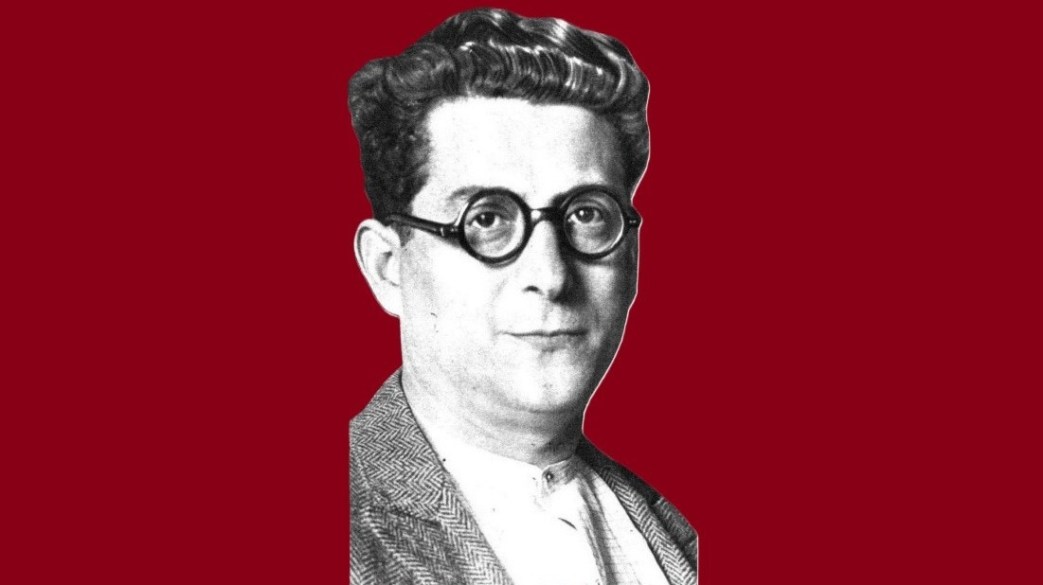
Nin, here as a leading figure in the Profintern, laments that lack of labor action in defense of the working class of Bulgaria as the fascistic Zankov government set out to annihilate its organizations.
‘Bulgaria and the International Trade Union Movement’ by Andrés Nin from International Press Correspondence. Vol. 5 No. 59. July 23, 1925.
In Bulgaria blood continues to flow ceaselessly. The most self-sacrificing champions of the masses of Bulgarian workers and peasants, after having fought heroically since September 1923 against the most horrible of all tyrannies, have been swept from the field of battle by every means that the sadistic imagination of a “Professor” can conjure up and place at the service of the bourgeois dictatorship. The courts martial continue to work uninterruptedly. Gallows have been erected in every square. Thousands of workers and peasants fill the prisons, or are brutally murdered.
Bulgaria has become a mighty field of pain, a place of torment, a Dantesque hell: Since the bloody suppression of the Paris Commune in 1871 the working masses have not suffered such a frightful suppression, have not undergone such a brutal extermination, as they have suffered in this little Balkan country since the day that Zankov established his bloody dictatorship by a bold coup d’etat.
In face of these events, it must be declared that the international proletariat has not quite done its duty; it has not reacted with sufficient energy against this systematic and carefully organised massacre of its Bulgarian brothers. There was a time before the war and before the October revolution when the executioner Czars of Russia could not visit the great European capitals without hearing the indignant curses and shouts of the working class. But now it has been possible for one of the executioner minister of Zankov’s government, Kalfov, to pass unpunished through almost the whole of Europe. Here and there, on the initiative of the Communist Parties and of the revolutionary Trade Unions, protest meetings have been organised against the Bulgarian atrocities: But the voice of the proletariat has not been raised loudly enough to stay the hand of the executioner.
Mass action has been lacking, united action among all the workers organisations. The Second International and the Amsterdam International have again been on the other side of the barricades. And how could this be otherwise, when in Bulgaria itself the Socialist leaders and the leaders of the reformist Trade Unions are hand in hand with the Zankov dictatorship. Did they not help to establish this dictatorship? This is an incontestable fact, and the reformist leaders will not succeed in concealing it. History will record their heavy responsibility. They will never be able to rid themselves of it.
But the leaders of the Amsterdam International must declare clearly and distinctly whether they are on the side of the executioners or of the victims. Whether they who are always ready to join in bourgeois protests against the so-called “Bolshevist terror”, declare themselves in agreement with the methods pursed by the Zankov government. We should even be content if they would give us a modest explanation of whether they are in agreement with the systematic destruction of the revolutionary trade unions, in which almost the whole of the organised workers are united? They are probably aware that all our Trade Unions have been closed, the Trade Union newspapers prohibited, many of the secretaries of the organisations killed, the Trade Union premises and funds simply stolen by Zankov and his helpers, and the simple fact of membership in a Trade Union regarded as a crime.
If the Amsterdam leaders want to inform themselves more exactly on the nameless crimes committed in Bulgarian under the cloak of the “Defence of civilisation”, they only need to apply to the leaders of their Bulgarian section, the sole one still able to carry on its functions legally in the whole country, all the fighting organisations of the workers and peasants being unmercifully destroyed. If but a single spark of proletarian dignity is left to them, they would then have to do their utmost to put an end to Zankov’s bloody regime, to the indescribable atrocities being committed in Bulgaria, and to join the revolutionary trade union organisations for energetic common action.
Never before was the United Front of all Trade Union Organisations so urgent. The aim is clear; no sincere revolutionary fighter can feel a moment’s doubt. This aim is the defence of the most elementary right of coalition and organisation among the workers, employees, and peasants; the arousing of the working class of all countries to action against a regime worthy of the middle ages, and a dark blot on the civilisation of today.
Once more, you gentlemen of the Amsterdam International: Are you with the executioners or with the victims? Are you with Zankov, or with the workers who are defending their class organisation with their lives?
The Bulgarian workers, and with them the proletariats of all countries, including the proletariat which you assert you represent, await your answer.
International Press Correspondence, widely known as”Inprecorr” was published by the Executive Committee of the Communist International (ECCI) regularly in German and English, occasionally in many other languages, beginning in 1921 and lasting in English until 1938. Inprecorr’s role was to supply translated articles to the English-speaking press of the International from the Comintern’s different sections, as well as news and statements from the ECCI. Many ‘Daily Worker’ and ‘Communist’ articles originated in Inprecorr, and it also published articles by American comrades for use in other countries. It was published at least weekly, and often thrice weekly. A major contributor to the Communist press in the U.S., Inprecorr is an invaluable English-language source on the history of the Communist International and its sections.
PDF of full issue: https://www.marxists.org/history/international/comintern/inprecor/1925/v05n59-jul-23-1925-inprecor.pdf

