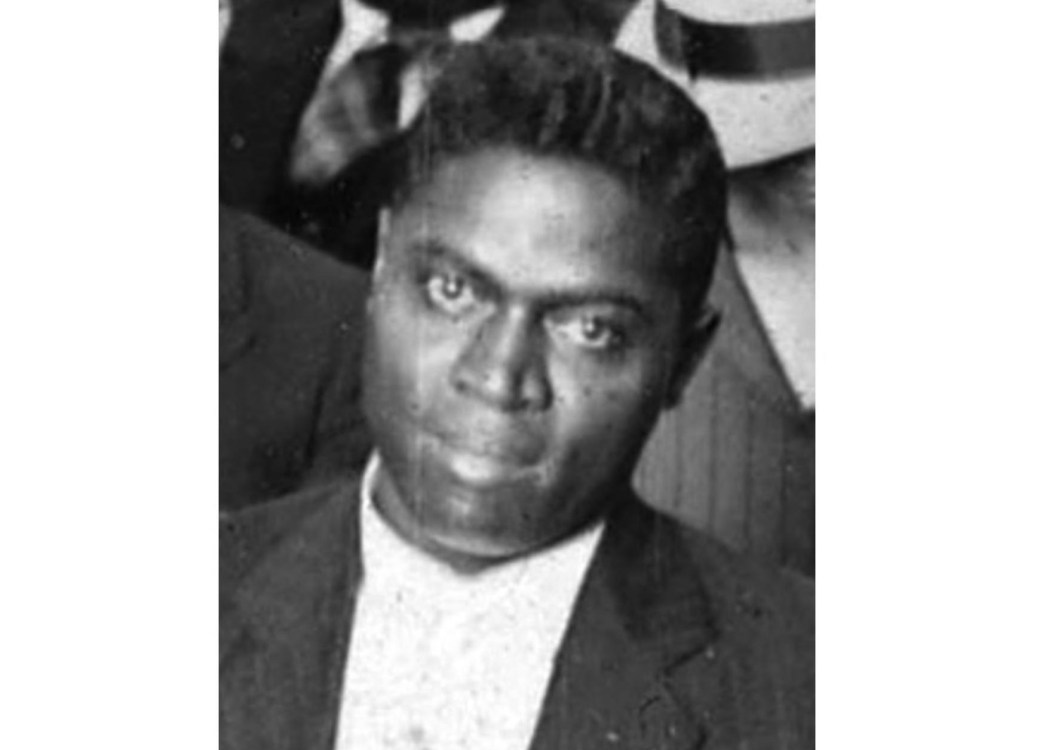
The activism of Jamaica-born W.A. Domingo (Wilfred Adolphus Domingo) saw him participate in three of the main organizations of Black radicalism of the WWI-era writing for The Messenger, The Negro World, and The Crusader. First he joined the Socialist Party in the mid 1910s and worked in its Harlem Branch with Messenger editors A. Philip Randolph and Chandler Owen. In 1919 he became the first editor of fellow-Jamaican Marcus Garvey’s Negro World before political differences became insurmountable, whereby he joined the African Blood Brotherhood led by Cyril Briggs. Moving back and forth between the States and Jamaica over his life, his central commitment was to Jamaican independence.
‘Capitalism the Basis of Colonialism’ by W.A. Domingo from The Messenger. Vol. 2 No. 8. August, 1919.
The various colonial empires of the world are maintained by force and trickery and are devoid of altruism in any shape or form. The motivating influence that brought them into existence was the intention of a better armed race or nation to reduce weaker races and nations to the point where they would be compelled to directly or indirectly produce wealth for the benefit of the dominant class of the “Mother Country.” The true basis of all empires is economic in spite of the fact that apologists for colonial expansion exhaust all their ingenuity to assign moral intent to countries whose imperial rule is based upon openly exercised, or slightly veiled force. This is as much true of the frank and brutal imperialism of Rome, Germany, France, Spain, Japan and Great Britain as it is of the less visible imperialism of the United States. The former countries, more ingenuous than the latter, in acquiring new territory rarely, if ever, attempted to cover up their intentions with hypocritical cant or resort to the outward forms of a “purchase”; they usually took whatever they had the power to seize and explained the conquest afterwards.
A very natural question to ask is: “Why do countries have colonies?” This is easily explained. In the first place, because of the capitalistic development of most “civilized” countries the vast majority of the population have been expropriated from the land and live in cities in ever increasing numbers. In the cities, because of the wonderful productivity of modern machines more goods are produced than can be bought up by the population of the producing country, hence the need for outlets in foreign countries. This condition makes foreign markets necessary. The only markets that can absorb any appreciable portion of manufactured goods are located in such countries as cannot or ARE NOT PERMITTED to develop industrially. To safeguard and insure a market against competition from other industrially developed and exploiting countries, political control of the market is essential. Hence the imposing of the rule of the industrially developed exporting country upon the industrially undeveloped and importing country. However, sometimes the prospective colony may have infant industries of its own–enough to supply its own needs or it may have ambitions to become self-sufficient. In such cases the “Mother” or exploiting country ordinarily effectuates the death of the existing industries or renders the ambition to create new industries, stillborn. This is illustrated by the manner in which the weaving and other industries of India were killed in the interest of English manufacturers and by the way in which the Jamaican government (which is dominated by English officials appointed from Downing Street, London) strangled the soap factory in Kingston some years ago. The first reason for colonies is to provide safe markets for the surplus commodities of the “Mother Country.”
Secondly, because of the needs of modern industry and the inability of manufacturing countries located in temperate regions to produce them, tropical products such as copra, rubber, coffee, cocoa, balata, pissava and hides have to be imported. In order that the supply will be steady and uninterrupted, political control of the source is necessary. This control manifests itself in the form of preferential tariffs between the colony and the “Mother Country.” It explains the insistent demands of the Unionists of Great Britain for a preferential tariff with the colonies and the reason why Cuban imports into America are given a substantial rebate of Customs duties.
The second reason for colonies is, therefore, to insure the mother country a safe and regular source of supply of raw materials.
Thirdly, because of the contradiction of modern capitalist civilization, instead of machines being a boon to the workers they have proven to be a curse. In all industrialized countries vast armies of unemployed exist who have been created by the man being displaced by his creature–the machine. These unemployed men and women serve two purposes. One, by their pressure on the factory gate to reduce wages to the lowest point of subsistence; two, by their ever-increasing numbers enlarge the proletarian population, thereby making of it a portentous menace to the system that created it. So as to avoid the latter phase from becoming too dangerous, the mother country, that is, the class that controls it, needs some place to which the “surplus” population can be conveniently exported. Hence, the various efforts to send unemployed Europeans to Australia, Canada, South Africa, New Zealand and other temperate countries. Germany, who came on the colonial field late, had to yield to this imperative economic law even though political control of her exported subjects was lost when they went to colonies of other exporting countries or to sparsely populated sovereign countries like Brazil. This in a measure explains the dual citizenship laws of Germany.
The third reason for colonies is to find congenial territory to which to export the “surplus” population of the mother country.
The fourth and last important reason for colonies is the intention to create sinecures for impecunious sons of the mother country, who by virtue of lineage and tradition belong to the class from which bureaucrats are largely recruited. This last reason which is the visible manifestation of actual political control of colonies serves a dual purpose. First, it serves as a guarantee that the colonial government, dominated by sons of the mother country, will not be diverted into economic and political activities and alliances inimical to the interests of the land of their birth; and, next, by paying huge salaries and enormous pensions to these officials, substantial amounts are yearly extracted from the colonies and exported to enrich the Mother Country. To sum up: All Empires, no matter how seemingly benevolent, are based upon force and maintain the structural form of a central, manufacturing, exporting and exploiting “Mother” country, whose influence radiates to the “colonies” through her possession of a merchant marine, political control and expropriation of the natives. These bases of influence in their turn have behind them power in the form of an army and navy.
Colonialism, therefore, is a product of Capitalism which may be defined as that system of wealth production and distribution that is based upon a favored few living off and at the expense of the oppressed many. With the death of capitalism in the Mother or central country, will come the collapse of imperialism and its train or murder, high taxes, poverty, oppression and exploitation in the Colonies.
The Messenger was founded and published in New York City by A. Phillip Randolph and Chandler Owen in 1917 after they both joined the Socialist Party of America. The Messenger opposed World War I, conscription and supported the Bolshevik Revolution, though it remained loyal to the Socialist Party when the left split in 1919. It sought to promote a labor-orientated Black leadership, “New Crowd Negroes,” as explicitly opposed to the positions of both WEB DuBois and Booker T Washington at the time. Both Owen and Randolph were arrested under the Espionage Act in an attempt to disrupt The Messenger. Eventually, The Messenger became less political and more trade union focused. After the departure of and Owen, the focus again shifted to arts and culture. The Messenger ceased publishing in 1928. Its early issues contain invaluable articles on the early Black left.
PDF of full issue: https://www.marxists.org/history/usa/pubs/messenger/1919-08-v2n08-aug-Messenger.pdf

