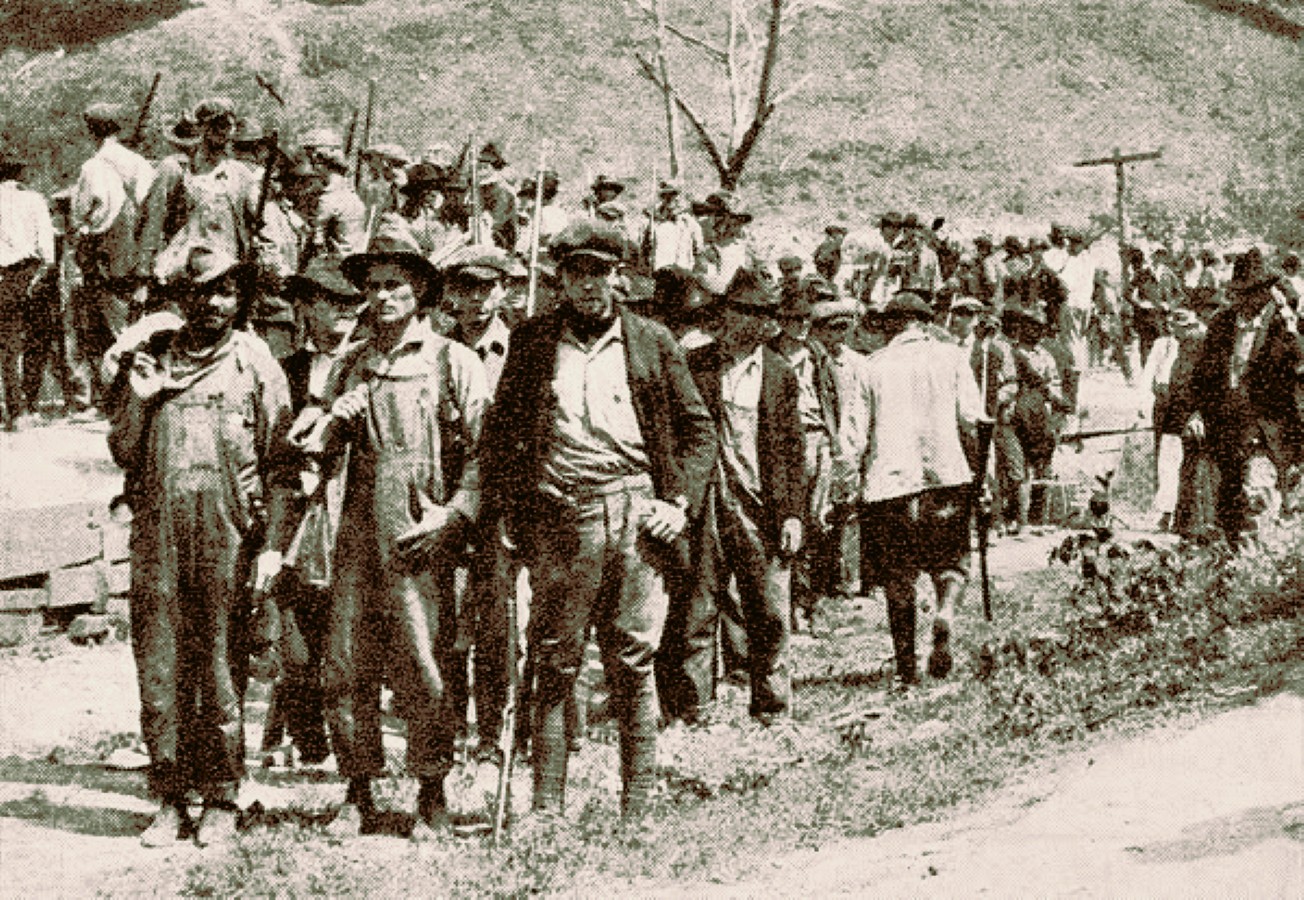
Our class’s history in this country is as rich in solidarity and in honorable rebellion as any. Five dispatches from Art Shields below, written with his usual elucidating details and partisan empathy, sent within days from the scene of September 1921’s insurgent march of rednecked miner. While not a one-off, or the culmination of the long war in West Virginia, what is now known to us as the Battle of Blair Mountain was the largest and most dramatic moment in that generations-long struggle waged by union communities for their rights, lives, and dignity against the despotism of the coal company and lawlessness of their state-sanctioned legal enforcers. Great stuff.
‘Class War in West Virginia: The March of the Miners’ by Art Shields from Industrial Worker. Vol. 3 Nos. 23 & 24. September 17 & 24, 1921.
I. Terrorism in West Virginia; Mine Owners Bomb Babies.
Charleston, W. Va. Bombs falling from attacking airplanes on five little mining villages filled with defenseless women and children behind the lines in the northeastern part of Logan county have infuriated the miners beyond measure, and fighting has broken out afresh. The miners have forced their way nearly two miles beyond Blair mountain into the “forbidden lands” of the Baldwin-Felts.
Peace prevails only along the ten miles of front actually occupied by U.S. soldiers. More troops are being rushed in to patrol the rest of the 15-mile war line.
The miners say they will continue their victorious drive on the gunmen till sufficient soldiers come to guarantee protection along the entire line.
This cowardly airplane bombing of non-combatants was the last card of a losing game. It came after Chafin had lost a half dozen machine guns and perhaps 40 lives. His ill-assorted army of Baldwin-Felts thugs, state police and unwilling citizen conscripts was on the verge of complete rout. Hundreds had already deserted in spite of savage threats of death from their offices, and the rest were giving ground steadily. Insane with rage, a chapter was taken from the book of war terrorism. Two aviators who had been acting merely as air scouts went out on a different mission, supplied with hastily constructed bombs of large size, made of gas mains loaded with powder and chunks of iron, and with glass containers filled with poison gas. The union mining camps in the little strip of Logan county on the other side of the mountain had long been a thorn in Chafin’s side. Now they were to get it.
The Attack of Jeffery.
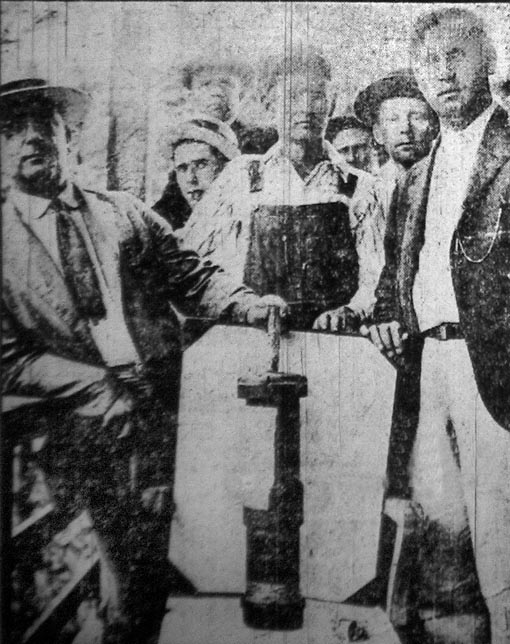
The little village of Jeffery, at the lower end of the union zone, was enjoying a Thursday afternoon the day of the first bomb attack. An old church stood sentinel over women and children feeding their chickens and pigs or talking eagerly of their husbands and fathers on the front more than a mile away. Two women were bending over washtubs, scrubbing on the overalls their men folks would wear into the Jeffery mine when the trouble would be over–when suddenly, almost shaking them to the ground–a huge projectile crashed into the earth not ten feet away. Far up in the skies, seemingly no bigger than a boy’s kite, an enemy airplane was skimming away towards the mountain, too high a mark for a high-power rifle to reach readily. Boys dashed to the hole in the ground and dug up an unexploded bomb–an ugly cylinder of cast iron, 6 inches by 30, with a sliding wooden pin in one end.
Members of the miners’ army, who had studied bomb structure in France, were summoned, and opened the infernal machine. They found that the wooden pin fitted into the cap of a shot-gun shell, and behind the shell was 25 pounds of powder and several hundred iron nuts and bolts. The bomb was designed to fall pin first and explode, but the rudder or “guide” had broken in falling. A hell of destruction in the village had been prevented by the bomb-maker’s inexpertness.
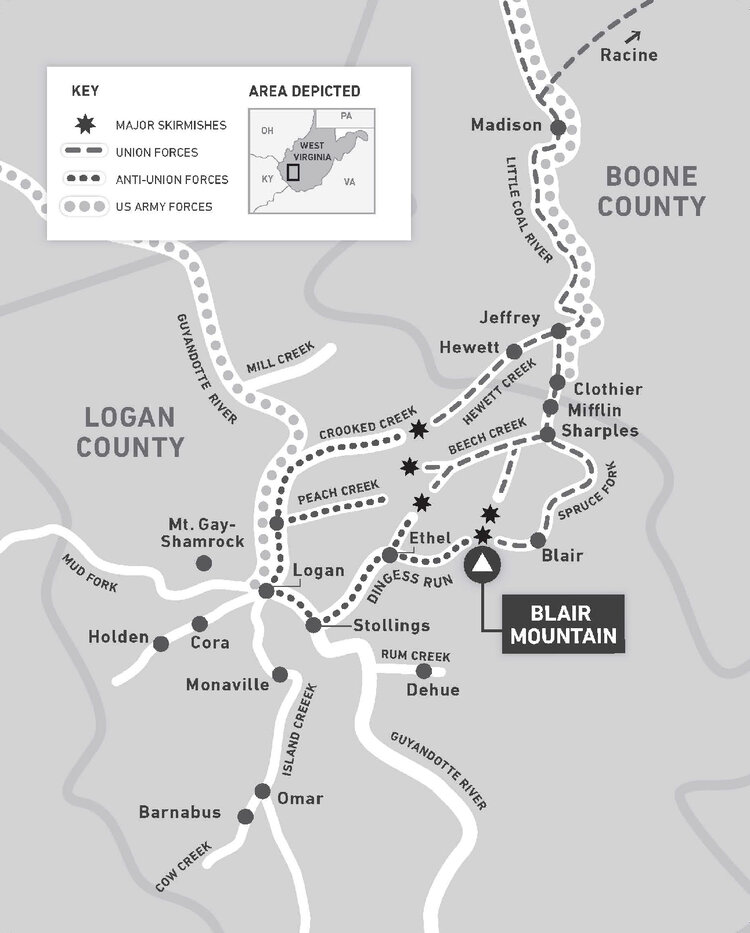
Out of 20 bombs dropped in four villages in three days, only 8 exploded, tearing great holes in the earth but not hitting any dwellings. The aviators flew too high to aim accurately. They flew high in fear of the high-powered rifles of the miners who were detailed back to guard the villages. One aviator, as it was, was almost hit, escaping a rain of bullets only by reckless cavorting in the air.
Gas Bombs.
The inexpertness of the explosive-bomb makers was only exceeded by the lack of chemical knowledge of the men who prepared the poison-gas bombs which the aviators dropped. Not one did the harm intended. One man reported that he felt slightly sick for a few minutes after breathing the heavy greenish fumes that arose from a bursting bottle that hit the ground a few feet from him near Jeffery, but no one else was affected. A chemical analysis of the corks of several bottles disclosed the nature of the material within as chlorine gas. Had this been prepared scientifically it would have left real destruction in its wake. As it was, it simply totaled up as an empty act of would-be terrorism, a futile tour de force of bravado.
A Galvanic Bomb.
One bomb, which failed to explode, nevertheless had a galvanic effect–on rougher citizens than the babes and females it was meant for. This bomb drove into the earth Saturday morning within 20 feet of a body of soldiers who had just come to Jeffery from the little Coal River rail line leading up from St. Albans.
“The dirty s of b-s!” said a corporal who helped dig it up. “Not satisfied with trying to kill women and children, they’re trying to give Uncle Sam’s army hell!” Whether the aviator at his immense height was able to distinguish the boys in khaki from ordinary workingmen and their wives is more than can be told, but the result was to excite the sympathies of the soldiers in favor of the miners, and it is noticeable that no desperate effort was made by the troops then at hand to penetrate into the mountain fastnesses and call off the miners from the pursuit of the operators’ army.
Don Chafin’s Failure.
With the coming of another thousand troops peace will probably be restored all along the irregular line of 15 miles. It will come none too soon to save the Baldwin-Felts thugs from the greatest clean-up they have gotten since the memorable fighting eight years ago when several hundred gunmen were slain. Defeat has marked all the military strategy of Don Chafin this week. In spite of all those tools of modern warfare-airplanes, with gas and bombs, and an array of numerous machine guns–the week has been a record of failure for him. True, Chafin himself is not entirely to blame. He had incompetence to work with. The Baldwin-Felts men are better at beating up or murdering lone miners than at real war, and the citizen conscripts who made up a large part of the forces were unwilling and inefficient fighters,
Capturing the Machine Guns.
Capturing the machine gun nests in the mountains was exciting work for the miners, at that. Every peak along the dividing mountain was occupied with a machine gun and its crew of four or five men in the early stages of the fighting, and much of the miners’ work consisted of capturing or dislodging these batteries. It was hot work. One machine gun on top of a hill planted to corn–one of the few cultivated spots on the mountain–was taken by storm in sensational fashion. The miners dashed up the field under fire. For some reason the gun could not be depressed below a certain angle, and by bending low the men dashed up unscathed, while the corn was mowed down above their heads.
Desperate fighting marked the capture of machine guns near Dingess Run, and at the upper end of Blair Mountain (the opposite end of the fighting line, near Jeffery). These death-dealing centers had to be dealt with before the miners could advance, so after locating the nests snipers systematically set to work to reduce the crews about the guns. In most cases the remnant of a machine gun crew fled after one or two men had been picked off, or managed to remove the gun behind the lines. This took a week’s hard work, and even a few are still active, through failure to locate them exactly. Altogether some six machine guns were captured and several times that many were dislodged. All this was not done without loss of life. One machine gun in Blair Mountain took a toll of two men before its operators fled. But with every captured machine gun the Chafin forces were that much weaker and the miners that much stronger. The captured guns were placed in the hands of young men who had learned how to use them “over there.” More than one-third of the workers’ army were ex-soldiers.
Rifle Still Supreme.
But in spite of all the machine gun fighting the week of battle clearly demonstrated the superiority of the rifle for this kind of engagement. In such rocky, scrubby mountain land as Logan county, the machine gun loses much of its effectiveness. Its field for sweeping is too small, and snipers can approach too near.
On the other hand, the man with the rifle is free to move rapidly from covert to covert and can take advantage of an instant’s exposure of the enemy.
Reporters Wounded.
Not all the casualties were confined to the fighters. Four “innocent bystanders” were nipped while slipping into the forbidden land of the Baldwin-Felts, where even capitalist reporters are not wanted, as a reader of John J. Leary’s series of articles on Logan county in the New York World two years ago could find without testing it for himself. But these four wanted to see for themselves what murders and strange things were done in Don Chafin’s country, so they got a guide Saturday morning and by extraordinary luck, during the temporary lull that existed for a while, managed to penetrate four miles behind the lines before the valley came. Down went Boyden Sparkes of the New York Tribune, with a bullet in his leg and another one through the flesh of his scalp: Donald Craig of the New York Herald felt the path of a bullet along his temple and flopped down for safety; Harold Jacobs of the United Press tumbled with a ricochet bullet striking his knee, and Miss Mildred Morris, a correspondent from Washington, D.C., was scratched on the wrist in falling.
They cried out that they were just newspaper folk, and furious state troopers, coming on the scene, after making them put up their hands, cursed them heartily for coming where they were not wanted. They were taken captives to Logan city in an automobile, where they got further cursing, the troopers and Baldwin-Felts men devoting most of their profanity and lewd talk to the woman in the case.
“Why didn’t you challenge us?” Jacobs ventured to ask his captors. “I have been held up 50 times by the miners and have never been shot at.”
“We believe in shooting first and firing afterwards,” growled the thugs.
The whole experience did not sweeten the feelings of the reporters towards the gunmen of West Virginia and the whole affair did not tend to improve the publicity of Guyan Valley, from the standpoint of the coal operators and their henchmen.
Reign of Terror in Logan.
Logan county is under a reign of terror that can only be properly described by comparing it with the mine feudalism of Colorado at its worst. Piecemeal bits coming from refugees escaping from conscription indicate a horror-fest whose tale in its entirety will probably never be told. Several well-confirmed reports tell of a man whose brains were blown out in Logan county jail for refusing to join Chafin’s army. Other murders have taken place for the same reason, it is said, the official version being that they were slain by the miners.
Virtual conscription is enforced, state troopers and Baldwin-Felts men making the rounds of homes throughout the countryside with the curt message, “You are wanted at the courthouse.” There guns are thrust into men’s faces and they are ordered into automobiles at once, on threat of death, for the front.
These tales would seem incredible anywhere but in Logan county, where the constitution of the United States troubles no more than the revenue laws.
There are four other counties where the gunmen rule, but Logan is the hub of the Baldwin-Felts system. Here now are coming in the other war leaders of the coal barons, from Mercer, Mingo, McDowell and Wyoming counties, with reinforcements. Here came Sheriff Bill Hatfield of McDowell the other day–Bill Hatfield, who could not spare one single man to protect Sid Hatfield and Ed Chambers from murder, but who has one thousand extra men for Don Chafin.
All these war chiefs are loyal retainers of the coal barons, but standing high over the whole crew is Don Chafin himself–Don Chafin, who is no mere servant of the operators, but their equal, an operator himself–a baron who does some of his own fighting–an atavism in modern society.
But Don Chafin is doing none of the actual fighting in this present war. In the present conflict he is generalissimo from the courthouse, fearing that death lurks a very short distance away from that stronghold.
***
II.
Charleston, W. Va. Ten thousand armed miners were pressing Don Chafin’s mine guards hard in the mountain passes of northeast Logan county just before the arrival of the United States troops Saturday morning, and only the presence of these troops saved the operators’ forces from disastrous punishment. Thirty to 40 were already reported slain; miners escaping from the “forbidden land” tell of truckloads of dead coming back from the front.
These refugees say that Chafin and his lieutenants are keenly disappointed at the failure of their machine guns to do the damage they had calculated on. The miners used old-fashioned frontier tactics, avoiding careless exposure and taking advantage of every rock, tree and bush in their advance. They have lost fewer men than their opponents.
The battle front extended 15 miles along the mountain ridge which divides the little organized strip from the rest of Logan county. Heaviest concentration of the miners’ forces was at Dingess Run, to the north, the largest of the passes running through to the Chafin territory, and Jeffreys, to the south.
The workers’ army was made up of volunteers from all the union counties of West Virginia, with a scattering of men from Indiana, Ohio, Kentucky, and other states, and a number of bold spirits who escaped from the carefully guarded domain of Don Chafin to fight with their fellow workers. One-third are veterans from overseas, quite convinced that they are engaged in a real battle for freedom.
Don Chafin’s Army.
Against them was a mixed force of several thousand men from the Baldwin-Felts forces of four counties, other mine guards and special deputies, and a small number of nonunion miners from Logan county who yielded to the promises and threats of the recruiting agents for the operators’ army. Twenty dollars a day had been offered to any Logan county miner joining the White Guard of Don Chafin, say the men who broke through the lines. “And you sure have to be diplomatic in refusing to fight for Don while you are in his country,” said one of these men. “If you give your real reason you’ll just as likely as not be filled full of lead, least you’ll get will be a beating.” While the fighting was going on in the northeast nearly every mine in Logan county, the richest mining region in the United States, was shut down. “The first time our mine has closed in 17 years. Damn those fool miners!” I heard one young operator growl on a smoking car coming into Charleston. The companies see the impossibility of keeping the men at work during this excitement, One and all the newspapers in this district with the exception of the labor “Federationist,” have been heaping abuse on the miners and hoping against hope for their defeat. Especially bitter are they because the miners failed to lay down their arms and go home as President Harding’s. But the miners proclamation ordered. They have their own reasons for protecting their front.
“A fine thing it would be for us to disarm and go home and leave these miners of northeastern Logan county and their wives and children to the tender mercies of the gunmen,” they told personal representatives of William M. Petry, vice-president and acting chief of District No. 17, who brought them the text of the president’s proclamation. “No, indeed!” they sent word back to Petry. “We stay here till the gunmen are beaten or till the troops come. We learned our lesson August 27th.”
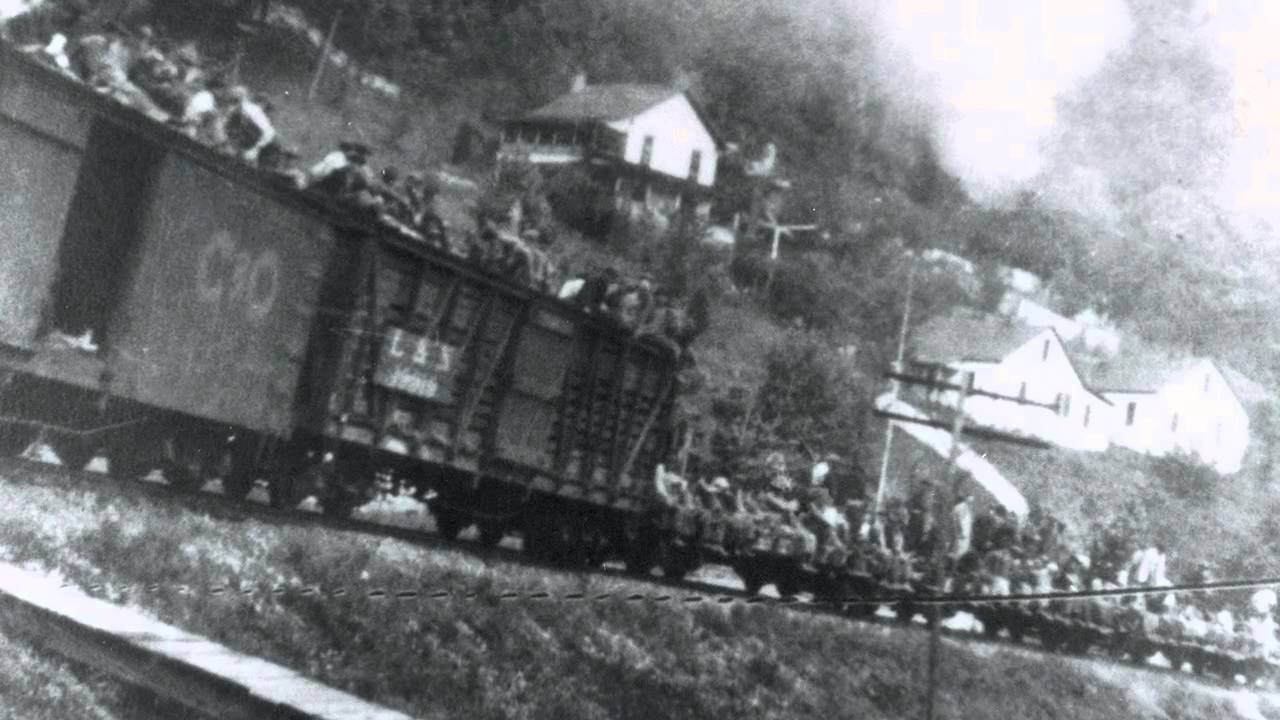
On August 27th, the date referred to, two miners were murdered, two others wounded, and the women and children in the mining colonies of this unionized part of Logan county were terrorized by countless shots fired through their homes. It was the day after the first army had disbanded and gone to its homes in response to the request of President Keeney and Secretary Mooney. Assurance had been given by state authorities that the mine guards would be kept in hand, but no sooner had the miners’ army gone away than the thugs swooped down on the unprotected camps. This was the spark that fired West Virginia. Immediately the miners reassembled, this time determined to see the thing through.
Coming of Troops.
Friday night the first two detachments of United States soldiers detrained at St. Albans to take a branch line the other 30 miles to the battle scene, where they arrived Saturday morning. All were from Camp Sherman and Fort Benjamin Harrison. Other soldiers are coming from Camp Dix in New Jersey. Eleven airplanes passed over Charleston Friday night, flying to the Logan county sector. These are United States government airplanes.
The miners’ attitude regarding the troops was that they would be welcome, provided they impartially disarm both sides. If the guns are taken away from the mine thugs, they say, nothing will prevent the unionization of Logan county, which has remained nonunion only because of the large private army concentrated there–in defiance of federal law.
***
III. Sheriff Murders Workers; Union Men Shot from Behind.
Charleston, W. Va., Sept. 7. Silence broods over the mountains in northeastern Logan county which late were alive with machine gun and rifle fire. United States troops are in the recent battle sector.
Searching parties are still looking for missing men, and until they have reported the losses on the miners’ side cannot be definitely known. Only eight deaths are definitely recorded so far, two of them volunteers from Virginia and Kentucky. The total number lost cannot be more than twice that number and is more probably several less. Half of the death wounds were caused by machine-gun bullets.
Don Chafin’s losses are much greater than was at first supposed. The estimate of 40 deaths previously made is far below the actual facts, it now appears. In spite of Chafin’s press bureau’s policy of playing down losses in order to create a good recruiting atmosphere, some inklings of the extent of the disaster to his forces are coming out. Railroad men and refugees tell of great stacks of dead men. One railroad man says he personally counted more than 80 dead in one place, and other refugees declare that they saw nearly as many at other times.
Gross Brutalities.
The story of Joel Lee, colored, is the most astonishing of all. The substance of it is incorporated in an affidavit that is being presented to Governor Morgan. Most of Lee’s story deals with the terrorism in the jail, but incidentally he tells of personally unloading 75 bodies from automobile trucks back from the front, and of carrying them into the main room of a packing house in Logan used as a morgue. At one time he counted nearly 300 bodies in this main room, and he says that not quite all of the dead were taken there.
Lee had been through a terrible experience; he told his story through lips that had been terribly mangled in a beating given him when he refused to fight for Chafin, and he said that his “buddy” and another man, a union bricklayer, had been murdered for the same reason, and that all the while he was in the thugs’ power the expectation of immediate death lay over him. It was thought at first that his mind had been deranged by his experiences, but his self-possession of quiet sadness dispelled that opinion in the minds of most of his auditors. I talked with Lee in the headquarters of the United Mine Workers in Charleston and he gave me the impression of perfect sincerity. Whether his count had been accurate or not, I am convinced that he was attempting to deceive no one.
Sheriff’s Violence.
Lee said he came to Charleston this summer with a well-to-do Cleveland family. His wife was with him. One evening during the week of fighting a deputy came to his home and told him to get ready to leave for the front. Lee said he refused to fight. First the deputy tried to argue with him, then hustled him to the prison. In prison he found his “buddy,” another colored man that he was friends within Charleston. The “buddy” stubbornly refused to fight or work for the Logan county forces and was dragged out of his cell, a shot, ringing out shortly after. Lee was told he had been killed. About the same time another prisoner, who said he was a union bricklayer, was killed for the same reason, says Lee. This story is corroborated by eyewitnesses.
Expecting death any minute, Lee consented to do noncombatant work. He was motored to Blair Mountain, where he assisted in the commissariat and hospital work. Here he loaded up 75 men on four auto trucks coming into Logan and unloading them there.
Murder of the Bricklayer.
The story of the murder of the union bricklayer was confirmed by two clean-cut young fellows, who told me they stood three feet away while the man was shot twice. through the back in the corridor, just outside their cell in the Logan county prison. They gave their names and take full responsibility for the story, saying they are ready to appear as witnesses any time a murder prosecution starts.
They give the names of Floyd Dean Gregg of Waueson, Ohio, and Clomar Stanfield of Atlanta, Georgia. They say that the killing took place in the corridor of the Logan county jail, just outside their cell, after the man had been shoved thru the door by a jailor. Two revolver shots. through the back, the bullets coming out within an inch of each other on the breast side, killed the man instantly. Just before the jailor had been angrily arguing and they could hear the man’s voice repeating the words, “No, I won’t!” The man had been there just a few hours. He said he was a bricklayer and a union man temporarily in the county and had been seized on for conscript purposes.
A Nervy Lad.
Gregg and Stanfield were in Logan looking for work. They were picked up August 24th, shortly after the first advance of the miners, before they demobilized and went home at the request of their leaders, Keeney and Mooney. Both were slung into jail without warrant or charges and stayed there more than a week with 200 other prisoners who had been arrested for refusing to fight or as possible union sympathizers. Five days after arrest Gregg was taken to Chafin’s headquarters in the courthouse, he said. Chafin told him that he heard he was an ex-marine and ordered him to go to the front. Chafin just added instructions to get a rifle from the gun-rack and was turning away when the boy objected, saying: “I’ve had 18 months of fighting in France, but I’m not going to fight workingmen over here!”
Chafin is a cold man of action and of few words. Gregg says the man’s face did not change expression as he stuck a .45 at him and said he would die on the spot if he didn’t obey orders.
“All right, kill me,” said Gregg, “there’ll just be one more dead man then. “Take him back to the jail,” said Chafin, with some admiration. “That boy has nerve.”
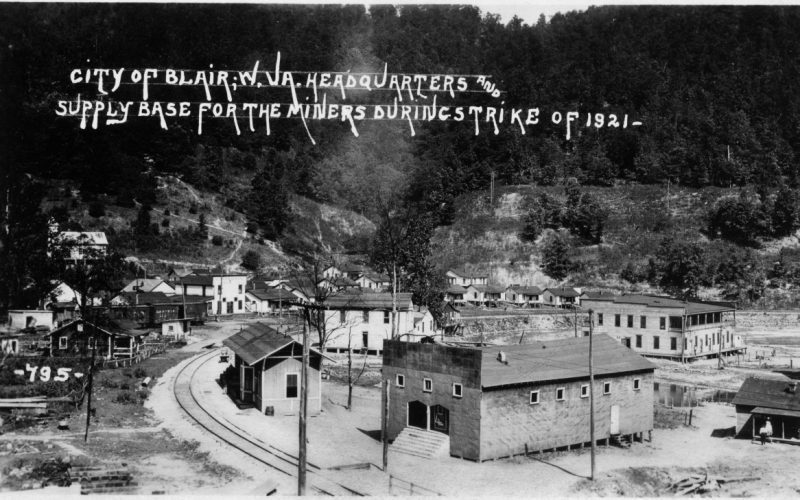
A few days after Chafin came to the prison and told the two hundred men that he was going to let them out and that they would have just 15 minutes to get out of town.
The boys and Lee say that they cannot tell whether the killings they described in the jail were a premeditated method of terrorizing other prisoners into joining the army or whether the jailors were just carried away by rage.
“Do you wonder that we miners say that the gunmen of Logan county must go?” said a miner to me in the union headquarters after we had both listened to these stories.
State Government Against Them. But the miners do not expect any help from the state government of West Virginia in restoring some semblance of freedom to the southwest counties of the state that are now under the heel of the gunmen. Governor Morgan is openly allied to them, having sent them all the state troops he could, and confining his threats of prosecution only to the miners.
Another story of attack on a law-abiding citizen was given early this week. The man was Thomas Thompson, a salesman for the Paramount Advertising Corporation of New York. Thompson’s business carried him into the town of Welch, county seat of McDowell county, where Sid Hatfield and Ed Chambers were murdered recently. Last Sunday afternoon Thompson says he was accosted by a man who said he was the sheriff. The man questioned his business roughly, and then accompanied him to his room, bringing two others. Thompson started to open his suitcase to show him his papers and prove that he had been too busy at his work to have thought of union affairs, but the man pushed the suit case aside, knocking him down, and heeled him. Then he had him put out of the hotel and taken to the station by the other thugs. Thompson wanted to wait for a New York train, but the thugs made him get on the first train that was coming, though it was going in the wrong direction, first knocking him down and kicking him again.
Thompson told his story to the governor and was advised to go right back to Welch, the governor offering to give him protection.
“You’ll get the same protection Hatfield got,” said union men. Thompson did not go.
***
IV. Some Facts Unfit to Print in the Coal Baron’s Press
Clifton, Boone County, W. Va., Sept. 6. The newspapers of Guyan and Kanawha valleys have a becoming modesty about their communities. They lack that blatant small-town self-assertion–that exaggerated civic pride–which is always shouting to the world what the community is doing. or, rather, what its leading citizens are doing. One and all these newspapers are soft-pedaling the interesting and charactertistic exploits of their great and noble.
Take, for instance, their sublime silence about these airplane raids on women and children that continued for three days–this bombing and gassing of mining villages behind the lines. A brilliant achievement for the lords of Guyan, and yet unhonored and unsung by their minstrels.
If one did not understand the newspapers’ keen appreciation of the modesty of Don Chafin and the great financial interests behind him, one would think that the newspaper world was coming to an end when the same newspapers that played up in seven-column headlines the kaiser’s bombing of noncombatants in distant Europe have nothing to say when the same thing is pulled off right at our back door, in the little Coal River Valley.
But so it is, and that is why when labor wishes to indulge its unhallowed curiosity about what is going on in the warfare against itself it has to turn to its own newspapers.

Now to get back to the air raids: I spent the morning and afternoon listening to dozens of men and women who saw the bombs dropping on the town in the little Coal River Valley, or were under fire from the aviators’ machine guns. The testimony of these people cannot be drowned by the chorus of denials that will issue from the Logan county authorities when an investigation starts, any more than the bomb now in possession of the United Mine Workers and the United States soldiers can be dissolved into nothingness. Miners and their wives, physician, preacher, justice of the peace, and merchants–all say the mechanical hawks swooping over the mountainside that walls off Chaffins land, and were witnesses of the loosing of the infernal apparatus and of the machine-gun fire on the villages.
Gassing a Red Cross Nurse.
I talked to a housewife of Jeffrey–Mrs. Duly Chambers, wife of the village blacksmith. Her head was splitting with sharp pains and she was bleeding at the nose at intervals from a gas bomb attack Saturday on the Red Cross automobile in which she was hastening to the schoolhouse used as a field hospital several miles up Hewitt Creek from Jeffrey.
“But did the aviator know it was a hospital wagon?” I asked.
“He couldn’t help knowing it,” said Mrs. Chambers. “It was covered with brilliant Red Cross markings on sides and top that shone in the sunshine for a mile.”
Mrs. Chambers’ story was corroborated by another nurse and by half a dozen miners and by a physician who treated her and who will testify at any investigation that may be called. She was proceeding along Hewitt Creek with Mrs. Bertie Currans, a trained nurse who had come as a volunteer from Russell, Kentucky, to aid the wounded. Suddenly, said Mrs. Chambers, there was a whirring far in the heavens, and a little later a crash as a glass bottle struck the ground. Greenish, sickening fumes rose about them and Mrs. Chambers reeled dizzily. Her experienced companion got a cloth quickly over her own nose and that of her fellow nurse, and the chauffeur, holding his breath, raced out of the poisoned atmosphere. Later on the fragments of the bottle and the chlorine-soaked stopper were picked up. Two such stoppers are in possession of the miners and have been subjected to an analysis which revealed evidence of the deadly chlorine. Several other persons were affected by other gas bombs, but none seriously. Both gas and explosive bombs were used at this part of the front where the hospital was located. One struck the ground near the old Ferrel home, which had been made into a dressing room, near the hospital. It failed to explode. Another tore a hole 30 feet wide in the earth a mile away. But nearly all the bombs were hurled from a quarter of a mile to three miles behind the lines.
The Raid on the Mess Hall.
Mrs. Myrtle Hainor, a pretty young woman of Jeffrey, was one of many who described the most protracted raid, the one made Friday, September 2d. She was standing just outside the Eagle Hall where 200 miners, back from the front lines for a rest, were eating. She was in the act of hustling out roasting ears for the men when the airplane shot into view from the other side of the mountain that runs down close to the village.
“There it goes!” someone shouted as the bomb was loosed almost directly over the mess hall, as it seemed. But the devil-cylinder missed its mark and buried itself in the hillside, not 200 yards away, across Hewitt Creek, without exploding. Another fell with just as little result–an additional evidence of the bad marksmanship of Chafin’s aviators and the lack of technical skill of the bomb makers. Before the aviator left he sent down a volley of machine-gun bullets that hit no one.
It was all over so quickly, said Mrs. Hainor, that the food hadn’t time to get cold on the mess tables, Mrs. Hainor was one of the women in charge of the Jeffrey mess arrangements, and was full of justifiable pride of the good food served to the boys.
“And those Logan county folks saying we were just feeding them bread and beans!” she protested, describing the variety and abundance of food that they served. Only detachments were fed there, however, most of the meals going hot to the front. The food came in by the ton from all parts of the countryside of several counties, in large automobile trucks. Nearly all of it was donated by the plain country people of West Virginia, who are heart and soul with the miners, as well they may be, for nearly all of them–farmers included–do their stunt in the mines at some time of the year, and they regard this fight as their own fight.
As Mrs. Hainor was talking my eye wandered over the numerous religious prints and “God Bless Our Home,” etc., which covered her walls. I found the same devotional atmosphere in some other houses that I visited, and in the whole village of several hundred folks there is not a single dance hall, nor are moving pictures ever exhibited. An old-fashioned religious faith prevails in the community and the Methodist church, on the high hill to the right, is as representative as it is prominent. I have heard some refugees from Logan speaking bitterly of a preacher who they claim is working hand-in-hand with Don Chafin, but here in Jeffrey the church is almost working-class conscious. Rev. Shorden, the pastor, is thoroughly in sympathy with the union views of his flock, and, in fact, used to be a union man himself.
I had also heard about a Logan county justice of the peace, named Mitchell, who was captured by the miners near a machine-gun nest in the mountains. But in Jeffrey there is a different kind of a judge. Moses Atkins, justice of the peace of Washington district, Boone county, was emphatic in his expressions against the air raids which he had witnessed, and said that an investigation will be forced.
“This is the greatest outrage ever perpetrated against a law-abiding people,” he declared. “The people of this community are the best behaved people in the United States. If they have finally joined their fellow miners in taking up arms against this thug system, it was because they insist on the American rights guaranteed by law.”
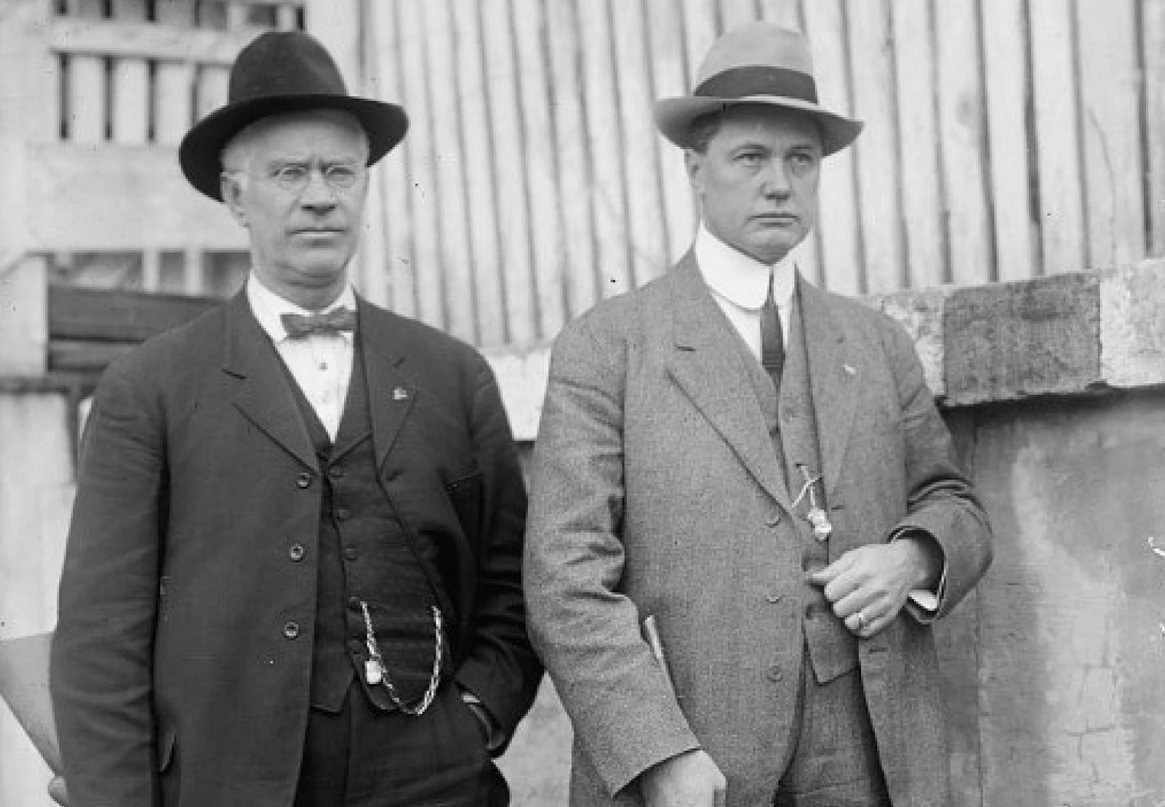
The soldiers near whom a bomb fell Saturday morning have reported the matter to their superiors and are demanding action. Their one regret, say the rank and file of the soldiers to the villagers, is that they did not bag the bomb-thrower.
Dozens of persons told me their stories, c and most of them gave me full permission a to use their names as much as was useful, but others told me frankly that they did not want their names in the papers unless e there was no other way to give authentication to certain necessary details.
“It isn’t that we are afraid,” said an old man; “we’ll face those thugs any time, A man to man, as we have been doing all last week, but we don’t relish the idea of being shot in the back. Some of us have to go to Logan county to pay our taxes.” Such a remark astonishes no one who has been in this West Virginia atmosphere for a few days. There are too many well-verified stories of the cold-blooded murders f committed by Don Chafin’s crew without interference from the state government. Far from opposing Chafin, Governor Morgan is abetting him. State troopers is fought side by side with the Baldwin-Feltz thugs, and now Governor Morgan, in a fulminating statement, threatens murder b prosecutions against miners from the front. At the same time he apparently regards the atrocious air raids on noncombatants the as mere incidents of warfare. William Murray, international vice-president of the United Mine Workers, and William M. Petry, vice-president and acting chief of District No. 17, are unconcerned by the governor’s threats. They say that the United Mine Workers can prove that it co-operated to the fullest extent with the United States troops and that their organization is unalterably opposed to crime, especially such cowardly st deeds as those committed by the Baldwin-Feltz thugs.
The attitude of the rank and file of the miners towards Morgan is typified by the utterance of a coal digger in the headquarters of District No. 17 in Charleston: “Don’t blame Morgan,” said this man. He’s loyal to his own people.” Then, tilting up the end of the airplane bomb on exhibition there, he said:
“This is what a lot of folks voted for. This represents the state government of West Virginia–bombs!”
***
V. Cold Blooded Murder of Hatfield and Chambers Roused the Miners to Arms.
Charleston, W. Va., Sept. 11. Hundreds of columns have been written about the march of armed miners in West Virginia and the battles on the mountain ridges between Coal River Valley and Guyan Valley on the frontiers of Logan county. Most of the matter has been wildly inaccurate, but that is not the point I am driving at here. The point I wish to make is that almost nothing has been said about the real purpose of the marchers.
It has been assumed generally, where writers gave any attention to the purpose of the march, that the miners’ first aim was to organize Logan county. The real facts are that Logan was only incidental. Logan happened to be in the line of march toward the intended goal–Mingo county,
Logan is a scab county, but Mingo was organized by the United Mine Workers early last year. It was the first of the extreme southwest counties to be won for organization. However, in spite of that fact, gunmen continued to rule Mingo as much as Logan. In Logan they are called deputy sheriffs and in Mingo they are mainly state militia and constabulary under state martial law. There is a difference in name, but fundamentally the oppression is the same. In neither county is there any freedom of press or assemblage and in each county something like one hundred men are in prison at the present time because they are suspected of desiring these rights. But the miners in the organized fields react differently in the two cases. They feel that the oppression of the union men in Mingo county is more fundamentally their business than the oppression in the scab county.
Attacks on the tent colony of dispossessed miners and their families, the constant beatings and shootings of union men and the denial of the right of as many as three union men to be together on the streets–such things as these began to cause rumblings throughout the state. The governor was appealed to and reminded of his campaign promise that the thug system must go, but there was no help in that quarter, only assistance to the other side.
Then came the indictment of Hatfield and Chambers on the charge of taking part in an attack on Mohawk, in the neighboring nonunion county of McDowell. Governor Morgan promised Hatfield and Chambers that they would be protected if they answered to the indictment. Instead, they were murdered in cold blood by a man who is out on bail and who is said to have taken part in the recent fighting.
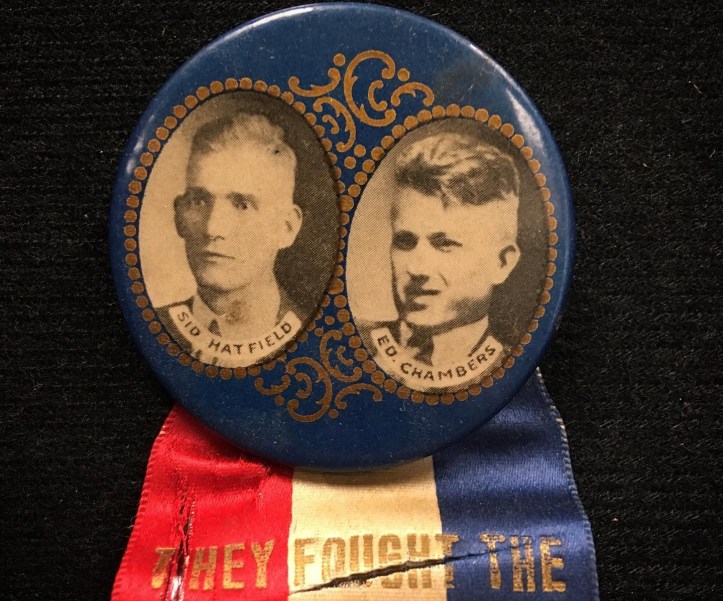
Murdering Hatfield and Chambers, who were both much loved by the miners of the state, was the last straw. The call to clean up Mingo, or, as the miners called it, “restore the constitution,” could not be denied. In spite of the official protest of the leaders of District No. 17, the march was on. It turned back once at the request of Keeney and then broke forth with greater vigor because of the night attack on the little village of Sharpless, August 27th.
When the federal soldiers came the gunmen concentrated in Logan county were being forced back, and a short time more would have seen the workers on their way through Logan to Mingo county to come to the aid of the oppressed fellow workers. These facts are common knowledge in this district.
The Industrial Union Bulletin, and the Industrial Worker were newspapers published by the Industrial Workers of the World (IWW) from 1907 until 1913. First printed in Joliet, Illinois, IUB incorporated The Voice of Labor, the newspaper of the American Labor Union which had joined the IWW, and another IWW affiliate, International Metal Worker.The Trautmann-DeLeon faction issued its weekly from March 1907. Soon after, De Leon would be expelled and Trautmann would continue IUB until March 1909. It was edited by A. S. Edwards. 1909, production moved to Spokane, Washington and became The Industrial Worker, “the voice of revolutionary industrial unionism.” A victim of finances and internal disputes, the IW ceased publication in 1913, only to be revived in 1916 and surviving as a weekly, sometimes more, until 1931. Easily among the most important working class newspapers in U.S. history and an essential resource on the wobbly, and larger radical labor experience.
PDF of full issue: https://washingtondigitalnewspapers.org/?a=d&d=IWW19210917
PDF of full issue: https://washingtondigitalnewspapers.org/?a=d&d=IWW19210924

