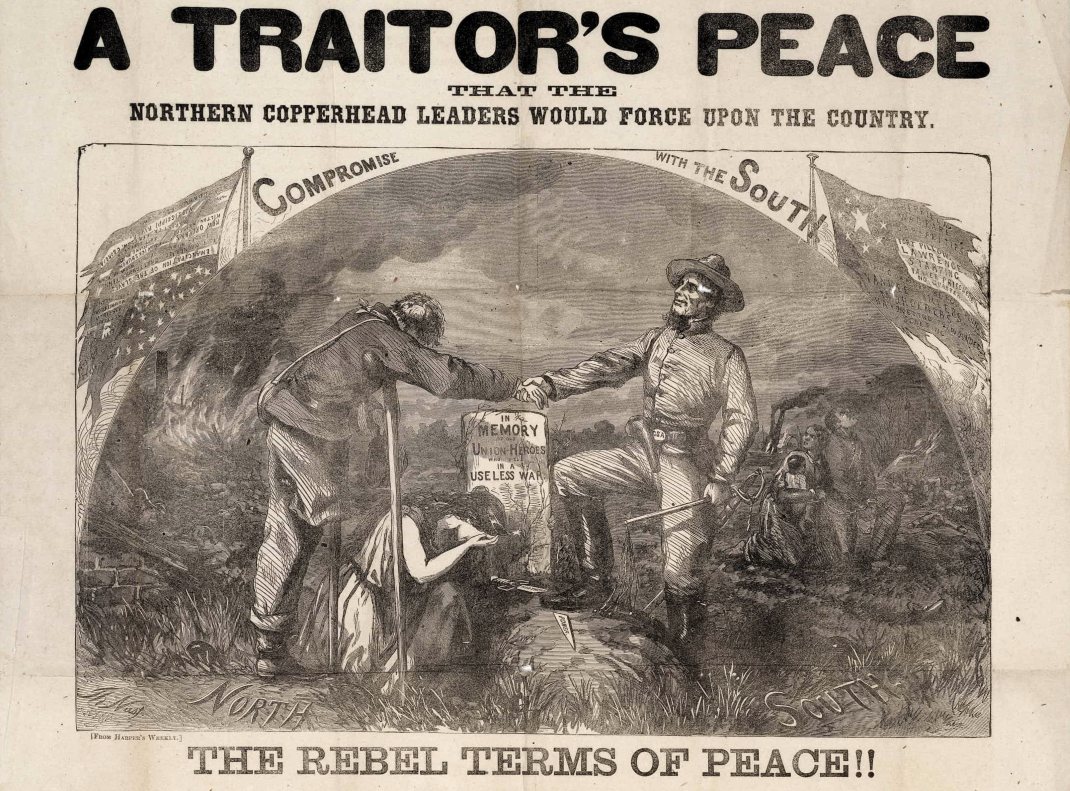
A substantial article published over three issues from Wicks on the pernicious history of the Democratic Party from Jefferson and Jackson, through the Slave Owner and White Man’s Party, to Bryan and Wilson.
‘The Democratic Party’ by H.M. Wicks from Workers Monthly. Vol. 5 Nos. 3, 5 & 7. January, March & May, 1926.
SURELY no one except the most pathetically partisan democrat can believe that the democratic party of today is the party of Jefferson and Jackson. A hundred years, the most eventful century in all the history of the world, separate Thomas Jefferson and Andrew Jackson from William Jennings Bryan and Al Smith.
When Jefferson became president of the United States the first stage of the French revolution had closed. A year and a half before the inauguration Napoleon Bonaparte had achieved his “Eighteenth Brumaire” against the French directorate. Frederick William III of Prussia was waging the struggle against France that was to culminate in his humiliating defeat and the Peace of Tilsit. On the throne of the Cars in Russia sat Paul, the imbecile son of Catherine II, who was assassinated three weeks after the inauguration of Jefferson. George I was on the throne of England. Mankind has travelled far since the days that these figures personified the clash of social forces on the stage of history.
The Birth of the Party of Jefferson.
The party of Jefferson rose directly out of conflicts engendered when the constitution of the United States was adopted at a secret convention September 17, 1787. Jefferson, himself, was in France at the time, where he had been since 1784 as the representative of the states. But there were present at the convention men who held the ideas that afterward distinguished the party of Jefferson.
The economic situation of the country was such that at that time there was no dominant class capable of creating a powerful political party that could rule the states. Roughly there were four economic divisions:
(1) The commercial interests that spread over the states north of the Potomac river that desired a centralized government and who proposed giving congress control over commerce.
(2) The manufacturers of New England, some of whom supported the program of the commercial interests and a strong faction that feared such a centralization of govern mental power might work to their disadvantage, hence they were more sympathetic toward state rights.
(3) The two southernmost states, South Carolina and Georgie, where chattel slavery was very profitable, who feared that congressional control over commerce would interfere with the slave trade, therefore they resented a centralized government.
(4) The states of Virginia and Maryland, which had as many slaves as they could profitably employ, and no popular demand for more. They joined with the delegates of the North in proposals to eliminate the slave traffic at once, though keeping those slaves already in slave territory.
This enraged South Carolina and Georgia and they flatly refused to continue discussions. In this they were joined by North Carolina. The people of the southernmost states looked with eagerness upon the rich lands of the gulf region, awaiting development through slave labor. It was evident that a powerful nation could be formed if the three states decided decisively to break with the others. The situation was critical for a time, but finally a compromise prevailed. Congress was to be given control over navigation, but the slave trade was not to be disturbed, for a time at least.
Even with this compromise it required several years of bribery, intimidation and terror to secure ratification of the constitution as adopted. In New England the anti-federalists were strong in the interior towns and thoroughly distrusted the manufacturers and capitalists of the coast towns. Popular leaders like John Hancock and Samuel Adams were won over to the side of the federalists with promises of exalted positions in the new government, and helped get Massachusetts to ratify the constitution.
Lesser lights of other states were appealed to in the same way. Most of the outstanding figures in American history were involved in the corrupt practices preceding the ratification by states of the constitution.
But there also crystallized a definite opposition to the constitution, on the basis of states rights. Two political groups sprang up that later developed into parties. Those in favor of centralized power of government and congressional control of commerce were known as federalists. Those opposed were known as republicans. George Washington and Alexander Hamilton were leaders of the former, while Thomas Jefferson became the first outstanding leader of the latter.
The Return of Jefferson.
All the states except Rhode Island and North Carolina had ratified the constitution by the end of the year 1788, so preparations were made to organize the new government. Thomas Jefferson, who had been in France during the seething five years from 1784 to 1789 and whose ideas were unquestionably influenced by those stirring events, was recalled to this country four months before the storming of the Bastille to become secretary of state in Washington’s cabinet.
Washington had been elected president of the United States without a political campaign and without the citizens of the states voting for him. It was more in the nature of an appointment than an election. John Adams, having secured the next highest number of votes of the delegates from the various states, was designated vice-president. The political divisions had not yet crystallized into political parties. There was no opposition to Washington in the convention that elected him, nor did the party of Jefferson develop for some years afterwards, although intense political conflicts soon arose.
Alexander Hamilton was appointed secretary of the treasury by Washington and he, more than any other one person, formulated the policies that distinguished the federalist party. Through the establishment of a national bank in an effort to fund the national debt, stabilize currency and build up powerful support for the government as a means of aligning commercial interests in its support, Hamilton aroused opposition against the government. At first this opposition was led by James Madison, who fought it in the house of congress. In the cabinet Jefferson opposed it, but was out voted.
Attitude Toward French Revolution.
Jefferson’s opposition to Hamilton, Adams and Washington on domestic questions was supplemented by the most intense opposition on foreign questions.
The French revolution was raging. As secretary of state, Jefferson recognized the revolutionary government and when a general European war broke out and the French government declared war against Great Britain and Holland he proposed that the United States come to the aid of the revolution. Adams and Hamilton, both pro-British, bitterly as sailed Jefferson’s stand on the conflict. The outcome was a declaration of neutrality on the part of the United States. From that time onward Jefferson waged a terrific campaign, at first stealthily, then openly, against both Adams and Hamilton.
Alien and Sedition Laws.
At the end of his second term Washington retired to his home in Mt. Vernon and John Adams was elected president, receiving an electoral vote of 71; Jefferson receiving the next highest vote which was 68. Therefore according to law at that time Jefferson became vice-president.
The outstanding act of Adams’ term was a vicious blow at free speech, free press and free assemblage through adoption of the odious “Alien and Sedition Acts.” The seditious act was directed against “conspiracies to oppose any measure or law of the government.” It also provided penalties for “writing, printing, uttering or publishing any false, scandal–or of malicious writing, or of adding to do the same against the government, congress or the president, with intent to defame them or to bring them into disrepute, or to stir up sedition…”
Derisively called the “gag” law by Jefferson and his followers, it was intended to crush all opposition to the course of Adams and his brigands who, in the interest of the large southern plantation owners and the sea coast commercial interests of the North, were favorable to Britain in the war against the revolution in France.
Resolutions drawn up by Jefferson were introduced in various state legislatures and passed many of them. At first secretly, then openly when sufficient support had been mobilized, Jefferson and his party finally discredited Adams, even splitting the ranks of the federalist party by his expose of Adams’ truckling to Britain.
The Triumph of the Party of Jefferson.
When the electoral college met after the presidential elections of 1800 it was discovered that President Adams, the federalist, received 65 votes; J.J. Pickney received 64 and John Jay 1. Thomas Jefferson and Aaron Burr, both republicans, received 73 each. The election was thrown into the house of congress and Jefferson chosen president and Barr vice-president. In the balloting in the house Alexander Hamilton threw his federalist support to Jefferson in order to defeat Burr.
The one outstanding achievement of Jefferson’s administration was the purchase from France of the vast territory, of Louisiana by an act known as the “Louisiana purchase.” Napolean was engaged in his great wars against other nations in Europe and was sorely in need of money. Jefferson anticipated that this territory would eventually become settled and extend the power of the country.
Within his own party there was considerable dissension until after the purchase of Louisiana. Aaron Burr, the vice-president, was a person of extraordinary ability and Jefferson feared his power and influence and assumed toward him the meat acrimonious manner, never neglecting an opportunity privately to insult him and publicly to humiliate and revile him. Burr resented the attitude of Jefferson and felt that Hamilton had been induced by some nefarious compact to throw his support to his opponent in the congressional decision on the election.
Burr later proved himself a characterless individual by accepting as federalist candidate for governor of New York in 1804, thinking he could split the republican party and secure enough of their support with the federalist vote to elect him. Hamilton entered into the conflict and exposed the purpose of Burr to gain office by the complete abandonment of principles for which he was alleged to have stood. The exposure discredited Burr and so he challenged Hamilton to a duel which resulted in the death of Hamilton on July 11, 1804.
Meanwhile Jefferson had enfranchised many new voters, previously prevented from participating in elections because the vote had theretofore been based upon ownership of property. This assured his reelection by a substantial majority. Refusing a third term he left the presidential chair on March 4, 1809, arriving at his Virginia Lome at Monticello on March 15, where he remained, never leaving the borders of the state, for the next seventeen years of his life.
Madison and the War of 1812.
James Madison succeeded Jefferson and served two terms as president of the United States. The wars in Europe had reacted to the benefit of American industry and commerce. European demand for products of this country were so great that an uninterrupted period of prosperity characterized both terms of Jefferson hence his party easily triumphed at the polls with Madison as its candidate.
The population of the country was pushing westward and a series of Indian wars, waged with the most shameful frightfulness, were conducted in Indian territory. The Indians had arms that were said to have been received from England by way of Canada.
Britain, at war with Napoleon, had, as a war measure, blockaded continental European ports, which interfered with American shipping. Both France and Britain were short of seamen on their merchant ships and indulged in impressment of American seamen on foreign ships.
Finally, in 1812, during the second campaign of Madison, war was declared against Britain on the pretext of resisting the impressment of American seamen on British ships. Never was there a more uncalled for war. The “orders of council” adopted by Britain to prevent American ships going to French ports, were repealed on June 23, but war had been declared by the United States five days before. If there had been cables between the two countries the excuse for the declaration of war would have vanished as soon as news of the repeal of the orders reached Washington. The announcement of the repeal reached this country three weeks after the declaration of war. But since the step had been taken the war party in control of congress decided to carry it through, with the hope of annexing Canada.
There were many freak events connected with the war besides the senseless prosecution of it after the “cause” had been removed. The principal battle, that of New Orleans, was fought on January 8, 1815, after the treaty of peace with England had been signed on December 14, 1814, When the treaty was signed not one clause was incorporated regarding impressment of American seamen and the United States although claiming victory, agreed to pay an indemnity to Britain.
Industrial Stagnation After Wars.
The close of the Napoleonic wars in Europe stopped the demand for American products. The result was a period of unprecedented industrial depression, with foreign traders dumping enormous quantities of goods on the American market.
A tariff on imports was adopted in 1816 in an effort to arrest the flood of foreign products and protect the “infant industries” of this country. The tariff was not then a party question, though the southern states presented strong opposition to it on the ground that it interfered with the import of goods useful to them. It is not improbable, as it was frequently charged by Northerners, that British industrialists had some influence on the southern states in this tariff controversy.
Revolution in Cotton Industry.
While political events of great magnitude were transpiring in every part of the world changes in the spheres of production were preparing the soil for a rapid transformation of society. During the years at the close of the Eighteenth century when the constitution was being bludgeoned down the throats of the various states of the union and the first dim political party lines were forming another and less spectacular, but more profound, revolution was taking place that was destined to affect American political life for more than half a century. That was the revolution in the cotton industry.
A series of inventions began with Hargreave’s spinning Jenny in England in 1767, which was supplemented by the spinning frame of Arkwright in 1768 and that in turn supplemented by the spinning mule of Crompton in 1779. These inventions greatly increased the productive power of labor.
It was almost impossible to obtain sufficient raw material to keep the machines running even half time. The work of removing seeds from raw cotton had to be done by hand, and this slow process made the production of raw cotton for the mills of England and the northern states of this country very certain and inadequate.
Finally, after many people had spent years on experiments, Whitney in 1793 invented his cotton gin, a machine that could extract seeds from the cotton ball by a mechanical contrivance. The earliest of these machines driven by horse power could clean 300 pounds a day, while the most dexterous slaves of the south could clean but five or six pounds a day by hand. The inventions in the sphere of cotton spinning created a demand for a change in the production of raw material for the market.
Thus we see illustrated one of the fundamental laws of industrial development: a change in the mode of production in one branch of an industry brings changes in other branches of the same industry.
While these inventions stimulated cotton production and chattel slavery in the South and also stimulated the industries of England, the manufacturers of the North were experiencing a decline, because the British were jealously guarding the secret of their inventions.
However, this secret was eventually smuggled into America by adventurous industrialists and mills in Rhode Island and Massachusetts began to spring up employing hundreds and later thousands of men, women and children to tend the machines.
Speaking of the productivity of Massachusetts factories in 1813, Trenche Cox, (writing in the American State Papers, finance) said:
“The wonderful machines, working day and night as if they were animated beings, endowed with all the talents of their Inventors, laboring with organs that never tire, and subject to no expense of food or bed or raiment or dwelling, may be justly considered as equivalent to an immense body of manufacturing recruits, enlisted in the service of the country.”
During the war of 1812, when shipments of coal from England were shut off, a boat load of “stone coal” (anthracite) was brought down the Lehigh and Delaware rivers to Philadelphia. This sort of coal was difficult to light and keep burning until Joseph Smith, who had already invented the steel plowshare, conceived the idea of building his fire over a grate to secure a stronger draft. This experiment was successful. Sufficient heat to fuse iron was developed by this process, thus anthracite came into general use by the iron foundries. It fell into disuse fer this purpose only after fields of soft coal were discovered, which furnished a still better fuel for fusing iron. Ore that had been discovered west of the Alleghenies came into general use and soon there was a network of furnaces and forges in Fayette county and adjoining counties in Pennsylvania.
Inadequate transportation stimulated still more inventions, the most important of which was the steam engine. Peter Cooper’s engine, the “Tom Thumb” was the first one used in this country. The Baltimore & Ohio adopted it as “the most practical motor.” From that time forward railroads spread throughout the country, and industries, mostly sconed to the sea coast towns, sprang up in the interior of the country along with thousands of towns.
The series of inventions in textiles, the invention of the blast furnace, the discovery of coal fields and the use of the steam engine, ushering in the period of modern industry in the United States, determined the economic development of the nation and it is the mode of wealth production which is the real formation upon which rests political and other social institutions.
No understanding of political parties is possible without a knowledge of the fact that they express conflicting economic interests and classes.
James Monroe and John Quincy Adams.
With the invention of Whitney’s cotton gin the slave traffic of the South that had been at a standstill for many years suddenly revived. New cotton plantations were opened up and a steady stream of Negroes, imported in specially constructed slave ships, poured upon the Atlantic sea coast. The plantation owners and their retainers soon became the dominant class in the United States. This class desired complete control of the government in its own interest.
The next president after Madison was James Monroe. He was elected in 1816 on the republican (Jeffersonian democrat) ticket, defeating his federalist opponent by an overwhelming majority. This was the last campaign of the federalist party of Washington and Hamilton. Its decline had been steady from the days of the infamous alien and sedition laws of John Adams, and it never had another victory.
Slavery became an issue of national importance during the Monroe administration, when the territory of Missouri applied for statehood.
Efforts were made to make Missouri a free state by a process of gradual elimination of slavery within its boundaries. A compromise was finally reached to the effect that slavery could exist in Missouri but not north and west of that state.
Two figures that loom large in the pages of the ruling class history of America engaged in one of their first notable conflicts during this discussion–Henry Clay and John C. Calhoun. Both of them entered the house at the opening of the twelfth congress in 1811 and on opposing sides of various issues, mostly arising out of the controversy that eventually led to the civil war, they played spectacular roles over a period of forty years.
Commenting on this conflict over slavery Jefferson from his place of retirement at Monticello, wrote:
“This momentous question, like a firebell in the night awakened and filled me with terror. I considered it at once as the knell of the Union. It is hushed indeed for the moment. But this is a reprieve only, not a final sentence.”
Monroe was unopposed for President of the United States in 1820, the federalist party having expired and no single economic class in disagreement with the administration was powerful enough to maintain a political party. A marked recovery as the result of the tariff and a general revival in industry eliminated the possibility of an issue.
But in the campaign of 1824 there wore four candidates, all claiming to be republicans (Jeffersonians). In the vote of the electoral college Andrew Jackson, the hero of New Orleans, was given 99 votes; John Quincy Adams, 84; a person named Crawford, 41; and Henry Clay, 87. The election was thrown into the house of representatives where the vote was by states and was so close that the one state of Kentucky decided it.
Henry Clay was the political leader of the state of Kentucky and he swung his support to Adams and defeated Jackson, thereby electing John Quincy Adams in spite of the fact that Jackson ran far ahead in the popular voting and in the electoral vote. It developed that the state legislature of Kentucky had requested Clay to vote for Jackson but he ignored this request.
Jackson charged that Clay had been bribed to cast his vote for Adams. The fact that Adams selected Clay as his secretary of state, the highest office within the gift of the president, lends color to this charge and it was many years before Clay lived down the taint of corruption. However, it is probable that Clay opposed Jackson in order to thwart the designs of the slave power, of which Jackson was the apostle, in its desire to control the government.
As for John Quincy Adams, he was probably the most unscrupulous demagogue that had up to that time sat in the presidential chair. Elected as a supporter of Jeffersonian principles he proved in action to be a federalist, with all the vicious characteristics of his father whose administration wrecked the federalist party. The charge of having been elected by corrupt practices combined with his political dis honesty caused the defeat of Adams. He was beaten by Jackson, who had the backing of powerful combinations of plantation owners in establishing a new political party–the democratic party.
The Slave Holders’ Party.
Other parties had represented mere tendencies of class divisions in society. Most of the earlier parties had been created on certain issues and before there existed any dominant class the campaigns were fought out on minor issues with contesting candidates running on the same political ticket. From the election of Andrew Jackson in 1828 all this was changed. There was one dominant class in the country and the party of that class ruled the nation, with but two intervals, from the inauguration of Jackson until the inauguration of Lincoln.
But an avowedly slave holders’ party was certain to be challenged by opposing elements. So long as the class lines were not definitely drawn it was possible for a party to straddle the issue of slavery, but after the conflict over the Missouri question there could be no compromise. So powerful, however, were the slaveholders and so firmly implanted in the minds of the whole population was the respect for slavery that no one who hoped to survive politically dared challenge it.
During his two terms Jackson did everything within his power to increase the might end prestige of the slave holders of the South. A half-educated, adventurous braggart, never shrinking from any low act that would gain advantage for those he served, Jackson personified all the viciousness of the slave holding class.
The Invasion of Texas.
The single achievement of his administration was encouraging the invasion of Texas by a horde of criminal adventurers. One of his agents in Mexico, Anthony Butler, was a shifty individual whose intrigues became so flagrant that he was exposed and Jackson, much embarrassed, way forced to recall him. This episode created a profound distrust among Mexicans for “our diplomacy.”
Another of the agents of the slave holding aristocracy was one Sam Houston, who had been consecutively soldier, Indian agent, member of congress and governor of Tennessee. A typical chivalrous Southern gentleman, he deserted his wife, joined a Cherokeen Indian tribe, debauched them with booze, married a squaw, became chief and finally landed in Texas where he devoted his talents to fomenting an uprising in order to expel the Mexicans so that slavery could be introduced in that vast territory.
After a group of adventurers under one Col. Travis had been defeated and killed while invading Mexican territory in the year 1836, Sam Houston and his bandit gang drove out the Mexican soldiers and proclaimed Texas a “free state.” This was only a pretext for the next move–annexation to the slave power. The brigands and bandits under Sam Houston then raised theory that in view of the inability of Taxes to maintain itself against Mexico the benevolent government of the United States should annex it.
The Rise of the Whig Party.
Jackson’s vicious administration was challenged by every person in political life not absolutely wedded to the slave power. In various states new parties began to enter the field against Jacksonian candidates. The opposition was based almost exclusively upon hatred of Jackson and his policies. It embraced Jeffersonian republicans, former federalists, anti-masons, and other opposition elements.
Finally the name Whig was applied to the opposition movement in 1834 by James Watson Webb, editor of the New York Courier and Enquirer, and was intended to suggest encroachments of the executive.
Under Jackson’s administration the anti-slavery agitation of William Lloyd Garrison began end it was a gang of Jackson henchmen from Alton, Illinois, who murdered Elijah P. Lovejoy in 1834 because of his anti-slavery agitation. The next year Garrison was mobbed in the streets of Boston by a gang or hoodlums returning from church who had been listening to a democratic preacher prove by the holy bible that slavery was a divine institution and that all abolitionists were infidels.
The Texas situation gave the abolitionists opportunity to deliver telling blows against the slave power, but the new political party never took up the issue. The Whig party was under the leadership of Henry Clay and Daniel Webster.
Clay had tried to found a new party against Jackson in 1832 and he, himself, for the second time became a candidate for president on a ticket that he called the National Republican. He received only 49 electoral votes to President Jackson’s 219. When, during the next few years the Whig party sprang up in a number of states, he threw his influence on the side of the new party.
Storm Clouds Gather.
Martin Van Buren, a dyed-in-the-wool Jacksonian, whose one motive was to strengthen the slave power, had been selected by Jackson as his successor and easily secured the nomination at the democratic convention, which was absolutely dominated by Jackson.
William Henry Harrison, the Indiana Indian fighter that had blazed with gunpowder the trail for industrialism in the North, was selected by a number of states as Whig candidate, though there was no national convention of that party. A number of other candidates, among whom was Daniel Webster, were chosen by their friends. The general scheme was to divide the vote and throw the election into congress in the hope of defeating Van Buren.
In the campaign John C. Calhoun, one of the foremost apostles of chattel slavery and a luminary of the democratic party, insisted that the opponents of Van Buren declare their stand on slavery. Neither Webster nor any of the others dared take a stand opposed to it.
Van Buren easily triumphed, securing a safe margin in the electoral college over four opponents.
In ability Van Buren had all the virtues of mediocrity. He was colorless, thrifty, simple, with total incapacity for leadership. The slave holding aristocracy praised him as a super-man, but forces already operating when he was inaugurated reacted against his administration. The great industrial depression of 1827 had already commenced. The Industrialists of the North had expanded the network of railroads far into the middle west, new industries were springing up everywhere throughout the vast stretch of territory from the Alleghenies to the Mississippi.
This new industrial class was opposed to any extension of slavery for a very substantial reason. Industrialists in New England, for instance, who employed women and children at a few dollars a week, would never think of purchasing slaves and supporting them the year around. It was cheaper to purchase labor power over short periods of time than to pay for the laborer himself and support him even in slack times.
The tremendous development of the economic forces of the North were being gradually strangled as the government under Jackson devoted its energies to defending and extending the slave power.
The cotton growers of the South entered into agreements with the mills of England to the effect that they would furnish all the raw cotton required, after which they would supply the domestic mills of the United States if there was enough cotton left. The tariff was lowered so that foreign goods, could be poured onto American shores.
Such governmental Interference against the industrialists, combined with a periodic industrial depression brought about a crisis much deeper and more prolonged than that which followed the close of the Napoleonic wars.
In the midst of this depression and general disorganization of the country the question of the annexation of Texas again came up in the form of a resolution to “reannex” that territory during the congressional session.
Supporters of John C. Calhoun tried to force it through, but they met stern opposition from Clay and his followers. In the debate on the question former president John Quincy Adams, then a member of congress, opposed the annexation of Texas and said: “I avow it as my solemn belief that the annexation of an independent power by this government would, ipso facto, be a dissolution of this union.”
Adams continued, in the outstanding speech of his career, to expose the nefarious chicanery and intrigue of Andrew Jackson and his vice-president, John C. Calhoun. This was the keynote for a veritable barrage from the opposition. The situation became so menacing that Texas was persuaded by the slave powers to withdraw its application for annexation.
At the next session (1838-39) a “gag rule” was adopted to the effect that the next time a question affecting the issue of slavery was brought up it should be laid on the table without being debated, printed or referred to any committee.
An avalanche of denunciation swept the country. The long depression and the widespread misery prostrating the northern industrial centers aroused the deepest aversion to Van Buren.
The Victory of the Whigs.
Abolitionists throughout the North took full advantage of the discontent to arouse sentiment against the institution of chattel slavery Wendell Phillips and William Lloyd Garrison were carrying the fight to the masses, while in congress their champion became none other than John Quincy Adams, who did much to redeem his reputation which was badly damaged during his occupancy of the white house. He openly defied the rules of the house by arising whenever the hour for presenting petitions arrived and stating: “I hold in my hand a petition from the citizens of the town–of praying for abolition of slavery in—” At this point he would be declared out of order as the hammer of the speaker fell, only to pick up another paper and mention the name of another place demanding abolition of slavery.
In 1840 the Whigs for the first time held a national convention and selected William Henry Harrison as their candidate. The democrats renominated Van Buren. Harrison was elected, but died thirty days after he was inaugurated. John Tyler, the vice-president succeeded him and had a stormy administration, principally because of the antagonism of Henry Clay, the real leader of the Whig party. Clay was arrogant and imperious and not inclined to bow before so insignificant a figure as Tyler.
After vetoing a number of Whig financial bills designed to relieve the appalling depression that all gripped the nation, Tyler was summarily read out of the Whig party by Clay and his associates who issued a solemn public statement that “all political connection between the party and John Tyler is at an end.”
This upstart president, catapulted into office because of the death of Harrison, proved to be as contemptible as he was insignificant. He opened negotiations with Sam Houston, the adventurer squaw-man and Cherokee chief who had become president of Texas by grace of guerilla bands financed by the slave holders. Houston demanded that the United States send an army to the frontier to fight Mexico in case that government resisted while the annexationist negotiations were being conducted.
This was considered inadvisable by the astute slave holder, Calhoun, who was then secretary of state and a secret treaty was concluded annexing the territory of Texas. Tyler had become completely identified with the democrats and carried out Calhoun’s policies. But this treachery did not win him the nomination on the democratic ticket. Not even Calhoun was willing to trust Tyler. The result of the democratic convention was the nomination of James K. Polk. The Whigs nominated Henry Clay, who for the third time met defeat as a presidential candidate.
The War with Mexico.
Polk’s victory indicated that Texas would be annexed according to the agreement that only needed the ratification of congress. In the closing days of Tyler’s administration this was accomplished.
But the territory formerly controlled by Houston’s brig and bands was not sufficient for the slave power. The greedy cotton planters wanted to extend their power to the Rio Grande. For this purpose an army was sent to the border under command of General Zachary Taylor. Though Taylor, himself, was a whig, and opposed to the venture, certain elements in his army provoked the Mexicans and a scrimmage ensued, which gave Polk the excuse to present a request to congress for a declaration of war on May 18, 1846.
Even General Winfield Scott, who had been in Texas, as commander of “the army of occupation,” sent a scorching note to the secretary of war in which he imputed the vilest motives to Polk for his declaration of war against Mexico. For this affront Scott was removed as head of the army and forced to remain in Washington throughout the balance of the struggle.
In congress Polk was assailed in the most vindictive manner. Among those who denounced the war as an unwarranted act of aggression in the interest of the slave power was Abraham Lincoln, a congressman from Illinois, who had been elected on the Whig ticket. The defeat of Mexico extended the slave empire to the Rio Grande in spite of the fact that slavery had been abolished by Mexico twenty years before. The soldiers, workers and farmers, who fought the war had been induced to join the army on promises of being granted land in the conquered territory, but when the war closed they were given the uninhabitable swaps and hillsides, while the plantation owners got the level plains upon which to establish chattel slavery.
The Last Clay-Calhoun Conflict.
In the elections of 1848 the Whig candidate, General Zachary Taylor, was elected, but died in 1850 and was succeeded by Milliard Filmore. The principal event of this administration was the conflict over the admission of California as a state of the union. Under John C. Fremont, who had established a loose sort of government in that state after the great gold rush of ’49, California had prohibited slavery within its boundaries. When the state applied for admission John C. Calhoun, the life-long servant of the slave holders, arose from his bed where he had lain stricken and, with the shadow of death upon him, tottered into his seat to deliver a tirade against Henry Clay, who at the age of 73 years had just delivered his last great speech. Both of these men had entered the twelfth congress in 1811, and in the year 1860, after having dominated the political stage for nearly forty years they faced each other to the last as bitter opponents.
But while Calhoun was an avowed defender of slavery, Clay was a hesitating, vacillating, pliant opponent in principle. He served the interests of the rising industrialism of the North and was the personification of the immaturity and timidity of that class in its conflict with the slave power. His unstable political career caused him to be known as “the great compromiser.”
Clay’s speech consumed two days, February 5th and 6th, 1850. On March 4th, Calhoun delivered his reply and three days later Daniel Webster, himself then a veteran, delivered one of his last famous orations,
Neither Clay nor Webster dared face the fight squarely. They both defended the rights of the slave power, while opposing its extension. In discussing the question of fugitive slaves that were flooding certain sections of the North, both Clay and Webster upheld the rights of the slave power to force their return. Clay said that he thought the South had “serious cause of complaint against the free states.” (Cong. Globe, 31 Cong. 1st session.) Webster said in this regard that “the South is right and the North is wrong.”
Here was an opportunity decisively to challenge the slave power, but the traditional cowardice and respect for things as they are that characterized the industrialists of the North prevented an open break. One of Clay’s notorious compromises prevailed and patched up the situation.
But the terrible economic depression that had continued since 1837 and was only to end with the outbreak of the Civil War brought out the total incapacity of the Whig party to solve the problems of the class it was created to serve, and at the famous discussion on California when the three gladiators, Clay, Webster and Calhoun, were roaring their last, a new generation of statesmen were becoming audible who carried out the conflict that had to be decided before industry could break the political fetters imposed upon it by the slave power.
II.
THOUGH Clay and Webster were weak vacillating spokesmen for the industrial north, striving to break through the political barriers thrown in its path by the Democratic party, the party of the slave holders a younger man, but one with long experience in political struggles, dared to challenge the very existence of slavery. That man was William H. Seward, twice governor of New York, and who in the decade from 1850 to 1860, was the most hated and feared opponent of the democratic party in the country.
On March 11, 1850, Seward delivered the third of the great speeches that were heard in the senate that month. The other two were the speeches of Calhoun and Webster. While Webster’s reply to Calhoun on the question of the fugitive slave law–a law compelling the return to their masters of slaves who escaped to the northern states–was apologetic, Seward assailed the institution of slavery with all the invective at his command. He defied those who demagogically appealed to the United States constitution to protect slavery and declared that a “higher law” than the constitution demanded the extinction of slavery.
One of the democratic congressmen, L.Q.C. Lamar, in assailing this speech in the house of congress, declared:
“I was on the floor of the senate when your great leader, William H. Seward, announced that startling program of anti-slavery sentiment and action against the South…and, Sir, in his exultation he exclaimed–for I heard him myself that he hoped to see the day when there would not be the footprint of a single slave upon this continent. And when he uttered this atrocious sentiment, his form seemed to dilate, his pale, thin face, furrowed by the lines of thought and evil passion, kindled with malignant triumph, and his eyes glowed and burned upon Southern senators as though the fires of hell were burning in his heart.”
This gem was the expression of democratic sentiment of the day. The Southern mind could conceive of nothing more destructive than the proposal to abolish slavery.
Seward became from the date of this speech forward the bete noire of the democratic party. Every defender of slavery, every hireling of the slave power maligned and vilified the New York senator. The northern opponents of slavery acclaimed him their spokesman.
Webster Covered with Obloquy. While Seward was being showered with plaudits the veteran statesman, Daniel Webster, was everywhere throughout the North the object of the deepest hatred. From press and platform the most abusive and contumelious language was used against him. Supporters of the whig party who hoped to forge a political weapon against the democratic party of slave holders and who looked to Webster and Clay for leadership openly proclaimed the demise of their own party. Webster was condemned everywhere as a traitor to the cause of liberty.
A tremendous mass meeting in Faneuil Hall, Boston, cheered to the echo the speech of Theodore Parker who compared the action of Webster to that of Benedict Arnold, and declared that Webster was an unscrupulous scoundrel seeking southern support for the presidency. Horace Mann said that Webster had played false to the North, called him a fallen star, a Lucifer descending from heaven. Whittler, in his poem “Ichabod,” mourned the fall of one in whom honor and faith are dead.
New Leaders Carry on the Old Fight.
Seward had two strong allies in Charles Sumner of Massachusetts and S.P. Chase of Ohio, in his fight against the democratic party. The flamboyant leader of the democratic party, John C. Calhoun, too ill to deliver his speech defending the fugitive slave law and advocating slavery for California and New Mexico, sat huddled in his seat while it was intoned by a reading clerk. When it was finished he tottered down the steps of the capitol and died four weeks later. His place was taken by Jefferson Davis of Mississippi. It was these two leaders, Seward and Davis, who dominated the wing and democratic conventions in 1852.
Webster was a candidate for the whig nomination, Milliard Fillmore, who became president on the death of Taylor, was also a candidate. Seward mistrusted both of them and succeeded in nominating General Winfield Scott. Jefferson Davis and his supporters looked with suspicion upon Stephen A. Douglas, senator from Illinois, and did not consider any of the other prominent candidates could win. Likewise the southern leader was convinced that no southerner could carry the election as the growth of industrialism in the North had resulted in its population far outdistancing that of the south. The problem was to find a Northerner who was also an avowed champion of the democratic party, hence a defender of the slave power. Finally Franklin Pierce, of New Hampshire, was brought forth as a dark horse.
But the treachery of Webster and the miserable compromise of Clay as the spokesman for the whig administration under Fillmore, wrecked the chances of that party. Pierce and the democratic party won a spectacular victory, and the plantation owners were once more in the saddle.
The Path to Secession and Civil War.
The conflict between the two economic systems, chattel slavery in the South and industrialism, with its wage slavery, in the North, democracy, led directly to secession and civil conducted under the parliamentary forms of war during the next eight years, under the two democratic administrations of Franklin H. Pierce and James Buchanan.
Realizing that the rapid growth of population in the North, which was stimulated as the first great trunk lines of railroads began to span the continent, heralded the inevitable triumph at the polls of the industrialist group, the policy of both these administrations was directed toward consciously preparing the ground for a division of the union so that the cotton plantation owners could conduct commerce with European nations without interference from the northern capitalists.
Five political events, during those eight years, were landmarks toward the great conflict. They were:
1-The struggle to settle Kansas.
2-The organization of the republican party.
3 The Dred Scott decision.
4-The John Brown raid.
5-The election of Lincoln in 1860.
The Pacific railroad project brought forth the question of creating Nebraska territory. To strike a balance between slave states and free states it was agreed that two territories, instead of one be created, and the Southern one be known as Kansas. A clause in the bill specifically repealed the Missouri compromise that arose out of the first conflict over the slavery question. It was understood that Nebraska was to be a free state and Kansas a slave state.
The northern industrialists resented this and began to pour settlers into Kansas with the idea of declaring the territory free under terms of an election arranged to choose members of the first territorial legislature. The slave holders of Missouri, on election day in 1855, sent more than 5,000 men into Kansas to vote for pro-slavery candidates. The result was that the legislature met, declared some of the delegates chosen by the northerners illegally elected, seated those elected by the Missourians and adopted a code of laws upholding slavery. This was resented by the northerners who, under the leadership of one Dr. Charles Robinson, who had played a prominent role in the settling of California, organized a second government of the territory, adopted a constitution without a slave clause, and asked for admission to the union.
Two Legislatures for Kansas.
The next year the struggle over Kansas came up in the senate. Charles Sumner, of Massachusetts, led the northerners, while Douglas led the pro-slavery party. Sumner’s speech on this occasion which he entitled “The Crime Against Kansas,” was a philippic that ranks with the best of all time. So devastating was his indictment that no democrat could reply. One Brooks tried to reply and, after a few words, gave up in despair and bodily assaulted Sumner with his cane; in the melee many democratic senators aided in pummeling Sumner.
Lewis Cass, of Michigan, the nestor of the senate, who had been a member of Jackson’s cabinet, was horrified at the audacity of Sumner, and his open defiance of the slave power, and exclaimed:
“I have listened with equal regret and surprise to the speech of the honorable senator from Massachusetts. Such a speech, the most un-American and unpatriotic that ever grated on the ears of this high body, I hope never to hear again here or elsewhere.”
The accusation of un-Americanism, now a banality, was taken seriously those days. How familiar is its ring to Communists of today!
In spite of the furious debate and the general turmoil in the senate, nothing came of it. Congress could not agree and the factional fight still raged in Kansas.
A pro-slavery grand jury indicted several of the anti-slavery leaders; a federal marshal sent from Washington, with several aids, arrested those indicted; fighting broke out in Lawrence and other points and five anti-slavery supporters were killed.
One Kansan, John Brown, with seven followers, started on a campaign of vengeance. His first raid was on Pottawatamie creek, where he took five pro-slavery men from their homes, killed them and left them on the roadside. Thus was started the guerilla warfare that raged at intervals during the next nine years, or until the close of the civil war.
Organization of the Republican Party.
While congress debated the Kansas-Nebraska bill in 1854 many mass meetings were held to protest against the measure. At Ripon, Wisconsin, March 20, one of these meetings adopted a resolution to the effect that a new party be created to “resist the encroachments of slavery.” Even this mild proposition, leaving slavery intact, aroused the most virulent maledictions from the ranks of the democrats, who had by this time mobilized all their forces, press, pulpit, schools and every available means of publicity, to prove that slavery was a divine institution and that those who opposed it were infidels and “N***r lovers.” From thousands of ignorant preachers the admonition of St. Paul, “Slaves, be obedient to your masters, for the powers that be are ordained of God,” was thundered forth to appall the abolitionists.
In spite of the nation-wide democratic campaign in favor of the slave power a convention was called at Jackson, Michigan, on June 6, to fight against the extension of slavery, a state ticket was nominated and other states called upon to do likewise. Wisconsin soon followed Michigan’s example, while Vermont, Indiana and Ohio nominated anti-Nebraska tickets.
This new movement carried but one state, Ohio. The majority was 75,000. Disheartened whigs tried in vain to gather together the remnants of their bankrupt party by launching a secret political organization called the “know-nothings.” It assailed the Irish Catholics, because most of them were democrats, and worked exclusively under cover. With a few state victories to its credit it finally threw off its secrecy, but the light of day revealed it as nothing more than the old whig outfit under another name, In 1856 it lost its anti-slavery wing when it refused to demand the restoration of the Missouri compromise.
Taking advantage of the continued economic depression, the collapse of the whig party and the strife arising out of the Kansas-Nebraska controversy, the political spokesmen of the industrialists called a national convention at Pittsburgh, Pa., on February 22, to organize a national party. After adopting a platform demanding the exclusion of slavery from the territories and the admission of Kansas to the Union, it called a nominating convention to meet in Philadelphia on June 17. This was the birth of the republican party.
Still vacillating and hesitating, the supporters of the new party dared not openly proclaim their antagonism to slavery; they merely proposed preventing its extension beyond the already existing slave states.
The Campaign of 1856.
Seward was the outstanding figure of the prominent members of the new party and all expected he would be the candidate for president. But his long fight against slavery and his opposition to “know-nothingism” had won for him many enemies. As the date of the Philadelphia convention approached a feeling of resentment arose against him, encouraged to a considerable extent by the bitter attacks against him and Charles Sumner that filled the columns of the democratic press. Incapable of defending its most able and prominent spokesman, the first convention of the republican party chose John C. Freemont, who had gained prominence because of his career in California, to head the ticket.
The democratic convention met at Cincinnati, June 2. Pierce and Douglas stood forth as the most likely candidates. But the Kansas-Nebraska fight had created such animosity in the north that the slave holders were terrorized and feared to name a man responsible for it, so they chose James Buchanan, who had been absent from the United States as ambassador to England and had not been involved in the great struggle over Kansas.
The whigs held a convention and nominated Fillmore, whom the know-nothings had already secretly nominated.
Kansas was the issue of the campaign. In this campaign the democrats definitely raised the question of the Union. Did anyone think, they asked, that the south would submit to be ruled by a president and congress elected from the free states? None of the democratic spokesmen concealed their intention of splitting the United States into two parts should Freemont win.
While the republicans emphasized “bleeding Kansas,” the democrats evaded the issue and continually threatened secession. The result was a victory for Buchanan by large majorities in the south and sufficient northern states by small majorities to assure his election.
The Dred Scott Decision.
Two days after the inauguration of Buchanan, March, 1857, a decision of the supreme court was made public that had been held up for many months because of political consequences. This was the infamous Dred Scott decision, which denied the legal existence of Negroes as persons and declared they were merchandise or property. The case arose over the claim of Dred Scott, a Negro slave, who had been taken from the slave state of Missouri in 1834 to Illinois by his master.
Later he was taken back to Missouri. Scott learned in 1838 that the status of Illinois prohibited slavery and that his transfer to Illinois had made him a free man. Scott had been severely whipped by his master in Missouri and he was instructed to bring suit for assault and battery. The Negro won in a Missouri court. The supreme court of Missouri reversed the decision. It was an appeal from this court that brought the case to the United States supreme court at Washington. The case was an exceedingly dangerous proposition and the court feared to touch it. Not until the question of slavery became so acute that it could not be evaded did the supreme court act.
Seward, the republican leader, openly charged in the senate on March 3, 1858, that Buchanan, before he was inaugurated, had entered into a conspiracy with the supreme court to fasten slavery upon the United States forever. In a scathing denunciation of the president and the supreme court he referred to the inauguration of Buchanan as “that great national pageant that was to be desecrated by a coalition between the executive and legislative departments to undermine the national legislature and the liberties of the people.” Continuing his defiant attack, he said:
“Sir, the supreme court attempts to command the people of the United States to accept the principle that one man can own other men; and that they must guarantee inviolability of that false and pernicious property. The people of the United States never can, and they never will, accept principles so unconstitutional and abhorrent. Never! Let the court recede. Whether it recedes or not we shall reorganize the court, and thus reform its political sentiments and practices.”
Buchanan, the object of this philippic, covered himself with ignominy by his vicious administration in the interest of the slave power.
This same year occurred the senatorial campaign which produced the famous Lincoln-Douglas debates in Illinois. In this series of debates Lincoln drew his inspiration from Seward’s brilliant polemics in the senate against slavery and the Dred Scott decision. Douglas was forced to recede from one position after another in these debates, until finally he had to admit, in a debate at Freeport, Illinois, that on the basis of state’s rights, a state could exclude. slavery from its territory in spite of the decision of the supreme court in the Dred Scott case. While this retreat saved Douglas in his senatorial campaign it discredited him in the stronghold of the democratic party, the South.
The Dred Scott agitation resulted in widespread victories for the republican party in the congressional elections of 1858. Two years earlier the composition of the house was 131 democrats, 92 republicans and 14 know-nothings. In 1858 there were 109 republicans, 86 democrats, 13 anti-slavery democrats and 22 know-nothings.
John Brown’s Raid and His Murder.
Before the new congress convened the raid of John Brown of Kansas, at Harper’s Ferry, Virginia. Since his act of vengeance in Kansas he had been busy endeavoring to organize a band of armed followers who would seize and fortify a position in the mountains of Virginia or Maryland, make raids in the surrounding territory, for the purpose of liberating and arming the slaves for a rebellion. He imagined that such action would inspire others to join his forces until he could create an insurrectionary force powerful enough to crush the slave power.
This mad scheme brought him to Harper’s Ferry, where he with 18 followers seized the government arsenal on October 16, 1859, captured some thirty citizens whom he held as prisoners, cut the telegraph lines, and for 24 hours held his own against citizens and local militia.
On the morning of the 18th he was captured by a detachment of marines under the command of Captain Robert E. Lee, taken to prison at Charlestown where he was tried and sentenced to hang on December 2. Had he been killed in the fighting at Harper’s Ferry, he would have been regarded as a fanatic bandit, but the picturesque and defiant bearing of this old man at the trial evoked the admiration of the north and his demise was utilized by the abolitionists to inflame sentiment against slavery.
Davis Splits Democratic Party.
Events during the years 1858-59 heralded the inevitable defeat of the democratic party nationally. Douglas, though mistrusted in the south because of his compromising position in the debates with Lincoln, was the undisputed leader of northern democracy. Jefferson Davis, through his control of the southern democracy, was the leader of the overwhelming majority of the party. He carefully prepared for the nominating convention of 1860 by introducing in the senate on February 2 a series of resolutions demanding that congress guarantee slave property in the territories. As the day of the convention approached it became apparent that these resolutions were introduced for the purpose of forcing Douglas and his supporters to make clear their position as well as to consolidate secession sentiment in the South.
When the democratic convention met at Charlestown, So. Carolina, on April 23, Davis and his supporters held a caucus and endorsed the resolutions. Douglas and his supporters dared not endorse the demands to force slavery into territories against the wishes of their inhabitants. The platform committee accepted the former and the battle began. Douglas was accused of responsibility for the abolitionist sentiment in the north by his evasive attitude on the slavery question. One of the Douglas delegates, speaking against the proposed platform, stated that the position of the Davis supporters was at last perfectly clear and delivered an ultimatum that they would not accept such a position. By a vote of 165 to 138 the Douglas position was upheld. Then a delegate from Alabama arose and announced that his state would withdraw from the convention. He and his colleagues left the convention and were followed by the delegations from seven other southern states.
Five southern states remained with the convention although their delegations sympathized with those who had left. After balloting for three days it was impossible to get a two-thirds majority for any candidate so the convention adjourned to meet in Baltimore, June 18. There they nominated Duglas for president and a southerner, Herschel V. Johnson of Georgia, for vice-president.
The Davis group adjourned to meet at Richmond, Va., on June 10, where they nominated John C. Breckenridge of Kentucky for president and Joseph Lane of Oregon, for vice-president.
Republicans Nominate Moderate Candidate.
All indications pointed to Seward as the candidate of the republican party. He was the undisputed leader. But when the convention met his opponents were a majority. His fiery crusade in the senate against slavery and his unsparing denunciation of all compromisers struck terror in the hearts of the moderates, who pointed to the defeat of Fremont, in 1856, as auguring against the success of a candidate who was outspoken against slavery in the south. They desired a candidate who would oppose the extension of slavery, but would leave the already existing slave states strictly alone.
After taking three ballots, Abraham Lincoln was nominated as he was considered a man who would try to straddle the issue; use the government in the interest of the northern industrialists and at the same time leave slavery intact.
The remnants of the whig and know-nothing parties combined again and nominated John Bell of Tennessee for president and Edward Everett of Massachusetts for vice-president. They called themselves the constitutional union party and adopted a platform appealing to voters to “save the country” from sectionalism.
Election of Lincoln and Secession.
Seward, though defeated at the nominating convention, remained the chief spokesman for the republican party and, against the charge of Douglas that the union would be dissolved, succeeded in allaying the fears of the northerners, so Lincoln succeeded in obtaining a plurality, but not a majority, in the elections. But in each house of congress the republicans were a minority against the combined opposition.
Election day was the first Tuesday in November and on the 20th of December, two and a half months before the inauguration of Lincoln, the state of South Carolina called a convention to consider the situation and proclaimed the dissolution of “the union now existing between South Carolina and the other states, under the name of the ‘United States of America’”.
Buchanan, the democratic president, instead of sending forces into the south to put down the growing rebellion, deliberately encouraged the movement. Responsive to every whim of Jefferson Davis, whose lackey he was, the president permitted other states to secede until by February 4, a month before Buchanan was to leave the white house, six states in all had seceded and on that day a convention was called in Montgomery, Ala., which established the “Confederate States of America” with Jefferson Davis as president, and issued a call for the other slave states to join it.
This was the final achievement of the democratic party as the political expression of the chattel slave owners from the day it was created by Andrew Jackson to the treasonable administration of Buchanan.
III.
Inaugural of Lincoln and Civil War.
Seward was still the undisputed leader of the republican party and the industrialists of the north implicitly trusted to his legendary genius to consolidate the nation. Lincoln was inexperienced and relied for the most part upon Seward. The latter, flattered by the northern publicists extolling his ability to bring order out of the chaos that had been precipitated by the defeated democratic party, tried to affect a compromise, but failed.
The country anxiously awaited the inaugural address of Lincoln. On the appointed day it was delivered and began with the miserable assertion that slavery in the south was sound, that the union would last forever, that secession was impossible (though it was then an accomplished fact) and that fugitive slaves ought to be restored to their masters. Thus, this so-called emancipator began his presidential career with a speech damning to slavery the thousands of Negroes who had painfully and at the risk of their lives escaped to the North.
Seward, who had been militant before assuming office, became a sniveling compromiser whose caution bordered on rank cowardice. His antics were on a par with those of Henry Clay and Daniel Webster, leaders of the first generation of northern industrialist statesmen. Every retreat, every act of hesitancy emboldened the democrat government of Jefferson Davis. The defiance of the South and the hesitancy of Seward and Lincoln caused widespread discontent in the North. Finally, in the midst of this situation, Lincoln and Seward fell to quarreling between themselves.
A whole series of war-like moves on the part of the South finally culminated in a declaration of war. During the four years’ struggle on the field of battle, Jefferson Davis sent a flock of emissaries to Europe in order to seek support from England, France and Spain. Palmerston, premier of England, was in sympathy with the South, because of the close economic alliance maintained for so long between the cotton plantation owners and the industrialists of England. Not only was the South a source of raw material for Britain, but Palmerston desired victory for the South so that British industrialists could use that territory as a market for their products. Only the intervention of the British working class under the influence of Karl Marx, then in exile in England, prevented England entering the war on the side of the South. In France Napoleon III (Louis the Little) conducted intrigues against the North, and was willing to aid Britain on the side of the South in return for Britain’s aid against Germany. But neither country dared recognize the seceding states. Not merely was the democratic party responsible for secession and a break-up of the nation into two warring sections in order to extend and perpetuate slave power, but it stood ready, willing and anxious to enter into traitorous relations with European countries in order to maintain its power. Nothing was sacred to it except the divine right of slave masters to hold slaves.
The Defeat of the Slave Power.
During the second year of the civil war industry revived and in spite of the struggle many new railroad projects were launched by the capitalists of the North. In fact the industrialists took advantage of the struggle to engage in the most astounding series of governmental looting that history had up to that time recorded. Everything that could be taken was stolen by the prototypes of the present day capitalists. The war furnished such marvelous opportunities for stealing the land and natural resources of the nation that the profiteers showed no inclination for it to close.
The political victory of 1860 was consolidated by the military victory of 1865. The Civil War broke the hold of the slave power upon the government and shattered the political fetters that had paralyzed industrial development and, after the usual depression attendant upon the demobilization of the armies and reconstruction, there ensued a period of industrial expansion such as had never been equaled anywhere. In the 20 years from 1860 to 1880 the population accompanying the industrial expansion increased from 31,000,000 to 50,000,000, and almost the entire country became settled.
The Eclipse of the Democratic Party.
During these years the democratic party was in almost total eclipse. It was saved from extinction in the South only by organized terror against the freed slaves. Hordes of masked nocturnal marauders, the original Ku Klux Klan, rode horseback through the former slave territory scourging every vestige of revolt against the political machine that had been shattered in the impact of Civil War.
In every campaign the democratic party endeavored to win the support of the middle class elements of the North, but the role of that party as the defender of slavery, as the disrupter of the union, was so fresh in the memories of the voters that they mistrusted its sudden concern about the woes of the farmers and the middle class and many years passed before it succeeded in becoming the party of the small bourgeoisie.
Though the republican party, after the war, spewed forth the most incompetent, inebriate aggregation of venal politicians that ever disgraced a nation, the democratic party remained impotent for many years. Andrew Johnson, who became president when Lincoln was assassinated after the close of the war had been one of the anti-slavery democrats of the South. He was chosen by Lincoln in the second campaign. in order to strengthen the ticket. Johnson’s sentiments swayed him toward the democratic party even after the war. In a perpetual state of drunkenness his speeches were ludicrous exhibitions of maudlin sentimentalism in which he abused his opponents and glorified himself.
Grant, who succeeded Johnson, was a typical military man, arrogant, gullible and eager for emoluments. He was an easy prey to Jay Gould and other capitalists and sanctioned a wild orgy of plundering that even eclipsed the Civil War period. In spite of his incompetence, his war record enabled him to defeat Horace Greeley, editor and publisher of the New York Tribune, who had been nominated by a convention of “liberal republicans” and whose candidacy was endorsed by the democrats who hoped thereby to become the political expression of the middle class as well as the southern plantation owners.
The infamous record of Grant and the great industrial depression of 1873 helped the democratic party rehabilitate itself in the eyes of the nation. That crisis marked the beginning of the development of trusts. Thousands of small merchants and industrialists were forced out of business, railroad building that had employed a veritable army of construction workers was curtailed, industrialists found their orders countermanded because the markets were glutted by the vast surplus accumulated in the period of industrial expansion after the civil war.
The industrial expansion after the war was accompanied by an equally marked agricultural expansion. Unsettled conditions in Europe aided American agriculture. Prussia and Austria were at war in 1866, and in 1870-71 occurred the Franco-Prussian war.
Chaos in Europe curtailed production there and large quantities of grain were exported at high prices. The coming of peace in Europe threw vast energy into production there, which affected the American market. Agriculture also revived in Europe, while the extension of railroads to the wheat-growing plains of Russia opened to the world that vast area of production. This development in Europe forced down the price of American wheat from $2.85 per bushel in 1867 to $1.38 in 1872 and to an average of one dollar in 1876.
Democratic Party Experiences Revival.
This industrial and agricultural depression furnished fertile soil for the revival of the opposition party and the democrats took full advantage of it. In the elections of 1876 they chose as their candidate Samuel J. Tilden, who was a popular figure because of his exposure of that cesspool of corruption known as Tammany Hall in New York. He sent its leader, “Boss” Tweed, to the penitentiary and, although New York democracy fought him, he had discredited it too much for it to be effective. The republican party chose Rutherford B. Hayes, governor of Ohio. Neither of the candidates were victorious at the polls and the election was thrown into the house where Hayes succeeded, through corruption, in securing the presidency.
Desperately striving to appeal to the mass discontent in the nation, the democratic party did not succeed in rallying to its standard the full power of these elements. Its infamous record as the party of the slave holders prevented its winning unanimous support from the impoverished voters of the north.
The more militant of the northern elements turned toward Greenbackism, the first of the currency reform panaceas, and attracted support that, if thrown behind the democratic party, would have resulted in defeat of the republican party.
Revival and Election of 1880.
Industry by 1880 had revived and the building of railroads again proceeded, while the great combinations of capital were employing workers to the full capacity of their industries. Poor crops in Europe caused an agricultural revival. The republicans, with James A. Garfield, as the candidate, had an easy victory.
Garfield died at the hand of an assassin, who had been a disappointed office seeker and Chester A. Arthur, the vice-president, succeeded him.
A recurrence in 1883 of the industrial and agricultural crisis in a less devastating form, gave the democratic party renewed hope and they were successful in the elections of 1884.
The republicans chose James G. Blaine as their candidate. Blaine had been involved in the corrupt practices of the Grant administration and was thoroughly discredited during the campaign. Grover Cleveland was the successful democratic candidate.
It was their first victory since the election of Buchanan in 1856, but it was an empty one, as one group of democrats opposed to Cleveland’s policies aligned their votes on the side of the republicans, to prevent consideration of the tariff bill which was designed to remove prohibitive import rates on industrial products and thus aid the middle class consumer.
Industrial Upheavals.
Every period of economic crisis was followed by a greater combination of capital, leading to monopolies. The power of these great combines was used to crush small competitors and to increase profits by intensified exploitation of labor. A wave of strikes in the latter seventies, accompanied by outbursts of violence, had its reflex in the platforms of the two major political parties, both of which professed the deepest concern for the wage laborers. A revival of widespread industrial disturbances characterized the latter eighties, culminating in the eight-hour movement. The climax of a whole series of strikes came with the explosion of the Haymarket bomb in Chicago, May 4, 1886, and the subsequent judicial murder of leaders of that movement.
The republican party utilized these disturbances for political capital and claimed that the disturbed industrial conditions resulting in great strike waves were caused by democratic meddling with the tariff.
Amidst wholesale corruption, with charges of vote buying on both sides, the republicans with Benjamin Harrison as their candidate, carried the election of 1888.
Upheavals in the republican party over the spoils of office enabled Cleveland and the democratic party, appealing to the middle class with the tariff and vague currency reforms as their main issues to return to power in the elections of 1892.
The Panic of 1893 and Free Silver.
Following the consolidation of the industries into great trusts, the banks soon began to combine. Rockefeller and his trust, Standard Oil, that he had organized through the most brazen policy of crushing competitors, took the lead in this movement by gaining control of the National City Bank about 1890 and tremendously increasing its capital stock. This bank extended its tentacles until it controlled many of the largest banks throughout the country. Side by side with this bank combine, organized from the surplus realized from the oil trust, grew up the powerful banking combine headed by J.P. Morgan & Co. The middle class and the small industrial capitalists keenly felt the pressure of these two banking systems.
A wave of anti-trust legislation swept the nation, with most states passing laws against these combinations in industry. The state of New Jersey, however, was absolutely dominated by the interests, and passed a special law granting free rein to the trusts. As all other states had to recognize this Jersey law the trusts became legalized and proceeded more relentlessly than ever to crush the small business class. During this period a political movement of the farmers and middle class sprang up that railed against the “money trust,” and had as its main plank the old illusion of currency reform.
A sharp crisis in industry and agriculture and the resultant failure of more than 400 banks, mostly in the agricultural region of the middle west, initiated the devastating panic of 1893 and gave tremendous impetus to the populist movement.
A large section of the democratic party from the middle section of the country adopted the slogans of the populists, while remaining within the old party. Meantime Cleveland, as president, influenced by the bankers of New York, deeply resented this insurgency, and in combatting it openly aligned the government behind the trusts. His attitude toward labor was viciously despotic as was revealed by his crushing of the American Railroad Union strike with the use of federal troops in Pullman over the protest of John P. Altgeld, governor of Illinois and one of the democratic insurgents.
Strikes at Buffalo, Coeur d’Alene and in Tennessee preceded the Pullman strike and all of them had been lost through the intervention of the armed forces of the state. These defeats on the economic field caused the workers to turn toward parliamentary action to endeavor to achieve in that manner what they could not achieve in the direct struggle. On the parliamentary field labor supported the populists and the left wing of the democratic party.
The Rise of Bryanism.
Cleveland and his supporters were thoroughly discredited among the middle class of the nation. When 1896 and another presidential campaign approached, the populist movement had crystallized into a party that had gained remarkable local victories and was a power to be reckoned with. With the exception of the eastern wing of the party which Cleveland had dominated, the democratic party strove to qualify as the spokesmen for the middle class. The problem facing the democratic leaders was how to devise a means of liquidating the populist party and swinging that sentiment behind their party.
History decreed that William Jennings Bryan should be the medium through which this coveted end was accomplished. He had been one of the lesser lights supporting populism within the democratic party…
In 1890, when only 30 years of age, Bryan was elected to the House of Congress from the first district of Nebraska, until then a Republican stronghold. He first definitely formulated the political slogan that afterwards made him. famous in a speech delivered in the House on August 16, 1893, when he advocated “free and unlimited coinage of silver, irrespective of international agreement, at the ratio of 16 to 1.”
Currency reform had long been a favorite illusion of opposition movements in this country. It was the war cry of the Greenbackers who held that there was insufficient money in the country and that the government should issue greenback currency to struggling industrialists and small traders. The populists went a step beyond Greenbackism and advocated the free coinage of silver synonymous with the coinage of gold–or bimetallism. Bryan advocated the coinage of silver at the ratio of 16 silver dollars to one gold dollar, the government to arbitrarily fix the limits of this production of currency. As every Marxian knows, it is impossible arbitrarily to set a price upon silver and gold for the simple reason that conditions of production constantly change in relation to both these metals, sometimes raising or lowering the value of one while the value of the other remains stationary. This economic absurdity, holding out the promise of “easy money” to the small capitalists captured the mind of millions of voters in this country through two Presidential campaigns.
At a critical moment, well-timed by his political advisors, during the Democratic convention of 1896 in Chicago, at the close of a long debate on bimetallism, Bryan, in spite of a bad political record, having been defeated for re-election to Congress and for the United States Senate from his state, aroused the exhausted convention to wildest enthusiasm with his speech in defense of money reform. He concluded with the words: “You must not place a crown of thorns upon the brow of labor; you shall not crucify mankind upon a cross of gold.” His first nomination for the Presidency followed this speech. But 36 years of age, one year over the necessary age for that office, he waged a campaign that was unequalled in this history of American politics.
Finally Became Party of Middle Class.
Having stolen the thunder of the Populists, Bryan was able to deliver this movement to the Democratic Party. The long-hoped for achievement was a fact. The democratic party became the one political expression of the middle class of the United States, with Bryan as its undisputed leader.
The working class of the country, being almost wholly unconscious of its class interests, threw its support to this petty bourgeois movement. The majority of the organized workers were deluded into believing that its hope for better conditions could be realized by supporting the rapidly vanishing small capitalists against the trusts. In the ranks of the working class there was at that time but a very. small group of students of history and economics, who pointed to the fact that “trust busting” was an attempt to confine the highly developed capitalism of this country to the shell from which it emerged.
Bryan, in the 1896 campaign, polled a popular vote of 6,502,925 to 7,104,779 for his Republican opponent, William McKinley.
Under the McKinley administration the government was, as had been the case under all such administrations, the tool of the big industrial capitalists. In 1898 the government provoked the war against Spain in the interest of the Havemeyer Sugar Trust and the American Tobacco Company. Bryan opposed this war, although he entered the volunteer army, attaining the rank of colonel. At the close of the war he opposed the retention of the Philippine Islands claiming the maintenance of a standing army in the Islands meant increased taxation for the common people of America.
A Pacifist Campaign.
In the campaign of 1900 Bryan was again the standard-bearer of the Democratic Party, opposing President. McKinley, the flunkey of the trusts. The outstanding plank was still “free silver,” but he waged his campaign on the slogan of “anti-imperialism.” This was obviously a clear-cut campaign in the interests of the middle class, The theme of Bryan’s speech against the Republican policy was that a continuation of McKinley in power would increase still further the burden of taxation, already too heavy for the small capitalists and farm owners. In spite of another bewildering campaign he was again defeated and by a somewhat larger majority than before.
The removal from the scene of President McKinley by an assassin’s bullet placed the demagogic Theodore (Teddy) Roosevelt in the White House at Washington. Roosevelt’s forte from the first was trust busting; a direct bid for the support of the petty bourgeoisie while functioning as political head of the Republican Party of industrial capitalism. Unable to prevent the renomination of the spectacular “Teddy,” Wall Street endeavored to get control of the middle class Democratic Party and use it for its own purposes. At the 1904 convention Bryan resisted with all his power the efforts of Wall Street to name the standard bearer of the party that he had come to regard as his own. His efforts were unavailing and Judge Alton B. Parker, a Wall Street satellite, was elected to run against Roosevelt and was overwhelmingly defeated.
After this campaign Bryan made a trip through Europe and upon his return began a strenuous campaign for world disarmament. He electrified a large audience at Madison Square Garden and sent shivers down the spines of the trust magnates by advocating government ownership of railroads declaring that with the railroads in the hands of the “people” the farmers could market their produce without paying tribute to the railway magnates and the small business man could escape the excessive freight rates imposed by the private owners of the railways.
At the Democratic convention of 1908 Bryan routed the agents of the House of Morgan who came from the Eastern part of the nation and again became the Presidential nominee; this time against the trust-owned William Howard Taft. For the third time in his career he waged a strictly petty bourgeoise campaign and again met defeat.
This time the defeat was more decisive than ever before and indicated the decline of the political power of the middle class that had been the backbone of the party.
Meanwhile finance capital, under the leadership of the House of Morgan, was growing more powerful and was far from satisfied with the policy of the Taft government, which was directed toward the defense of the interests of Standard Oil, the National City company and the powerful industrial group.
Becomes Political Expression of Morgan.
After the defeat of Bryan, the petty bourgeois leader of the democratic party, the House of Morgan intensified its drive for control of that party. The spoils politicians around Tammany willingly delivered that part of the organization under their control to Morgan. They welcomed the unlimited financial support of the House of Morgan and made such effective use of it that in the 1910 congressional elections, for the first time since the Grover Cleveland election of 1892, the democratic party secured a majority in the house of congress and increased its representation in the senate.
Thus the Party of the middle class capitulated to Finance Capital. Through a period embracing a quarter of a century the influence of that Party had declined in inverse ratio to the growth of the great combinations of capital. The class from which it derived its support, the petty bourgeoisie, was being sapped of its vitality, it did not have sufficient power and cohesion to maintain an independent political existence. The composition of the middle class that survived was rapidly changing. Instead of independent merchants and small manufacturers, they became more and more dependent upon the large industrialist and financial groups.
The Nomination of Wilson.
When the 1912 convention opened at Baltimore the Democratic Party was the private property of the House of Morgan. Champ Clark, congressman from Missouri, was Morgan’s candidate. Tammany Hall and the eastern states delegations were determined to put through the nomination of Clark. But the petty bourgeoisie elements around, Bryan were still powerful enough to frustrate this scheme. In a terrific speech against control of the Party by “the interests” Bryan personally assailed Charles F. Murphy, “boss” of Tammany Hall, and August Belmont and Thomas F. Ryan, representatives of the House of Morgan, who were delegates to the convention.
Bryan, throughout the long convention, opposed Clark even after the Missourian had received more than one-half the votes (two-thirds being required to nominate) and supported Woodrow Wilson, then governor of New Jersey.
Bryan was victorious and his nominee, Wilson, headed the ticket.
That same year produced a split in the Republican Party. Standard Oil insisted upon control of that Party and the renomination of Taft, but the Harvester, Packing House and Steel trusts concentrated upon Roosevelt. The tempestuous Teddy headed the Bull Moose ticket, endeavoring to capture the imagination of the middle class so they would support his branch of industrial capital by having his supporters and delegates to his “progressive party” convention parade the Chicago Coliseum singing “Onward Christian Soldiers” between gulps of strong liquor.
Pacifism in the Service of Imperialism.
In this three-cornered fight Wilson emerged victorious and when he announced the personnel of his cabinet William Jennings Bryan was secretary of state as a reward for having nominated the president.
From the very first day he occupied that office history played peculiar pranks with this champion of the middle class. His first act as secretary of state in the Wilson cabinet was in the interest of the House of Morgan although the “peerless leader” fondly imagined he was striking a blow at Imperialism. The Wilson administration, as its first international manouver, announced the withdrawal of the United States government from the “Six Power Group” which had been trying to impose a loan upon China under the most shameful terms–conditions that amounted to partitioning China between England, France, Germany, Japan, Russia and the United States.
All the petty bourgeois liberals, the pacifists and the uplifters, hailed this act as indicative of the benevolent and humanitarian character of the Wilson government. Instead of the mailed fist of the conqueror against weaker nations, they extended the helping hand. Bryan, who had for years led the diminishing hosts of the middle class in its futile assaults upon the citadels of privilege thought he had at last realized his dream of disarmament and world peace. To his mind this vile conspiracy, the six power loan, was stifled by the valiant hand of the liberal Wilson government. And he was premier of that government!
Even the socialists indulged in the most extravagant eulogiums, hailing Wilson, and the democratic government as saviors of the world.
Meanwhile Morgan and his associates sat back and smiled at the antics of these liberals, knowing that the first act of the Wilson government had made it possible for Morgan to enter China and challenge the rest of the imperialist world, instead of sharing among a consortium of powers the resources and exploitation of labor in that vast country.
Morgan’s Party Drives Toward War.
Wilson, from the time he entered the white house at Washington on March 4, 1913, until he tottered down the steps and into private life in 1921, was the consistent representative of Morgan.
When the world war broke out he admonished the nation to remain neutral in thought as well as in deed. He was consistent in that attitude because Morgan had not yet decided which side of the European conflict would best forward his interests. Industrial concerns under the domination of Wall Street sold ammunition and guns and other materials of war alike to the Central European powers and the Triple Entente.
When the British blockaded German and Central European ports, Wilson protested mildly, but Morgan was assured that Britain and France and Russia would purchase all that American industry could produce. In 1916 when Britain could no longer pay cash for its war materials purchased in the United States, Morgan floated a quarter billion dollar loan as a beginning. This was followed by billions of dollars being poured into the war on the side of the Entente.
Wilson, during his entire administration, had the benefit of the advice of one of the most astute politicians in the nation, Col. Edward M. House of the House of Morgan. Every act of the president was the result of the advice of House.
In the 1916 campaign when Wilson ran for reelection against Charles Evans Hughes of the republican party, his chief slogan was “Peace with Honor, He Kept Us Out of War.” The war he is alleged to have prevented was the struggle in the interest of Standard Oil on the Mexican border. But he refrained from mentioning that during the previous year United States marines had invaded Haiti and forcibly dispersed a duly elected legislature in the interest of American imperialism.
The War and Its Aftermath.
Before Wilson was inaugurated for the second term it was evident that this country would soon be involved in the struggle. When in the spring of 1917 occurred the March revolution in Russia, removing from the forces of the entente twelve million men and when the guns of Germany were thundering at the gates of Paris the investments of Morgan were in danger, so Wilson, as the servant of Morgan, formulated the slogan “Make the World Safe for Democracy,” to conceal his real motive, which was to defend the investments of Morgan’s billions, and hurled this country into the imperialist war.
During the strife of war the middle class pacifists were in almost total eclipse and Bryan, who had assisted Morgan’s man Wilson to power, played no role within that party.
When Wilson, at the close of the war, journeyed to Versailles and helped frame the treaty and draft the covenant of the league of nations, he never doubted his ability to force the nation to accept its role in that ambitious dream of world imperialism.
But the plan was blocked in the senate by the determined opposition of republican industrialists under the leadership of Medill McCormick, William E. Borah and others. This group with Warren C. Harding as their candidate, made opposition to the league of nations the burden of their campaign and defeated, in a spectacular landslide, the democratic candidate, James E. Cox of Ohio.
In the campaign of 1924 the middle class elements in the democratic party, under the leadership of Bryan, endeavored to regain control of the party machinery. But, although he managed to defeat the ignorant Tammanyite politician, Governor Al. Smith of New York, as presidential nominee, he could not defeat Morgan. The issues on which Smith had been defeated (anti-catholicism, prohibition, etc.) could not be used against all of Morgan’s men, so the candidate became John W. Davis, attorney for the House of Morgan.
But again in this campaign the democratic party met defeat at the hands of the republican party with Coolidge at its head. But Coolidge is also the agent of the House of Morgan, because profound economic changes have removed the basis for a powerful industrialist opposition to the imperialist schemes of banking capital.
During the past five years the steady encroachment of finance capital upon industrial capital; the amalgamating of corporations into ever larger combines under the aegis of banking capital brought the republican party, to a pronounced degree, under the domination of the House of Morgan, so that it now defends the same interests as the democratic party.
One Party; the Servant of Three Classes.
The democratic party is unique in the history of political parties. As a general proposition when the class upon which a party is based is destroyed or sinks into impotency to vegetate as an adjunct of other and more powerful social forces the party that served it in its heyday dies. But the democratic party has shown sufficient vitality to exist as the servant of three distinct classes the chattel slave owners of the South from the time of Andrew Jackson to the Civil War, the party of the middle class from 1896 to 1908-10, and the party of the House of Morgan (imperialism) from thence onward.
History played further pranks with it when, after using it to initiate the period of the domination of finance capital over the nation, the temporary triumph of the anti-leaguers in the republican party, placed it again in a secondary position.
The Workers Monthly began publishing in 1924 as a merger of the ‘Liberator’, the Trade Union Educational League magazine ‘Labor Herald’, and Friends of Soviet Russia’s monthly ‘Soviet Russia Pictorial’ as an explicitly Party publication. In 1927 Workers Monthly ceased and the Communist Party began publishing The Communist as its theoretical magazine. Editors included Earl Browder and Max Bedacht as the magazine continued the Liberator’s use of graphics and art.
PDF of issue 1: https://www.marxists.org/history/usa/culture/pubs/wm/1926/v5n03-jan-1926-1B-WM.pdf
PDF of issue 2: https://www.marxists.org/history/usa/culture/pubs/wm/1926/v5n05-mar-1926-1B-WM.pdf
PDF of issue 3: https://www.marxists.org/history/usa/culture/pubs/wm/1926/v5n07-may-1926-1B-WM.pdf


A great look at history…..chuq
LikeLike