Filip Filipović, veteran Socialist, the first Secretary of the Yugoslav Communist Party, Chair of the Balkan Communist Federation, and elected mayor of Belgrade on fascist Italy’s designs in the Adriatic. A major issue in the ethnic and national conflicts that have beset the Balkans has been the interference into and manipulation of those differences by imperialist powers for their own nefarious ends. Like many of Yugoslavia’s exiled Communists in the Soviet Union, Filipović was a victim of the Purges, sidelined, arrested, and then executed in April, 1938. He was eventually ‘rehabilitated’ in Tito’s Yugoslavia, where on the 100th anniversary of his birth in 1978 a conference on the “Revolutionary thought and work of Filip Filipović” was held.
‘The Conflict Between Italy and Yugo-Slavia’ by B. Boshkovitch (Filip Filipović) from The Daily Worker Magazine. 4 No. 10. May 21, 1927.
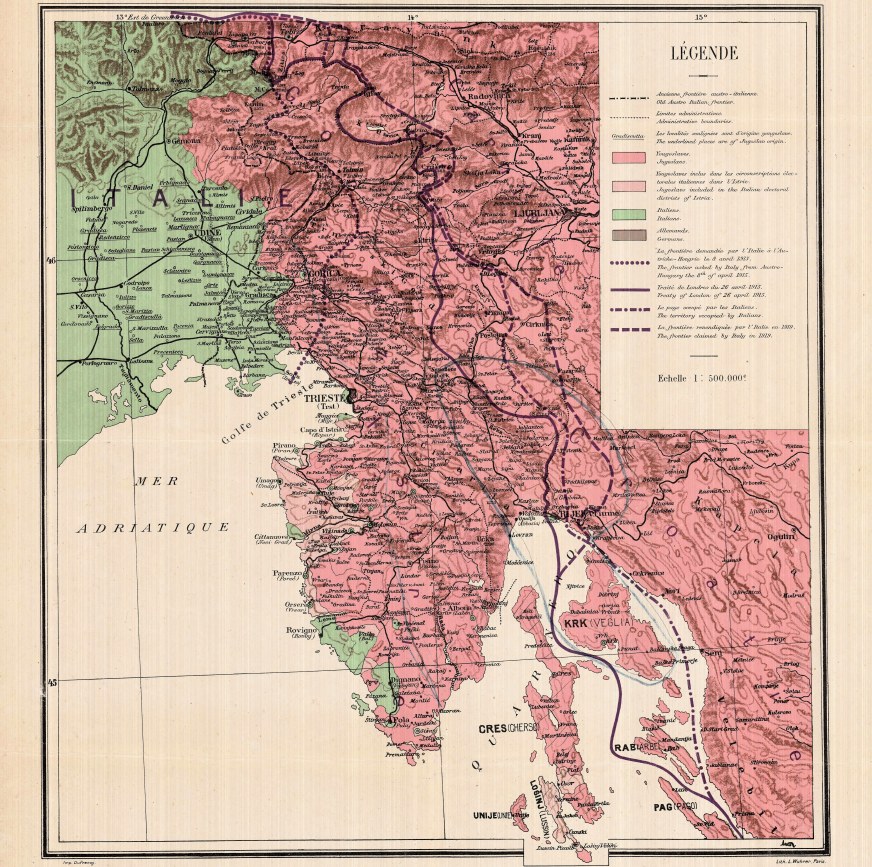
UNDER the auspices of French diplomacy and for the protection of the “peace” treaties against Bulgaria, Hungary, and Austria, the Little Entente was founded, that union of the three states, Czechoslovakia, Yugoslavia and Roumania with the help of which France desired to guarantee its hegemony in the Balkans. But France’s rival in the Balkans is Great Britain, which likewise endeavors by all means at its disposal to strengthen its influence there. Besides the imperialism of France and Great Britain, however, an aggressive policy is also carried on in the Balkans by fascist Italy, which has the advantage over its greater competitors of being far nearer the scene of action. In collaboration with the British imperialists, those of Italy have established themselves in Bulgaria and are constantly augmenting their influence on Roumania, Greece, and Hungary. In its endeavors to convert the Adriatic into an Italian sea, Italy has already laid hands on Fiume and is on the way to convert Albanian on the Board of this society.
Italian capital has already found a firm footing in Albania, the foreign trade of which country presented the following aspect in 1925: 75 per cent, or three quarters of the turnover fell to the share of Italy, 21 per cent to that of Greece, and 3 per cent to that of Yugoslavia. In 1926, the First Albanian Bank was founded with a capital of 12% million gold francs. Of this capital, 50 per cent is Italian, 23 per cent Albanian, 15 per cent Swiss, 8 per cent Yugoslavian, and 4 per cent Belgian. The chairman and two of the managers are Italians. One half of the reserves is deposited with Roman banks. Furthermore, 18 months back, a group of Italian capitalists, headed by the well-known financier Mario Alberti, concluded a loan agreement with the Albanian minister of finance for a sum of 50 million gold francs, to run for 40 years at a rate of 7% per cent, the annual service including amortization amounting to about 8 millions.
Last year a Society for the Economic Promotion of Albania, created mainly with Italian capital, was granted concessions for forest exploitation in the Skutari region, besides concessions for the construction of railways and roads of strategic importance in a possible attack on Yugoslavia. There is only a single Albanian on the board of this society.
By means of the Anglo-Persian Oil Co. and the Anglo-Dutch Royal Dutch Shell, Great Britain has succeeded in extending its influence to Albania. In connection with the exploitation of the naphtha sources there was once lively competition in Albania between British and Italian interests, but this ended with the acquisition of extensive naphtha concessions by Italy, too.
The interests of Italy and Yugoslavia are diametrically opposed in Albania. In June, 1924, there was a revolution in that country which destroyed the power of Achmed Bey Zogu, the adherent of the Serbs, representing the interests of the feudal landowners (Beys). This revolution, indeed, was directed against the power of the Beys and against the remnants of medieval feudalism and favored the confiscation of large landed property and the distribution of the land among the peasants.
At the head of the new government was Fan Noli, who was backed by Italy. The old government of Achmed Bey Zogu fled to Yugoslavia, whence it managed with the full support of Belgrade to depose Fan Noli and to restore the old regime of the landowners. This connivance has been admitted by the Yugoslavian foreign minister, Dr. M. Nintchitch. In the Paris paper “Le Matin” of February 16th, 1927, Dr. Nintehitch openly declared that at the close of 1924 his government financed and organized the overthrow of Fan Noli. Finally, however, Italy succeeded in winning over the Yugoslav puppet Achmed. Bey Zogu, by which means the Italian fascists paralysed the anti-Italian policy of the Albanian government.
For a time it seemed as though the Yugoslavian government of Parhitch and Nintehitch would succeed in coming to an understand with the Italians under the influence of British diplomacy. According to the agreement of 1924, Italy and Yugoslavia had each its separate sphere of influence in Albania and in other disputed regions of the Adriatic. Yugoslavia renounced its claims on Fiume in favor of Italy and was in its turn allotted the entire coastal stretch of Dalmatia. The Serbian government agreed to this settlement so as to have a free hand in regard to some disputed points in Macedonia and on the Egean Sea in relation to Bulgaria and Greece, in which connection it was desirable that all available Yugoslavian forces be concentrated on the Eastern borders. In Yugoslavia’s foreign politics, the “Egans” got the better of the “Adriatics.” Very soon, however, it became apparent that Italy had no intention of sharing its sphere of influence in Albania with Yugoslavia. The fascist government of Italy made use of the rebellion of certain clans of the Roman-Catholic persuasion in the North of Albania in November 1926 for the purpose of forcing Achmed Bey Zogu to sign the agreement of Tirana between Italy and Albania. By means of this treaty Italy gained full control over the foreign policy of Albania.
This agreement between Italy and Albania is backed by Great Britain. Both in the “New York Tribune” and in the “Matin” it was reported that on the occasion of a meeting at Leghorn between Chamberlain and Mussolini, the former promised that Great Britain would not prevent Italy from laying Its hands on Albania, British diplomacy works behind the scenes. It is influencing Roumania, Bulgaria, and Greece in an anti-French sense. Under the lead of British diplomacy, fascisti Italy is driving a wedge into the Little Entente, France’s main prop in the Balkans, by ratifying the so-called Bessarabian protocol. The yet unofficial union between Italy and Roumania will mean the secession of the latter state from the Little Entente and the complete isolation of Yugoslavia.
The agreement between Italy and Albania caused an acute government crisis in Yugoslavia. Indirectly this treaty was directed against France and also against Turkey, which particularly suited Great Britain, since the latter has long endeavored to alienate Yugoslavia from its allegiance to France and to draw it into the British net. As the protector of Yugoslavia, France cannot contemplate with equanimity this advance of Italian fascism, which already threatens the French interests in Syria and North Africa. Nor can Turkey remain inactive in view of the feverish zeal of the Italian fascists, which also menaces Asia Minor.
Isolated Yugoslavia now begins to think of an approach to the Soviet Union. True, the parliamentary speech of the Yugoslavian Foreign Minister, Dr. Peritch still bears the marks of indecision and half-heartedness as regards Soviet Russia, though under the pressure of public opinion he had finally to own that “the Yugoslavian people would gladly welcome the renewal of relations with the Soviet Union.”
The conflict between Italy and Yugoslavia in regard to Albania is therefore of more than local interest; it has acquired great international significance. It augments the tension not only in the Balkans, where an explosion may ensue on the slightest provocation, but also in other parts of the world. True, the imperialist powers are at present endeavoring to prevent any premature outbreak of hostilities in the Balkans, since they are at present still occupied with China. It is a moot point, however, whether they will be able to quench the spark once kindled in the nick of time.
The working masses in Yugoslavia already scent the smell of gun-powder on the Albania frontier and are therefore redoubling their exertions against the outbreak of a new war. In this connection they reckon on the indispensable help of the international proletariat. Thus supported, the working masses of the Balkan countries will be able to take up a successful fight against war, against imperialism, and in favor of the Balkan Federation of Peasants and Workers’ Republics.
The Saturday Supplement, later changed to a Sunday Supplement, of the Daily Worker was a place for longer articles with debate, international focus, literature, and documents presented. The Daily Worker began in 1924 and was published in New York City by the Communist Party US and its predecessor organizations. Among the most long-lasting and important left publications in US history, it had a circulation of 35,000 at its peak. The Daily Worker came from The Ohio Socialist, published by the Left Wing-dominated Socialist Party of Ohio in Cleveland from 1917 to November 1919, when it became became The Toiler, paper of the Communist Labor Party. In December 1921 the above-ground Workers Party of America merged the Toiler with the paper Workers Council to found The Worker, which became The Daily Worker beginning January 13, 1924.
PDF of full issue: https://www.marxists.org/history/usa/pubs/dailyworker/1927/1927-ny/v04-n110-new-magazine-may-21-1927-DW-LOC.pdf

