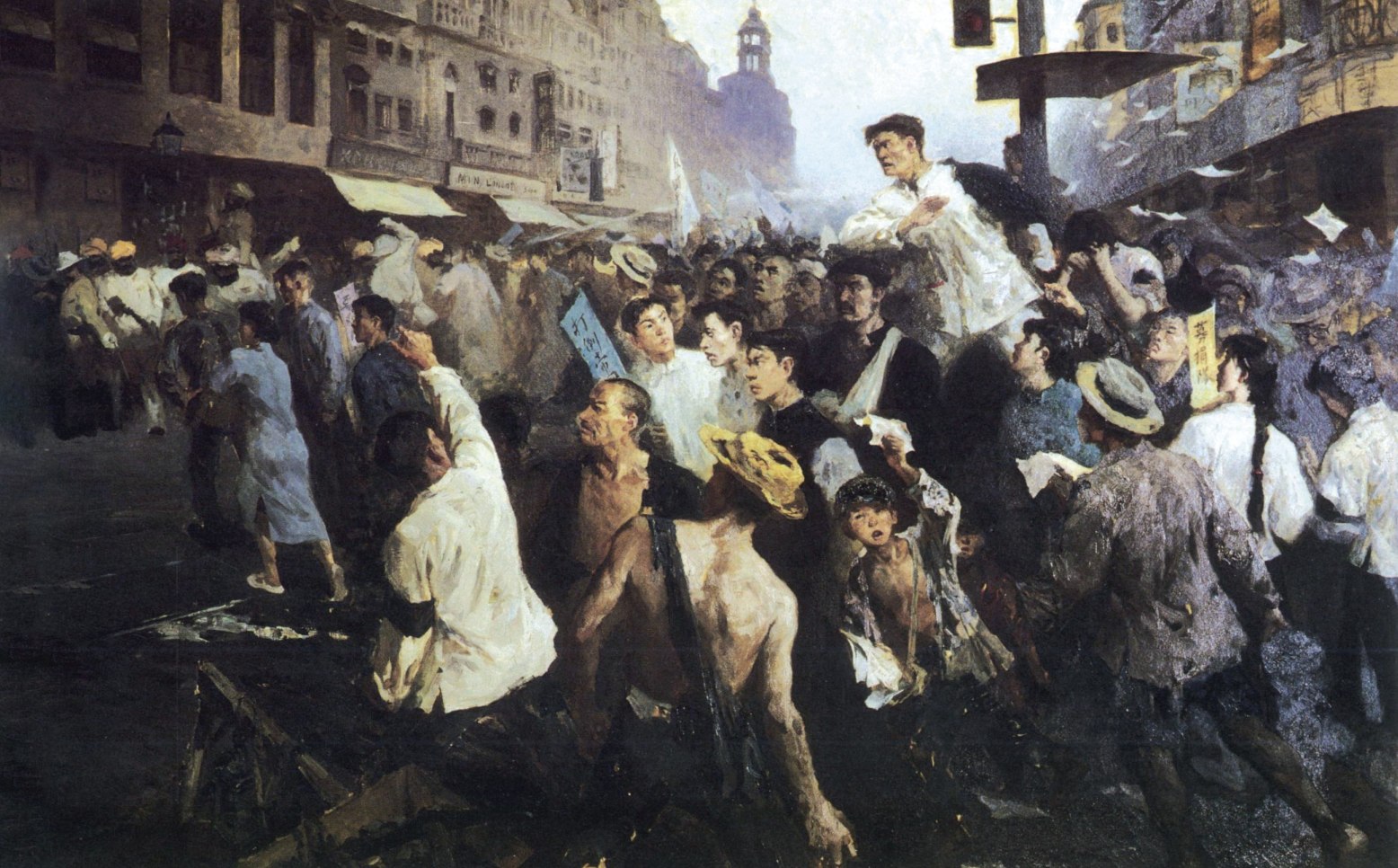
Zinoviev, Chair of the Executive Committee of the Communist International from its founding March, 1919 until his replacement by Bukharin in November, 1926, greets China’s May 30th Movement, which saw a wave of strikes, including Shanghai’s monumental general strike, in reaction to the massacre of demonstrators against imperialist occupation in Shanghai on May 30, 1925. In the process that followed China’s relatively small Communist Party would grow into a significant force, especially among workers and students in the south’s coastal industrial and trading cities.
‘The World Historical Importance of the Events in Shanghai’ by Grigory Zinoviev from International Press Correspondence. Vol. 5 No. 2 No. 51. June 18, 1925.
The movement began with the most modest economic demands the Chinese workers demanded the eight hour day for juvenile workers, the ten hour day for adults, and one day’s rest in seven; demands which the workers of the advanced capitalist countries put forward half a century ago.
The movement became a profound political event, which has assumed world historical importance.
From the demand for the eight hour day to the demand for the evacuation of China by the foreign troops! For this the Chinese workers needed in all only a few days. The working masses in Russia after a long period of preparation–likewise traversed an analogous road at a very rapid pace. The troops of the English and Japanese imperialists have now furnished the Chinese workers with just a lesson as, in their time, the reactionary troops of Nicolas Romanoff, who was spattered with the blood of the people, gave to the Russian workers.
The Russian workers in their time learned through painful and bloody experience the connection between Economics and Politics. And the struggle of the Russian workers became converted more and more into a political struggle, and ever louder and louder resounded the “Cry of the people”: Down with Despotism! The Chinese workers are now learning by painful and bloody experience, not only the connection between Economics and Politics in general, but also the connection between Economics in China and international politics, the politics of bloody imperialism.
The troops of the English and Japanese imperialists have shot down dozens of Chinese workers and also students who supported them. The English gendarmes have arrested workers employed in the electric power stations and water-works in Shanghai. These sections of the workers of Shanghai have been compelled to work at the mouth of the revolver in the literal sense of the word. Notwithstanding, the strike is extending to a general strike and the movement is spreading and growing. The slogans of the fight against international imperialism are growing louder and more powerful; the workers of Shanghai are coming forward more and more decidedly as the leaders of the general movement of the broad masses of the people of China.
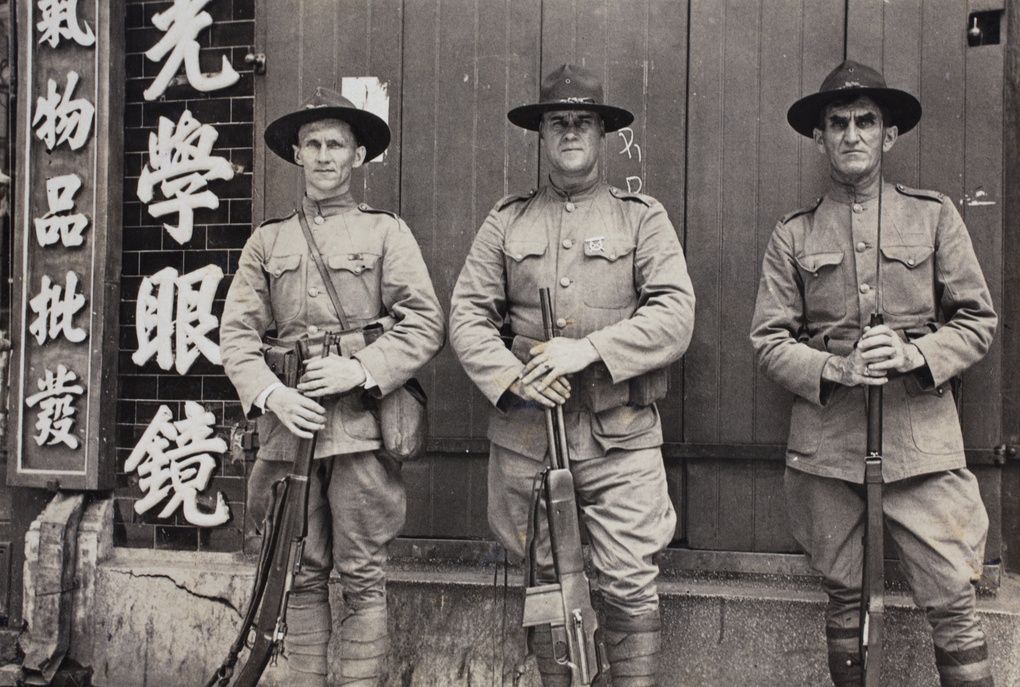
The English, Japanese and American imperialists are sending urgent war signals to their warships and are dispatching them to the “scene of action”. One need not be a prophet in order to predict that the hate of the hundreds of millions of Chinese people against the foreign capitalist robbers will become all the more deeper and that their demand: “Clear out of China” will resound all the louder.
English and Japanese imperialism, and especially the first, cannot live without plundering the colonies and semi-colonial countries. Without the predatory plundering of such countries as China there would be no excess profits, there would be no possibility of bribing the labour aristocracy in their own countries. There are only two alternatives: either plundering of the colonies or hastening the proletarian revolution in its own country. This is the issue which faces English capitalism. The dialectics of history are working in such a manner that it is precisely the pressure upon the colonies which is hastening the ripening of the national liberation movement in the East and which, in turn, is also expediting the proletarian revolution in imperialist England.
The great world historical importance of the events in Shanghai also consists in the fact that they have confirmed precisely this truth in the most striking manner. The Chinese workers commence with the demand for the most elementary improvements in their economic existence, and end with the slogan: “Clear the foreign imperialist troops out of China!” At the present moment the Chinese workers are becoming one of the most important factors of the international proletarian revolution.
“51% of the proletariat are less than 20% when, among the 51% there exists imperialist infection and petty bourgeois resistance.” So wrote Lenin in a sketch on the dictatorship of the proletariat.
The reason why for a long time the revolutionary weight of the English proletariat was so insignificant, was precisely because within the English working class there existed many elements of “imperialist infection” and petty bourgeois opposition to the idea of the proletarian revolution. The present rapid revolutionising of the English working class which has just set in, is bound up in the closest manner with the commencing decline of English imperialism. The growth of the revolutionary self-consciousness of the working class in the suppressed countries (colonies and semi-colonies), and the decline of “imperialist infection” in the proletariat of the suppressing countries, is a parallel process.
The working class in China represents a much smaller portion of the population than 20% (6 million among 400 million). But it is clear that, under favourable conditions, the Chinese working class can and will become the leader of the whole great national liberation movement of China, when one takes into consideration the following:
1. The working class, thanks to its situation, cannot be infected with the “Great Power” ideas of imperialism, on the contrary, the entire situation compels it to take over the role of leader of the whole of the people against the foreign capitalists who are oppressing them.
2. The advance-guard of the European proletariat who are led by the Communist International, recognise the enormous importance of the Chinese working class, and illuminate for it its historical way with the torch of Leninism,
3. The first victorious proletarian revolution (the Soviet Union) constitutes an ideal revolutionary point of support for the growing revolutionary movement in all colonies and dependent countries, among them being China.
4. In all the prominent centres of China (Shanghai, Hankau, Peking, Tsingtao, Nanking etc.) the Chinese proletariat constitutes a numerically important group. In Shanghai, for example, there are over 200,000 workers.
5. The majority of the population of China is keenly interested in throwing off the foreign imperialist yoke, and ever greater masses of the people of China are awakening to the conscious struggle against world imperialism.
6. The Chinese peasantry in particular are being driven by the whole situation to support the working class.
In view of the general situation which has arisen in China and the level already attained by the national liberation movement, the reprisals of English and Japanese imperialism will only add fuel to the flames.
The recent session of the Enlarged Executive of the Comintern was absolutely right when, foreseeing the alteration of the line of march of the proletarian world revolution, pointed out that the revolutionary events in the East were ripening with much greater rapidity than was to be expected, and that no partial “stabilising” of the capitalist West would be capable of postponing the victory of the proletarian world revolution for any great length of time.
The events in Shanghai serve as an example of the events in the whole of China, in India, Egypt, Java etc. In India, among a population of 350 million, there are 8 million workers; in Egypt, among a population of 20 million, 1/2 to 2 million workers; in Java 22 million workers among a population of over 30 millions. In all these countries there exist to a greater or less degree those six conditions which we indicated above. In all these colonial and dependent countries, the working class, if conditions are in any way favourable, will certainly succeed in impressing their stamp upon the great liberation movement of these countries.
“The revolt of the proletariat against the bourgeoisie of its own country, plus the revolt of the peoples in the colonies and in the dependent countries” this, declared comrade Lenin, was the essence of the international revolution. Now this formula is being clothed more and more with flesh and blood. The time is no longer distant when there will begin the great appeal between Shanghai and Calcutta, Hankau and Madres, Tsingtao and Cairo, Peking and Alexandria, And at the same time the revolutionary appeal between these centres of the colonial and dependent countries on the one hand, and the proletariat of London, New York, Tokio and Paris on the other hand, will grow and become stronger. In China and in Egypt the affair has already come to the occupation of factories and works by the workers. In India the movement of the workers is growing and extending. The sheet-lightening of the revolutionary movement in the East is piercing the darkness of black reaction which is hanging over all countries.
The demand of the workers of Shanghai for the evacuation of China by the foreign imperialist troops will find a powerful response, not only in Moscow and Leningrad, but in all the capital cities of the world. The English Trade Unions are beginning to fulfil their international proletarian duty. The more European capitalism, which is being “stabilised”, scorns and oppresses the workers of “its own” country, the more will the “provincialism” and give more attention and support to the European proletarians cast aside the narrowness of European revolutionary movement in the colonies and semi-colonies. It is in the interest of the European worker to support the colonial and semi-colonial liberation movement, not only as the sole leader of the approaching world revolution, but even simply as a seller of labour power.
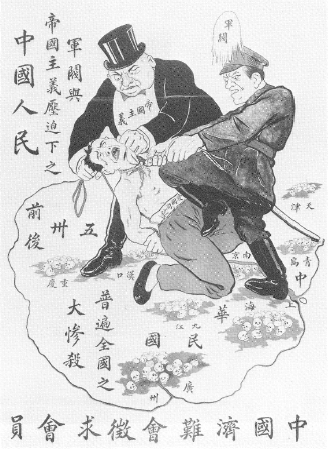
It is not so many weeks since the Communist International for the first time pronounced the word “Stabilisation” (partial “stabilisation” of capitalism in Europe). The events which have occurred in the few weeks that have passed since that time have shown with sufficient clearness to what a great extent the political stabilisation of the world situation is only relative.
The war in Morocco, the events in Shanghai, the increase of unemployment in England, the victory of Hindenburg in Germany, the events in Bulgaria, the signs of a financial crisis in France etc. all this goes to show that capitalism is doomed to decay, and that the international proletariat, led by the Communist International, will be its grave-digger.
“The cause of the workers in Shanghai is our cause”, the advance-guard of the European proletariat will say. The textile workers, the printers, the railway workers of Shanghai, the Chinese proletarians, are occupying the front ranks in the proletarian world war. We are heart and soul with the Chinese workers.
International Press Correspondence, widely known as”Inprecorr” was published by the Executive Committee of the Communist International (ECCI) regularly in German and English, occasionally in many other languages, beginning in 1921 and lasting in English until 1938. Inprecorr’s role was to supply translated articles to the English-speaking press of the International from the Comintern’s different sections, as well as news and statements from the ECCI. Many ‘Daily Worker’ and ‘Communist’ articles originated in Inprecorr, and it also published articles by American comrades for use in other countries. It was published at least weekly, and often thrice weekly.
PDF of full issue: https://www.marxists.org/history/international/comintern/inprecor/1925/v05n51-jun-18-1925-inprecor.pdf

