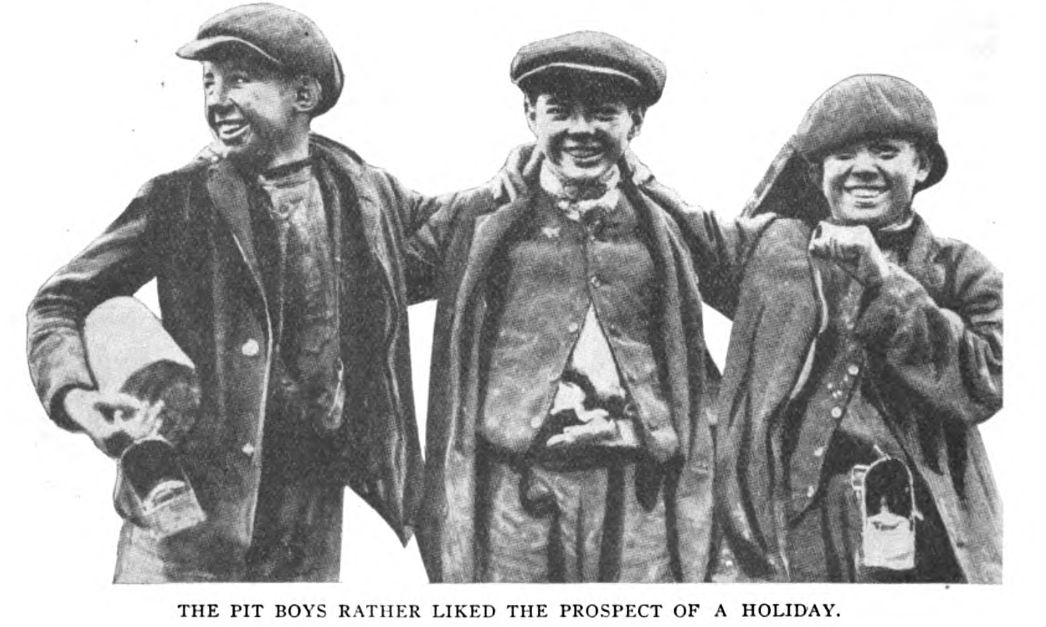
Just out of jail, Tom Mann on the wave of militant working class action that swept through Britain in the years before World War One hitting the crucial mining industry.
‘The Uprising of the British Miners’ by Tom Mann from International Socialist Review. Vol. 12 No. 11. May, 1912.
IN writing briefly upon the coal miners’ strike of Britain, I shall endeavor to show the extent to which the old time orthodox ideas have prevailed, and the extent to which the principle of Industrial Solidarity has been resorted to.
It has been the almost universal practice in coal mining in Britain for the men to be paid tonnage rates, i.e., to be paid according to the amount of coal produced and sent out of the mine, but as in all coal fields, the seams of coal vary in thickness and hardness, causing, in some cases much other work to be done by the miner besides simply heaving the coal, the amount of coal produced varies accordingly and unless reasonable allowance is made for the conditions under which the miner has to work, it means that a miner though working diligently, may not receive more than a half the amount of wages that men in other seams will get, working no harder than the miner in the difficult seam. Therefore from time immemorial, it has been the practice to make necessary allowances for men working in “abnormal places,” or difficult seams, and probably no one working day has passed over in the British coal fields, for generations without such mutual decisions being arrived at to enable work to proceed.
Recently, partly owing to more perfect combination on both sides, the difficulties of arriving at settlements have been greater than formerly, but a chief reason of such difficulties is the decision given in law courts against the claims of the men when they have endeavored to secure rates in accordance with past custom.
To illustrate, the case of the South Wales colliers may be given. Until recently, the colliers working upon the normal price list or tonnage rate, but being in a difficult or abnormal place, would be allowed by the manager, such extra rate as would bring his wages up to the average amount; and usually on cases being brought to court by miners, the court awarded in their favor to secure for them the average wage, but a few years ago a certain Judge Bryn Roberts, decided, that all such extra allowances made by owners were in “the nature of a gratuity or charity,” and that the miner could claim nothing beyond what the price list declared, and such decisions played into the hands of the owners in such fashion that the number of instances where miners could not get anything approaching an average wage increased greatly and consequently dissatisfaction grew and showed itself in various ways.
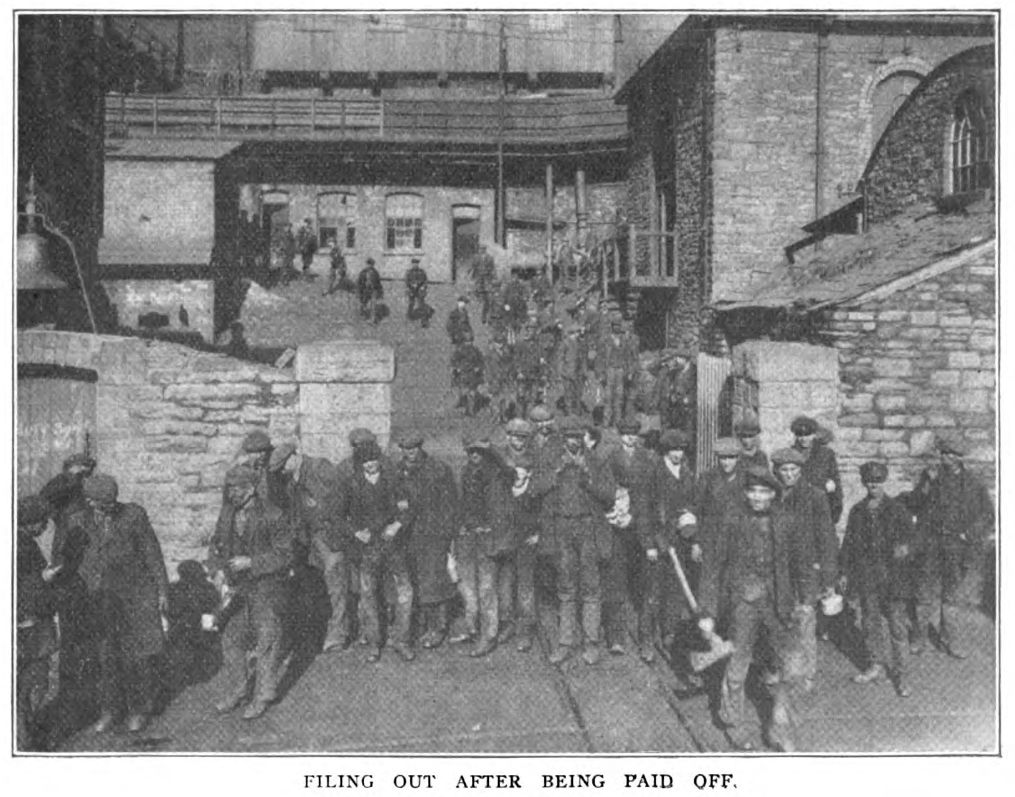
This was the cause of the Cambrian combine miners’ strike a year ago, and of fifty or more disputes in the various coal fields.
The wages of the collieries have varied from five shillings a day to thirteen shillings, with an average of about seven shillings and six pence a day, but that some received less than five shillings is quite certain, and so numerous were the complaints of those already affected that at the conference of the Miners’ Federation of Great ‘Britain, held at Newcastle in October, 1909, the following resolution was carried:
“That the Annual Conference of the Miners’ Federation of Great Britain believes that the time has come when a special effort should be made to extend and raise the present minimum to at least eight shillings a day, and remits to the executive committee to devise the best means of raising the present minimum to that extent.”
It was something to get this resolution so far, and the miners who were in earnest found it was an exceedingly difficult matter to get the miners officials to take definite action to put the resolution into practice, but the eleven months strike of the twelve thousand men of the Cambrian Combine forced matters to a head.
And now it is necessary to deal with the mentality and environment of the miners’ “leaders” and of the rank and file. In the first place fully seventy per cent of the one million men in and about the mines were organized; and practically all of them believers in political and parliamentary action, having returned a number of their “leaders” to the House of Commons. These “leaders” are’ part of the political labor party; and orthodox believers in the state as the all powerful institution, and therefore favoring the nationalization of the mines, but the miners themselves, and the “leaders,” to their credit, have never been favorable to state arbitration in matters of wages or working conditions, and when at length it was decided to try and get a minimum wage through, it was on industrial organization and direct negotiation that they relied to achieve the end in view. But neither leaders nor rank and file (apart from a small but virile minority), had any real grasp of the true principles of industrial solidarity and of the right method of conducting such a fight against such a well organized and wealthy body of opponents as the organized mine owners.
It is true the various miners’ associations were connected with the Miners’ Federation, and that they unitedly agreed upon common action, and to this extent they were able to resort to solidarity, in the mining industry, but they made no effort at all to obtain the backing of other industries on the basis of solidarity. Not only did they not ask for the help of others, but when the National Executive of the Transport Workers’ Federation carried a resolution of sympathy and informed them of their readiness to help, even to making of common cause if need be, the miners’ leaders simply replied that “so far they did not feel the necessity for help.”
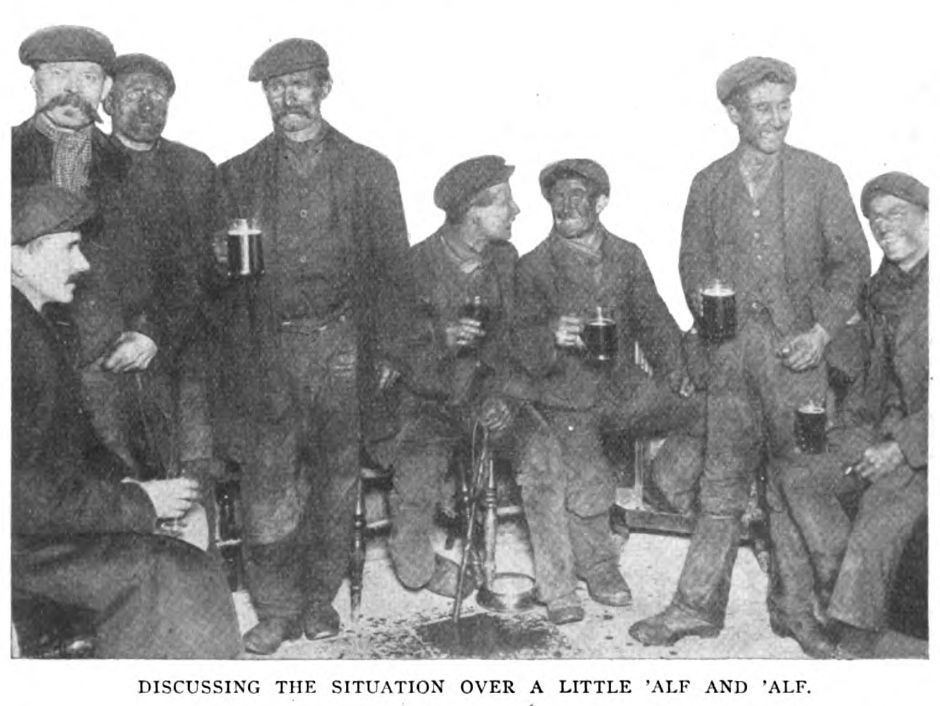
The miners had intimated to the world for some four months before action was taken by them, that they intended taking such action, and so the capitalists throughout the county obtained stocks of coals, and then, when the notices of the miners expired on the 29th of February, they met in conference for a fortnight, but made absolutely no progress at all. Then instead of asking for the backing of the Transport Workers, they left the matter in the hands of the government with Prime Minister Asquith, meeting first the owners and then the men, but never getting anything done or causing the stubborn section of owners to alter their position in the least, and the third week of the strike passed over and by this time a million of other workers were thrown out of work as a consequence of the strike.
Then the government declared they would introduce a minimum wage bill unless owners and miners settled their differences. These did not settle their differences and a minimum wage bill declaring in favor of the principle of a minimum wage, but not fixing a minimum was passed, and the end of the fourth week of the strike is reached, and at the time of writing, Monday, April 1st, we are in the fifth week, but no settlement has yet been reached. The reason is that the miners’ leaders are obsessed with the bourgeoise notion of constitutional action, and are devoid of the real fighting spirit that would enable them to understand how to bring pressure in the right quarters against those who resisted them. The backing of the miners by the Transport workers would have hit the owners and the capitalist class far more in three days than the miners alone have done in more than four weeks. The miners have fought on lines and by methods that do not seriously hurt the opponents, and fights that don’t hurt are not real fights at all.
I must make it clear that a growing section of the rank and file are possessed of precisely the right spirit, and are quite clear headed as to how to proceed; but the general body do not as yet appreciate the right methods and the present day leaders (80 per cent of them), are of the “rest the thankful order,” and whilst engaged in a serious class struggle, are amenable to the conventional notions, of “regard for public convenience” and high notions of “citizenship.”
But these are passing comparatively quickly too, and this fight was necessary to enable the light to enter.
It has been a remarkable struggle in several respects:
First, it is the first time in British history when real solidarity characterized the whole of the workers in the industry.
Second, although the leaders have been woefully jacking in the mental conception of centering their forces where the enemy would have been found vulnerable by the addition to their forces of that solidarity that might have been obtained from other industries, still the leaders have at least exhibited a doggedly unyielding attitude and nothing in the nature of panic has characterized any of them.
Third, they have lost nothing, and have gained something, the declaration by Parliament that a minimum wage must be paid, and that district boards must be set up to fix the minimum for the districts, is no great gain, but at least they have lost nothing, and those younger men, are in the ascendency who have already made their influence felt and who are assiduously carrying on a systematic educational campaign. These young men, themselves working as miners, have recently issued a pamphlet entitled, “The Miners’ Next Step,” an exceedingly well written and well thought out product it is, but so far it has received little but contemptuous references by the older and the official school. The pamphlet effectively criticises the Miners’ Federation, and in excellent temper and style sets forth other proposals, calculated ere long to be in the main accepted by the general body. For immediate steps it is proposed,
“That a minimum wage of eight shillings a day, for all workmen employed in or about the mines, constitute a demand to be striven for nationally at once.
“That subject to the foregoing having been obtained, we demand and use our power to obtain a seven-hour day.”
By today’s cables, we learn that nine hundred thousand coal miners of the United States are on strike, in the name of those for whom I can speak I send hearty greetings and encouragements. Each successive fight enables us to learn how to fight better and the time is not far off when we shall be able to exhibit solidarity—not in one industry only nor in one country only, but in all industries in all countries. So may it be.
This week the votes of the British miners are being taken on the subject of whether they shall return to work and await the award of the district boards to fix the minimum for each district, which decision is to be made retrospective from the time of the passing of the minimum wage act, and some of the counties have given decided majorities against returning till they know exactly what the wages are to be; but the strike is virtually over and 20,000 men are now at work, but this is not by any means an indication of demoralization, as one-half of these men are in Warwickshire, where they had secured a satisfactory minimum before the strike commenced, but all of whom made common cause for the sake of solidarity and stood quite firm until the Federation officials declared in favor of work being resumed.
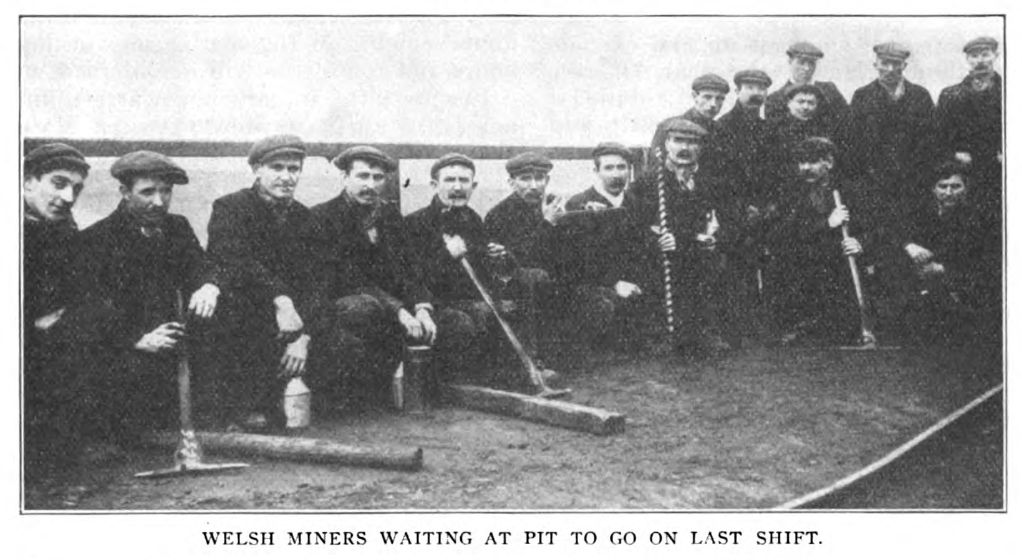
It is noteworthy that some of these officials are already declaring in favor of different tactics, thus Wm. Staker, one of the foremost amongst miners’ officials in Northumberland, states that, “if ever again the miners contemplated a national stoppage, they would strike swiftly and suddenly.” This lesson ought to have been learned long ago, but better late than never.
All this coupled with the persistent advocacy of “Syndicalism” is rapidly focusing attention on the need for perfected industrial organization. In two months’ time, we may expect the demands of the British Railway men to be up for consideration, and if their case be handled discreetly it is likely that very substantial improvements in the matter of working hours and conditions will be obtained.
For myself, I am now under arrest, but am out on bail to appear at the Manchester Assizes on May 6th, charged with “inciting the military to mutiny,” etc.
The cause is moving rapidly, the old time lethargy is giving place to a gloriously healthy activity, at last it is really the fact that the crusade for the abolition of poverty by securing industrial emancipation is inspiring millions; not all by any means, clear minded, but instinctively correct, and exhibiting a superb courage that forebodes complete success.
The International Socialist Review (ISR) was published monthly in Chicago from 1900 until 1918 by Charles H. Kerr and critically loyal to the Socialist Party of America. It is one of the essential publications in U.S. left history. During the editorship of A.M. Simons it was largely theoretical and moderate. In 1908, Charles H. Kerr took over as editor with strong influence from Mary E Marcy. The magazine became the foremost proponent of the SP’s left wing growing to tens of thousands of subscribers. It remained revolutionary in outlook and anti-militarist during World War One. It liberally used photographs and images, with news, theory, arts and organizing in its pages. It articles, reports and essays are an invaluable record of the U.S. class struggle and the development of Marxism in the decades before the Soviet experience. It was closed down in government repression in 1918.
PDF of full issue: https://www.marxists.org/history/usa/pubs/isr/v12n11-may-1912-gog-Corn.pdf

