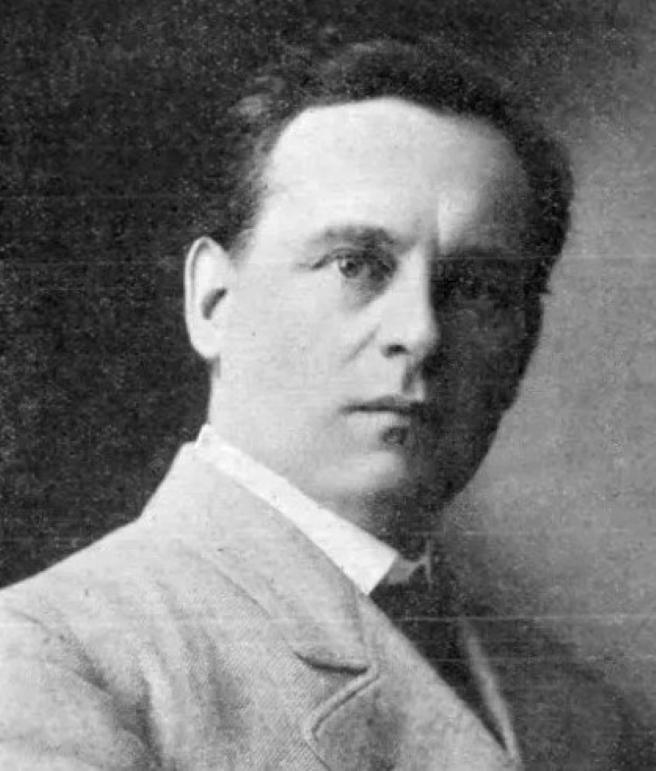
Policing a society this unequal and alienated necessarily requires, and attracts, monstrous people to do it. The poorer you are, the more frequent and violent your interactions with the monsters of law and order are. Austin Lewis, Marxist and long-time lawyer for rebellious proletarians, with an insider’s look at the mindset of police in dealing with one of our class; Frank Welch picked up on a vagrancy charge.
‘The Way of the Law with the Worker’ by Austin Lewis from New Review, Vol. 4 No. 3. March, 1916.
FRANK WELCH was held in the city prison on the charge of vagrancy. He had been arrested several weeks before and held in detinue for some time. This means that, contrary to the law, he had been segregated by the detectives and held incommunicado, without any charge having been placed against him. He sent for me to see him.
In the meantime a charge of vagrancy had been made and Welch had asked for a jury trial. This meant another month’s confinement before the trial would be held. The police had a firm grip upon him and as he was penniless and a stranger in town his chances of still longer confinement were fairly good.
Before he could be seen it was necessary to get a permit from the captain of detectives. This was a little unusual, for Welch was charged with a mere misdemeanor and under such circumstances all that is required as a rule is to get a pass from the desk sergeant.
I knew the captain; he had formerly been chief, but a change in the administration had caused his reduction and he was in charge of the “inspectors.” This is an euphemism, for the detective department which has the power of setting the constitution aside and of treating men in a fashion not contemplated by the code of any civilized country.
This particular captain is quite an unusual person. He has more than ordinary knowledge and is in some respects fairly well read. He is also a man of opinions, which he frequently has the courage to maintain, even in the face of public opinion and against the Puritanical influences which are so strong in a comparatively small city. It would be hard to find a more capable or a fairer man; all of which however makes it no easier for the hapless vagrant who has the misfortune to fall into his hands.
So I went into his office and asked for a permit to see Frank Welch.
“I thought that he would send for you,” said the captain.
“What made you think of me in particular?” I asked.
“They generally ask for you,” he said. And I wondered how often their requests went unheeded, for I have very few calls of this sort.
I remembered, however, that once it came out that a poor fellow who was grievously ill treated in the county jail had asked for me as a lawyer, but his request had been ignored. In that case the sheriff of the county had turned over the jail to a group of private detectives who had charge of bringing him from Fresno. All night long these detectives had tortured him. They teased him by keeping him awake. They thrust sticks through the bars of the cell and whenever he tried to sleep they poked him. After a time nature dominated even these tortures, for this was the third night that he had been so treated, and he fell asleep. The detectives, private detectives, then took him from the cell and marched him up and down the corridors to keep him awake. Several times during this course of treatment he had asked for me, and each time he had been refused.
There is nothing more lonely and miserable than a poor prisoner in the hands of the police. His helplessness is complete. The detinue system gives the detective department the opportunity to commit any sort of cruelty with impunity. I knew a literary gentleman in this town who once had the misfortune to work late at night and to need a cup of coffee. It was about 2 o’clock in the morning when he set out to a little restaurant. Before noon next day he had been stripped naked, struck, Bertilloned and subjected to innumerable indignities. He was a Southerner with great ideas of his own personal dignity. He was also a man of independence, although at the time of his arrest he had no money in his pocket, having spent his small change for coffee. I shall never forget his amazed horror when he was informed that there was nothing which he could do to remedy the wrong that he had suffered.
“But I tell you, sir, they struck me,” and he actually wept, “they took all my clothes off; they took my measurements and they photographed me. My picture is in their record at the jail and will be there always. I am disgraced, sir.”
And so he was. The detective department has its own laws. It is not amenable to the laws of the land. It acts in secret and there is none to call it to account.
If such a thing could happen to a well dressed old gentleman of attractive appearance whose only fault was that he was not known to the police department, one may imagine the evils that might befall a rough workingman, a stranger in town, and with no money in his pocket.
“What has he been doing?” I asked the captain.
“Stealing copper wire,” was the answer. Now, he was not charged with stealing copper wire, the charge on the book was vagrancy. The detective department suspected him of stealing copper wire and were holding him on the charge of vagrancy. This was the meaning of the detinue proceedings; this was the reason of his being hidden away in the recesses of the city hall for weeks before his friends could get any inkling of his whereabouts or do anything to help him.
The police had no case against him for stealing but they wanted to establish one and they were holding him.
“I don’t know why they send for you unless they can get you cheap,” said the captain with a half laugh, and I fancy a half sneer.
“You know all about it, captain,” I said. “You know my views very well.”
“It go a long way with you,” said the captain, “a long way; I do not agree with you altogether, but I think you are mostly right.”
I never know when they speak the truth or when they merely sneer. A life of agitation and close relations with the working class and particularly with that portion of the working class which is known as the unskilled, has filled me with an utter contempt for every department of the so-called administration of justice. Civil and criminal, it is all alike. Policeman, sheriff and judge, there is little to choose between them. They do not seem to be human beings. They are lying and leering images of humanity. But behind them there is a sort of institutionalism, an impending force, an impalpable sort of sublimated power, which says, “I am a liar and a bully and a scoundrel and you know it and you cannot do anything about it. Neither can I.”
I have seen the same look on the face of a district attorney when he was making a case, the same look on the face of a judge when he was putting something over, the same look on the face of a policeman when he was making his official position serve the purposes of his private malice. I remember on one occasion having to go to the inquest of a twenty-year-old boy who had been shot and killed by a policeman. There was the same look on the policeman’s face when he testified that he had done the shooting in self-defense. I saw the same look on the face of a judge who sentenced two men to imprisonment for life when he knew that they had not had a fair trial and that they had been obliged to face the prejudices of a hostile and unfair community.
The administration-of-justice face is not the ordinary fox face which is accepted as typifying the legal profession. It is rather the face of a fox which knows that it smells; the face of an inferior animal conscious of its own inferiority. And so I never know what they mean, for one cannot talk with them as with other men.
So perhaps the captain did think there were things that ought to be set right. Perhaps in his heart as a man there were feelings which he could not afford to harbor as a detective. At any rate he gave me the pass and I took the elevator to the top of the building, thirteen stories of it, in the tower of the city hall.
And the feeling against the prisoner was manifest directly I showed my pass.
“You can’t see him,” roared the jailer. “He can’t be seen.”
“But I have the pass from the captain of detectives,” I said, and the infuriated jailer roared his denial of my admission until another look at the signature on the pass made him think that it might be genuine, and he threatened to telephone to the office to see if it was all right. Having carried out his threat and discovering that no fraud was being perpetrated on the jail, he consented to call the prisoner.
And when the boy came in I fell for him forthwith. He was close on six feet of the most perfect make. He was an Ouida hero in the guise of a hobo, the very beau ideal of young Teutonic manhood. His chestnut hair was an aureole to an almost perfect face, with strong chin and mobile mouth, and mild large grey eyes. He walked with the stride of physical perfection and confidence, the stride of the ideal aristocrat of the Nietzchean type, conquering, and with plenty of reserve. He was the sort of young man whom one would pick out of a group of students or athletes and point to him as a child of promise. Here was no criminal. His twenty-three years had put no blemishes upon him, no marks of dissipation disfigured the sweetness of his face. His complexion was clear and fine, tanned somewhat with the outdoors, but the vivid pink and white beginning to show itself where the prison confinement was bleaching the tan. His blue shirt had been torn and was lying open buttonless, and the column of his neck rose brown and strong.
His face twitched with nervousness and his lip trembled a little. Thinking that he might have the malaria which comes to the valley people, and that he might be in need of medicine, I remarked upon his apparent nervousness.
“Yes,” he said, “I am nervous, the confinement breaks me down. I am not used to being indoors, I am in the open air all the time.”
And there was not a touch of the foreign in his speech.
“What is your nationality?” I asked, and he told me that he was American, born in Portland of an English father and a Norwegian mother. And surely enough that physique of his bore witness to the origin. He had the best marks of both peoples.
He was educated at the Portland public schools and had gone as far as the seventh grammar grade.
How had he come down to this stage? I was interested to know. “And was he a member of the I.W.W.?” He certainly was. He had seen me at San Diego during the free speech agitation and had heard me make a speech and try the case of the Austrian, who had been afterwards shot by the police.
His father had been originally a miner, but had saved a little money and had opened a store in Portland, Oregon, which had failed in the hard times of 1894. Then his father had gone into farming but had not been fortunate, for he had settled on a homestead which afterwards was condemned under the land fraud cases in Oregon, so that all his work was wasted, and he was turned loose, destitute upon the world. He never recovered from this and drifted down to San Diego where he worked as a common laborer.
There the boy had grown up and had become a teamster, a good union teamster, a member of the A.F. of L. union of teamsters. But the iron had eaten into his soul. The poverty and misfortunes of his father bore revolutionary fruit in the son and he had joined the Industrial Workers of the World.
Thenceforth the lure of the adventure of agitation had been more to him than the drudgery of “wage slavery.” The Norse romanticism which slumbered behind those grey eyes and to which he was so legitimately entitled had beckoned him along the revolutionary road.
The street-speaking fights, the short periods in jail for misdemeanors, the jungle, even the scarcity of food at times and the difficulty of making ends meet, had been more attractive than the drudgery of every-day work, than the making of profits for the boss whom he had already learned to despise.
From San Diego with its free speech fight, to the burning Imperial Valley where the local of Brawley of the I.W.W. had been engaged in fierce battle with the local authorities. Even there the migratory laborer had his heroes. The sheriff’s posse had opened fire on Dodson and his companions just as they were on the very border of old Mexico, and they had been wounded and taken prisoners and sentenced to various terms from ten years down for horse stealing. The sheriff had burned down the headquarters of the Industrial Workers and had used every effort to drive them from the county, but he had failed, and the headquarters had been rebuilt and the sheriff was dead, suddenly and untimely, with a little air of mystery about his taking off.
Then there were the innumerable little fights on the ranches where one stopped and worked. The constant struggle to make one’s self felt, to improve the condition of labor even in the matter of food and sleeping, and the constant strife with the employer, the grouping of the men of the same organization, the reading of reports in “Solidarity” of the struggle which was everywhere going on, the singing of the songs in the jungles in the evening when the stolen chickens bubbled in the pot or the suckling pig roasted in the ashes. The hot drowsy days when one never worked but slept, and the long warm starlit nights of the great California valleys, when life itself made a poet out of one.
There was also organization work to be done if it were only to paste stickers all over the countryside to remind the fruit pickers and the hop pickers and the cannery hands that Ford and Suhr were still in jail and that they must remember that Ford and Suhr, though still in jail, had done much for the migratory laborers of the State of California; had gotten them clean beds and running water to drink, and baths and other comforts, which might appear minor to you and me, but which are quite important to men and women, and even children, toiling in the hot sun all day, tormented by insects and torn and scratched by the vines.
It was an outlaw’s life with all its fascination and by all the facts of heredity it was a life for Frank Welch. The world has been colonized, nations have risen and empires grown from just that same spirit. The old viking blood which bubbled in his veins claimed its own. It was unfortunate for present society that there was no legitimate outlet for all that spirit and that hereditary fire; for it would not be denied. The free lands had gone. The chance of the pioneer and the settler was over. The net had closed around the working class. It was impossible to escape the exactions of the capitalist, and one had to be a laborer. The land of romance, the land of adventure, lay in the fight for the betterment of labor itself. Our Norse adventurer must perforce go berserking for the benefit of his class. And he was practically a berserk. As he stood, the six feet of him, in his overalls and cotton shirt, he reminded one of those ancestors of his, who, clad in nothing but their shirt, had gone forth into the world to fight their way; who “gained a gallant name and conquered Normandy,” as the old song has it.
The berserk spirit had found its own in the proletarian fight, a fact which does not augur well for the existence of things as they are, for the berserk spirit has never yet been denied. And among the migratory laborers, at least among the active ones who take up the struggle, you find an ever-increasing number of young Americans of those Northern races in whom still lives the spirit of conflict and the joy of strife.
But to the outlaw comes always the finality of the law. And this Frank Welch was feeling, thirteen stories up in the tower of the city hall, with gratings all about him and the surly jailer for a steady companion.
I did not like that jailer, his manners had been so unnecessarily offensive, and I told Welch so.
“Oh, he is not a bad fellow,” was the surprising reply. “He is a roughneck all right, but then you have the worst of him. He does not double-cross like the others.”
He went on telling about his treatment after his arrest when he was in the hands of the inspectors or detectives. There was nothing new about it. Every migratory worker who had been unfortunate to fall into the hands of the police has practically the same story to tell.
“They took me into a little room and asked me where I got the junk which they found on me. I told them that as they had arrested me it was their business to find out. I was not helping them any. I had four and a half dollars on my person when they arrested me. They wanted to know where I got it from and I would not tell them. Then they got mad and one of them came at me and tore all the buttons off my shirt. And one of them made a pass at me to strike me and said that I would be glad to tell everything before I was through, and I did not answer until he struck at me the second time, when I said, ‘You had better not hit me for you do not want to kill me, and if I am alive I shall come out of jail someday.’ Then they left me alone.”
There is something very convincing about Frank, and a policeman is no more anxious than anyone else to ford the black river. The poor and the lonely are the chief recipients of attention at the hands of the police. If one has an organization behind him, however small, it is different, for one is respected in proportion to the influence which one may exercise. Sometimes the influence is indirect, as social position; at other times it is more direct, as in the case of wealth, and at other times it is even more direct, as in the case of physical violence.
This last is the sole weapon of the migratory worker, for his organizations are usually very small and count for nothing in the community. If a member of the A. F. of L. is arrested there is generally behind him all the combined forces of the organization, with its political influences and its consequent ability to get bail. Hence the police will not ill-treat a regular organized workman if they know it. But the migratory is the defenseless subject of police brutality and against that there is but one method of reprisal, namely, to let the police thoroughly understand that there will be retaliation for brutality and ill-treatment. When once this fact has permeated the mind of the average policeman, he will be more careful in his employment of unnecessary and wanton force upon the persons of those unfortunate enough to come into his power.
“I do not see how they can hold me,” he said, “T had four and one-half dollars when I was arrested, and no man is a vagrant with four and a half dollars in his possession.”
“They put the charge of vagrancy against you because they expect to make good on the copper wire charge,” I told him, and he understood that readily enough.
His further adventures cease to be typical and are merely personal, so I leave him here, merely adding for the satisfaction of the curious that the police finally persuaded him to plead guilty to vagrancy.
The New Review: A Critical Survey of International Socialism was a New York-based, explicitly Marxist, sometimes weekly/sometimes monthly theoretical journal begun in 1913 and was an important vehicle for left discussion in the period before World War One. Bases in New York it declared in its aim the first issue: “The intellectual achievements of Marx and his successors have become the guiding star of the awakened, self-conscious proletariat on the toilsome road that leads to its emancipation. And it will be one of the principal tasks of The NEW REVIEW to make known these achievements,to the Socialists of America, so that we may attain to that fundamental unity of thought without which unity of action is impossible.” In the world of the East Coast Socialist Party, it included Max Eastman, Floyd Dell, Herman Simpson, Louis Boudin, William English Walling, Moses Oppenheimer, Robert Rives La Monte, Walter Lippmann, William Bohn, Frank Bohn, John Spargo, Austin Lewis, WEB DuBois, Arturo Giovannitti, Harry W. Laidler, Austin Lewis, and Isaac Hourwich as editors. Louis Fraina played an increasing role from 1914 and lead the journal in a leftward direction as New Review addressed many of the leading international questions facing Marxists. International writers in New Review included Rosa Luxemburg, James Connolly, Karl Kautsky, Anton Pannekoek, Lajpat Rai, Alexandra Kollontai, Tom Quelch, S.J. Rutgers, Edward Bernstein, and H.M. Hyndman, The journal folded in June, 1916 for financial reasons. Its issues are a formidable and invaluable archive of Marxist and Socialist discussion of the time.
PDF of full issue: https://www.marxists.org/history/usa/pubs/newreview/1916/v4n03-mar-1916.pdf

