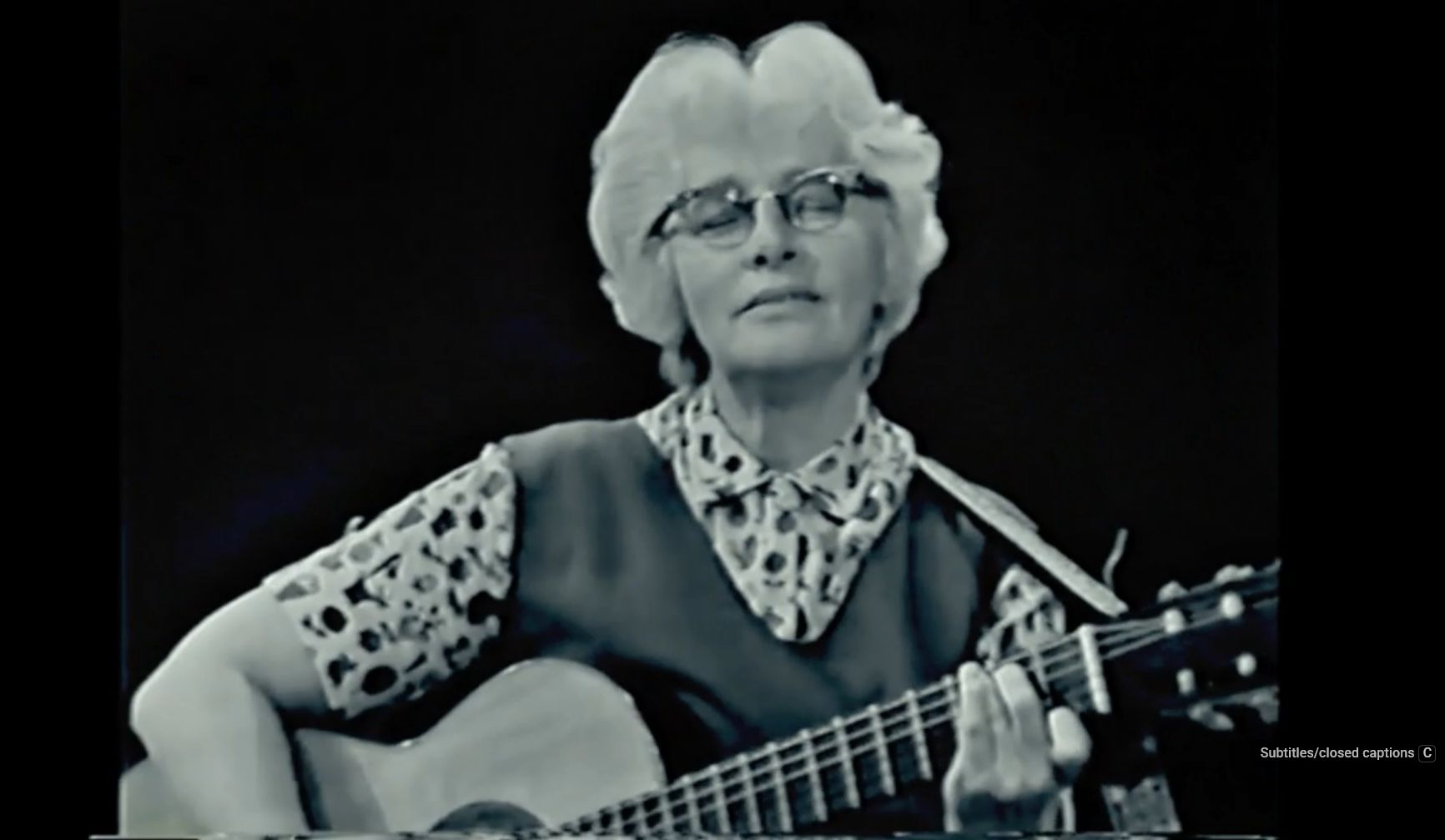
Decades before she she became known as a folk singer and songwriter, working with Pete Seeger, Malvina Reynolds, herself a red diaper baby born in San Francisco to Jewish immigrant Socialist parents, was politically active in the Left and labor movements. Here, she writes from her experience working for the Cannery and Agricultural Workers Industrial Union in the Brawley lettuce strike and the death three-year-old girl Cruce Guitterez from the effects of tear gas shot into the local union hall.
‘Recuerdo’ by Malvina Reynolds from Working Woman. Vol. 6 No. 7. August, 1935.
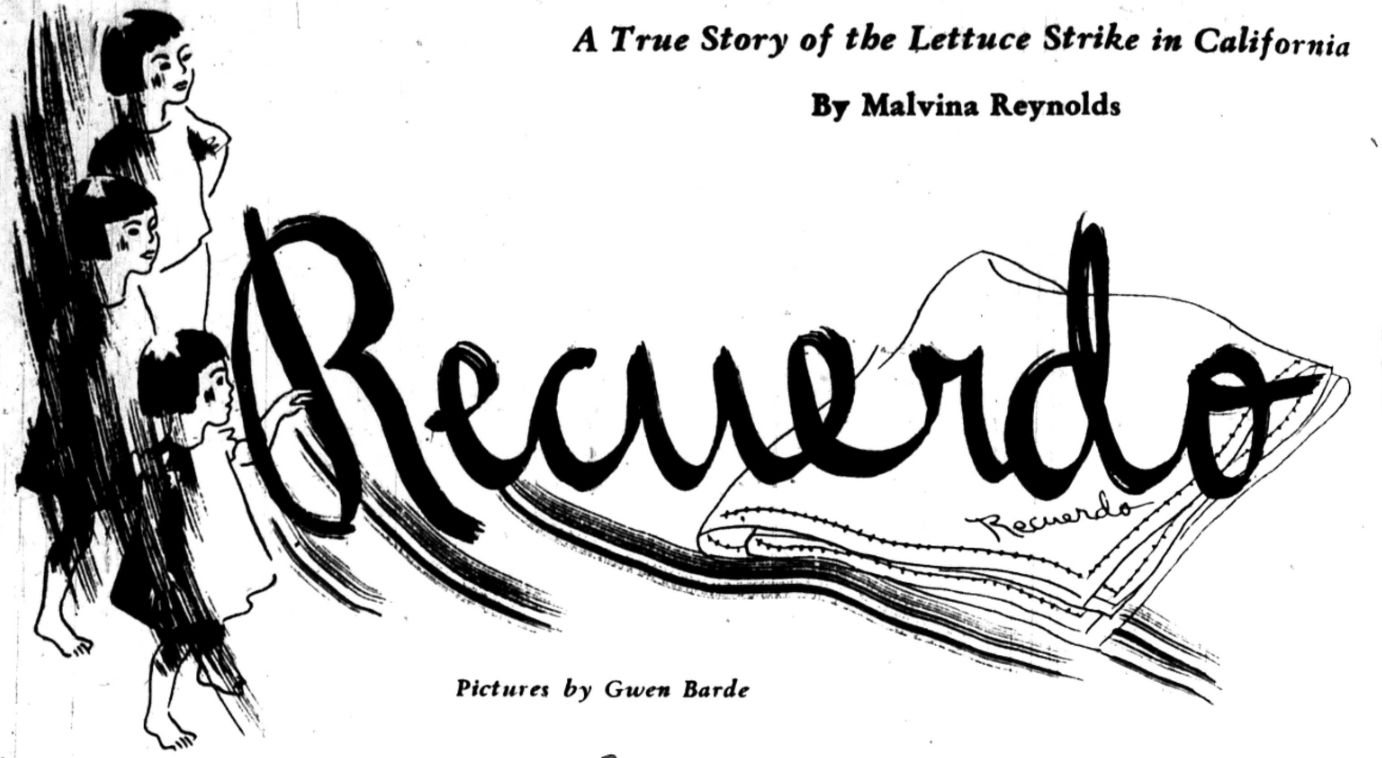
A True Story of the Lettuce Strike in California
I KNEW the little girl who was killed by tear gas thrown into the union hall at Brawley by police and vigilantes during the lettuce strike.
Her name was Cruce, which means “crucifix,” and she was one of three children of young Emanuel Guitterez, agricultural worker and trucker.
I was directed to Emanuel’s house, a board shack in the “colonia,” when I went to Oxnard to meet with the executive committee of the local union during the beet strike.
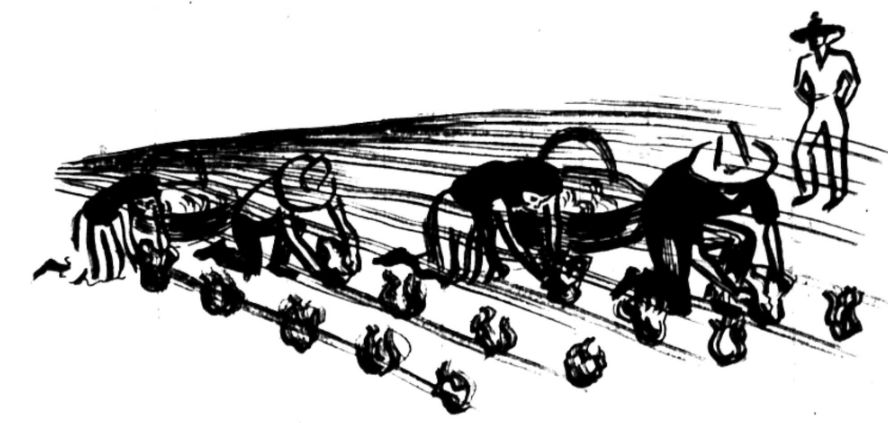
I arrived in the afternoon, and stayed with Mary Guitterrez and her babies till the meeting there in the evening. The boy Atanacio, Cruce, and Nene, the little one, had been playing in the yard, plowed into deep dust by the trucks and cars. Emanuel had his own truck. He had paid for it with beet-thinning (three dollars a back-breaking acre, and a good man can do an acre in three days), walnut picking (you get paid by the sack, and the bosses are always slipping in bigger and bigger sacks, and then they cheat you on a sack at the count), pea picking (they always put on too many workers for a field, then the contractor can get bigger percentage of the wages, and more for meals. You pay for meals whether you eat them or not). The truck was paid for; now Emanuel was paying on a new set of tires. But there wasn’t much trucking. The market was low, and many ranchers were not even trying to sell their stuff. Emanuel couldn’t haul beets while the strike was on.
One cold morning I rode with Emanuel along the seashore highway to Los Angeles when he brought in a load of cord wood. He shivered in a cheap sweater all the way. He had no coat, not even a short one. He couldn’t buy a coat. He had to buy tires. He had to have a truck so he could pull himself and his family out of the furrows, so he could stop following the crops, so he could stay one place long enough for the babies to go to school. Emanuel was thin, his back ruined with stooping. His eyes had a feverish, dogged lock.
I helped Mary bathe the babies–all three together, in the round galvanized iron tub taken down from the top of the wood stove. I washed Cruce’s little soft black curls, and she didn’t cry until the soap got in her eyes. I wiped them out with a towel. She sat quietly while I dressed her, put on her undershirt back side to and then turned it around. In honor of me she was to wear socks and shoes, her only shoes. Then while I worked at some notes, the three youngsters went through my purse, and it took the rest of the afternoon. Atanacio learned how to screw and unscrew the top of the fountain pen, and how to snap the rings of the note book, remove the pages and replace them. Cruce opened and closed the compact, and the sweet-smelling powder covered her hands and the front of her clean cotton dress.
“Put it away,” said Mary in Mexican.
“Don’t bother the Senora’s purse.” But I asked her to let them play; they were hurting nothing. Cruce understood the tone and result of what I said. Her bright, dark eyes noted me and approved of me. She was patient and explained things two or three times in her baby Mexican when I didn’t seem to understand.
I met with the committee in the evening. The bosses were trying every trick to smash the union. They had begun to fire workers from jobs who did not carry the yellow card of the Mexican Alliance.
“That is a scab union, the Mexican Alliance; a rancher union.”
Yes, I would know that. We did not call our union the Mexican this, or the French or German that. We organized the Mexican, the Philipino, the American agriculturos into one union to plan together and strike together for the common demands.
Now we considered how to meet these attacks, how to work in the Alliance, how to carry on the picketing for the fields that had not come out yet. Old Valdez reported about the picket line of women, who were shaming the men and women into coming out of the fields.
“One of the girls,” he said, “is the daughter of a contractor boss. She is helping pull her father’s jobs. Her husband is a picker. She is not afraid of the cops. The women are brave.”
I was to come back next week and finish organizing the defense. There would be arrests. The state police would attack the pickets on the highway, then arrest them and charge them with assault. In the courtroom they would rush things through. The defendant would not know what was going on. First thing he knew he was in jail for three months, six months. The courtroom with its pompous drone of doom in a difficult language terrified the workers more than the guns of the police.
So I came back next week, and all through the many weeks of the beet strike. The strike was lost at last. The growers decided to leave the beets in the field rather than give in so much as a cent on a crate, or dismiss even one of the useful contractors, who took on themselves all the petty jobs of tyranny and cheating. Police and vigilantes began a campaign of terror that the workers were not yet organized to meet. The old barriers between Mexican, Philipino and American workers were not yet broken through. The strike was lost. But this was only the first of a long series of struggles that were to make the great gains for the agricultural workers in California and the west, and weld their unity in the fire of hard battle.
Meantime I came to know Mary and Emanuel and many others. Mary was a shy, undemonstrative girl. She worked hard, keeping the hopelessly rickety cabin clean, cooking for the babies, her man and her brothers, sewing on the old foot-power machine, doing her turn in the fields.
The last time I saw her, she was packing up the small belongings to be put on the truck. They were going out to the groves for orange picking. She hated to go, she told me. It was impossible to keep those tents warm, and the nights were bitter. The babies always caught cold. Mary herself was going to have another baby.
She took down the brightly painted Mary in the front room, wrapped it carefully in bedding, and put it in the one trunk.
I asked her something that had been long in my mind. “Do you know how not to have babies, Mary?” She shook her head.
“The priest says it’s wicked,” I said, “He wants lots of Atanacios to pull beets for the sons of his rancher friends in the future.”
Mary’s eyes blazed.
“He tells you to have babies,” I said. “But he doesn’t do anything at all to help Manuel take care of them. When you are in Los Angeles, at your mother’s, after the baby is born, go to see the comrade doctor and tell him I sent you.” I gave her an address on a card, and she stuck it hastily in her bosom.
“You don’t mind my talking about it, do you?” I said.
“No,” said Mary. “Did you ever see the work my sister does?” She opened a small box and took out some crepe de chine handkerchiefs painstakingly embroidered. She thrust one toward me. It was bright blue, with the word “Recuerdo” embroidered across the corner. “Here,” she said. “Take this one for yourself.”
I thanked her. “Is it a name?” I said.
“No. That means ‘remember.”” We went into the kitchen to make tortillas for supper. Children were running and shouting in the yard.
“That Cruce,” said Mary. “After you left last time, she said to me, ‘Mama, I want to see that lady.’ Every Friday when she thinks you are coming she makes me dress her in her nice dress and shoes.” She is at her god-mother’s now, so that I can pack.
But I saw Cruce that night. She came in with her godmother late, when I was sitting with the committee, in the kitchen. I heard her high voice in the front room.
“Venga, Cruce,” I said softly, and she ran to me and climbed on my lap. She stayed there all through the meeting, with her hand on my arm, her head against my shoulder. I knew she should be asleep, but I let her stay. I came back for other meetings, but Mary and Emanuel were gone. The people in these agricultural towns shifted and changed. It was hard to build a permanent organization and train leaders.
But the cards of the union, the slogans of the union, went up and down the valley with the moving workers, went up and down the state, up into Oregon with the apple picking and down to Riverside with the citrus.
The strikes came, one after another. Against rate-cuts, against the typhoid ditch-water, against the contractors. Million dollar crops of melons spoiled on the vines because workers refused to pick them, starving and burning with fever. The growers went wild. They let loose the armed police, the vigilantes. They hunted the union organizers like beasts. Lawyers and ministers who came into the strike area were beaten and driven out.
In Brawley there was a union meeting in Azteca Hall. As usual, the women and children were there, sitting in the front rows of benches. The men sat in the back rows, or stood around the walls, wearing broad hats and serapes or sheep-lined coats. The women and children voted, even to the littlest, and the young voices would cry out, “Viva, Ibarra!” and little brown fists raise up with the others for committee nominees who stood in a group, according to the custom, before the assembly until the vote was taken.
Suddenly tear bombs were thrown in through the open windows. One, two, six, a dozen. The windows were pulled down from the outside. The acrid, biting gas rose from the floor and filled the room till the lights were dimmed and you couldn’t see your hand. Screaming, crying, choking, the people surged toward the big, iron double door at the back, only to find it barred from the outside.
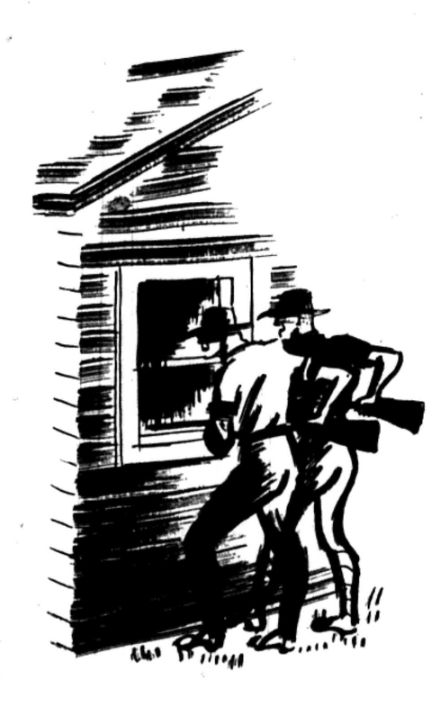
“Altogether men!” yelled a voice through the smoke. “One! Two!” And the men pushed against the doors until the jamb gave way and the doors were forced open.
Outside in a ring waited the police and vigilantes. They clubbed the surging workers till the ground was clogged with bleeding men and those inside could not move forward.
Next day the workers organized a red funeral for a child who had died from the gas. It was Cruce, three-year-old daughter of Emanuel and Mary Guitterez, members of the Cannery and Agricultural Workers Industrial Union.
The Working Woman, ‘A Paper for Working Women, Farm Women, and Working-Class Housewives,’ was first published monthly by the Communist Party USA Central Committee Women’s Department from 1929 to 1935, continuing until 1937. It was the first official English-language paper of a Socialist or Communist Party specifically for women (there had been many independent such papers). At first a newspaper and very much an exponent of ‘Third Period’ politics, it played particular attention to Black women, long invisible in the left press. In addition, the magazine covered home-life, women’s health and women’s history, trade union and unemployment struggles, Party activities, as well poems and short stories. The newspaper became a magazine in 1933, and in late 1935 it was folded into The Woman Today which sought to compete with bourgeois women’s magazines in the Popular Front era. The Woman today published until 1937. During its run editors included Isobel Walker Soule, Elinor Curtis, and Margaret Cowl among others.
PDF of full issue: https://www.marxists.org/history/usa/pubs/wt/v6n07-aug-1935-WW-R7524-R2.pdf

