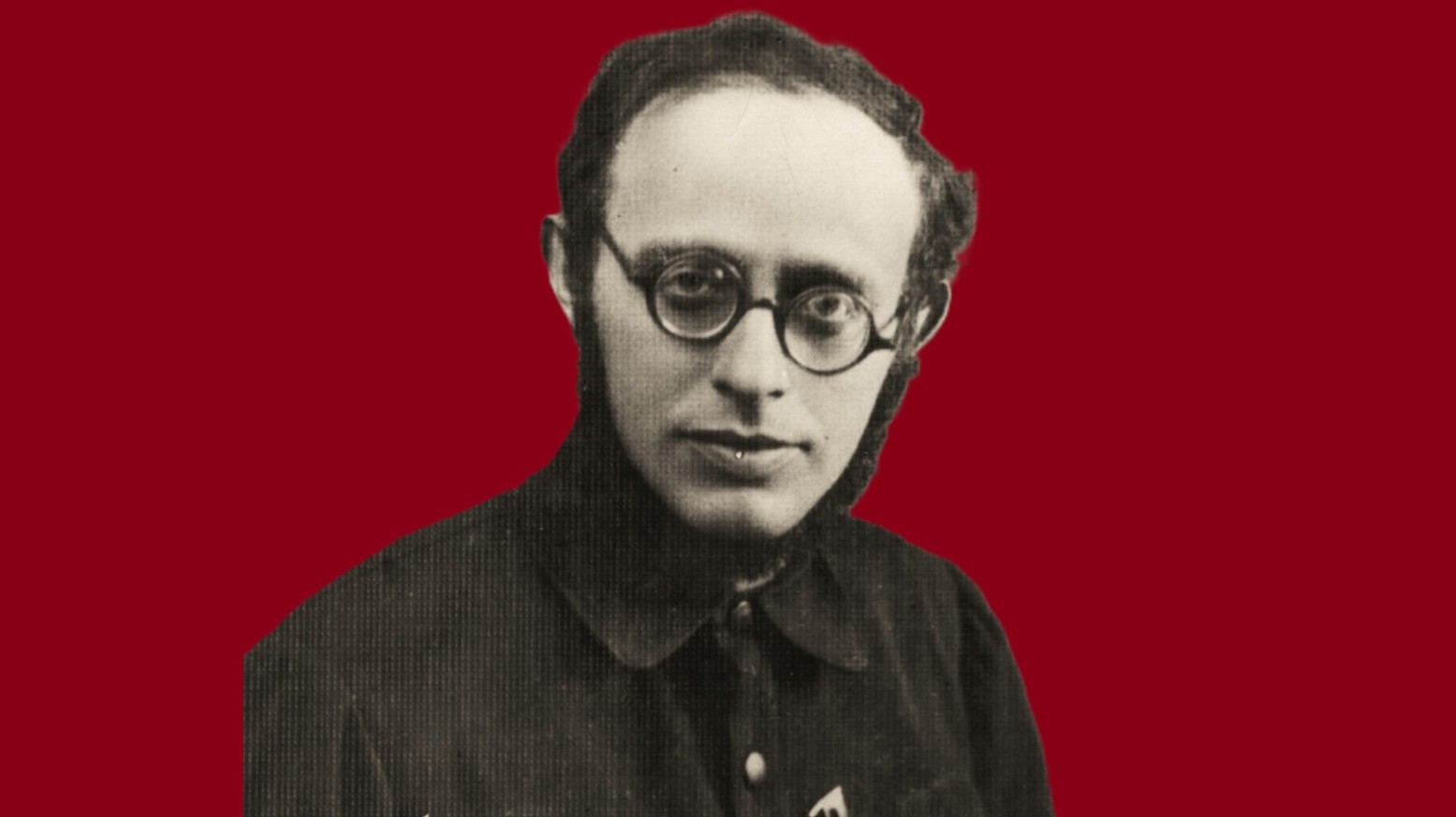
Radek on the reaction to the Russian Revolution and different approaches by French and British imperialism to the Soviets in their first years.
‘England, France and Russia’ by Karl Radek from Soviet Russia (New York). Vol. 5 No. 6. December, 1921.
At the moment of the October Revolution, France and England had a common policy with regard to Soviet Russia. This policy arose from purely military interests and aimed to prevent Germany from using Soviet Russia as a source of strength in making war and to create a military front in the East which would compel Germany to concentrate there the forces drawn to the Western front after the peace of Brest-Litovsk. Social motives, even the destruction of the proletarian state, were of less importance than these military objectives.
After the defeat of Germany and at the conclusion of that period during which the Allies trembled lest Bolshevism might envelop the world in conflagration, and therefore created White armies to combat this danger, a differentiation arose in the policies of the Allies. After the peace of Versailles, the United States retired from participation in European politics. The share of the United States in the Siberian adventure was chiefly intended to limit the liberty of action of the Japanese. The force of the interventionist efforts, as well as their direction, were determined primarily by France and England.
The French Policy.
French policy has very definite and simple aims. Its object is to destroy the Soviet power in order to create a White Russia, the object of which would be to extort from the peasant masses the old national debt incurred by the Tsars. To this White Russia, as an ally of France, would also be assigned the defense of France, with several million bayonets, against the future German revanche.
For this reason the French Government does not favor the creation of separate border states. The single exception has been Poland, which is regarded as a military substitute for Russia, and simultaneously as the watchdog of the Treaty of Versailles. Toward all the other states created on the soil of the former Russian Empire, France has assumed a skeptical and most unfriendly attitude. At best it regarded these states as cannon fodder and never intended to assume any obligations with regard to them. The policy of France was stubborn and undeviating until the destruction of Wrangel.
The English Policy.
England pursued an entirely different policy. Of course, the English Government hated Soviet Russia. The destruction of Soviet Russia was and still remains one of the aims of the English Government, but this aim is one to be pursued over a number of years, and the English Government by no means binds itself as to the method by which this is to be achieved. It does not desire the speediest possible destruction of the Soviet power. On the contrary, the English Government is afraid it might fall too soon. This is the dominant trait of the English policy toward Russia. The causes of this attitude of the English capitalist Government toward the proletarian state are apparent to all who are acquainted, first, with the history of the English oriental policy, and second, with the origin of the Anglo-French controversy, the struggle for domination on the European continent, England fears the re-establishment and consolidation of any Russia—a White Russia not less than a Red—since any firmly established Russia will again be a decisive factor in foreign policy, particularly in Oriental policy. Such a Russia would be incapable of competing with the capitalist countries in Europe and would doubtless turn its face to Asia and there become a dangerous opponent which could threaten England from the vantage-ground of dry land. The English fleet could not defend India and Persia, and Turkey would be under Russian influence.
It would not be a matter of indifference to English authorities whether these regions were ruled by a White Russia or were under the influence of the revolutionary Russia which has aided them in emerging from the yoke of world capitalism. The English Government is more afraid of White Russia than of Red Russia in this field, as a White Russia would be more likely to conclude an alliance with the capitalist competitors of England, with America and France, than would a Red Russia.
Why England Supported Counter-Revolution.
Although England aims at a victory over Red Russia and at the re-establishment of a white bourgeois Russia, it is for the present attempting to postpone this consummation until the main questions of oriental policy (the Turkish question, and the Chinese question) have been definitely settled to the advantage of England, and until England’s relations with America and France have been defined. For this reason England supported the Kolchaks, Denikins, and Yudeniches with insufficient aid. This aid was crippled, not only by the conflict of commercial interests with the military clique, but also by the struggle of those influential circles headed by Lord Curzon, which dominate England’s Asiatic policy, against Churchill’s military party.
By supporting Denikin and Kolchak, the English Government weakened not only Soviet Russia, but Russia in general, as this struggle diverted Russia’s attention from economic problems, and gave the country no opportunity to establish itself and gather its forces. Simultaneously, the strength of the Whites was consumed in the conflict After Denikin’s defeat, England was ready to do business with Soviet Russia, as the country had been sufficiently debilitated by the war. England was even obliged to give up the war upon Soviet Russia as speedily as possible in order to get ahead of her competitors, France and America, in trade, by which alone England could exert a dominating influence on Russia.
England Plays a Waiting Game.
The development of relations between England and Soviet Russia after the conclusion of the trade agreement proceeded in a manner that prevented the English aim from becoming apparent for a long time. England was expecting a transformation of the internal Soviet policy. It waited for the wounds inflicted by intervention to exert their influence on Russia’s economic policy. The representatives of the Soviet power said frankly that the effects of the economic weakening of Russia would force the country to release all its economic resources, to cease to depend merely upon state activity but to resort also to the activity of the petty bourgeois in the work of reconstruction. They further declared that Soviet Russia would be forced to yield to capital, as it is in need of economic aid from the capitalist world. In its interpretation of the resolution of our March Congress, the Observer, the intellectual food of Lloyd George, declared that these resolutions were one of the most decisive political factors of recent days. The English Government wanted to see to what extent the Soviet Government would be able, to what extent it would desire, to realize this new economic policy.
The Soviet Government is carrying out this policy which will lead to a re-establishment of Russian economy. Moreover, the distress that has befallen Russia from the great famine compels a determined attitude in this matter. The English Government and the English business world are convinced, therefore, that it is time to stop talking about economic relations and to begin the organization of these relations. The fact that Leslie Urquhart, one of the chief instigators of the former interventionist policy, began negotiations for the re-establishment of the mighty Ural enterprises once belonging to him, is one of the most striking indications of this attitude.
Economic Penetration.
Lloyd George’s speech on August 6, on the famine in Russia, stated the platform of English imperialism with regard to Russia. Commercial firms are to buy grain for the hungry provinces, on the basis of a great credit, to be established in their favor by the English Government, in those provinces where the crops did not fail. There is a twofold object in this plan. It keeps out America, which is the chief purveyor of grain, and to whom Soviet Russia might turn if it had money credits instead of goods credits. The form of goods credits proposed by Lloyd George had the object of postponing the moment of economic agreement between Soviet Russia and America. The second object is the immediate economic penetration of Soviet Russia by English commercial capital. The policy proclaimed by Lloyd George is an effort to attain an English monopoly in Russia or at least to secure a dominant influence for England in the Russian market
A New Trend in France.
France has not yet renounced the policy of intervention. It still dreams of an early fall of the Soviet Government M. Briand still hopes that France’s old ally, hunger, which Noulens sought to mobilize as early as 1918, will be of assistance to him. He hopes that hunger will lead to the fall of the Soviet Government and this not only with the humane aid of the White Guards supported by France, but also with the immediate assistance of French bayonets and the bayonets of France’s vassals. Before the end of 1920, however, there arose in France a tendency towards a change of policy. This new trend is to be observed even in influential government circles. In an exchange of notes between the English and French governments beginning last December and continuing through July of this year France took up the question of the resumption of relations with Soviet Russia. Recognition of the debts of the Tsarist and Kerensky governments by Soviet Russia is considered by the French Government to be a sine qua non of this resumption, but it speaks of these debts in a manner that leads one to suppose that a portion of the French capitalist class begins to view the formulation of the question not as a means of exacerbating the relations between the two states, but as a method of arriving at a settlement In the note of November 25, 1920, it is pointed out that of course Soviet Russia would not be able immediately to begin payments on this debt Postponement of payment and transformation of the debts are also spoken of.
French Apprehensions.
A number of voices in the French Press, such as the Delegate Hennessey, such as the paper Information, even Poincare, etc., openly point out the causes of this already apparent transformation. Poincare, the former president of France, a nationalist of narrow horizon, in an article in the Revue des deux Mondes, asks: “Shall France stand aloof at a moment when amiable allies on the other side of the channel are selling their goods to Soviet Russia for the money of the Russian treasury, for the money which constitutes a guarantee of the debt of France?” Commercial relations between Soviet Russia and England, which France did not succeed in preventing, force the latter to compound with Soviet Russia. The sober political heads of France begin to understand that the continuation of the intervention policy is a danger to their country. While France pursues a policy of impotent rage against Soviet Russia, England will have so consolidated its economic position in Russia that France, having changed its policy, may find itself approaching a table on which all the covers have already been reserved by others. The more this danger becomes a reality, the greater becomes France’s disquiet.
In judging the world situation, Soviet Russia must consider this tendency in France to reckon with realities. This current represents the view that France u incapable of making war upon Russia and that the isolation of France from Russia will serve only the interests of the English desire for monopoly in Europe. This was revealed in the answer received by France from England. For a month the English Government did not answer the French note, and finally declared: “We beg you to join us in our commercial agreements with Russia.” Of course such an answer showed that England was only too delighted to postpone commercial relations between France and Russia.
The external policy of Soviet Russia, taking account of this new tendency in France, must also appraise it properly. In the first place, we must say: The tendency is a new one; it has by no means overcome the interventionist movement The adventurers of the military party are still in full bloom and still have a strong influence on the French Government. Officially, the power is still in their hands. Second: Even if the Government were determined to resort to the new policy, this would by no means exclude the possibility that it might pursue this new policy in a manner that would be a lively counterpart to the policy of intervention. This might particularly be the case at the beginning of the new policy. To put the case more concretely, let us for a moment examine the procedure of the French Government in Warsaw on September 3.
Ultimatums and Negotiations.
What was the intention of the French Government when it forced Poland and Rumania to send ultimatums to Soviet Russia? Was it the intervention policy, the preparation of a new war against Russia? This would show the present weakness of the conciliation tendency. But there might be an entirely different reason. The French Government has undoubtedly lost much time in its interventions; it knows that normally the negotiations on an economic treaty are of long duration. It is not impossible that the adventurers of the French Ministry of Foreign Affairs may want to counterbalance the time they have lost, by making threats, now that they know their minds have been made up to take part in negotiations.
It is possible that those who pull the strings in France wanted to create a situation through their vassals by which they might have secured the conclusion of a treaty on terms dictated by themselves. However insane this policy that passes from negotiations to ultimatums may seem, we do not consider French diplomacy to be incapable of such a policy. French diplomacy, which does not understand the real situation of Russia, which is full of internal contradictions, which fears the outcry of the nationalist press, which cannot afford to appear in any other guise than that of victor; this French diplomacy perhaps thought it would frighten us, instead it has only given us warning what were the goals pursued by the ultimatum of September 3; it has shown that it was ready to rekindle the torch of war in order to hurl Soviet Russia into an abyss of blood and suffering. But if they use ultimatums to play with us, they can never tell how the game will close. Particularly when so reserved and self-controlled a partner as Marshal Pilsudski is Used as the weapon of France.
Soviet Russia has been warned. It knows that M. Briand wants either to renew the war or to force from the Soviet Government by military threats concessions which he could not obtain by peaceful negotiations. The Soviet Government, which recently made known to France its readiness for peace, in the splendid and clear communication of Comrade Chicherin to the French people—the Soviet Government is no material for extortionists to practice on. Such attempts, altogether aside from the military dangers involved in threats of this kind, only accentuate the hostility between the masses of the Russian people and the French Government, and create a situation is which England becomes the only factor with whom business and treaty negotiations can be concluded.
The way to reach agreements with Soviet Russia, to reach an understanding based upon the interests of both countries, insofar as such intentions may be possibly assumed in the relations between capitalist and proletarian countries, must be by the abandonment of the policy of egging on Poland and Rumania against Soviet Russia, a policy which, while it may weaken Russia economically, will simply postpone the moment when Russia can begin to buy and sell. So long as this ability to buy and sell is not present, no military devices will squeeze a single penny out of Russia. You cannot get bread from a stone.
Soviet Russia began in the summer of 1919, published by the Bureau of Information of Soviet Russia and replaced The Weekly Bulletin of the Bureau of Information of Soviet Russia. In lieu of an Embassy the Russian Soviet Government Bureau was the official voice of the Soviets in the US. Soviet Russia was published as the official organ of the RSGB until February 1922 when Soviet Russia became to the official organ of The Friends of Soviet Russia, becoming Soviet Russia Pictorial in 1923. There is no better US-published source for information on the Soviet state at this time, and includes official statements, articles by prominent Bolsheviks, data on the Soviet economy, weekly reports on the wars for survival the Soviets were engaged in, as well as efforts to in the US to lift the blockade and begin trade with the emerging Soviet Union.
PDF of full issue: https://www.marxists.org/history/usa/pubs/srp/v4-5-soviet-russia%20Jan-Dec%201921.pdf

