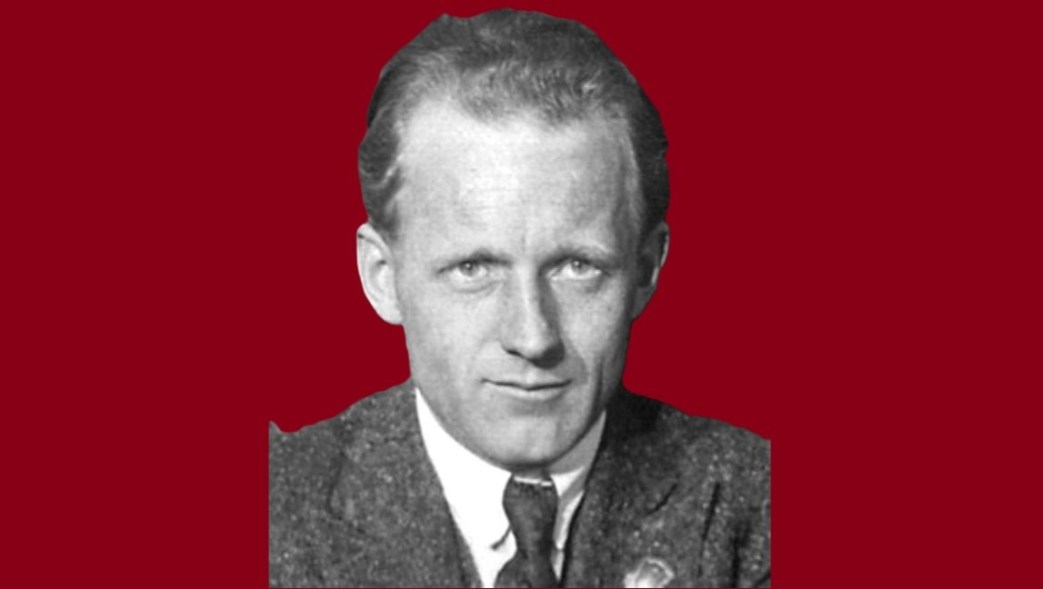
Exemplifying the shift away from the Socialists’ overwhelming focus on voting, among the most significant organizational changes activists made as they left the Socialist Party to build the new Communist Party was to switch the main membership unit from the residing electoral district to the workplace (or neighborhood). These would become to be called ‘shop’ or ‘street nuclei.’ Though it would be codified and standardized across the Comintern beginning with ‘Bolshevization’ in 1924, in the U.S. that turn began in 1919 with the Communist movement itself, and reflected the strong ‘Industrial Socialist’ background of a a section of U.S. Communists. The Danish-born activist Arne Swabeck being a good example. A member of both the I.W.W. and the Socialist Party in the West, participant in the Seattle General Strike, delegate to the 1919 Socialist Party Convention that split, where Swabeck joined John Reed’s Communist Labor Party, serving on its new leadership. By the mid-1920s, with this writing, the veteran activist in the painters’ union, had been in Soviet Russia serving on the E.C.C.I. and as a Comintern delegate, was D.O. (District Organizer) of the C.P.’s District 8 (Illinois-Indiana-Missouri, plus Chicago’s environs in Iowa and Wisconsin) and coordinator of the Party’s work among miners. District 8 was also the factional seat of the Foster-Cannon-Bittelman leadership with District 2 (the New York City area) being seat of the Ruthenberg-Pepper-Lovestone leadership.
‘A Party of Shop Nuclei’ by Arne Swabeck from The Daily Worker Magazine. Vol. 2 No. 215. November 28, 1924.
With the capitalist victory on November 4, the “progressive” illusions have received a severe shock. The working class will again face the grim realities of the class struggle in a more acute form.
This capitalist victory will be further consolidated. To reap the fruits thereof, labor’s resistance to increased exploitation must first be crushed. Thus the workers will be called upon to battle for the life of their terribly weakened organizations and once gained. Their immediate task is to proceed from the present inertia to vigorous but well-planned preparations to maintain the standard of living to meet this situation.
From propaganda to action is the next task of the Workers Party. To lead in these struggles proceeding from the shops and factories where the workers will feel the weight of this further consolidation of the capitalist victory; to give the political direction and organize effective resistance to the coming attacks; to lead in the creation of the organs of resistance the shop committees and factory councils; to lead in the actions for relief of the unemployed masses and organize and strengthen the labor unions. These are some of the immediate tasks facing the Workers Party. The shop nuclei form of party organization will make a solution possible.
In Constant Touch with Workers.
The shop nucleus will be a permanent organization in constant touch with the workers. Its problems are those of the workers on the job. As a combination of militant fighters it will take up all these problems and work out the immediate plans of action. As a basic Communist unit, it recognizes that the proletarian revolution is the only solution for the labor problem and all its plans are worked out with that goal in view. The workers, learning by experience that only through active struggle can any gains be secured, and any relief be obtained from the pressure of exploitation, will soon turn toward the party shop nuclei for direction and leadership.
The obstacles in the path of the proletarian revolution can only be removed gradually by the training, educating and organizing of the workers through the struggles. These obstacles are present also in the industries where the trade unions have obtained a foothold. There the faithful capitalist lieutenants, masquerading as trade union leaders, are using all their powers of persuasion to discourage the workers from entering the struggle. They are making glowing promises to be fulfilled when the members completely submit to their class collaboration schemes. These schemes vary from the celebrated non-partisan political policy to plans like the B. & O. co-operation plan, proposed by the international president of the Machinists’ Union, to make the unions efficiency instruments for the railroad companies; the plan of speed-up and cheaper production, as proposed by Frank Farrington of District 12, United Mine Workers, by which the operators of the union fields should be able to compete with the non-union operators and the plan of permanent compulsory arbitration boards set up in collusion with the bosses to have disciplinary powers, to impose fines, suspend or expel union members, as already pursued by the building trades, to mention a few examples.
Fight Class Collaboration.
The party reorganization does not in the least change its objects or its tasks, but it does change the methods of carrying them out. While the present branch formation allows only for an abstract treatment of such schemes, due to the fact that although the members work in the shops, they are scattered into many different branches, thus completely paralyzing any effort at united action in the shops. The shop nucleus, however, directed by the general party policies, will take these points up with the workers and, proceeding from the actual experiences on the job, expose the injurious character of class collaboration schemes, not only from the point of view of the need of the ultimate victory over the capitalist system of exploitation, but also as an obstacle to the improvement of the everyday conditions of work.
By planned united action of all party members in a shop, through the shop nucleus and taking advantage of all experiences gained, it will be comparatively easy to convince the workers that any plan or agreement which pledges the organized workers to a greater speed and efficiency of production so as to make the cost of production of their work less than that of the unorganized, will only serve as an additional weapon in the hands of the employers, united in their organizations, to create an endless competition between organized and unorganized workers and thus force down the standard of living as a whole. It will be comparatively easy to convince the workers that arbitration boards composed jointly of representatives of labor and of the employers serve the interests of the latter because all accomplishments recorded in the history of the working class have been made only through actual struggle. It will be easier yet to show that both methods weaken the organized power of the workers and strengthens that of the employers, thus giving the latter all the advantages in future struggles which, no matter what schemes are advanced, nevertheless become inevitable.
Strengthen Left Wing in Trade Unions.
Having learned this, the workers will naturally turn to the party members organized in the shop nucleus and listen to further advice. They will then be shown the need of attending to their union affairs and fight with the Communists, organized in the trade union fraction (the T.U.E.L.), to prevent the adoption of such measures and their strength will go to swell the ranks of the left wing trade union groups. Through the diligent work of the party shop nucleus to unite he workers for the struggles in the shops and factories, it will soon become apparent to these workers, by actual experience, that the craft union form of organization has outlived its usefulness and now serves to divide their ranks. The demand for amalgamation of these unions into industrial unions will thereby be transformed from paper resolutions, buried in trade union headquarters, to the realities of life.
During the election campaign just concluded the lack of leadership in the shops was particularly apparent. The LaFollette movement everywhere presented its combination of so-called friendly republicans, democrats and “progressives” and appealed for the support of the workers. It was the non-partisan political policy of Samuel Gompers changed a little in its appearance and just another form of class collaboration to support capitalist politicians and strengthen the capitalist system. The capitalist propaganda machinery became very active indeed and the workers being unable to discover its class interests from such presentation, mostly voted for the imaginary “full dinner pail.” Only those who were already class conscious supported the Communist ticket.
Political Education.
The real issues of an election campaign are insolubly bound up with the struggles of the workers in the shops. From there the fight for workers’ power must be organized. However, it will take the party shop nuclei to make these issues clear and to organize that fight. One functioning shop nucleus within a factory will make a systematic practice of convincing the workers that the non-partisan political plan divorces the workers from their real class issues. It will demonstrate that no matter what capitalist politician the masses support, at the time of actual conflict he will immediately become their enemy because he is part of the capitalist system of government. It will show that the capitalist government is always an enemy of the working class. In the shops the election campaigns will thus assume the character of a class contest for power and on that basis the party shop nuclei will organize the workers for the struggle for political power.
Our party must win over the large masses of workers for the revolution. The shop nuclei will easily gain the confidence of the workers because they are part of their ranks and the most active part, speaking their language and proposing practical measures for relief of their misery. Through the shop nuclei the Communist units become organically connected with the working masses at the place of production. Through the shop nuclei the connections will be established which builds the united front of the workers from the bottom. They become a counterbalance against the treacherous and strikebreaking activities of the trade union fakers–the proponents of class collaboration. Being the basic political units of the party, they will establish the proper connection between its industrial and political activities and give political character to the struggles in the shops and from the unions by convincing the workers of the need of the conquest of power.
Although the power of the trade unions, controlled by the reactionary leaders, is steadily declining, the workers in the unorganized industries are worse off. And today many of the great basic, raw material and manufacturing Industries are almost entirely unorganized. The workers are left helplessly in the grip of the most ruthless capitalist exploitation. Their sporadic, unplanned and isolated strikes are either mercilessly crushed or slowly starved to death. Their latent forces as a factor in the struggle for working class power is dormant. The problem facing the Workers Party in these Industries, as the militant champion of the working class interests, is that of organizing these actions, these strikes and organize the workers into shop committees and into industrial unions. To believe that the American Federation of Labor with its present methods will organize these industries would be an idle illusion. That task remains to be done by the militants.
Organize Shop Committees.
Shop committees, composed of representatives of all workers in the shops, is the basis of up-to-date unions, are necessary to the workers in the organized industries. But in the unorganized industries they become not only the organs of struggle of the workers, but also the most effective instruments with which to organize the unions. That is the starting point for party shop nuclei in the unorganized industries. While the nuclei themselves are confined to Communists, to party members, their task will be to initiate the formation of shop committees which take in all the workers.
During the sporadic, isolated strikes of the workers in the great car shops of Pullman and Hegewisch, Illinois, last summer, the lack of leadership became particularly apparent as it does in all such cases. The party took whatever actions it could under the circumstances as an outside force coming in to lend a helping hand, and actually succeeded in stiffening the morale of the strikers. Yet a party shop nucleus in each instance would Inevitably have stepped to the fore. It would have gained the leadership of the strike because of its being an organized group and part of the strike itself. It would give organized direction to the strike and if it would accomplish no more in this first attempt, for all future purposes, the shop nucleus would map out the strategy of the struggles. It would make an estimate of the relative strength of the contending forces, attempt to choose the most opportune moment for an offensive, propose the measures needed for united action by the workers always bearing in mind the object of steadily gaining positions of more power to the workers and prepare for the actual organization of the workers. In Gary, Indiana, where one party shop nucleus has recently been organized in one of the large mills, it was demonstrated that the attention of the comrades naturally and immediately focused on the problems of the shop. At their first meeting they took action to carry out certain measures in regards to a couple of definite issues pending before the workers in the shop.
Of course, while the party is just taking the first steps toward the formation of shop nuclei some of the points here mentioned may seem a little novel. Yet, as the shop nuclei are being established, the basis is being laid for contact with the large masses of workers through their struggles and for the united proletarian front for the conquest of power.
The Saturday Supplement, later changed to a Sunday Supplement, of the Daily Worker was a place for longer articles with debate, international focus, literature, and documents presented. The Daily Worker began in 1924 and was published in New York City by the Communist Party US and its predecessor organizations. Among the most long-lasting and important left publications in US history, it had a circulation of 35,000 at its peak. The Daily Worker came from The Ohio Socialist, published by the Left Wing-dominated Socialist Party of Ohio in Cleveland from 1917 to November 1919, when it became became The Toiler, paper of the Communist Labor Party. In December 1921 the above-ground Workers Party of America merged the Toiler with the paper Workers Council to found The Worker, which became The Daily Worker beginning January 13, 1924.
PDF of full issue: https://www.marxists.org/history/usa/pubs/dailyworker/1924/v02a-n215-supplement-nov-28-1924-DW-LOC.pdf

