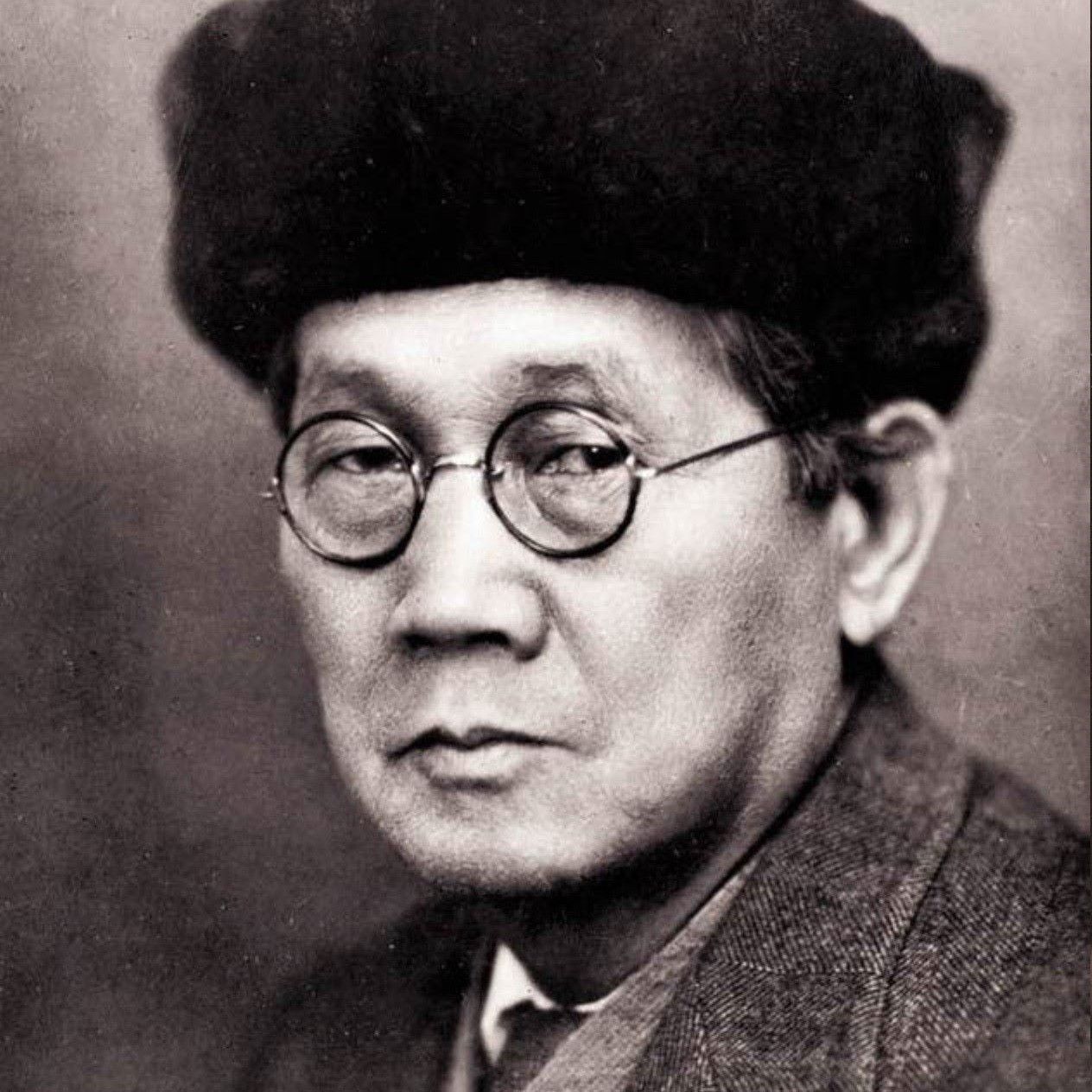
Katayama analyzes a wealth of statistics produced by Japan’s General Federation of Labor on the situation of that country’s working class in the years following World War One.
‘Progress of the Labour Movement in Japan’ by Sen Katayama from International Press Correspondence. Vol. 5 No. 57. July 16, 1925.
I.
The Publication Department of Japan Sodomei (Japan General Federation of Labour) has published a Labour Year Book, divided into six sections and containing 23 chapters and 465 pages. Being the first issue of its kind by the Sodomei, it gives a brief historical sketch of the various phases of the labour movements in Japan.
The first section of the book is devoted to a brief review of the trend of the development of capitalism in Japan. The deadlock in Japanese industries is illustrated by statistical tables showing the actual position. Reasons for the present deadlock are given as follows:
1) Capitalism in Japan smoothly and even rapidly developed as long as it concentrated on industries for home consumption and the export trade of coarse manufactured goods, products from the exploitation of unskilled labour.
2) The export trade includes raw materials or the products of sweated labour, which are limited in extent; these have now almost ceased on account of imports from China and America such as umbrellas, tooth picks and clogs imported to Japan at far lower prices than the Japanese sweating industry can produce them. China produces them with still cheaper labour and with cheap materials; America produces them by cheap machines.
3) Japan’s industries cannot compete with those of China, which in recent years has remarkably developed its cotton and other coarse manufactures.
4) Japan has no raw materials necessary for modern industries, the chief of which are iron, coal, oil, so when Japan has to compete with foreign countries that have their own raw material, it is unable to do so.
5) The coarse manufactures require only skilled or semi-skilled labour but now Japan’s competitors China and India furnish the products of cheap and unskilled labour. Wages in Japan increase and the standard of living has also risen, so it is impossible to compete now with unskilled and cheap labour.
6) Japan has had no time yet to develop skilled labour and better works owing to the short-duration of her industrial life. Moreover the industry of the country prospered in producing for home consumption and during the late world war through war industries and export trade which supplanted European competitors.
The trend of capitalist economy during the year 1924 is varied. The year began with a period of temporary prosperity, with the reconstruction work after the September (1923) earthquake in accordance with the reconstruction budget of the Yamamoto ministry, but the ministry suddenly had to resign on account of an attempt on the Prince Regent on 26 December, and was succeeded by the most unpopular Kiyoura ministry, which soon brought about a general election thereby setting back the whole work of reconstruction. These circumstances gave a set back to all industries and commerce. Imported goods for the reconstruction works were piled up in stores, and the foreign trade balance was unfavourable; unemployment increased in every industry and the rate of exchange is lower than Japan has ever experienced in her modern life.
All these misfortunes and unfavourable conditions did not reduce the prices of the necessities of life owing to prohibition of gold export and the artificial keeping up of the high interest. Thus the workers and the poor peasants have suffered a great deal; but on the whole the financial position has somewhat recovered during the latter part of the year.
Because of industrial and commercial depression, the capitalist class profited by that depression, the rate of exchange fell greatly and consequently, though nominal wages did not decrease, real wages fell since September, since prices rose higher and higher and wages remained stationary. While this process was going on, the government carried out financial retrenchments and as a result many tens of thousands of workers were thrown out of their jobs. The capitalists have fully utilized the reserve army of the Workers to assist more and more in exploitation. The workers felt more and more the intensifying difficulties of living on account of the conditions above stated, and, as a result of unbearable conditions, they became aggressive and had recourse to strikes to better their condition. Such was the position of the workers at the end of the year 1924.
The second section of the book is devoted to the Labour Movement.
The real modern labour movement began in March 1896-7 with the return of several workers from San Francisco, where they became interested in the labour movement and organised there the Japanese Labour Union. They were naturally interested in starting the movement in Japan and formed first a Labour Association at the end of 1896 in Tokio and the next year in March they organised Rodokumiai Kiseikai and in the same year in December the Metal Workers’ Union; many unions under the leadership of the Kiseikai were simultaneously organised.
The prosperous condition of the labour movement was due to a temporary prosperity of industry owing to the outcome of the Chinese-Japanese war of 1894-5 which wrested a big indemnity from China, but this lasted a very short time. The Labour Movement began to wane due to industrial depression and unemployment, and this tendency was accelerated by the police peace order law passed in 1900. This law enabled the authorities and the employers to oppress the labour movement, and in some cases as in the Railway Union in the Nippon Railway Company, actually to suppress certain unions. Thus the once hopeful and growing labour movement almost died out within a few years after the passage of that obnoxious law.
When the said law was enacted, the labour movement took the shape of a political or socialist movement, and the universal suffrage movement became quite strong, but the government became more and more oppressive and reactionary and oppressed the socialists; some of these became anarchists, and as a result there were the Red Flag affair and the Anarchist trials in 1910 and 1911. During this period two big strikes took place, that of the Japan Railway Company in 1898 and at the Asio Copper Mines which developed into a great destructive riot in 1906, destroying several million dollar worth of mining property; it extended into other mines such as Bessi Copper mines and Yubari colliery.
The next period of the labour movement covers the most eventful years, the world war and the Russian revolution and the break down of German militarism. During this period the consciousness of the proletariat of Japan awakened and it has shown itself capable of fighting against the exploiters. During the world war the industries thrived greatly, and factories increased by 5316 and the factory workers by 596,281. At the beginning of the world war there were only two labour unions in the country, namely Yuaikai and Shinyukai. The number of strikes. increased from 83 in 1913 to 497 in 1919.
The enormous increase of capital and industrial and commercial undertakings during the war and rise of prices of the necessities of life and the effect of the Russian revolution brought about the great food riot of 1918 which shook the very foundation of bureaucracy of Japan; since then the labour movement became most popular, and labour unions were formed one after another.
The food riots of the year 1918 were continued for some months in the form of labour strikes and these strikes which were mostly successful encouraged the workers to form labour unions and so the present labour movement was practivally started in the year just after the great food riots.
Formation of Yuaikai. This was the former body of the present Japanese General Federation of Labour, whose Research Department has issued this Labour Year Book. Naturally the book gives a full history of the Federation and its development from a modest labour association of the yellow and compromising tendency to a full-blown class-conscious and fighting labour organisation!
Development of Yuaikai. The Yuaikai was organised on August 1, 1912 under the leadership of Bunji Suzuki, who was then secretary of the Tokio Unitarian Church where the Yuaikai was formed with a membership of 15: three months later the Yuaikai published the first number of its organ Yuai Shimpo. In one year the membership increased to 1326, and the work was divided up into savings bank, legal advice, medical aid, physical culture, amusement and press departments. The Yuaikai took up an attitude regarding the identity of interest between capital and labour, and its chief task was to act as conciliator between the two at the time of labour troubles. In 1916 the Yuaikai was able to extend its work and created a general affairs department, treasury, press, legal, education and also women’s departments.
In March 1918 the Yuaikai had established different departments according to the kinds of trades, such as Seamen’s, Printers’, Spinners’ and Metal Workers’ departments. Formerly the Yuaikai was a simple labour association whose membership was composed of all sorts of trades and occupations. In the same year in October the Metal Workers’ Union was organised, and then two other branches were organised, namely, Kawasaki and Johan branch. The members of the Yuiakai gradually increased and more branches were organised in different parts of the country and also in Manchuria and Korea.
Shinyukai (Printers’ Union) existed for many years among European type-setters, but with the beginning of the European war foreign newspapers were stopped, and the Shinyukai was reorganised in 1915, and members are recruited from home and foreign type setters and other workers in the printing trade. In 1916 it was able to start a union organ—Shinyu–and its members increased to 650.
In 1919 the labour movement thrived, and the unions increased from 11 to 71, during the year strikes numbered 497, but with the financial crisis of March 1920 the labour movement met with hard times. The number of strikes decreased to 282, but some of the strikes were very big ones, and many of them involved many tens of thousands workers; the strikes themselves often became desperate, involving encounters with police force in street fights, and arrests. Some workers were killed by police. The most conspicuous strikes were those of Yawata Government Steel Mill where over 30,000 workers are employed, and the Tokio street railway strike that began by peaceful sabotage and lasted nearly three months.
For the first time in recent years May Day was celebrated by the Labour Unions of Tokio at Uyeno Park; over 5,000 workers participated on this day.
On May 10th Rodo Kumiai Domerkai (Labour Union) was formed, and in October of the same year the Miners Federation was formed. During the year the Labour movement gave evidence of its left tendency as the Executive members of Yuaikai and others joined in the Socialist League which was formed in December; at the same time the Shinyu Kai (Printers Union) and others displayed a decided tendency toward syndicalism.
The number of strikes in 1921 was still less than in 1920, being but 246. This is due to continued industrial and trade depression and the consequent increase of unemployment. The strikes of this year mostly involved workers in bigger factories who are organised and able to meet the capitalist offensive attack with strikes and sabotage.
In March 1921 four labour unions, namely, Kojokai, Koishikawa, Gengyom and Yawata Boshikai, formed the Kangyo Rodo Sadomei (Federation of Government Works Employees). In May the Japan Seamen’s Union was formed and consisted of the amalgamation of 49 small seamen’s unions. The Yuaikai became on the occasion of its tenth anniversary the Nippon Rodo Sadomei (Japan General Federation of Labour) which is a great advance for it began as a modest syndicalist movement and now has become a gigantic Federation.
Also in this year the unemployed workers organised themselves into a union and made effective demonstrations for the radical remedy of conditions, and at the same time there appeared a fascist organisation to crush the labour movement, of course supported by the Premier Hara and Home Minister Tokonama. The former was assassinated by a young railway worker, and the latter now is a leader of Seiyuhonto the most reactionary party in Japan. Strikes in 1922 were still fewer than the previous year and numbered 250.
The most notable event of the year is the increasing influence of the Syndicalists under the leadership of Isuai, who was murdered during the earthquake. On the one hand the Communist tendency has been growing among hitherto moderate unions and Federations like Sodomei. Communist influence has been steadily growing in the Sodomei, the Metal Workers Union forming the strongest left wing of the Sodomei. In accordance with the marked growth of Communist tendency among Sodomei members, the syndicalist movement decreased after the murder of Oengi, the former anarcho-syndicalist leader. Recently syndicalist unions have also grown in strength and number of members, and the Sodomei has split into two, and the Left Wing Unions (32 unions with a membership of 150,000) formed a separate Federation at Kobe in the end of 1921. The right wing became more and more reactionary and opportunistic. Thus a Communist tendency in the labour movement has been made clear and strong.
In 1923, the strikes increased to 263 involving 35,503 strikers; the increase is due to a changed attitude of the workers from defensive prior to the September earthquake to offensive after the earthquake. The labour movement, since the great financial as well as industrial crisis of March 1920, has gradually been on the wane and the once very flourishing labour union movement at the lowest ebb, as shown by the decrease in the number of strikes, but with the great disaster of September 1923 oppression and the capitalist offensive on the workers began in order to shift the losses incurred by the earthquake on to the workers.
The workers in the country have been slowly but surely increased in their strength in the fight against the exploiters. The September earthquake burnt down 300,000 houses in the Tokio Prefecture alone, 100,000 were killed and 50,000 workers unemployed. But, as we have already observed, the movement took a new departure and has since become aggressive and even assumed the offensive towards exploiters.
II.
The Labour movement during the year 1924 became realistic and practical, which facts are shown in the activities of the labour unions and in their resolutions passed at the conferences. In the past the labour movement was chiefly interested in theoretical and even ideal methods of labour, but this year shows a marked development in the practical side of the labour movement. The government in the past nominated the labour delegate to the Geneva Labour Congress independent of the labour unions, but this year the government recognised the labour unions’ right to choose and send the delegate; the labour unions agreed among themselves to utilise the Labour Congress, and sent a delegate.
Parliamentarism hitherto was also neglected, the workers avoided the political movement, but universal suffrage was about to be introduced, hence the labour unions took up labour politics and the labour congresses of various trades passed resolutions on the subject as to how to utilise the newly gained franchise, they even discussed and studied the matter. The Proletarian Party in some unions and labour federations established a political bureau and worked for the organisation of a Labour Party.
The Labour Unions and Federations of Labour have started to organise immediate remedial as well as preventative measures, such as Labour Halls, Labour dwellings, Labour exchanges, the Consumers Co-operative Movement etc. Then to enable these practical purposes to be carried out, they established propaganda days or propaganda weeks with a view to increasing membership and strengthening the union. Every important union has started labour research work establishing a section in the union like the Industrial Labour Research Bureau of Sodomei.
As to special features of the labour movement of the year: organised labour made protests against the anti-Japanese legislation of America and instituted an anti-movement. There was also a movement for a national federation of labour; unskilled workers have their own organisation, and the movement is led by them. May Day was observed more effectively than in the past. On the whole, the year 1924 showed that much progress was made by the labour movement.
The chief events are given as follows:
The union burial of comrades who were murdered at Komeido during the September earthquake. From 41 labour and radical organisations sent to the burial in Tokio, there were over 8,900 representatives.
Memorial service of the Koreans and the Chinese massacred during the earthquake disaster by the Japanese fascist organisations called Jibeidan (Self-police party) on March 16. This service was conducted by 13 Chinese and Korean labour organisations in Japan, but was suppressed by the police.
For the first time Japanese labour sent a delegate to the Geneva Labour Congress, elected by Unions that have a membership of over one thousand.
May Day was observed in Tokio, Yokohama, Noda, Asio, Osaka, Sakai, Kobe, Kyoto, Nagaya, Jiroshima and Innoshima. Russian concession problem concerning the earthquake. Activities of Labour Relief Committee.
Movement for National Labour Union Federation.
Establishment of the Industrial Labour Research Bureau. This bureau is chiefly organised and supported by Sodomei and the chief Secretary is Comrade Teku Nozaba, who was in Moscow in 1921-22 and has written a very interesting pamphlet on Japanese labour.
Sodomei held its National Congress in Feb. 10-12 and passed many important measures; resolutions of protest and impeachment of the government against the Komeido massacre of workers, on the establishment of a strike Bureau which will control and direct all the labour disputes and strikes, the unification of labour exchanges of the whole country and the recognition of Soviet Russia, etc.
Kanto Labour Union Federation (of Sodomei) Congress held October 5th passed resolutions against transferring the government-owned factories to private hands; to demand an enactment to perfect a Labour Union law, to demand the immediate recognition of Soviet Russia etc.
Kansai Rodó Domeikai of Sodomei Western Labour Union Federation held annual congresses at Kyoto.
One of the most important events in the Sodomei during the year was the so-called “inner troubles” of the Federation. It is nothing but a conflict between the right and left wings. Kanto local federation expelled 4 unions as suffering from infantile sickness and five leaders of left wing movement; for the same reason the Metal Workers Union split into right and left sections recognising the former and expelling the latter. This high-handed conduct of Kanto local federation of the Sodomei was not approved at the meeting of the E.C. of the Sodomei. But it developed within a few months and the real split took place in April 1925.
A development and differentiation of two tendencies, right and left has been going on within the Sodomei. This became very marked since the September earthquake; the left took an aggressive attitude towards the exploiters and the government, while the right wingers became more and more opportunistic and accepted the government offer of 75,000 yen at the time of the earthquake for working men’s houses. They want to co-operate with the government reconstruction works of the devastated earthquake district of Tokio, and the final split took place only few months ago, then the left unions (32) formed the Kodo Kamiai Hyogikai (Labour Union Council).
Another Chapter is devoted to the labour disputes and strikes for 28 years beginning with the year 1897. Of these years, during the first 19 years the number of strikes was never more than two figures; the smallest number of strikes was in 1904, there being only 6, and the largest was 1915, when there were 64 strikes total 487. The last 9 years strikes are as follows:
Year–No. strike–No. persons–No. of persons per strike
1916—108–8,413—73
1917—398–57,309—144
1918—417–66,457—159
1919—497–63,137—127
1920—282–36,371—129
1921—246–58,225—240
1922—263–35,126—130
1923—250–41,503—166
1924 (to end of Oct.)—274–46,910—171
From 1897 to 1923 altogether 27 years there were 2948 strikes. The largest number of strikes was in the year 1919, being 497 with 63,371 strikers. The chief cause of strikes is the demand for an increase in wages; there are comparatively fewer strikes to resist wage cuts. Compromise settlements of strikes predominate; complete refusal on the part of employers to negotiate lately is on the increase in 1919 only 93 out of a total of 497 strikes, and this figure in 1923 increased to 110 out 263 strikes.
During the year 1924 strikers’ demands have become more radical and much more aggressive in manner than hitherto, although the causes of strikes are for increased wages and in protest against wage cuts, dismissals and other increasing exploitation due to industrial and trade depression and the great earthquake in Tokio and Yokohama.
Strikes have been fought in a more well-organised manner. Each strike was well supported by other labour unions thus forming a united front of workers against the capitalists. According to the investigation of the industrial labour Research Bureau, strikes, disputes, and sabotages ware estimated at 743 cases up till the end of October; strikes alone equaled 251. Reviewed generally, the strikes during the year were fights against industrial depression and the capitalist offensive.
The following Chapter deals with Labour Unions. The Labour Union movement is as yet in a backward condition with Western countries. In 1922 there were 387 unions with a total membership of 137,481, in 1923, 432 unions with 135,551 and in May 1924, 447 unions with 175,454 members. The number of workers is given at 3,958,897 from among whose ranks these unions are organised. The proportion of the organised workers is very small, but they possess moral and economic influence on the condition of entire workers.
At the end of 1924 the number of organised workers was estimated at 250,000 including 52,000 in the Peasant union (Nippon Nomin Kumiai). Eight federations existed and 12 single unions. of over one thousand members.
1. Nory Labour Union Federation: 5–45,600–9,100
2. Japan General Federation of Labour: 68–28,000—310
3. Japan Transport Workers Federation: 4–11,800–3,000
4. General Labour Federation in Gouvernment works: 7–13,500–1,900
5. Japan Labour Union Federation: 5–4,300—860
6. Machinist Federation: 7–3,500—500
7. Japan Steward Union Federation: 2–1,800—900
8. Printer’s Union Federation: 8–1,500—190
9. Chubu Labour Union Federation: 4–1,200–340
Total: 9 Federations: 110–110,200–980
Single Unions—No. of Members
1. Japan Peasant Union 52,000
2. Japan Seamen’s Union 28,600
3. Ocean Unity Association 12,600
4. Seamen’s Association 7,300
5. Nich-No Servakai 6,700
6. Kyodo Kenkinkai 2,300
7. Postal Workers Union 2,300
8. Koshinkai 2,000
9. H.P. Club 2,000
10. Shiboura Labour Union 1,800
11. Shipbuilding Workers Union 1,100
12. Yokohama Street car employees Union 1,000
Total: 11,970
Federations and Unions: 122 Members 230,900
If we classify according to the kinds of industries asfollows:
Industries—No. Union–Union Members
1. Metal industries 51–85,200
2. Transport enterprises (land and sea) 18–69,400
3. Textile industries 8–10,000
4. Sundry industries 31–8,600
5. Printing industry 12–4,100
6. Mining industry 4–3,300
7. Chemical industry 10–3,200
8. Foot industry 6–3,200
9. Building industry 6–2,600
10. Electricity-Gas industry 4–1,500
Total: 150–191,300
A peculiarity of the Japanese Labour Union organisations is the segregation of the workers employed in the government enterprises. The workers themselves work either in the government or private factories without any difficulty or hindrance.
A special Chapter is devoted to the Women’s Labour Movement. The working women have gained recognition, and the number of professional women is on the increase. In the end of 1923 there were 856,182 women workers in the government public and private factories, 71,349 women miners and 331,972 other women workers, total 1,259,503. But in August 1924 the women workers were distributed as follows:
Factory and mining workers 980,000
Agricultural workers 1,315,900
Professional women 429,544
Others 455,739
Total 3,581,183
According to the above figures Japanese women workers constitute 13% of the entire women population of Japan (28,000,000), but women factory workers constitute 74% of the entire factory workers. The average working hours of factory women workers per day are: 4,6% work 8 hours, 7,4% 9 hours, 28% 10 hours, 53% 12 hours and over 12 hours about 5%. Thus over 50% of women workers work 10-12 hours in the factory.
Comparison of wages between the two sexes in the government works is as follows:
Men–Women.
Unit Yen.
Government Printing Bureau 2,105–1,360
Mint 2,414–1,247
Monopoly Bureau (Tobacco etc.) 2,130–1,066
Tokio Arsenal 2,710–1,527
Governmental railway workshop 2,682–1,494
Differences of wages between male and female workers are very great in the private undertakings.
In September 1924, there were 7,700 women members of unions distributed in the different trades and industries. Activities of women workers in every industry have been increasing, during the last 4 or 5 years, and they join the unions and have equal rights and privileges with men. With one or two exceptions the women workers have no separate industry of their own, they join the same union as men in the same industry; the most important unions and federations have women’s sections and some have a separate monthly organ devoted entirely to the women’s problems. Women have been taking an activity part in strikes and have shown themselves very good fighters and agitators.
The last phase of the labour movement is the Workers’ Co-operative Movement. In Japan the co-operative movement has been growing during the last few decades, this movement is mostly composed of petty bourgeois undertakings, poor peasants belonging to the unions to a small extent. A real workers co-operative movement is very undeveloped. In 1923 there were 14,259 co-operative unions with membership of over 3 million, distinct purchasing co-operative unions numbered 425; truly consumers unions had 260 unions.
International Press Correspondence, widely known as”Inprecorr” was published by the Executive Committee of the Communist International (ECCI) regularly in German and English, occasionally in many other languages, beginning in 1921 and lasting in English until 1938. Inprecorr’s role was to supply translated articles to the English-speaking press of the International from the Comintern’s different sections, as well as news and statements from the ECCI. Many ‘Daily Worker’ and ‘Communist’ articles originated in Inprecorr, and it also published articles by American comrades for use in other countries. It was published at least weekly, and often thrice weekly. A major contributor to the Communist press in the U.S., Inprecorr is an invaluable English-language source on the history of the Communist International and its sections.
PDF of full issue: https://www.marxists.org/history/international/comintern/inprecor/1925/v05n57-jul-16-1925-inprecor.pdf

