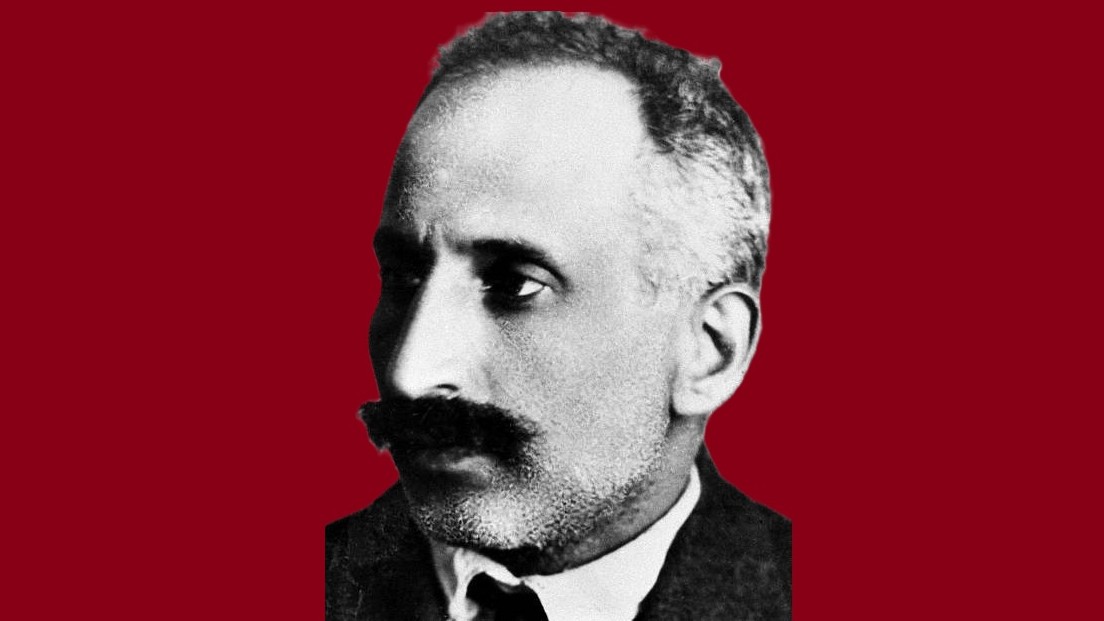
In anticipation of a coming Comintern congress on organization, a four-parter from Piatnitsky on the restructuring of Comintern sections on the basis of workshop and neighborhood rather than the electoral districts of the Social Democratic Parties, as well as the tole of Communist fractions in non-party organizations. Includes, I. Party Construction in the Sections of the Communist International, II. Nuclei and Local Organization, III. Party Functions among Nucleus Members, IV. Communist Fractions in Representative Institutions.
‘Party Construction in the Sections of the Communist International’ by Osip Piatnitsky from International Press Correspondence Vol. 5 Nos.11, 18, 21 & 25. February 5, March 5, 26 & April 2, 1925.
***
Party Construction in the Sections of the Communist International.
Party construction and the building up of Party organisations in Europe and America have differed greatly from the structure of our Russian Party organisations which came into being with the very commencement of a labour movement in Russia.
In other countries at the dawn of the labour movement, there were, comparatively speaking, suitable political conditions which gave the workers an opportunity to organise legal political parties of the working class, as well as to establish local and provincial branches. The latter had the right to convene Party meetings and workers’ mass meetings. They could also have their own Party press. Therefore, Party organisations led from the beginning an existence apart from factories and workshops. This was perfectly comprehensible, for why should the German social democratic party organise workers public meetings and Party meetings in the workshops and factories (besides, the German capitalists would not have allowed them), when they could easily convene them after working hours, and in any locality where the workers lived, meetings which were actually very well-attended by the workers.
It should also be said that in New York, Paris London, Berlin and other large towns the residential quarters of the workers are not in the vicinity of workshops and factories, and that in some places there are few late trains. The latter circumstance is even now a great obstacle to making the workshops and factories the main centre of communist work.
There were also two other features in which the Party construction and Party work of the social democratic parties of other countries differed from the construction of our Russian Party organisations. Side by side with the political proletarian parties of Germany, Austria, France and Italy, there existed trade unions. Between these two forms of labour movement there was so to speak a division of labour: the trade unions had to make a stand for all the economic demands of the working class, while the social democratic parties stood for their political interests. The social democratic parties cultivated “high” politics and left it to the trade unions to settle all conflicts between the workers and the manufacturers. (In some countries the trade unions, although connected with the factories and workshops through their treasurers, did not hold their trade union meetings in the factories and workshops.)
The other differentiating feature was that all the political parties of the proletariat (social democratic) in Europe aimed at conducting the struggle” with capitalism within the frame-work of the existing order, chiefly by means of the vote (at present it has become an established fact that all social democratic parties are no longer “opponents” but defenders of the capitalist order). Therefore the constituency was the basis of working-class organisations.
In Russia conditions were utterly different. The Russian working class, even before it made its appearance on the political arena, was deprived of the right of having its own press and its own Party and trade unions. Neither did it enjoy the right of meeting. Therefore, the only places where workers could discuss their needs, the political situation of Russia and the tasks of the working class were the factories and workshops where class-conscious workers had an opportunity to agitate, to carry on propaganda, and to form their small factory and workshop political organisations. As trade unions in the European sense did not exist in Russia (except during the short period 1905-1907) until 1917, the political social democratic organisations in the factories and workshops and the local committees of the Party, which coordinated the latter, entered into all the details of the employers’ exploitation of men, women and young workers, formulated the demands of the workers and took the lead in their economic strikes. Moreover, the social democratic organisations of Russia connected the economic demands of the workers with the political struggle of the working class against the feudal-bourgeois czarist regime of Russia.
Owing to the above-mentioned facts, union was established between the political organisations in Russia before the February revolution, and also after the revolution of 1917 this union was maintained when trade unions were organised which brought nearly all the workers of Soviet Russia into their ranks.
Until 1905, there were no parliamentary (Duma) elections in Russia, and even after 1905 workers elected their Duma representatives through factory and workshop electoral colleges. Moreover, Russian revolutionary social democrats used the Duma election not as an aim in itself, but only as one of the means for the overthrow of the czarist regime through armed rising and through the establishment of proletarian and peasant dictatorship. Therefore, Party organisations were built up territorially in accordance with the workers and party members place of employment, and not on a residential qualification.
Revolutionary social democrats (now communists) in Russia built up their Party organisations on the basis of factories and workshops, offices, shops, barracks and schools situated in the respective ward, district or small township. But in other countries working class organisations were based on the constituency in which voters resided. This difference must be taken into consideration when studying the Party construction of the Communist Parties of other countries.
It would be as well to point out yet another difference between the Russian Communist Party (formerly the Russian Social Democratic Labour Party [Bolshevik]) and the communist parties of Europe and America, although this difference has perhaps no direct relation with Party construction.
Because of its 20 years illegal existence the Russian Communist Party produced a type of professional revolutionaries “the Lenin Guard”, which has gone through “the ordeal of fire etc.”. The members of this Lenin Guard have gained great experience in the building up of Party organisations dependent on political conditions.
This experience was lacking in the former members of the social democratic parties of Europe. It is for this reason that our brother communist parties find it so difficult to adapt their party organisations to the illegal conditions which have been forced on them by their bourgeoisie.
Nearly all the communist parties throughout the world were formed between 1918 and 1920 from the left elements of the social democratic parties (and the French and Czech communist parties formed from the majority of the French and Czech socialist parties). Although the communist parties aim at the conquest of power by the working class and at the taken over by social democratic force of habit, the old social organisation of production on a communist basis, they have democratic organisational forms of building up Party organisations. This being so, they have been unable to form strong Party organisations of the right type and to get into contact with the factories and workshops.
The ideological influence exercised by the Communist Parties of Western Europe over the working class was enormous: at the time of the Hungarian Soviet Republic, Austrian workers organised in Vienna enormous demonstrations before the premises of the Central Committee of the Austrian Communist Party, suggesting to the latter to become the leader of the mass movement.
The seizure of factories in Italy in the year 1920 would have taken a different turn if the Italian Communist Party had had a proper and adequate leadership, and finally, if the Communist Party of Germany had had for its basis the factories and workshops, the German October events in 1923 would have had better results, not only for the German but also for the International proletariat.
The old social-democratic organisational methods in building up Party organisation did not give our brother Communist Parties an opportunity to consolidate organisationally their ideological influence over the masses. The above statements are not mere theorising, but are based on numerous facts of which the organisation department of the E.C.C.I. has documentary proof.
In this article I will limit myself to a few facts from the German experience. In 1923 factories and workshops in Germany were, with a few exceptions minus Party nuclei, but in the big factories and workshops communists were members of factory and workshop committees. As there were no nuclei even in the factories where communists served on factory committees, there was no lead or control of the committees, through any nucleus. Besides, the communists in the factory and workshop committees had no definite standing, because they had no proper support due to the fact that the communists in the factories were not coordinated into one body. The result was that the discontented workers of these factories and workshops were led and controlled by trade union representatives and members of the social democratic party who played up to the mood of the workers, proposing radical resolutions, etc. But when these humbugs were given the leadership of the movement by the workers they did their utmost to hinder the movement, and certainly did nothing to encourage it. As yet there was no one who could have exposed all these Judases to the factory workers, for the communists among them were not coordinated, they had no uniform leadership and were not all of them working for the same aim. And Germany provided examples in the first half of 1924 during the big strikes in the Ruhr and the Hamburg district which showed clearly the difference in the leadership of the movement in factories, mines, and docks; wherever nuclei existed the leadership of the movement was entirely in the hands of the nucleus, while in factories where no nuclei existed, communists acted against communists and in some places communist chairmen of meetings refused to put to the vote resolutions proposed by communists.
The same might be observed lately in Italy, in Milan and Turin. In works and factories with properly functioning nuclei the latter become the leading centres of these works and factories. The recent demonstrations of the Milan Melal Workers against the agreement of their fascist trade union with the metal industry employers were under the guidance of the factory nuclei of our Party. Big workers’ meetings which take place in Italy when the workers leave their factories at the end of the day’s work and which are frequently attended by as many as 5,000 workers, have only become possible after the organisation of nuclei in the factories, for it is they who organise these meetings and carry them through.
On the other hand, where factories in Italy have no Party nuclei, or where these nuclei are not very active, there are no meetings no demonstrations against fascist trade unions and other fascist organisations.
Everything has been done by the Communist International to make the Communist Parties of Europe and America realise the importance of creating correct forms of organisation.
The theses and report of Comrade Zinoviev on the role of the Party in the revolution presented at the Second Congress of the Communist International, Comrade Lenin’s statement on the same question and nearly every one of the 21 conditions adopted at the same Second Congress gave to the Sections of the Communist International minute instructions on the building up of Party organisations and on the nature of their tasks. The question of organisation was also very prominent at the Third Congress of the Communist International. The theses on organisation which were elaborated with the help of Lenin, explained very minutely why nuclei and other forms of Party organisation are necessary, how they should work, etc. At the Fourth Congress of the Communist International Lenin pointed out that the theses on organisation adopted by the Third Congress had remained on paper, although all the delegates to the Congress had voted for them. In fact, previous to the lesson of the German revolution, none of the decisions on the question of organisation had been carried out by any of the foreign sections of the Communist International. except the parties of countries which previous to 1917 had formed part of the Russian Empire. What is the explanation for this?
Many active comrades thought that nuclei which had been readily adopted in Russia, could not be mechanically transported to other countries because conditions in these countries differ from conditions in Russia. And finally there is the force of habit. There are even now communists who imagine that the destruction of the old form of organisation would also mean the destruction of the Communist Party. They see in the organisation of nuclei the destruction of local Party organisations.
There is also another element which resists, and quite consciously, the reorganisation of the Party on the factory and workshops nuclei basis. This element is not very numerous but it is the worst element in the Party officials and a few members of the Party who have become members of Parliament, of municipal councils, trade union and cooperative administrations, etc.
Under the existing old forms of organisation Party members are not active. They only meet when they are summoned to meetings before elections or campaigns connected with elections. Party members do not discuss and make decisions on all Party questions, they very seldom meet among themselves and therefore the above-mentioned Party officials and candidates to elective posts are able to carry through anything they like at the Party meetings which they convene.
The above-mentioned elements see, and quite rightly, in the organisation of nuclei, their coordination according to districts in bis towns and on a city scale in the smaller towns, the end of the almost unlimited control which they exercised in the Party organisations. In Italy, in Turin and in some French towns, after the organisation of nuclei in the workshops, the leadership of local organisations went entirely into the hands of workers recommended by the nuclei. Through the failure of some active workers of the section of the CI to understand the importance of the organisation of nuclei in the workshops and of Communist Fractions in non-Party workers mass organisation, etc. and through the obstacles which were put in the way of the proposed reorganisation by certain obstructive elements of the Party the favourable moment of the Labour Movement boom in 1919-21 was missed, a time when it would have been very easy to form and consolidate nuclei in the workshops. Now the organisation of nuclei is much more difficult.
In Germany, Great Britain, Italy, Poland and America, communists constitute a big percentage of the unemployed, which renders the organisation of nuclei still more difficult. There is wholesale unemployment; there is unprecedented terror on the part of employers. Not only Communists are dismissed but also all those who sympathise with them if this fact can be established. Employers are helped in the matter of spotting Communists by members of social-democratic parties and by opportunist trade union officials. And vet in spite of all the difficulties, this year has witnessed the practical reorganisation of the Party on the basis of factory nuclei in the big industrial centres of Germany, France, Italy and of some parts of Czecho-Slovakia and of Great Britain. An animated discussion on the organisation of nuclei in enterprises has also been initiated in America. In many countries the Young Communist Leagues have acted as the forerunner in this matter.
It should also be stated that in Germany and France nuclei publish periodically papers for their or several kindred factories, which have, in addition to political articles, also special columns describing factory life. These newspapers are varied and interesting. In Italy the Parly organisations publish instead of factory newspapers small leaflets on various subjects, which are distributed among the workers. In Germany, France, Italy and Norway workers’ correspondents from factories and workshops have begun to function and have already achieved a certain amount of success.
All this is most decidedly the right way to the transformation of our brother sections of the Communist International into mass parties supported by large sections of the urban and rural proletariat.
New life has been put into the Party organisations of the above-mentioned countries. The have become imbued with the revolutionary energy of the factory workers. The recent demonstrations of the Paris workers with whom the Paris Party organisation has come into direct contact through the factory and workshop nuclei, have shown how much the latter were needed and how important they are for the proletarian and revolutionary Communist Party.
We have chosen the right path. The experience of the Communist nuclei in the west has absolutely proved that these are not something peculiarly Russian, not adaptable to European and American conditions. They have stood the test also under western conditions. It is necessary to overcome the difficulties and to organise nuclei in all the factories, works, offices, shops, barracks, estates, etc. etc. in fact wherever there are wage workers, whether they be men, women, young workers, mobilised soldiers, sailors, etc. Nuclei should be coordinated into wards and districts, the latter on a town or gubernia scale, and these in their turn on a national scale.
If something has been done in connection with the organisation of Party nuclei in factories and workshops and in connection with the creation of the correct forms of local Party organisations in the industrial centres of some countries, very little has been done in connection with the formation of Communist fractions in non-Party mass organisations of the working class and in connection with placing Communist fractions under the control of the Party. And yet the few Communist fractions which exist mainly in parliaments are, because of their short-comings a source of much harm to the Communist Parties.
Central and local committees of a considerable number of Communist Parties did not pay sufficient attention to this question. The minute instructions of the ECCI of February 1924 on the organisation of Communist fractions, their work and their relations with Party organs compiled on the basis of the experience of the Russian Communist Party and other sections of the Communist International, have hitherto remained on paper, and in the meantime the actions of individual members of the Communist fractions are doing great harm to the Communist Parties.
In many countries Communist members of trade unions, cooperatives and other workers’ organisations are not yet coordinated into Communist fractions. Hence it is so easy for the trade union and cooperative bureaucrats from the social-democratic party to drive the Communists out of the above-mentioned mass organisations.
It is essential to organise nuclei in the workshops and to form Communist fractions. At the same time these nuclei and fractions must be given a proper lead by the Party organs.
With a correct organisation of the Party and with correct and flexible tactics applied through nuclei and Communist fractions Communist Parties will be victorious in the struggle with capitalism.
***
Nuclei and Local Organisations of the Sections of the C.I.
It is nowadays difficult to meet an active Party member in the sections of the CI. who is openly opposed to the organisation of factory nuclei or declares himself against them. Factory nuclei have won themselves a position in the local organisations of the sections of the CI. Here and there they have even come into being without the instructions and direction of the local organisations.
In France, Germany, Bulgaria and Italy the factory nuclei have brought more life into the Party organisations. More than that, in these countries the parties have, through the factory nuclei got into touch with the broad masses of workers in the factories and works. This is indicated by the recent great Labour demonstration in Berlin–for the amnesty of the political prisoners and on the anniversary of the murder of Rosa Luxembourg and Karl Liebknecht–and the magnificent demonstration of the Parisian proletariat on the day when the mortal remains of Jaurès were conveyed to the Pantheon. The discipline shown by the demonstrators and the wholesale participation of the workers in this demonstration are, to an appreciable extent attributable to the work of the factory nuclei.
The development of factory nuclei must be continued in all countries as energetically as hitherto. Our essential task now is to help the nuclei to strike out on the right path and to give them concrete substance. Otherwise the activity of the Party members, which was roused by the masses, will soon be exhausted and the nuclei will not fulfil the functions for which they were created but will become empty forms. An example: in Czechoslovakia our Party is carrying on an energetic campaign against the rise in prices. The working class women are holding street demonstrations, whereas in the factory and works nuclei (according to official statements the CP of Czechoslovakia has about 500 nuclei) the question of the rise of prices of articles of necessity for wholesale consumption is not treated and discussed, as though this question did not concern the workers in the factories and works.
There are in Czechoslovakia several central trade union organs; there are parallel associations in one and the same branch of production, of which some are affiliated to Amsterdam and others to the Red Trade Union International. For this reason the forces of the proletariat in Czechoslovakia are split up. For this reason it is not in a position to combat successfully capital in its own country. Surely the broad masses of the workers are interested in the unity of the trade union movement both in Czechoslovakia and on an international scale. This question can and must be discussed in the nuclei. The Party nuclei in the factories can do much for the unity of the trade union movement and towards attracting the workers to the trade unions, whereas at present in Czechoslovakia, according to the official report of the CP. of Czechoslovakia at the last Party Conference, we judge that about 30% of the members of the Party are not members of the trade unions at all.
Is it impossible to discuss the question of Leninism and Trotzkism in the nuclei? As a matter of fact, it is not only a Russian but an international question, and it will therefore be very difficult for us to become real Bolshevist Parties unless the broad sections of the Party members, especially the workers in the nuclei, rightly understand the question, accept it as their own and solve it. Nevertheless many Parties have been satisfied with accepting resolutions submitted to them by the Central Committee and with printing a few articles in the Party Press.
Apart from the question connected with the life in the nuclei, the nuclei can and must discuss the questions which are connected with the campaigns carried on by the Party: the platform for the election of the factory councils and municipal councils, of Parliament, the Party’s motions for an amnesty, the fight and the motions of the Party for the taxation of the bourgeoisie and against the taxation of the poorest of the peasants, finally the policy of the Party in the national and agrarian question all these are questions which also concern the nuclei.
All the questions mentioned can only become slogans for the broad masses of the workers if the members of the Party, especially those working in the nuclei, who are in daily touch with the non-party workers of both sexes, make the slogans their own. Only thus will the slogans of the Party be realised as slogans of the broad masses.
Plenty more questions could be enumerated with which the nuclei can and must concern themselves, whereas in many places their only occupation is that of discussing the affairs of their factory, and even that insufficiently, or of collecting membership fees. It is easy to understand that this state of affairs is unsatisfactory to the members of the nuclei. It would not have been worth while to form nuclei for this purpose alone. A communist factory and works nucleus can and will only work well if it really becomes the fundamental organisation of the Party for the place in question, with all the functions which appertain to an organisation of this kind.
It is therefore necessary for the local Party organs to see that the nuclei are well administered, to establish close connection with them and to prepare material for the discussion both of questions of internal interest to the Party and of those which at the moment agitate the masses of the workers.
In conversations with the leading comrades in some of the sections of the CI we learned that these comrades attach great importance to the nuclei with regard to the organisation of street demonstrations and similar actions, but consider that the nuclei are unsuitable for carrying out parliamentary election campaign, for the elections of municipal councils and Parliament. They therefore allow the former district electoral organisations to exist side by side with the nuclei.
These views cannot stand any criticism. Why should the nuclei in the factories not be able to carry out election campaigns? Is it not mainly the workers who vote for the Communist Party? Is it not chiefly for the workers that the Communist Parties publish their appeals, broad-sheets, posters and newspapers in the industrial districts? They are most easily and best distributed where it is most important, in and around the works. And surely it is easier for the Party members to carry on the agitation for the election slogans of the Party according to a plan mapped out by the nuclei in the works, factories and workshops, in the mess-rooms during meals, in trains when the workers are travelling to and from their work and finally in the districts where they reside. Since these nuclei are able to rouse and mobilise whole works demonstrations, why should they not be able to lead these works to meetings, even if they are not held in the works or in their immediate neighbourhood?
The Communist Party can and must seek out the workers in the factories, organise them there, formulate their demands, lead the daily fight for the improvement of the living conditions of the workers in all their forms, and on the same spot do their Party work and carry out the Party slogans.
Factories and works must become the citadel of the Communist Party.
In the discussion as to the reorganisation of the Communist Party on the basis of factory nuclei, voices have made themselves heard both in the American and English Party Press and at the conferences called by the local Party organisations in Czechoslovakia and other countries to discuss the same question, maintaining that with the organisation of factory nuclei and the transference to them of the functions of the Party, the local Party organisations would be destroyed and cease to exist, while the nuclei would not be capable of carrying out the manifold Party work in the whole group of cells, in urban districts and in the town.
This is complete confusion and a misunderstanding of the nature of the resolution of the ECCI as to the construction of the sections of the CI.
What has been up to now (and it still exists in many places!) the structure of the Party organisation of a large town in Czechoslovakia or Germany? The Party members of one residential district were periodically, about once a month, called to meetings with the object of hearing this or that report which was put on the agenda by the district or local leaders of the Party. These leaders were elected at one of these meetings of the Party members, usually once in six months.
The local directors (committee) distributed the Party literature, collected the members’ subscriptions and conducted the election and other campaigns. With such a structure of the organisation it cannot be said that the members of the Party are overburdened with Party work (in Czechoslovakia less than 20-25% of the members of the Party have up to now done Party work). The members of the Party were according to their place of residence, divided into groups of ten with an elected or nominated comrade at their head only in those Parties which were illegal (for instance in Italy) or semi-legal (in Germany) or in those with regard to whom the government was able to apply exceptional laws (in Czechoslovakia). This was of course already a progress in organisation. But it cannot be said that the activity of the members of the Party increased with the existence of the groups of ten, as these were not employed in active, regular Party work. As a rule they were mobilised for great Party campaigns, for street demonstrations or for the distribution of literature during the elections etc., but where no campaign was carried on, the groups of ten succumbed and disintegrated.
In many urban Party organisations in Germany, Czechoslovakia, Austria and other countries, the permanent institution of “functionaries” still existed (party functionaries, trade union functionaries, functionaries of the cooperative societies, members of the fractions of the town and district Soviets etc.). They were periodically called together by the Party leaders of the towns to discuss and decide the most important Party questions, although they had not authority from the Party members to do so, and although they were not sufficiently in touch with the latter; as the result of this the members of the Party tended to drop out of active participation in Party affairs, and were less and less employed in active work and in carrying out definite Party functions.
Is it true that the local Party organisations are destroyed and annihilated by the organisation of factory nuclei? By no means!
What is it which is changed in the structure of the local Party organisations through the comprehension of the members of the Party in nuclei at their places of work?
In any given district of the town of Prague there are factories and works, offices etc. All the communists of every one of the enumerated concerns are grouped in communist nuclei (according to their place of work). The members of the Party in these districts who are not in work (housewives), are, on the other hand, if there are not too many in the district, attached to the existing factory nuclei or, if there are very many, to nuclei according to the streets in which they live. As soon as their organisation is completed, all the nuclei get into touch with the Party leaders in the district in question. When all or the majority of the Party members of the district have been grouped in nuclei and the later have begun to function, the leaders of the district call a conference of representatives of the nuclei at which the leaders of the district Party are elected or re-elected.
What has been changed? The leaders of the district Party have, through the nuclei, come into immediate touch with the basis of the Party–the workers and employees in the factories and works. These latter distribute the work of the Party among all its members, issue directions and see that they are carried out by the members of the Party.
All that is necessary is to dissolve the groups of ten and do away with the old institution of “functionaries” and, in their place, to discuss important questions more frequently in the meetings of the nuclei, to provide good speakers and good material with regard to those questions which are put before the nuclei for discussion, to hold more frequent conferences with the delegates of the nuclei (in parties which are legal) for the discussion of important questions which are not urgent, after they have been discussed by the nuclei and resolutions passed with regard to them.
Needless to say, the leaders of the groups, towns and local districts can call (indeed it is desirable that they should) councils of the secretaries or the directors of the nuclei, of the secretaries or the directors of the nuclei of the existing communist fractions, of the comrades who work among the women, the young, the peasants, etc.; these can be called either all together or separately according to the branches of the work of the Party, as seems desirable. These conferences however neither can nor should take the place of Party councils of groups of nuclei in the town or local districts.
The comrades in Paris grouped all members of the Party in the Paris districts into factory nuclei and then dissolved the old organisations. In this way they were eminently successful in developing the Party, came into touch with the working masses and brought new life into the work of the Party.
This is how all local organisations of the sections of the CI should proceed.
To sum up:
1. The organisation of nuclei must be continued energetically as the necessity of their existence has been demonstrated in all the countries in which they already exist.
2. The nuclei can fulfil their function if the existing Party leaders direct and control their work aright, if they discuss Party questions with them and prepare material for the questions raised.
3. The nuclei must engage all members of the Party in Party work, must give each individual a special piece of work in accordance with his capacities, his gifts and his strength.
4. As soon as the nuclei are organised and have got into touch with the local leaders of the Party, all previous organisations are dissolved.
Only when all this has been carried out can the right foundation for the construction of the Party be laid, and a part of the task of Bolshevising the Party be realised.
***
Distribution of Party Functions among Nucleus Members.
In an article “Nuclei and Local Party Organisations” I dealt with the necessity of continuing the organisation of nuclei in factories and of putting before the already existing nuclei all questions connected with the political Party and trade union life of the country and all questions appertaining to large sections of workers and peasants.
But here I want to deal only with the work of the nuclei in the factories and with the distribution of functions among nuclei members, which among other things should give an impetus to the activity of all Party members, thereby providing an opportunity to draw the best elements of the working class into our Communist Parties.
Let us take for example a medium nucleus of 20 to 30 members in any factory.
At the first meeting, which generally takes place in the presence of the representative of the district or town (in a little town) leading organ of the Party, the leading organ of the nucleus (bureau or presidium) is elected. It generally consists of three to five comrades. The latter after getting to know the members of the nucleus, distribute the work among them, taking into consideration the capacities and inclinations of the nuclei members for this or that kind of Party work. At its meetings, the nucleus as a whole lays down the lines of work, it draws up the plan of Party campaigns, makes decisions on contentious questions which are binding for the nucleus, receives reports from the nucleus bureau and from comrades entrusted with definite functions and defines its relation to them. All the decisions of the general meeting of the nucleus, and the entire work are carried out by the nucleus bureaus and by various nucleus members. I will therefore deal very fully with the distribution of work among nucleus members.
It seems to us that the distribution of work within the nucleus should be as follows:
1. If there is a factory committee in the factory including nucleus members, it should carry out the instructions of the Party in the course of its work; these are at the same time the instructions of the nucleus. In the factory committee they form the communist fraction which is connected with the nucleus bureaus. But in the event of the factory committee not including any communists, the nucleus bureau should instruct some of the nucleus members to keep systematically in touch with the work of the factory committee, to elaborate various proposals on questions of interest to the factory workers and to place these proposals before the factory committee and the general meetings of the factory, which proposals should be submitted by the members to the nucleus bureau for approval.
As these comrades become familiar with the work of the factory committee and with the questions it deals with, they can be put up as candidates to the factory committee when the time for re-election comes, their candidature being promoted either by the nucleus or by a group of factory workers in accordance with the conditions prevailing in the country (in accordance with the legality or illegality of the Communist Party) and in the factory.
2. Abroad there are in factories and works members of various trade unions (for instance in the railway workshops, carpenters and joiners belong to the woodworkers’ union, the locksmiths and turners to the metal workers’ union and the unskilled workers to the general workers’ unions). It frequently happens that there are in the same factory members of metal workers, wood workers and other unions adhering to the Amsterdam Federation, to the Profintern, to Catholic and other federations. The nucleus bureau of such a factory should appoint one or several nucleus members for work among the adherents of the various trade unions and also among workers of the same trade who have not yet joined a trade union.
Party members entrusted with trade union work must study very thoroughly all questions concerning the respective trade union conditions of labour, wages, working hours, etc. They should watch the work of the administration of the local trade union branch, as well as the work of the national and international administrative bodies. They must be regular readers of the trade union press, etc.
It is only by familiarising themselves with all questions connected with the respective union that they will be able to agitate among the workers in favour of adherence to the union, to criticise the activity of the leadership of the unions and to introduce at the trade union meetings of this or that undertaking proposals concerning the unity of the trade union movement and the introduction of necessary changes in the personnel of the administration should the latter be unsatisfactory.
I have dealt in such detail with the work of the nucleus members entrusted with trade union work in the factories, because it is of the utmost importance at the present juncture to draw all unorganised workers into the trade unions and to agitate among trade union members for trade union unity. We must realise that these are the two necessary conditions for a successful struggle against capitalism, as the experience of the last few years has shown.
It goes without saying that agitation for trade union unity must be the concern of all the members of the nucleus, but the comrades specially entrusted with this work must make a deeper study of this question in order to provide the other nucleus members with the material necessary for agitation.
During elections to trade union conferences the above-mentioned comrades, as trade union experts, can be put up as candidates from the nucleus. These comrades should, and in fact, must be connected with the Communist members of the administration of the respective local trade union who will give them information and instructions concerning trade union work.
The work of the Communist fraction in the trade union administration will also be much easier if it can depend on comrades doing systematic work among trade union members, in the factories where the nucleus functions. The comrades should of course work in the factory under the guidance of the nucleus bureau, and if the latter deems it necessary, periodical reports on the results and the methods of work should be presented by these comrades at the nuclei meetings.
3. The idea prevails in some of our sections that election work is not the business of factory nuclei, but is mainly the business of street nuclei in the residential districts of the workers. But this is not so, for work connected with municipal, state and national elections will also require the continuous attention of several comrades. It is essential to ascertain in good time where workers live, to have them entered in the lists of voters, to provide them with election literature, to gather information concerning the opponents and to place this information before the members of the nucleus in order to give them material for agitation and to organise mass attendance of workers at the election meetings of our Party, etc. etc.
4. If the said factory has different shops, the nucleus bureau is to appoint a responsible nucleus member for work in each one of the shops. These comrades will have to be in charge of the entire many-sided Party work in the shops.
5. If women are employed in the factory, one or several nucleus members should be instructed to work among them in local or district committee for work among women. Even if accordance with a plan elaborated by the department of the factory does not employ women, efforts should be made through the workers of that factory to draw their wives and daughters into the communist movement.
Working women and housewives (workmen’s wives) can play, and are playing an important role in the labour movement: in the movement against high cost of living, during strikes and election campaigns. At the recent elections in Great Britain and Germany a considerable number of workmen’s wives voted for the conservatives in Great Britain and for the Catholic centre, the social democrats and the nationalists in Germany. Working women and workingmen’s wives must be drawn into the working class movement, and the best way of getting at them is in the factories and workshops and through their husbands and fathers. This work is of the utmost importance and our nuclei must pay due attention to it.
6. Several nucleus members should be entrusted with keeping up a connection with the nucleus of the Young Communist League. If there is none in the factory, they should proceed to establish such a nucleus. Party members appointed for this work should work jointly with the youth nucleus among the young workers according to a plan drawn up by their Party committee, paying special attention to the young workers of military age.
This work is of the utmost importance, and factories and works are the best ground for work among army recruits as they provide an opportunity to establish close contact with these young men for the time when they will be already in the army.
7. One of the nucleus members should concentrate on the cooperative question which plays a fairly important role in the life of the worker. He should find out to what cooperatives the workers belong, he should collect information concerning these cooperatives and also get into touch with the Communist fractions of the administrative bodies of these cooperatives.
8. One or more comrades should work among workers who have not yet lost touch with their villages. Through them relations could be established with the agricultural labourers and poorest peasants. They can also be the means of supplying the latter with literature.
Relations established in this manner could be handed over through the proper Party organs to the Party organisations working in the district where relations with the agricultural labourers and poorest peasants must be maintained.
9. In many factories foreign workers, not knowing the local language, or workers belonging to the national minorities of that country play an important role. The nucleus bureau should appoint several comrades with a knowledge of the languages of these workers for work among them. The local committee will probably be able to procure literature in the desired language and agitators and propagandists for these workers. In America, France and Czechoslovakia, such workers play a very important role in the labour movement.
10. One nucleus member should keep in touch with former workers of the respective factory now unemployed. He should help them to organise, agitate among them, provide them with literature etc.
11. One or several nucleus members should be entrusted with work among men and women factory workers belonging to various sporting, choral and musical organisations. The said comrades should collect material concerning these working class organisations and get into touch through the nucleus bureau and the local leading Party organ with the Communist members of the administrative bodies of sporting, choral and musical organisations and societies.
12. One or more comrades should take up the work in connection with the protection of labour and various forms of social insurance.
13. Comrades should be allotted to tasks of distributing literature, collecting correspondence for the Party press and for the factory newspaper of the nucleus. Several comrades will also be required for the printing and editing of the paper.
14. The same applies to the organisation of political education circles and of circles for the study of Leninism.
15. A couple of nucleus members will also have to be spared for International Red Aid work collection of information about arrested persons, etc.
It is a matter of course that all nucleus members take part in all agitational campaigns, in the recruiting of new members etc., but all the same every nucleus member must concentrate his or her attention especially on the work which the bureau assigns to them.
It would be preferable to distribute the work in such a way that every member should have only one kind of work to do. But if circumstances demand, and when it is useful, several kinds of work may be assigned to one person.
Many more kinds of works could be enumerated which nucleus members could perform. With a rational distribution of Party duties all Party members will have definite work to do, and this will bring them into contact with the factory workers. In this way the factory nucleus will not be isolated from the workers, it will be easy to draw the best elements among them into the Party and finally it will be possible to agitate systematically in the works and factories against the social democrats and other opportunist “labour” parties.
In carrying out party duties the Party members will be drawn into party life and will become active members. This, of course, will be achieved only if the nucleus bureau itself is active, if it will give instructions and indicate how the work is to be carried out and if it will supervise the execution of the tasks given to the respective members of the nucleus. The nucleus bureau should receive reports from the various comrades on their Party work already carried out, or in the course of achievement. The most important of these reports should be also placed before the general meetings of the Party nucleus. The nucleus bureau has to prepare the agenda for the nucleus meetings very carefully. It must secure reporters on the questions on the agenda and must prepare its own proposals in regard to these questions. The nucleus bureau has to carry out promptly all the decisions of the nucleus, for if these decisions remain on paper the interest of the members in the nucleus meetings will flag.
On the other hand, nuclei and those in charge of them (the bureau) will work well and systematically if the district or town leading organ of the Party keeps proper control over its work, and provides the nuclei bureaus with the necessary information and directions.
Not to give sceptics occasion to say that my statement concerning the possibilities connected with the distribution of work among nucleus members and with making them participators in Party work is exaggerated, I will give a few quotations from the central organ of the Czechoslovakian Communist Party “Rude Pravo” of 5/2/25. The letter from the nucleus of a sugar factory in Central Bohemia contains the following statement:
“When the Party decided to organise nuclei in the factories, I selected three comrades to whom I gave a general outline of the tasks of the nucleus during dinner. We decided that everyone of us four would have to bring one comrade in the next three days. And thus we were eight. Our factory employs 150 workers, 32 of whom are already members of the nucleus. But this did not satisfy us, and we therefore decided that by the end of January every nucleus member was to secure one new member for whom he would make himself responsible. We have elected a bureau and have elaborated a series of proposals for the general meeting of the factory. We instructed six comrades to pass on our Party and trade union papers to workers who belong to other Parties and trade unions in order to show them how untruthful their own Party papers are.
Four comrades were instructed to make up a list by the end of January of all those wishing to subscribe to our press. At present we are engaged in collecting material for the publication of the first number of our factory paper.
Work in the factory nucleus presents some practical difficulties because comrades are accustomed to the old forms of organisation. But the importance of factory nuclei consists in the fact that they give an opportunity to bring all comrades into the work. Moreover, the nucleus itself works systematically and everyone of its members does a definite branch of Party work under the control of the nucleus.”
In the same number of “Rude Pravo” we find the following statement in a letter from a tobacco factory: “Nucleus work has the advantage that the entire Party work does not devolve as before on one or two comrades, but is distributed among every member of the nucleus, each one of them doing a definite task, which is very valuable from the point of view of Party education.”
It cannot be otherwise. As soon as nuclei come into being in the works and factories, their members immediately realise the superiority of this kind of organisation over the old form of organisation. Once adopted, they will not relinquish it. On the contrary, they do their utmost to make nuclei live active organs, capable of attracting and absorbing the best elements of the factory. In order to achieve this, they distribute the Party work among all their members. Our slogan should be: “No Party members without duties or outside Party nuclei.”
***
Communist Fractions in Representative Institutions and Extensive Non-Party Workers and Peasant Organisations.
I.
The inter-relations between Party organs and Communist fractions in representative Institutions (Parliament, Municipalities, etc.); Communist Fractions in mass organisations, not national in scope; and the work of such Communist Fractions.
In Federal (or National) and State representative institutions (Parliaments) and also in district, urban and rural institutions (county-councils, municipalities and rural district councils) the work of the Communist fractions is the simplest and the relations between these fractions and the corresponding Party organs, under normal conditions, are also not complicated. During elections to the respective institutions, the urban or district Party committees put forward a Communist ticket. A factory worker, office clerk or peasant in voting for any one of the Communists in the list of candidates votes, not for the individual, but the Communist Party as a whole, for its programme and tactics concerning all the questions of the political and economic life of the country.
Consequently, the mandate held by an elected person to a representative institution (parliament and municipality or rural council) is not given to the individual Communist elected, but to the Party represented by its respective Party organs.
For that reason, the policy and tactics of Communists elected to any public bodies must be not their own policy and tactics, but that of the Party. This applies even when a deputy or a majority of the Communist Fraction in a given representative institution is not in agreement with the policy and the tactics of the Party. Certain Communist deputies fail to understand or refuse to admit this principle, and the repudiation of the exclusive right of the Party to the mandates held sometimes lead to the insubordination of the fraction or of certain of its members to the Party organ.
In carrying out the policy and the instructions laid down by the organs of the Party, the above-mentioned Communist Fractions can help considerably to acquaint the masses with the attitude of the Party towards the important questions concerning the masses of the people. This can be done by means of the speeches made by Communist deputies in the parliaments and municipalities, for the masses are eager to know what is said in these places. Deputies and members of public bodies elected on the Communist Party ticket must, in their speeches and resolutions follow a proletarian class policy. By this they, supplementing the Party press and the mass meetings convened by the Communist Party, help to make clear the policy of the Communist Party.
Communist Fractions as a whole must report on their work periodically to the Party organisation; in addition to this, however, individual deputies and members of public bodies must report on their work to their constituents. The role of the Communist Fractions in parliaments and municipal bodies in those countries where the Communist Party must conduct its work underground, as for example, in Roumania, Poland, Bulgaria, etc., is much more important than in those countries where the Party exists legally or semi-legally. In the former case, the Communist Parties are unable to utilise organs of the press or call labour and mass meetings. Consequently in such countries deputies must make use of all the possibilities they have for Communist propaganda by calling meetings of working-class electors and at these explain the attitude of the Communist Party towards all important questions of programme and tactics. In the parliaments, the deputies must clearly and unreservedly formulate the view of the Communist Party concerning the government, the Parties which support it, on the tasks of the working class, etc.
In a word, the Communist Fraction must utilise its immunity to aid the Party in its difficult work of creating, establishing and expanding the Party organisations and must become one of the megaphones of the Party.
In those countries in which the Communist Party is illegal, the most determined comrades and those having closest connections with the Party should be put forwards as candidates for public bodies, for their work is very difficult. It not unfrequently happens, under such conditions that a candidate after election breaks away from the Party on the pretext of being autonomous and independent of the Party. Such deputies do not aid the Party, but on the contrary, cause it harm by disorganising its ranks.
Parallel with the organisation of Communist Fractions in representative institutions in which the work of the Communist Fraction is conducted publicly, Communist Parties must also organise their fractions in all mass, labour and peasants organisations. This must be done irrespective as to whether the particular organisations is permanent (like trade unions, cooperative societies, sport clubs, peasant organisations, etc.) or temporary, (like tenant leagues, organisations for combating high prices, control committees, etc.) and also irrespective of the fact that the work of Communist Fractions in such organisations is of the quiet detailed every day work of a Communist, which is not loudly advertised in the press and not brought to the notice of the masses. In connection with these fractions, reference should be made to Communist Fractions in tenant leagues in which the inter-relations between the Communist Fractions and the Party organ, like that between the Party organ and Communist Fractions in representative institutions are distinguished for their simplicity.
In many towns in France, Germany and England there are organisations composed mostly of workers. Members of the Party should join such extensive tenants’ organisations, the membership of which, work actively in them and form Communist Fractions in them, which in their turn, must work under the guidance and control of the local Party organ. In Scotland, the Tenants’ Anti-Eviction Leagues play a great part in the fight against the houseowners and the police, who, of course, wholeheartedly support the houseowners. In view of the fact that tenants’ leagues do not represent national organisations the inter-relations between the Communist Fractions in such or similar organisations and the local Party organisations are simple and can be easily regulated. The housing conditions may vary in different towns Fractions in these organisations a programme of action and the local Party organ can lay down for the Communist methods of work suitable to the conditions prevailing locally.
II.
The inter-relations between Communist Fractions in local and county Management Boards of Cooperative Societies and Peasants Organisations and the Fractions in the Central bodies of these Organisations; the inter-relations between all these Fractions and the Party organs; the work of these Fractions.
The situation with regard to the organisation of Communist Fractions in cooperative societies, sport societies and similar extensive labour organisations is more complicated.
In the majority of countries, organisations of the kind mentioned above are usually national in scope. Their local organisations are connected with county management committees and are subordinated to them. The latter, in their turn, are connected with and subordinated to central management committees and receive instructions from them. Communist Fractions in such extensive labour organisations, should be organised on lines similar to the structure of these organisations, the various links having the same relation of subordination; that is to say the Communist Fraction in the lower organisations should be subordinate to the Communist Fractions in the higher organisations. To this must be added that Communists who are members of central, provincial or local management committees of such organisations receive instructions from the central, provincial and local Party organisations respectively, and must be subordinate to them and work under their constant guidance and control. The corresponding Party organisations must carefully select suitable comrades for work in the central, provincial and local management boards of cooperative societies, sports societies, peasant organisations, ex-service men’s leagues, etc., etc., for if bad selections are made, not only do the comrades so selected discredit themselves, but also the Party as a whole which put them forward as its candidates and bears responsibility for them. The Fractions will be able to work well and properly if they will obtain the constant support both of the Party organisations and of all the members of the Party. The Party organs must lay down the line of conduct and plan of work for the Fractions in the organisations in which they work.
Communist fractions will be able to work well and on the right lines provided they receive the support both of the Party organisations and all Party members. Party organs must make themselves responsible for the plan of work and the line of conduct of the fractions in the organisations where they work. Besides acting upon the lines laid down by the Party organs, communist fractions should do their utmost to carry out this work in the most effective manner. They must deal with all new questions which arise in the process of work laid down by the Party in the most energetic manner and must do everything towards their solution.
It is only on such conditions acting upon the policy laid down by the Party on the one hand and showing their own initiative on the other hand that Communist fractions will be able to carry out their functions and spread communist influence among large sections of non-party workers.
The Communist Fraction in the Central Committee of peasant parties or central management committees of cooperative societies must maintain close and constant contact with the Communist Fractions in the provincial management boards of those organisations. In cases where there are no Communist Fractions in the provincial management committees, the Communist Fractions in the Central management committees must establish contact with all the local fractions of the organisation in that province. The Communist Fraction in the provincial management board must in its turn maintain contact with all the local fractions in the organisations in the particular province. The Fractions in the central managing committees must send to the fractions in the provincial managing committees which, in their turn, send to the local Communist fractions material concerning the work of the proposals it has put forward and make their comments upon them. They should also visit the local organisations in order to acquaint the Communist members of the given organisation with the work of the particular managing committee and with the tactics of the Communist fraction in it. After proper preparations have been made, the central fraction should call general meetings of all the members of the particular organisation including non-Communists, etc., etc.
The most important and responsible role must be played by the Communist fractions in local managing committees of the above-mentioned extensive non-Party, labour and peasant organisations. Through the nucleus committee of the given enterprise, office, shop, middle or high school, farm, or through the local Party committee in rural districts, they must establish close contact with the comrades working in factories and workshops, amongst students, in middle and high schools, among labourers employed on farms and in the villages, among members of cooperative societies, sport societies, ex-service men’s unions and peasants organisations. They must direct the work of all those comrades, provide them with material concerning the activity of the management board of which they are a fraction, inform them of the proposals they put forward and of the tactics they are carrying out on their management committees.
The Communist fraction through the local leading Party body should convene meetings of comrades working among the members of the given organisation and inform them of their work and after proper preparations have been made, to call meetings of all the members of the given organisations (cooperative, peasant, etc.) including non-Communist and at such meetings to explain the role of the organisation and the work in it of the Communist and other parties.
To place any question whatever before the general members meeting (that is to say not a meeting of Communists only) of the respective organisation constitutes a responsible piece of work on the part of the fractions. This necessitates careful preparation by the communist fraction of the question proposed to be placed before the general meeting attended also by non-party workers. For this purpose the most important questions on the agenda of the general meeting should be discussed and elaborated by the closed session of the fraction. Besides this, the Bureau submits the most important theses, resolutions, and proposals to the proper Party organ for perusal and endorsement. The decisions of the fraction adopted at the closed meeting of the fraction, which should always precede the general meeting at which non-party workers participate, is birding for all fraction members and must be acted upon by them at the general meeting. Parallel with this work, fraction members must endeavour to influence in the spirit of the adopted decisions, those who sympathise with us and
those who still waver with the view to winning them over to our side. This should take place both before the general meeting in which non-Party workers participate and at the meeting itself. If all the above-mentioned conditions are fulfilled the work of these Communist fractions will bring colossal benefits to our Party, for they will serve as the conduits of Party influence to the broad masses.
If, on the other hand, the Communist fraction is badly organised, if its work is badly conducted and the necessary guidance of the corresponding Party organisation is lacking, the Communist fraction may (and in some countries do) cause considerable harm to the Communist movement.
III.
Inter-relations between the Fractions in the various bodies of Trade Unions in a given industry; connection between Communist Fractions in the town, provincial and Central bodies of other Trade Unions of the same tendency; the coordination of the work of the Fractions in all Trade Unions, irrespective of tendency (Amsterdam, Profintern, Catholic, etc.); the work of Communist Fractions in Trade Unions, and their subordination to the Party organs.
In many countries, the inter-relations between Communist fractions and Party organs centrally and locally are very confused, and it is therefore difficult to lay down what shall be the proper relations and what should be the proper guidance to be exercised by the Party organs relation to these trade union fractions. This is due to the complex interrelations between the trade unions themselves and to their lack of cohesion. In America, England and France, for example, we have several metal workers’ unions which are affiliated to the same National Trade Union Federation. In a given factory the fitters and turners will belong to the Engineers’ Union and the engine drivers and stockers will belong to the Engine Drivers Union. At the same time, we have in the same factory workers belonging to engineers’, engine drivers’ and woodworkers’ unions which are affiliated to different national federations or international federations (Amsterdam, Profintern). All this hampers the work of the Communists in the factory among the members of the various trade unions and among those workers who are not fractions difficult in all the trade unions and their local and organised at all, and also renders the organisation of Communist central governing bodies.
In France, in Czechoslovakia and some parts of Germany and Holland, there are red or revolutionary trade unions existing side by side with the Amsterdam trade unions, the majority of which are led by Communists, but have non-Communist members also. In these trade unions, Communist fractions have not existed and perhaps have not been organised up to this moment, in spite of the fact that these unions contain a large percentage of Communists, who either voluntarily left or were expelled from the reformist trade unions.
For the reason above indicated, proper methods for the establishment of Communist fractions in these trade unions have not been adopted, the form of connection between such Communist fractions and the inter-relations between the latter and Party organs have not been decided. Among the rank and file of the working mass in many countries, there is a desire for the establishment of unity in the trade union movement, for amalgamating parallel trade unions and amalgamating all the trade unions in a given industry. That being the case, all Communists should work in this direction in the factories and in the trade unions. In order that this work may be fruitful, it is necessary that the work be conducted according to a definite plan and that all Communists in each union be united into one whole, into a fraction which must work under the guidance of the Party organs.
The plan of inter-relations between Communist fractions, in trade unions and the relations between Communist fractions and the Party organs, in my opinion, should be as follows:
1. All the Communist members of a given union, (metal workers, wood workers) in a given town, irrespective of the factory or workshop in which they are employed, should form a Communist fraction in that union in that town. If the union in the town represents a branch of the national union, having a branch committee upon which there are Communists (or only one Communist), the latter serves as the centre for the Communist fraction of that union in the town. If, however, there are no Communists on the branch committee, the trade union department of the local Party committee, or the secretary of the latter calls together and unites the Communists in the given union.
Communist fractions organised on the same lines are formed in all the other unions in the given town in which there are Communists. All the unions of a given tendency, Amsterdam, say, in the town are united by a trade union council (cartel). If on this trade union council there are Communists, the latter form a Communist fraction of this council and serve as the leading organ of all the Communist fractions of all the trade unions affiliated to the council. The Communist fraction on the trade union council, in its turn, establishes close contact with the local Party organ.
If, however, there are no Communists on the trade union council, the trade union department of the local Party committee, or its secretary must call a meeting of all the Communist members of trade union branch committees affiliated to that council and from these form a centre to guide all the trade union fractions in the given town.
2. Separate unions in a given industry belonging to the same tendency are united with similar organisations in other towns in a given province under a provincial committee which, in its turn, is affiliated to the provincial trade union council. The Communists in these provincial trade union committees must form a fraction which must be subordinate to the Communist fraction on the provincial trade union council, which in its turn, is guided by the provincial committee of the Party. If there are no Communists on the provincial trade union committee, the trade union department of the provincial Party committee or its secretary should convene a meeting of all the Communist members of the provincial committees of the respective unions which shall set up an organ to guide the work of the Communist fractions in the trade unions in the given province.
3. Separate trade unions (metal workers, wood workers, etc.) are united nationally under a national governing body. These national unions of a given tendency (Amsterdam or Profintern) in their turn are combined into a national federation of unions (the A.D.G.B. The General Federations of Trade Unions in Germany the C.G.T. General Federation of Labour and C.G.T.U. The United General Federation of Labour of France, the C.G.L. The General Federation of Labour of Italy, etc.). The Communists on the national federations of trade unions must form corresponding Communist fractions.
The Communist fractions of the central bodies of separate trade unions are subordinate to the Communist fraction of the central body of the national trade union federation. The latter fraction works under the direct guidance of the Central Committee of the Communist Party through its trade union department. In the event of there being no Communist on the central body of the national trade union federation, the trade union department of the Central Committee of the Communist Party must convene a meeting of the Communist fractions of the central bodies of the separate national unions which then sets up a central organ to guide all the fractions in the national unions of a given tendency, this organ must be endorsed by the Central Committee of the Party.
Through the trade union departments of the Central Committee, of the provincial committees and of the town committees of the Party can and should be combined into one centre, all the Communist fractions on governing bodies of trade unions of all tendencies in the trade union movement, which must decide on the methods of work, exchange experiences, aid each other and simultaneously conduct campaigns against the high cost of living, against increasing the working day and reductions in wages, for trade union unity and against the discredited leaders of the yellow and reformist trade unions, etc.
The fractions of provincial and local trade union governing bodies are subject to a two-fold subordination: they receive instructions from the fractions on the central body of the given organisation and from the fraction of the provincial or town trade union council. This two-fold subordination is somewhat complicated, but it cannot be avoided. Practice will soon remove any inconveniences that arise from it. As for subordination to Party Organs, I have already stated that as a rule the fractions in separate trade unions do not establish contact with the Party organs directly, but receive their instructions from the Communist fractions of their respective trade union councils. The latter, however, are directly subordinated to the corresponding Party organ and receive instructions from the latter. Of course, the Party organs may if necessary control, give instructions, appoint suitable workers, etc. to the various fractions on trade union governing bodies, but the Party organ does so with the knowledge of the corresponding fraction on the trade union council which is directly subordinated to the fraction of the governing body of the respective union.
If the above-mentioned fractions are weak, Party organs are in duty bound to support them in every possible way, in order to enable them to carry out their functions. However, this support and guidance on the part of the Party organs must on no account assume a kind of petty tutelage. On the contrary, Party organs must stimulate the activity and initiative of the fractions, for otherwise, no matter haw perfect the guidance of the Party organs, the work of the fractions will be lifeless and will not give the results which an active and independent fraction can achieve national unions are subordinated to the Communist fractions of The Communist fractions on central governing bodies of the central body of the national trade-union federation and receive instructions from it. The latter is subordinated to the Central Committee of the Party and works under its guidance.
The plan of organisation of inter-relations between Communist fractions in the trade unions and the Party organisations outlined above, may be applied in its entirety to France, Czechoslovakia, Holland and other countries where there are trade unions affiliated to the Profintern. It may be applied partially to Germany, Sweden, Norway, Italy and in those countries where Communists are at the head of separate, local Amsterdam trade unions and in many towns even at the head of trade union councils.
Communist fractions on the governing bodies of separate unions of trade union councils must establish contact with the nuclei in the factories and conduct trade union work and trade union campaigns through them. The above-mentioned fractions must report to the members of their union; they must call general meetings of all the workers of their respective unions and report on the work of the union, criticise the governing body if the majority is composed of compromisers and put forward definite proposals on various questions to be conveyed to the particular governing body and to propose a programme of work if the Communist fraction represents the majority of that governing body, etc.
Communists who comprise a majority in a trade union council, or on a governing body of a particular trade union in a given town, must set an example by their work, their initiative, their contact with the masses of the workers and by the business-like suggestions they put forward to be submitted to the national central body of the given organisation. The nature of these proposals should be communicated to all the fractions in the given union, including also the non-Communist members of the union. The Communist fraction on governing bodies of unions which are led by Communists, must establish connection with the branches of their respective union in other towns and enlist them in the work, combine them on business-like proposals affecting the masses of the workers generally belonging to that union.
Good connection with the Party and the unanimous and conscientious fulfilment of the Party’s instructions by all the Communists as one man, is a guarantee of the successful work of the Communist fractions in the trade unions.
To what has been said above, it is necessary to add that Communists must join all trade unions, including fascist unions, national socialist unions, Catholic unions and all other reactionary unions and direct their work towards bringing these unions into the class struggle and towards combining parallel unions into powerful, industrial unions.
IV. Fractions in Factory Committees.
I submit the question of organising Communist fractions on factory committees as a separate question. Factory committees exist in Germany, Italy, Czechoslovakia and other countries. In some countries their activities are limited by the laws of the country (Germany and Italy), which prohibit them from interfering in the life of the factory. They do not even fulfil trade union functions the factory. Moreover, the Amsterdam unions in Germany are conducting a campaign against the factory committees. Nevertheless it is extremely important for our Party to capture factory committees for they represent the only organs in factories and workshops which unite all the workers belonging to numerous parallel unions of different tendencies, as well as workers belonging to no unions at all. In the event of trade union unity being achieved, the factory committee will undoubtedly become the primary organisation of the industrial unions which will enlist into the unions all the workers in the factory.
Finally, the factory committees will play an important part in the class struggle when the labour movement is again on the upgrade. It is necessary to capture the factory committees, to organise active Communist fractions in them, which in their turn, will work under the guidance of the Party nucleus in the factory in close contact with the local Party organisation.
Only such Party organisations can be regarded as flexible, disciplined, well-formed and active which, while simultaneously organising Party nuclei in the factories, will be able also to organise Communist fractions in all the large labour and peasants organisations, and through them extend influence to the general masses of workers and peasants.
International Press Correspondence, widely known as”Inprecorr” was published by the Executive Committee of the Communist International (ECCI) regularly in German and English, occasionally in many other languages, beginning in 1921 and lasting in English until 1938. Inprecorr’s role was to supply translated articles to the English-speaking press of the International from the Comintern’s different sections, as well as news and statements from the ECCI. Many ‘Daily Worker’ and ‘Communist’ articles originated in Inprecorr, and it also published articles by American comrades for use in other countries. It was published at least weekly, and often thrice weekly.

